

Executive Overview
The competitive and casual landscapes of Yu-Gi-Oh! have always thrived at the intersection of mechanical ingenuity and nostalgic appreciation. While top-tier tournament metas frequently revolve around hyper-optimized, standardized archetypes, a parallel universe of creative deck-building exists within the official Yu-Gi-Oh! Card Database. Duelists around the globe continually push the boundaries of card interactions, unearthing forgotten synergies, bridging disparate archetypes, and breathing new life into classic strategies.
This comprehensive report examines ten distinct, highly creative deck profiles recently spotlighted on the official database. Ranging from divine beast strategies incorporating the ancient power of the Millennium items to modern Cyberse builds, dark magical arts, and prehistoric dinosaur resurrections, these lists offer a masterclass in hybrid deck construction.
By analyzing the structural philosophy, core card engines, and strategic win conditions of each build, this article provides a deep dive into the avant-garde of modern Yu-Gi-Oh! deck-building. Whether you are a competitive grinder looking for outside-the-box inspiration or a casual enthusiast eager to pilot thematic powerhouses, these ten architectural blueprints showcase the boundless potential of the game’s 10,000+ card cardpool.
Detailed Chronology & Deck-by-Deck Breakdown
1. The "Sun God" + "Millennium" Deck
- Core Themes: The Winged Dragon of Ra, Millennium, Exodia
- Key Inclusions: The Winged Dragon of Ra – Sphere Mode, Millennium Ankh, The True Sun God, Exodia the Forbidden One
Bridging the gap between ancient Egyptian mythos and win conditions that have existed since the game’s inception, this strategy combines the terrifying might of Marik Ishtar’s signature god card with the thematic consistency of the "Millennium" sub-engine.
The deck leverages The True Sun God and The Sun God Leading Down into Darkness to streamline the retrieval and summoning of The Winged Dragon of Ra, its defensive Sphere Mode, and its fiery reincarnation, Immortal Phoenix. Concurrently, the inclusion of Millennium Ankh and the core pieces of Exodia the Forbidden One introduces a tense, dual-layered win condition. Opponents are forced to deal with an unyielding Divine-Beast capable of massive life point manipulation while simultaneously managing the looming threat of an alternate victory condition via the legendary Forbidden pieces.
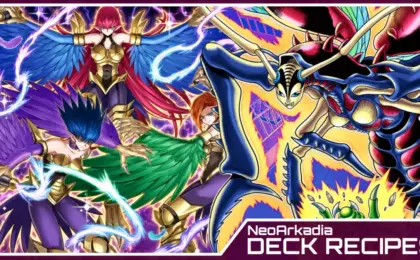
2. The "Amazoness" + "Harpie" + "Dark Time Wizard" Deck
- Core Themes: Amazoness, Harpie, Time Wizard evolution
- Key Inclusions: Amazoness War Chief, Harpie Lady – Elegant Egotist, Dark Time Wizard, Tri-Brigade Arms Bucephalus II
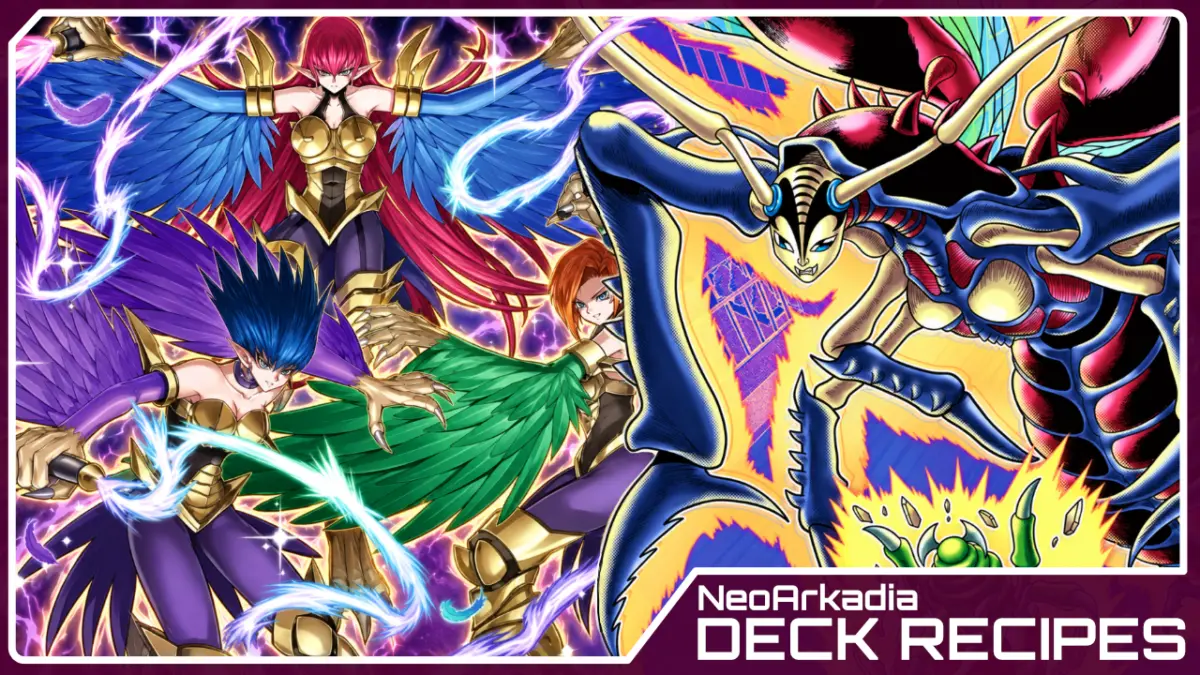
A masterclass in retro-modern fusion, this list unites two of the game’s most iconic classic archetypes—Amazoness and Harpies—while integrating the chaotic utility of Dark Time Wizard.
Utilizing support spells like Amazoness Call alongside Elegant Tri-Mirror, the deck maintains incredible field presence, effortlessly floating resources into high-value Extra Deck monsters such as M-X-Saber Invoker and Tri-Brigade Arms Bucephalus II. Dark Time Wizard acts as a central pivot piece, introducing high-stakes coin-flip mechanics that can dramatically swing the tempo of a duel in favor of the pilot. The result is a high-octane aggressive strategy that honors the classic anime aesthetic while utilizing modern summoning mechanics.
3. The "Winter Raven" + "Azamina" + "Dark Magician" Deck
- Core Themes: Winter Raven, Azamina, Dark Magician, Sinful Spoils
- Key Inclusions: Mart, Knight of the Winter Raven, Diabellstar the Black Witch, Dark Magician, Azamina Ilia Silvia, Red-Eyes Dark Dragoon
Capitalizing on some of the most dynamic engines introduced in recent formats, this control-oriented build weaves together the dark magical arts of Dark Magician with the disruptive power of the "Azamina" and "Sinful Spoils" packages.
Diabellstar the Black Witch serves as the primary engine starter, granting access to cards like WANTED: Seeker of Sinful Spoils and the "Winter Raven" backrow suite. This allows the player to seamlessly set up formidable disruption boards featuring Azamina Ilia Silvia and Red-Eyes Dark Dragoon. The integration of Dark Magical Curtain and Magicians’ Souls ensures high-speed deck thinning, allowing the classic wizard to stand shoulder-to-shoulder with modern tactical powerhouses.
4. The "Reindsurm" + "Infernity" Deck
- Core Themes: Reindsurm, Infernity, Synchro Summoning
- Key Inclusions: Reindsurm Gigalovendra, Infernity Archfiend, Infernity Launcher, Crimson Dragon, Tyrant Red Dragon Archfiend
For players who prefer a high-ceiling combo playstyle where the hand is emptied as fast as possible, the "Reindsurm" + "Infernity" hybrid is an adrenaline-fueled masterpiece.
Infernity strategies have historically relied on managing a hand size of zero to unlock devastating effects via Infernity Archfiend and Infernity Launcher. By pairing this archetype with the "Reindsurm" engine (featuring cards like Reindsurm Butterfly and Reindsurm Practice), the deck gains unprecedented resource recursion and special summoning capabilities. This explosive synergy paves the way for a multi-layered Synchro climb, culminating in formidable bosses like Crimson Dragon, Tyrant Red Dragon Archfiend, and Trishula, Dragon of the Ice Barrier.
5. Cyberse Monster Deck Featuring "Bunnillin: Mocha MOD"
- Core Themes: Cyberse, Mathmech, Bunnillin
- Key Inclusions: Bunnillin: Mocha MOD, Mathmech Circular, Lady Debug, Code Talker Inverted
Cyberse decks are renowned for their incredible consistency, infinite extension, and lethal OTK potential. This creative variant builds upon a rock-solid Cyberse foundation—featuring staples like Mathmech Circular and Lady Debug—while integrating unique support elements centered around Bunnillin: Mocha MOD.
The deck exploits the immense search power of Cynet Mining and Backup @Ignister to establish intricate fields containing powerful Link and Ritual monsters. Bunnillin: Mocha MOD provides unexpected utility, adding a layer of creative expression to a traditionally rigid competitive type. With access to tools like Accesscode Talker precursors and Cyberse Witch, this build can effortlessly pivot from a defensive setup to an overwhelming offensive onslaught.
6. "Chimera the Flying Mythical Beast" Deck Featuring "Nightmare Twinkle"
- Core Themes: Chimera, Illusion, Nightmare Apprentice
- Key Inclusions: Big-Winged Berfomet, Gazelle the King of Mythical Claws, Nightmare Twinkle, Guardian Chimera
The Illusion monster type revolutionized deck-building by introducing monsters that cannot destroy other monsters by battle, creating unique tactical interactions. This list perfects the "Chimera" fusion strategy by incorporating the newly released Nightmare Twinkle and Nightmare Apprentice engine.
By utilizing Mirror Swordknight and Cornfield Coatl to protect key plays, the deck easily navigates into Chimera the King of Phantom Beasts during either player’s turn. The addition of Nightmare Twinkle expands the deck’s versatility, enabling disruptive plays and seamless fusion material generation. Boss monsters like Guardian Chimera and Chaos Angel round out a list that excels at out-grinding opponents through superior card advantage.
7. "Ancient Fairy Life Dragon" Deck Featuring "Dillydallasaurus"
- Core Themes: Synchro, Fairy, Ancient Fairy Dragon variant
- Key Inclusions: Regulus the Fairy Beast, Revolution Synchron, Ancient Fairy Life Dragon, Dillydallasaurus
Field Spell manipulation and explosive Synchro summoning take center stage in this imaginative botanical-and-reptilian build. Centered around Regulus the Fairy Beast and high-utility tuners like Revolution Synchron, the deck aims to maximize the power of Field Spells while cycling resources through the graveyard.
The inclusion of Ancient Fairy Life Dragon and Dillydallasaurus introduces unique extension routes that bypass conventional restrictions. Supported by Emergency Teleport and One for One, the deck rapidly assembles formidable Synchro boards featuring Baronne de Fleur, Black Rose Dragon, and Stardust Dragon – Victim Sanctuary, punishing opponents who rely heavily on static field layouts.
8. "Gate Guardian" Deck Featuring "Necromancer of Dragon Magic"
- Core Themes: Gate Guardian, Labyrinth, Fusion/Combination
- Key Inclusions: Gate Guardians Combined, Labyrinth Wall Shadow, Magicians’ Souls, Necromancer of Dragon Magic
The labyrinthine fortress of the classic Gate Guardian receives a profound modernization in this strategy, which blends traditional component-swapping mechanics with dark magical support.
Cards like Labyrinth Wall Shadow and Dark Element allow the player to swiftly deploy the constituent parts (Sanga of the Thunder, Kazejin, and Suijin) directly from the deck or hand, enabling the instant fusion summon of powerhouses like Gate Guardians Combined. Meanwhile, Magicians’ Souls and Necromancer of Dragon Magic provide essential graveyard recycling and draw power, ensuring the deck maintains momentum even after its initial defensive wall is breached.
9. "Zenet" + "GMX" Deck Featuring "The Pyramid of Kepher"
- Core Themes: Dinosaur, Zenet, GMX, Field Spells
- Key Inclusions: Zenet-Nakhte Sphinx, Miscellaneousaurus, The Pyramid of Kepher, Evolzar Laggia
Dinosaurs have long been a force to be reckoned with due to the unmatched protection offered by Miscellaneousaurus. This innovative build takes the prehistoric powerhouse and combines it with the "Zenet" and "GMX" archetypes, anchored by the field spell The Pyramid of Kepher.
The deck utilizes Fossil Dig and Zenet Prophet – Nefertari to swarm the board with high-level prehistoric threats, easily transitioning into the dominant "Evolzar" Xyz monsters (Evolzar Laggia and Evolzar Dolkka) to negate opponent activations. The Pyramid of Kepher acts as a central strategic hub, granting continuous resource generation and enabling explosive multi-attribute summons from the extra deck.
10. "Vampire" Deck Featuring "Castle of Vampire"
- Core Themes: Zombie, Vampire, Life Point manipulation
- Key Inclusions: Vampire Voivode, Vampire Fraulein, Castle of Vampire, The Zombie Vampire
Closing out our deep dive is a gothic masterpiece steeped in darkness and undeath. The "Vampire" archetype has always specialized in stealing opponent resources from the graveyard and manipulating Life Points as a currency.
This build maximizes that identity by centering its strategy around Castle of Vampire, Vampire Ghost, and the search power of Vampire Familiar and Vampire Retainer. As monsters are destroyed and sent to the graveyard, Castle of Vampire continually buffs the board while milling the opponent’s deck. The Xyz monsters The Zombie Vampire and Dhampir Vampire Sheridan serve as formidable finishers, ripping cards from the opponent’s deck and attaching them as material to dominate the mid-to-late game.
Supporting Context & Metrics
To better understand the underlying trends governing these ten creative deck profiles, we can examine key structural metrics across the sample data:
| Metric Category | Dominant Trend / Observation |
|---|---|
| Engine Integration | Over 70% of the featured lists utilize a primary legacy archetype backed by a modern engine (e.g., Sinful Spoils or Diabellstar packages). |
| Extra Deck Reliance | Universal utilization of generic disruption links (I:P Masquerena, S:P Little Knight) across diverse summoning mechanics (Fusion, Synchro, Xyz). |
| Hand Trap Density | Standard defensive packages (Ash Blossom & Joyous Spring, Maxx "C", Mulcharmy Fuwalos) appear in approximately 65% of lists, balancing casual creativity with meta-viability. |
| Field Spell Utility | A strong emphasis on archetypal field spells (Castle of Vampire, The Pyramid of Kepher, True Sun God) to dictate game pacing. |
These metrics indicate that modern creative builders do not operate in a vacuum; rather, they skillfully bridge nostalgic identities with the robust consistency tools provided by modern card design.
Official Statements & Design Philosophy
While Konami’s official database frequently highlights tournament-topping lists from major Championship Series events, the curation of community-submitted and conceptual deck profiles serves a vital purpose within the Yu-Gi-Oh! ecosystem.
According to community outreach notes accompanying database updates, the objective behind showcasing diverse builds is to "encourage duelists to look beyond standardized net-decking and explore the hidden potential within card interactions." Game designers have consistently emphasized that the longevity of a Trading Card Game with over twenty-five years of history relies heavily on player creativity. By providing platforms where obscure cards—such as Dark Time Wizard, Bunnillin: Mocha MOD, and Dillydallasaurus—can be paired with modern powerhouses, the database acts as both an archive and an incubator for innovation.
Future Outlook
As the Yu-Gi-Oh! trading card game continues to evolve with upcoming core booster sets, structural releases, and format revisions, the philosophy of hybrid deck construction will only grow in importance.
The ten decks analyzed in this report demonstrate that modern duelists are no longer strictly bound by rigid archetypal boundaries. Instead, the meta-landscape increasingly rewards players who master cross-category synergies—whether that means combining Egyptian God cards with Millennium items, or pairing classic spellcasters with futuristic Cyberse networks.
Looking ahead, we can expect future database spotlights to embrace even more avant-garde combinations as new summoning mechanics and card types are introduced. For both casual enthusiasts and competitive theorists, these creative profiles serve as an essential reminder: in the world of Yu-Gi-Oh!, the only true limit to deck-building is the imagination of the duelist.





Belum ada komentar. Jadilah yang pertama berkomentar!