

Executive Overview
The cutting-edge landscape of real-time computer graphics has once again been upended by an unexpected leak, capturing the attention of hardware enthusiasts, software engineers, and digital artists alike. An early, unreleased version of Nvidia’s highly anticipated and deeply controversial DLSS 5 (Deep Learning Super Sampling 5) technology has slipped containment, finding its way into the hands of ambitious modders and curious PC gamers hours after its underlying DLL files were discovered.
Unlike previous iterations of DLSS—which primarily focused on traditional machine learning-based upscaling, frame generation, and ray reconstruction to boost frame rates while minimizing visual degradation—DLSS 5 represents a radical philosophical shift. Rather than reconstructing low-resolution source images to match the original artistic intent, this experimental technology leverages live generative AI image models. The system actively attempts to "improve" the artwork it touches in real-time, applying algorithmic transformations strikingly similar to prompting an AI model with keywords like "hyper-realism" or "photorealism."
The results of injecting this unoptimized technology into games it was never designed for have proven to be a fascinating double-edged sword. Across various gaming communities—from the RenoDX Discord server to dedicated enthusiast hubs on Reddit and ResetEra—early adopters have shared a dizzying array of results. Some players are discovering that DLSS 5 can inject unexpected life, depth, and organic texture into flat, aging character models. Conversely, others are being confronted with deeply uncanny, hilarious, and sometimes unsettling visual anomalies. Dubbed "Claude Strife" by the community, hyper-processed renderings of stylized icons like Cloud Strife from Final Fantasy 7 Rebirth and prematurely aged Hogwarts students have ignited a fierce debate.
As the tech industry grapples with the accelerating integration of generative artificial intelligence into creative mediums, the premature exposure of DLSS 5 forces a critical question: Are we witnessing the dawn of limitless graphical fidelity, or are we sleepwalking into an era of algorithmically generated digital homogeny?
Detailed Chronology: From DLL Discovery to Wild Community Experimentation
The saga of the DLSS 5 leak began not with a grand corporate keynote or a polished developer walkthrough, but through the digital sleuthing typical of the modern PC modding community.
Phase 1: The Discovery
Hours before the unauthorized release captured mainstream attention, data miners and modders scanning recent software packages and driver branches stumbled upon unexpected DLL files bearing nomenclature pointing toward Nvidia’s next-generation upscaling architecture. While Nvidia has maintained strict silence regarding its official roadmap for DLSS 5, the presence of these advanced, unpolished binaries was enough to spark immediate curiosity.
Rather than waiting for corporate documentation, software developers and modding hobbyists quickly figured out how to hook the experimental libraries into existing titles. They began testing the technology across an array of demanding PC games, pushing the unoptimized algorithms far beyond the boundaries of standard hardware testing environments.
Phase 2: The "Claude Strife" Phenomenon and Stylized Mismatches
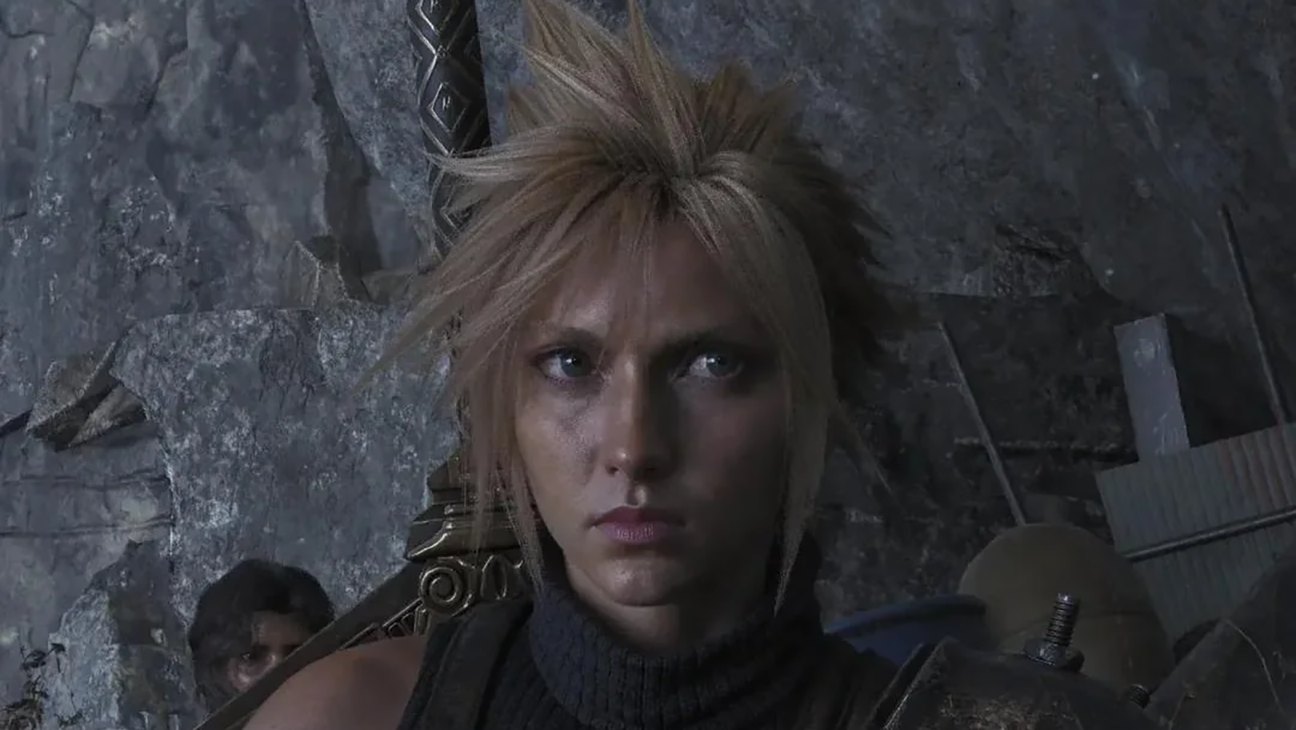
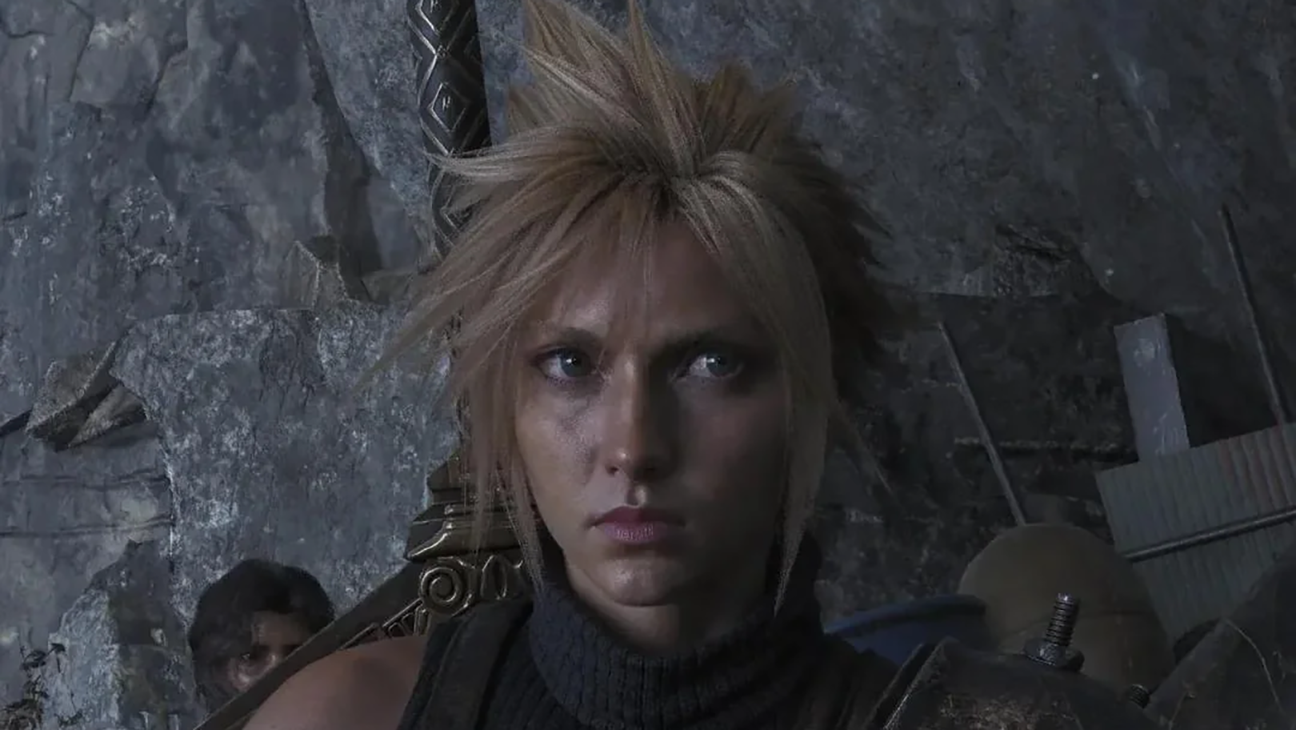
As the modified DLLs were deployed into various titles, the internet did what it does best: it sought out the most extreme, boundary-pushing use cases. Stylized, anime-inspired, and cel-shaded titles—most notably Final Fantasy 7 Rebirth—became the immediate testing grounds for extreme settings.
The resulting imagery was nothing short of surreal. Screenshots quickly circulated across social media platforms like Bluesky and Reddit showing characters like Cloud Strife rendered with hyper-detailed, pore-level skin textures, completely altering the distinct anime aesthetic crafted by Square Enix’s artists. The character’s features were aggressively reinterpreted by the generative model, leading to viral jokes comparing the resulting digital visage to Hollywood actors or high-fashion models under harsh studio lighting.
While the origin of the now-famous Final Fantasy 7 Rebirth "Claude Strife" screenshot remains slightly murky—traced by some to a now-deleted Reddit thread—it perfectly encapsulates the primary flaw of applying generative AI indiscriminately to distinct artistic styles: the algorithm steamrolls intentional aesthetic choices in favor of a homogenized, photographic realism.
Phase 3: The Midlife Crisis of Hogwarts Legacy Students
The experimentation didn’t stop with Japanese role-playing games. Modders quickly targeted Western RPGs and action-adventure titles, including Warner Bros.’ massive hit, Hogwarts Legacy.
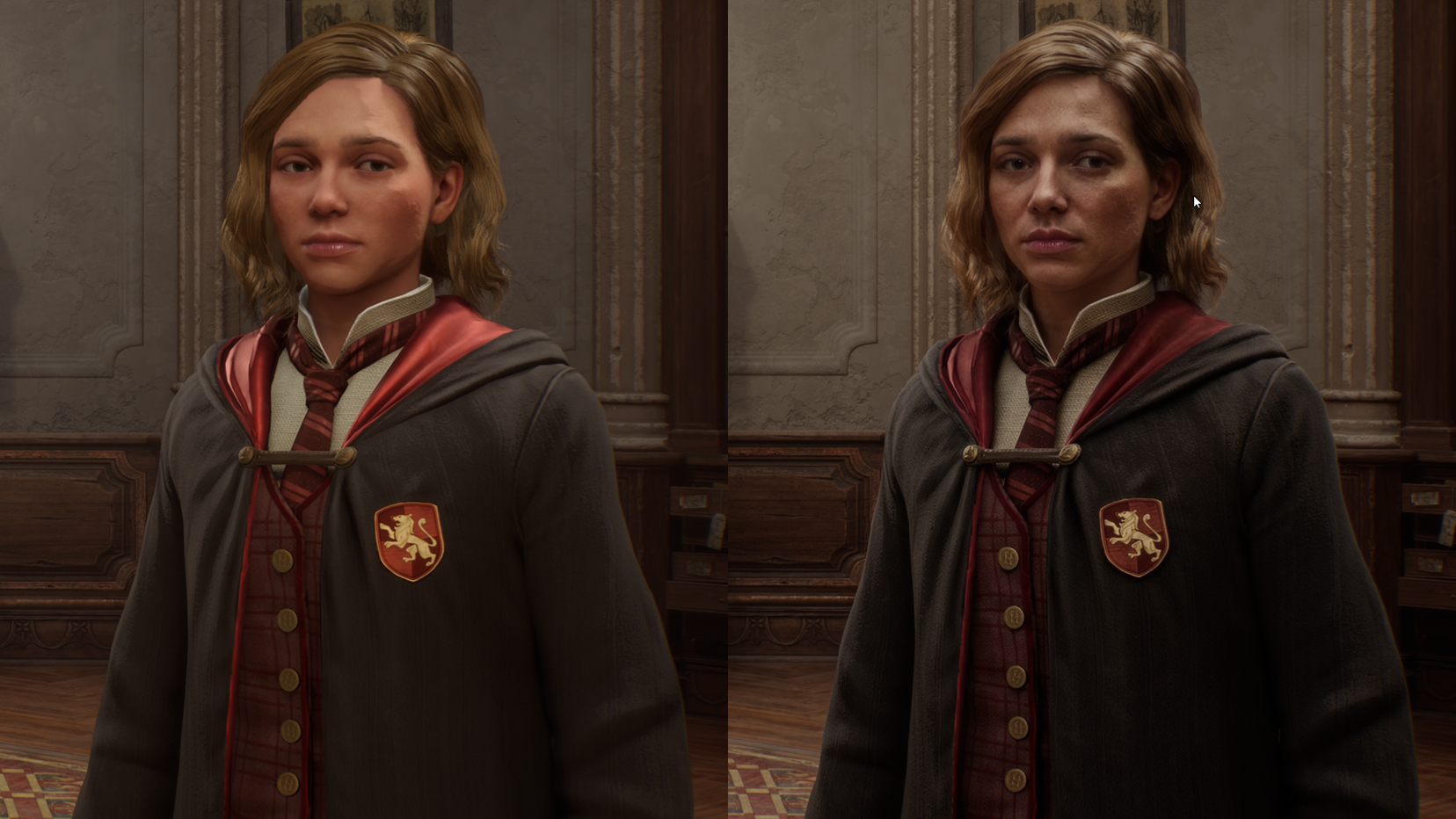
In community channels like the RenoDX Discord server, users began posting startling before-and-after comparisons. Under the influence of experimental DLSS 5 settings, youthful, stylized student avatars in Hogwarts Legacy were suddenly subjected to an aggressive aging process. Skin textures were intensified, jawlines were dramatically separated from cheeks, and neutral expressions were warped into heavy, dour scowls.
As user gc734 famously quipped within the RenoDX Discord server: "Bruh my hogwarts legacy student turned into a 35 yr old divorce attorney." The transformation highlighted how generative AI models struggle with contextual age and expression, frequently injecting mature human facial characteristics into youthful or stylized character rigs.
Supporting Context & Metrics: How DLSS 5 Differs From Its Predecessors
To understand why the gaming community is so heavily polarized by this leak, it is essential to examine the technical evolution of Nvidia’s Deep Learning Super Sampling technology.
| Version | Core Technology Focus | Primary Objective | Impact on Artistic Integrity |
|---|---|---|---|
| DLSS 2 | Spatial-temporal upscaling via Tensor Cores | Reconstruct high-res frames from low-res inputs | High preservation of original art style |
| DLSS 3 | AI-driven Frame Generation | Boost frame rates by inserting intermediate AI frames | Minimal geometric distortion; high fidelity |
| DLSS 4 | Advanced Ray Reconstruction | Enhance lighting, reflections, and shadow fidelity | Aligns closely with path-traced game engines |
| DLSS 5 (Exp.) | Generative AI Image Synthesis | Actively generate new pixel details & textures | High risk of altering original artistic direction |
The Shift from Reconstruction to Generation
Previous iterations of DLSS—spanning versions 2 through 4—relied heavily on machine learning models trained to understand motion vectors, pixel depth, and temporal data. Their fundamental goal was fidelity preservation: taking a low-resolution rendering pass and upscaling it to 4K while keeping the output as close as possible to what the game’s developers rendered natively.
DLSS 5, based on the early code and modder observations, pivots away from pure mathematical and temporal reconstruction toward generative synthesis. When the engine encounters flat, low-detail textures—such as a character’s skin, clothing, or distant environmental elements—the AI model does not merely sharpen them; it attempts to invent new detail based on its vast training dataset of real-world photographic images.
The Starfield Test Case: When Generative AI "Works"
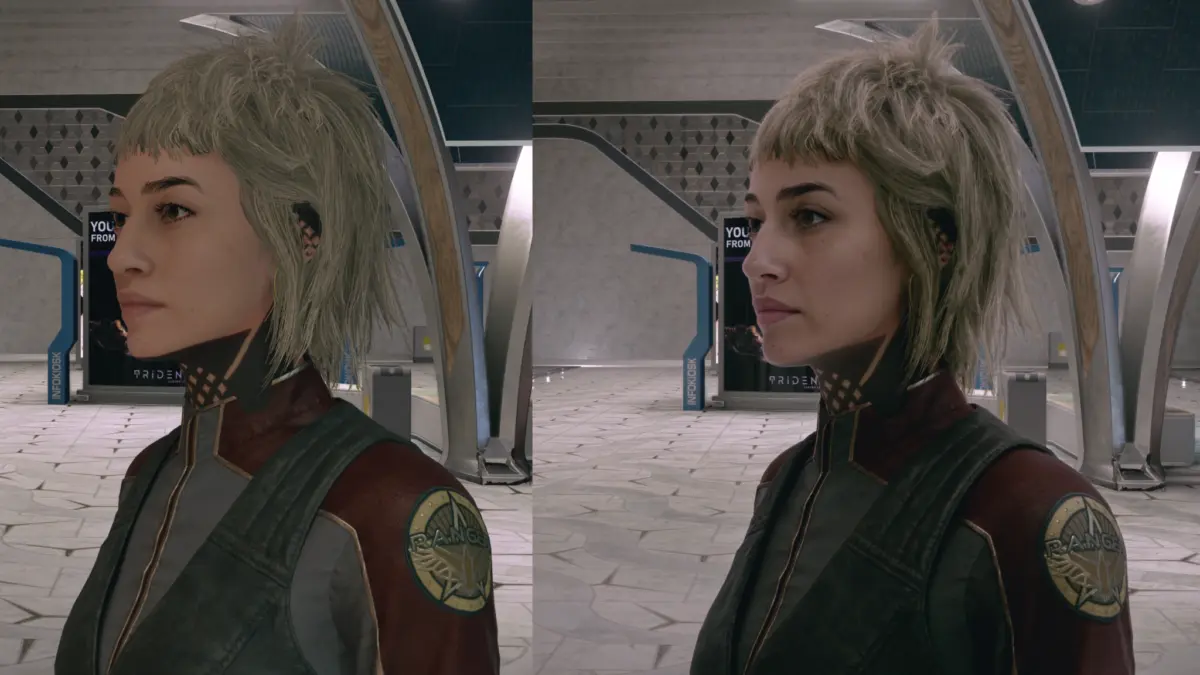
Not all early experiments yielded nightmarish results. In titles characterized by vast, open-world aesthetics and occasionally flat character models, such as Bethesda’s Starfield, users reported surprisingly positive outcomes under specific configuration parameters.
When dialed in correctly, DLSS 5 demonstrated an ability to take characters with flat, untextured skin and grant them a sense of biological volume, subtle subsurface scattering, and natural pore definition. For players seeking a grittier, hyper-realistic aesthetic in sci-fi or simulation titles, the technology occasionally delivered results that looked genuinely striking—bridging the gap between rigid video game assets and cinematic live-action footage.
Official Statements and Industry Reactions
As of writing, Nvidia has maintained a measured public stance regarding the unauthorized leak of the experimental DLL files. Major software and game publishers whose titles have been co-opted into these unsanctioned modding experiments—including Square Enix, Warner Bros. Games, and Bethesda Softworks—have yet to issue formal statements. This silence is largely expected, given that the software is unreleased, unoptimized, and operating entirely outside official distribution channels.
However, industry insiders and software engineers note that leaks of this nature are a double-edged sword for hardware manufacturers:
- The Risk of Misrepresentation: When experimental, unfinished tools leak prematurely, the public forms opinions based on broken implementations, worst-case scenarios (such as the "Claude Strife" meme), and unoptimized workloads.
- Valuable Telemetry: Conversely, the rapid deployment of the code across hundreds of disparate game engines provides Nvidia’s engineering teams with an unprecedented, albeit chaotic, stress test of how their generative models interact with legacy rendering pipelines.
Future Outlook: The Ideological Divide in PC Gaming
The unauthorized emergence of DLSS 5 has crystallized an ongoing cultural war within the PC gaming community concerning the boundaries of artificial intelligence.
On one side of the aisle stand tech enthusiasts, performance chasers, and visual futurists who view generative AI as the inevitable next frontier in video game fidelity. To this camp, the ability of an algorithm to dynamically inject high-frequency detail into aging or resource-constrained game assets represents the ultimate liberation from the polygon and texture budgets dictated by current hardware limitations.
On the other side stand artists, purists, and gamers who harbor deep skepticism toward generative AI. Critics argue that even when DLSS 5 successfully transforms a flat face into something possessing convincing volume and texture, the resulting aesthetic carries an unmistakable "AI slop" signature. It replaces unique, human-crafted artistic direction with a standardized, photographic gloss—reminiscent of studio-lit model photography stretched awkwardly over digital polygons.
As Tyler, veteran gaming journalist and observer of technological shifts, aptly summarizes:
"Even where DLSS 5 does turn a flat-looking face into something with volume and texture, it has a distinct AI-generated look—like photos of models taken with studio lighting have been stretched over all the faces and bodies. I can’t separate it from the Grok-generated images creeps post on X, or any other off-putting examples of AI slop."
What Lies Ahead?
When Nvidia officially pulls back the curtain on DLSS 5 with proper developer integration, robust UI controls, and game-specific optimization profiles, the results will undoubtedly look far more refined than the chaotic modded experiments currently circulating in Discord channels and ResetEra threads.
Nevertheless, the philosophical debate has already been drawn. As real-time rendering increasingly blurs the line between human artistry and machine-generated hallucination, the gaming community must decide whether hyper-realism is a prize worth paying for at the expense of distinct, intentional artistic vision.




Belum ada komentar. Jadilah yang pertama berkomentar!