

By the Competitive Gaming Editorial Desk
Published October 2026
Executive Overview
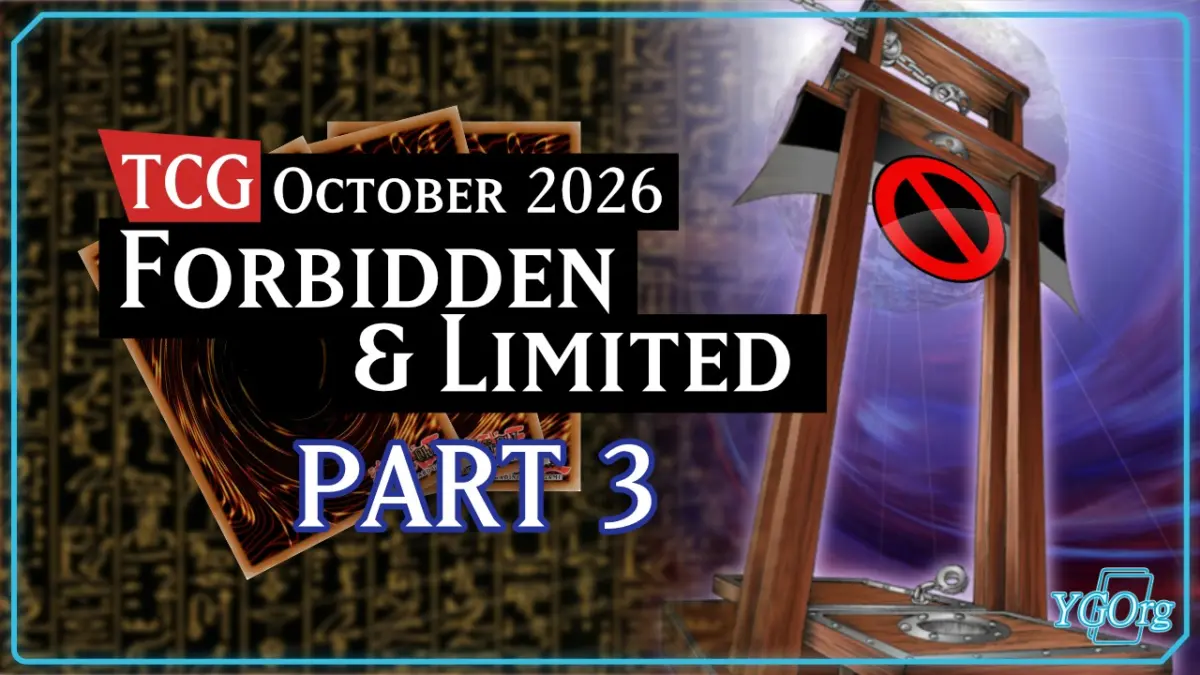
In the fast-paced, highly intricate ecosystem of the Yu-Gi-Oh! Trading Card Game (TCG), few events send shockwaves through the community quite like an emergency or mid-season Forbidden & Limited List update. The competitive landscape was permanently altered during the live broadcast of the Yu-Gi-Oh! Championship Series (YCS) in Houston, Texas, for the 2026 competitive season. Konami’s official stream dropped a massive bombshell regarding upcoming adjustments to the game’s legality rules. Scheduled to go into effect on Monday, October 19, 2026, this update directly targets some of the most format-defining floodgates and combo engines currently dominating the metagame.
At the center of this seismic shift is the complete elimination of a notorious trio of continuous trap cards that have historically dictated—and often polarized—player experiences: Gozen Match, Rivalry of Warlords, and There Can Be Only One. Alongside these restrictive floodgates, powerhouse utility pieces and combo extenders such as Pharaonic Advent, Cross-Sheep, Saryuja Skull Dread, and Cupsy˜…Yummy Way have been banished to the Forbidden tier. Meanwhile, the beloved "Toon" archetype has taken a distinct hit to its consistency engines, with Toon Bookmark and Toon Table of Contents being moved to the Limited category.
This report provides an exhaustive, authoritative breakdown of the October 19, 2026 Forbidden & Limited List. Utilizing data revealed live at YCS Houston 2026, we will examine the chronological context of the announcement, evaluate the competitive metrics driving these bans, project the future outlook of the metagame, and explore what these sweeping changes mean for duelists worldwide as they prepare for the next premier-level events.
Detailed Chronology: The Unfolding of the YCS Houston Revelation
The path to the October 19, 2026 list was paved by months of mounting community frustration, high-profile tournament data, and a metagame that many top-tier competitors felt had grown increasingly stale due to heavy reliance on generic floodgates and explosive, infinite-resource extra deck loops.
The Lead-Up to YCS Houston 2026
Throughout the 2026 competitive calendar, regional and YCS events across North America and Europe were increasingly characterized by "Stun" and control strategies running multiple copies of Attribute- and Type-restricting floodgates. While combo decks pushed the boundaries of modern board-building through versatile extenders like Cross-Sheep and Saryuja Skull Dread, control-oriented strategies countered the meta by deploying Gozen Match, Rivalry of Warlords, and There Can Be Only One. This created a binary format: either a player broke an insurmountable multi-negate board, or they were locked out of playing the game entirely by a single flipped trap card.
As the tournament scene converged on Houston, Texas, for YCS Houston 2026, rumors regarding an imminent list update had reached a fever pitch. Konami’s Organized Play team traditionally utilizes major streaming events to deliver high-impact product announcements and banlist reveals to maximize audience engagement and capture immediate community reactions.
The Broadcast Drop
During a high-stakes feature match broadcast stream on the official YouTube channel (source: YCS Houston 2026 Stream), the tournament organizers interrupted the broadcast programming to display the full suite of upcoming changes. The live reveal sent immediate ripples through the convention center floor, with audible cheers from competitors who had long campaigned for the eradication of format-defining floodgates. Within minutes, the clip of the announcement was clipped, shared, and dissected across every major Yu-Gi-Oh! platform, signaling the official countdown to the October 19 enforcement date.
Supporting Context & Metrics: Deep Dive into the Forbidden & Limited Additions
To fully grasp the magnitude of the October 19, 2026 list, one must analyze the individual card entries, their historical utility, and the specific reasons Konami’s design and balancing teams targeted them.
+-----------------------------------------------------------------------------+
|                          OCTOBER 19, 2026 BANLIST                           |
+-----------------------------------------------------------------------------+
| FORBIDDEN:                                                                  |
| • Pharaonic Advent                                                          |
| • Cross-Sheep                                                               |
| • Saryuja Skull Dread                                                       |
| • Cupsy˜…Yummy Way                                                          |
| • Gozen Match                                                               |
| • Rivalry of Warlords                                                       |
| • There Can Be Only One                                                     |
|                                                                             |
| LIMITED:                                                                    |
| • Toon Bookmark                                                             |
| • Toon Table of Contents                                                    |
+-----------------------------------------------------------------------------+
The Floodgate Purge: Gozen Match, Rivalry of Warlords, and TCBOO
For over a decade, the "Unholy Trinity" of floodgates—Gozen Match, Rivalry of Warlords, and There Can Be Only One (TCBOO)—have represented the pinnacle of passive interaction in the Yu-Gi-Oh! TCG.
- Gozen Match forced each player to control monsters of only a single Attribute, devastating multi-Attribute archetypes.
- Rivalry of Warlords restricted players to a single Type of monster, shutting down hybrid strategies.
- There Can Be Only One limited players to a single monster of the same Type across the board, rendering countless Extra Deck-heavy archetypes completely unplayable if resolved.
By placing all three of these cards on the Forbidden list simultaneously, Konami has sent an unmistakable message: the era of cheap, one-card-win passive floodgates in modern competitive play is officially over. Decks that relied solely on hiding behind these traps to secure wins will need to fundamentally restructure their philosophies.
Combo Extenders and Engine Pieces: Pharaonic Advent, Cross-Sheep, Saryuja, and Cupsy˜…Yummy Way
While floodgates ruled the control side of the spectrum, excessive combo acceleration was targeted via the elimination of several key monsters:
- Pharaonic Advent: Known for facilitating flexible Special Summons and searching crucial engine pieces, its removal weakens specific strategy lines that could leverage its unique mechanics to bypass traditional hand trap interruptions.
- Cross-Sheep: A staple Link-2 monster for years, Cross-Sheep provided unparalleled resource loops, generating card advantage, revival effects, and attack modifications whenever a monster was summoned to its linked zones. Its ban forces combo decks to look elsewhere for resource recycling.
- Saryuja Skull Dread: The classic multi-material generic Link-4 powerhouse. Saryuja has hovered in and out of competitive relevancy depending on the era’s combo potential. Its return to the Forbidden list indicates that excessive card drawing, filtering, and special summoning power from the hand have once again exceeded acceptable thresholds.
- Cupsy˜…Yummy Way: A newer entry to the competitive conscience, this card’s aggressive positioning and engine utility have evidently proven too dominant or centralizing for the upcoming format design.
Consistency Hits: Toon Bookmark and Toon Table of Contents
In a surprising move that caught casual and hybrid Toon players off guard, the iconic search engines for the Toon archetype—Toon Bookmark and Toon Table of Contents—have both been restricted to Limited (1 copy). While Toon decks have rarely dominated Tier 1 competitive play, Toon Table of Contents has historically served as a generic spell-counter engine and consistency booster in various rogue strategies due to its ability to search itself recursively. By hitting both Bookmark and Table of Contents, Konami has curbed both Toon engine explosiveness and any external abuse of the card’s self-searching mechanic.
Official Statements and Community Reactions
The immediate aftermath of the YCS Houston stream yielded a massive influx of commentary from prominent content creators, judges, and high-level tournament competitors.
The Competitive Perspective
Top-tier players have largely praised the elimination of the continuous trap floodgates. For years, competitive discourse centered around whether skill-testing back-and-forth interactions were being stifled by cards that required zero ongoing resource investment once resolved.
"Losing Gozen, Rivalry, and TCBOO on the same day completely re-opens the deck-building space for mid-tier and multi-Attribute strategies that were previously unviable simply because they folded to a single common trap card," noted one prominent regional champion interviewed on-site at Houston.
However, the banning of generic staples like Cross-Sheep and Saryuja Skull Dread has drawn mixed reactions from combo enthusiasts. While acknowledging that these cards enabled near-infinite loops, some players expressed concern that removing generic extenders narrows the pool of viable Extra Deck toolbox options, potentially pigeonholing players into strict, linear archetype-specific paths rather than creative, cross-engine innovation.
The Casual and Rogue Community Response
Conversely, the restriction of Toon Table of Contents sparked dismay within casual circles. For years, Toon Table of Contents was viewed as a harmless, nostalgic engine piece that allowed niche decks to thin their decks or generate spell counts. Limiting it alongside Toon Bookmark signals that Konami is tightening restrictions on recursive search loops across the board, regardless of an archetype’s current Tier status.
Future Outlook: Navigating the Post-October 19 Metagame
As duelists worldwide update their binders and adapt their decklists ahead of the October 19, 2026 enforcement date, the competitive landscape is poised for a dramatic evolution.
1. A Resurgence of Multi-Attribute and Hybrid Archetypes
Without the omnipresent threat of Gozen Match and Rivalry of Warlords, deck builders no longer need to restrict their main and extra decks to a single Attribute or Type for fear of auto-losing. We can expect to see a rise in creative hybrid strategies that blend disparate engines, as the structural hostility toward multi-faceted deckbuilding has been lifted.
2. Slower, More Interactive Mid-Range Duels
With major combo extenders (Cross-Sheep, Saryuja) removed and the most oppressive floodgates eradicated, the pendulum may swing back toward mid-range resource battles. Players will need to rely more heavily on thoughtful hand trap timing, engine efficiency, and well-timed interruptions rather than relying on an un-breakable board or an instantaneous floodgate lock.
3. The Quest for New Consistency Engines
With Toon Table of Contents restricted, rogue deck builders utilizing spell-based engines will need to innovate. The loss of consistent deck-thinning will force a re-evaluation of generic consistency cards moving into the winter tournament season.
Conclusion
The October 19, 2026 Forbidden & Limited List, proudly unveiled at YCS Houston 2026, marks a watershed moment for the Yu-Gi-Oh! TCG. By decisively removing the format’s most polarizing floodgates alongside crucial combo lubricants, Konami has demonstrated a clear commitment to fostering a more diverse, interactive, and dynamic competitive environment.
As duelists head to local game stores and premier events under these new rules, adaptability, creativity, and deep mechanical understanding will separate the champions from the pack. Be sure to join our growing Discord community to share your thoughts, discuss post-banlist decklists, and connect with fellow duelists as we navigate this exciting new era of competitive play.
For ongoing coverage, feature match analyses, and future banlist predictions, stay tuned to our competitive gaming editorial desk.
Belum ada komentar. Jadilah yang pertama berkomentar!