For travelers and urban explorers alike, Tokyo in the spring conjures an immediate, universally recognized mental image: the breathtaking canopy of soft pink cherry blossoms arching gracefully over the wide, urban expanse of the Meguro River. Stretching across the neighborhoods of Gotanda and Osaki, this famed two-kilometer (1.2-mile) waterway transforms into a bustling hub of hanami (cherry blossom viewing) culture every March and April, captivating millions of domestic and international visitors.
However, seasonal travel itineraries do not always align with nature’s calendar. Visitors arriving in the crisp, biting months of December and January are typically resigned to missing out on Japan’s most celebrated botanical spectacle. Yet, Tokyo’s urban planners and local community coalitions have engineered a brilliant seasonal defiance: the Meguro River Minna no Illumination.
Far from a conventional holiday light display, this wintertime exhibition redefines urban sustainability. Running annually from December 4 to January 31, the project illuminates roughly 410,000 brilliant pink LEDs along the dormant, winter-bare cherry trees lining the riverbanks. More remarkably, the entire spectacle operates on a closed-loop, 100-percent self-generated energy ecosystem fueled entirely by recycled local biodiesel. Through a synchronized community effort, used cooking oil collected from neighborhood households and commercial kitchens is refined to light up the nightscape.
This comprehensive report examines the logistical marvel, environmental architecture, and cultural significance of the Meguro River’s "Winter Sakura"—a project proving that technological ingenuity and eco-conscious urban design can successfully recreate spring’s warmth in the dead of winter.
Detailed Chronology: From Concept to Winter Illumination
The transformation of the Meguro River from a dormant industrial-era waterway into a globally recognized nocturnal winter attraction did not happen overnight. It represents a deliberate evolution of community engagement, urban beautification, and green-energy adoption that has steadily expanded over the past decade.
Phase 1: Community Mobilization and the Vision of "Winter Sakura"
Conceived as a collaborative effort between local neighborhood associations, municipal leaders, and environmentally focused creative agencies, the Meguro River Minna no Illumination was established to revitalize the Gotanda and Osaki districts during the slowest tourism months of the year. While winter illuminations are a beloved staple across Tokyo—often deployed to celebrate Christmas and New Year—organizers wanted something distinct. By wrapping the bare branches of the riverside sakura trees in specialized pink LED nodes, they sought to bridge the emotional gap between the harsh realities of winter and the deeply cherished cultural memory of spring.
In its early iterations, the illumination faced growing scrutiny from environmental advocates concerned about the carbon footprint and energy consumption of large-scale winter light displays. Recognizing the contradiction of celebrating nature while draining fossil-fuel-powered grids, the organizing committee initiated a radical overhaul of the project’s power infrastructure.
By partnering with local restaurants, hospitality venues, and residential apartment blocks, the project instituted a year-round used cooking oil collection drive. This waste oil is systematically gathered, transported to local refining partners, and converted into high-grade biodiesel. Today, the entire two-kilometer stretch of 410,000 lights—alongside associated public art installations—is sustained entirely by this recycled biofuel, effectively turning yesterday evening’s tempura and tonkatsu oil into tonight’s glowing urban canopy.
Phase 3: The Annual Opening Protocol and Interactive Additions
Each year, the illumination officially kicks off on December 4 with a meticulously coordinated opening-day ceremony. Starting at 4:00 p.m., local school marching bands and festive riverboats converge on the water near Gotanda Waterfront Plaza, setting a celebratory tone for the winter season.
In recent years, organizers have expanded the initiative beyond static lighting by integrating immersive public art. Collaborating with renowned creative units such as Zero by Zero, the event features interactive installations—including light-ripple art pieces—that respond to pedestrian movement. Additionally, daytime workshops invite citizens and visitors to construct kaleidoscopes from recycled cardboard and paper waste, reinforcing the overarching theme of circular economy and environmental stewardship.
Supporting Context & Metrics
To fully appreciate the scale and operational complexity of the Meguro River winter illumination, it is essential to examine the core metrics that define the project:
Event Duration: December 4 to January 31 annually.
Daily Operating Hours: 5:00 p.m. to 10:00 p.m. (ensuring a reliable evening viewing window for commuters and tourists).
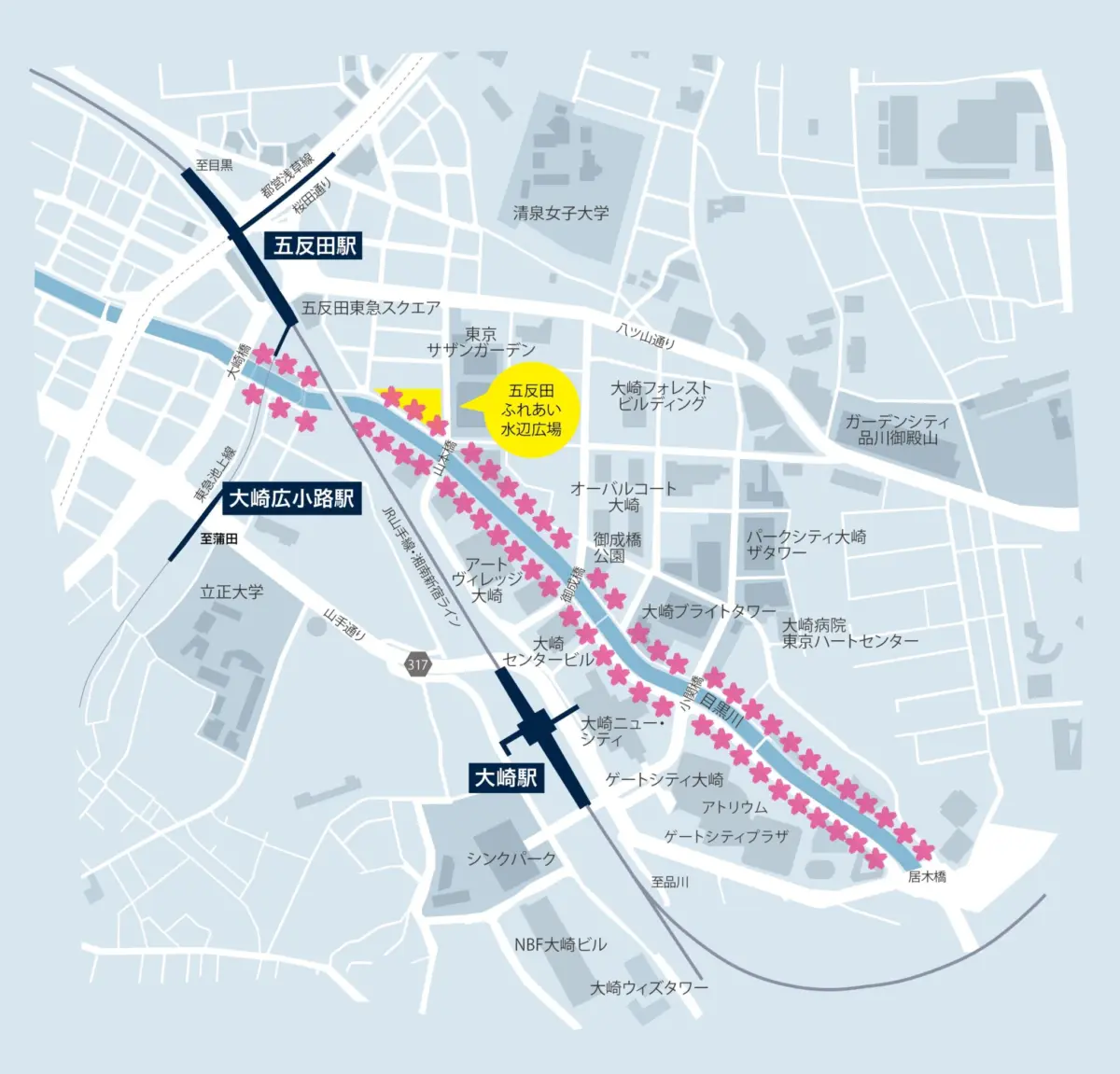
Geographic Scope: A two-kilometer span along the Meguro River, extending from Gotanda Station down southeast past Osaki Station.
Light Density: Approximately 410,000 individual high-efficiency, pink LED nodes carefully wrapped around the branches of the riverside cherry trees.
Energy Architecture: 100% self-generated, closed-loop biodiesel system powered entirely by locally sourced waste cooking oil.
Key Landmarks:
Gotanda Station: The northern gateway to the illumination zone.
Gotanda Waterfront Plaza: Located a three-minute walk from Gotanda Station, serving as the cultural heart of the event featuring interactive art installations and community recycling pop-ups.
The Circular Economy in Action: A Technical Breakdown
The logistical backbone of the Meguro River project serves as a masterclass in decentralized urban resource management. Traditional power grids draw heavily on coal, natural gas, and nuclear resources, often resulting in steep carbon emissions during peak winter heating months.
By contrast, the Meguro River biodiesel pipeline operates on a hyper-local scale:
Collection: Throughout the year, participating restaurants, convenience stores, and households in the Shinagawa City area deposit used frying oil into designated collection drums rather than disposing of it down drains—a practice that historically plagued municipal plumbing systems with hardened fatbergs.
Refining: The aggregated organic oil is collected by specialized municipal partners, filtered, chemically treated, and transfigured into clean-burning biodiesel generators.
Combustion & Illumination: During operational hours, these generators feed stable, low-emission electrical current to the LED strings winding around the tree trunks.
The Human Connection: This setup creates a profound psychological and physical link between the community and the landscape. A resident dining out in Gotanda in November may find their household culinary byproduct softly illuminating a stranger’s evening stroll along the embankment weeks later.
Official Statements and Cultural Significance
Urban planners and cultural anthropologists frequently cite the Meguro River Minna no Illumination as a pioneering model for balancing seasonal tourism demands with aggressive municipal sustainability targets.
"We wanted to challenge the prevailing narrative that large-scale urban celebrations must inherently compromise our environmental values," noted a representative from the organizing committee during a press briefing. "By harnessing the literal waste of our neighborhoods to illuminate the natural beauty of our streets, we create a dialogue between the community, our city’s infrastructure, and our collective ecological responsibility."
Cultural commentators emphasize that the exhibition taps deeply into the Japanese aesthetic sensibility of mono no aware—a poignant awareness of transience, beauty, and longing. While real cherry blossoms are famously fleeting, lasting only a week or two before succumbing to spring winds, the "Winter Sakura" offers a prolonged, albeit artificial, extension of that comforting pink warmth. It provides psychological relief during the darkest, coldest weeks of the year, transforming a utilitarian concrete drainage canal into a dreamlike, romantic corridor.
Furthermore, educational workshops—such as the paper-tube kaleidoscope building sessions hosted at Gotanda Waterfront Plaza—ensure that younger generations internalize the lessons of upcycling. Children learn firsthand how discarded packaging and waste materials can be transformed into optical marvels, mirroring how discarded kitchen grease becomes a glowing canopy of lights.
Future Outlook: Scaling Sustainable Urban Tourism
As Tokyo prepares for future waves of international tourism and tightens its municipal carbon reduction frameworks, the Meguro River illumination model stands out as a blueprint for other urban centers globally.
Expanding Eco-Art Integrations
Future iterations of the winter festival aim to expand interactive elements further up and down the riverway. Discussions are currently underway to incorporate biodiverse-friendly lighting spectrums that minimize disruption to local nocturnal wildlife, ensuring that the pink LEDs do not negatively impact resident bird species or aquatic ecosystems within the Meguro River channel.
Replicating the Circular Model
Municipalities across Japan—and major cities internationally—have begun studying the Shinagawa City biodiesel loop. As cities search for viable ways to achieve net-zero carbon goals for public events, decentralized community-energy projects like this offer a compelling, scalable template. Rather than relying on massive, centralized wind or solar farms that require extensive transmission infrastructure, hyper-local waste-to-energy loops empower neighborhoods to generate their own festive power directly from daily life.
Conclusion: A Timeless Stroll in Pink
Whether you are a first-time visitor navigating Tokyo’s labyrinthine train lines or a long-term resident seeking refuge from the winter chill, a brisk evening walk along the Meguro River between December and January offers an unforgettable experience. It bridges the gap between seasons, defies the gloom of winter, and demonstrates that beauty and ecological responsibility can coexist under a canopy of 410,000 glowing pink lights—all powered by the very community that calls the riverbank home.










Belum ada komentar. Jadilah yang pertama berkomentar!