

Executive Overview
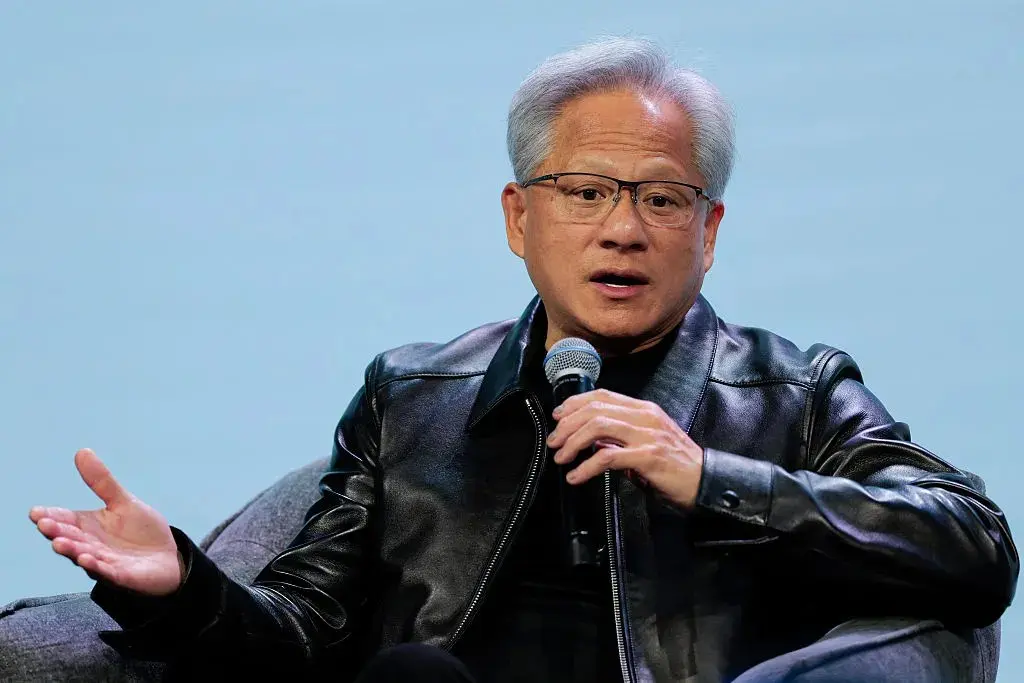
The technology sector is still reeling from what industry insiders are calling "the bomb that went off" in Silicon Valley and across global financial markets. Jensen Huang—the visionary co-founder who steered Nvidia through 33 transformative years, turning a niche graphics card manufacturer into the beating heart of the global artificial intelligence revolution—has officially stepped down as chief executive officer.
Huang’s abrupt resignation follows a turbulent controversy surrounding his personal conduct and alleged entanglements, leaving an unprecedented vacuum at the top of the world’s most valuable chipmaker. With CFO Colette Kress stepping in as interim CEO, Nvidia is staring down an institutional identity crisis.
For the broader technology landscape, however, the fallout extends far beyond executive suite drama. Over the past several years, Nvidia has acted as the financial lifeblood of the generative AI boom. Functioning as a prolific corporate venture capitalist, the company poured tens of billions of dollars annually into early-stage ventures, participating in a staggering 105 funding rounds in a single year. More often than not, Nvidia served as the lead investor, underwriting massive infrastructure plays, cutting-edge neoclouds, and speculative open-source labs.
Huang’s departure threatens to choke off this vital liquidity pipeline. As Wall Street demands greater fiscal conservatism and interim leadership pivots away from Huang’s aggressive, high-stakes dealmaking, the global AI startup ecosystem faces a stark reality check. Valuations are expected to contract, early-stage dealmaking faces immediate headwinds, and Europe and other international markets risk losing their primary champion for open-source AI innovation.
While venture capitalists and market analysts debate whether Big Tech rivals like Google, Microsoft, and Amazon can—or will—step in to fill the void, one thing is certain: the era of unchecked, high-velocity corporate backing that built the modern AI economy has officially come to an end.
Detailed Chronology: The Fall of a Titan and the Rise of Uncertainty
To understand the magnitude of Nvidia’s current pivot, one must trace the timeline of events that culminated in Huang’s sudden exit and the immediate corporate restructuring.
The Buildup and the Breach
For over three decades, Jensen Huang was synonymous with Nvidia. His idiosyncratic style—traditionally marked by his black leather jacket and relentless evangelism for accelerated computing—made him an iconic figure in modern tech history. However, the seeds of the current crisis were sown amid escalating geopolitical sensitivities and intensive corporate scrutiny.
By late 2026, mounting controversies surrounding Huang’s personal life and alleged interactions with foreign entities—including scrutiny over an alleged relationship with a Chinese national—put immense pressure on Nvidia’s board of directors. While Nvidia had weathered previous regulatory storms regarding export controls and antitrust probes, the convergence of personal scandal and geopolitical friction proved insurmountable.
The Resignation Heard Round the World
In mid-November 2026, the hammer fell. Nvidia announced that Huang was stepping down immediately. The news sent immediate shockwaves through global markets, triggering sharp fluctuations in Nvidia’s share price and sparking emergency discussions among neocloud founders, venture capitalists, and enterprise clients alike.
"It’s like a bomb went off," admitted one prominent neocloud founder who spoke on the condition of anonymity. "You simply cannot remove the gravitational center of the entire AI universe and expect things to continue as normal."
The Handover to Colette Kress
With the board scrambling to secure a permanent successor, longtime Chief Financial Officer Colette Kress was named interim CEO. Kress, highly respected for her operational discipline and financial acumen, immediately stepped into a tempest.
Unlike Huang—who operated with founder-led intuition, routinely greenlighting multi-million-dollar bets on pre-revenue startups based on personal conviction—Kress is viewed by Wall Street as a significantly more conservative operator. Financial analysts who had long criticized Huang’s rampant, dilutive dealmaking and the ballooning capital expenditures of the billion-dollar data center build-out welcomed Kress’s ascension.
However, the very traits that comfort institutional investors on Wall Street are striking terror into the hearts of early-stage entrepreneurs who relied on Nvidia’s aggressive balance sheet to survive.
Supporting Context & Metrics: Nvidia as the Engine of the AI Gold Rush
To fully appreciate the severity of Huang’s exit, one must examine the sheer scale of Nvidia’s footprint in the venture capital and startup ecosystem. According to data compiled by PitchBook, Nvidia was not merely a chip supplier; it was the financial architect of the modern AI stack.
The Mechanics of Nvidia’s Investment Machine
Nvidia’s strategy under Huang was masterclass vertical integration disguised as venture philanthropy. By writing massive checks to pre-revenue infrastructure startups, neocloud providers, and open-weight model developers, Nvidia achieved two critical objectives:
- Demand Generation: Startups receiving Nvidia funding were effectively locked into utilizing Nvidia’s proprietary hardware (GPUs) and software frameworks.
- Ecosystem Preservation: By backstopping high-cost operations, Nvidia ensured that the market for intensive AI compute continued to expand exponentially, even when macroeconomic conditions argued for caution.
Consider the roster of Nvidia’s recent investments:
- CoreWeave: Backed heavily by Nvidia while still a private entity, enabling it to scale into a premier specialized cloud provider.
- Crusoe: Participated in multiple rounds, including a massive $1.4 billion Series E financing.
- Hugging Face: Agreed to acquire the collaborative AI platform for a staggering $13 billion in a deal slated to close in 2027.
- Mistral AI & Black Forest Labs: Provided vital capital to top-tier European foundational model and generative media startups.
- Reflection AI: Wrote an $800 million check into a $2 billion Series B round last year before the open-source startup had generated meaningful revenue.
The European and Open-Source Vulnerability
One of the most immediate casualties of Huang’s departure may be the geographic diversification of AI funding. Shamillah Bankiya of Dawn Capital highlighted Huang’s unique ideological commitment to open-source software and international markets—particularly Europe.
"Jensen believed in open source and, frankly speaking, Europe," Bankiya noted. Without Nvidia’s willingness to bankroll cross-border innovation, the European startup ecosystem faces an acute funding gap. "The cessation of that support outside of America would be a massive funding and ecosystem gap that no one can fill."
Official Statements and Industry Reactions
The tech community’s response to Huang’s resignation has been a mix of panic, pragmatism, and acute anxiety over shifting capital allocations.
The Venture Capital Perspective
Umesh Padval, managing partner at Seligman Ventures and a longtime observer of Nvidia through his tenure on the board of Mellanox Technologies (acquired by Nvidia for $7 billion in 2020), emphasized that investment decisions were deeply personal to Huang.
"Most of the significant decisions to invest in startups often came from Jensen himself," Padval explained. While the startup community holds out hope that a future permanent CEO will eventually reignite Nvidia’s venture engine, investors agree that a prolonged dry spell is all but guaranteed under Kress’s interim watch.
"She’s much more conservative," a prominent venture capitalist remarked off the record. "I don’t think she’s going to commit the same amount of money to keep the early-stage ecosystem going."
The ripple effects on valuations are expected to be swift. Under Huang, infrastructure companies requiring $100 million to $500 million in initial GPU allocation could reliably secure half that funding at valuations of $1 billion or more simply because Nvidia’s name appeared on the cap table.
"When Nvidia was on the cap table, everyone felt safe," Padval noted. With that safety net removed, traditional venture capitalists are expected to exercise extreme caution, pausing or heavily restructuring pending term sheets.
The Big Tech Contenders
As Nvidia retreats from its aggressive underwriting posture, competitors are already moving to capture market share. Coincidentally, Google announced two new specialized AI hardware chips the same week as the Nvidia leadership crisis, underscoring how quickly rivals intend to capitalize on the disruption.
Dharmesh Thakker, general partner at Battery Ventures, predicts that hyperscalers like Google, Amazon, and Microsoft, alongside hardware rival AMD, will vie for Nvidia’s investment crown. However, Thakker draws a sharp distinction in execution: these competitors will only back mature startups capable of driving adoption for their proprietary clouds and chips. He doubts any competitor will replicate Nvidia’s willingness to pour hundreds of millions into pre-revenue infrastructure plays.
The primary battleground moving forward will be the software ecosystem—specifically, who can successfully challenge CUDA, Nvidia’s proprietary platform that locks developers into its GPU architecture.
Future Outlook: Navigating the Post-Huang Landscape
As the dust settles on Jensen Huang’s historic departure, the artificial intelligence industry stands at a profound crossroads.
What Lies Ahead for Startups
- Valuation Resets: Early-stage AI startups accustomed to hyper-inflated valuations driven by corporate strategic FOMO must prepare for rigorous valuation corrections.
- Consolidation and M&A: Lacking continuous financial injections from Nvidia, smaller neoclouds and cash-burning inference providers will likely be forced into consolidation or distressed acquisitions by deep-pocketed enterprise giants.
- Diversified Compute: With Nvidia’s monopoly-adjacent grip potentially loosening, alternative silicon providers (including custom ASICs from hyperscalers and emerging startups) will find a more receptive audience among developers seeking cost efficiencies.
The Ecosystem Endures
Despite the widespread anxiety, seasoned operators emphasize that the fundamental momentum of artificial intelligence cannot be halted by a single executive exit.
Amulya Vishwanath, a former Nvidia employee who now manages her own venture capital fund, offered a pragmatic perspective on the crisis. "Founders and leaders must be held accountable," Vishwanath stated, pointing out that the broader technological movement is vastly larger than any single individual. "That talent will, and must, continue to thrive."
The myth of the infallible corporate benefactor may be shattered, but the foundational engineers, researchers, and entrepreneurs who built the AI revolution remain. Whether Nvidia under Colette Kress—or a yet-unnamed permanent successor—can rediscover its appetite for audacious risk remains one of the most compelling storylines in modern business history. For now, Silicon Valley has learned a humbling lesson: even empires built on silicon are ultimately subject to the human element.






Belum ada komentar. Jadilah yang pertama berkomentar!