

Executive Overview
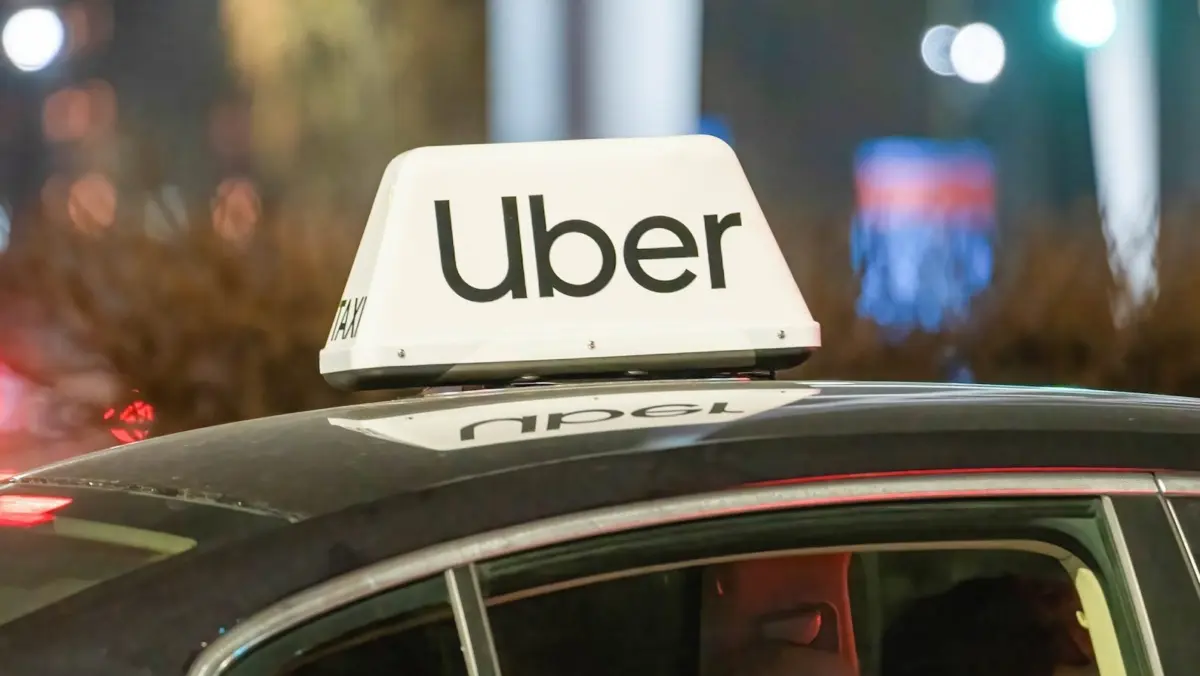
In an escalating era of interconnected enterprise ecosystems, a single third-party vendor vulnerability has once again rippled outward to impact millions of consumers and workers. Ride-hailing giant Uber is currently in the process of notifying thousands of its drivers across the United States that their sensitive personal and driver’s license information was compromised during a significant cyberattack.
The security incident did not originate inside Uber’s own heavily fortified network infrastructure. Instead, the breach occurred at Fireworks AI, a prominent third-party tech provider specializing in artificial intelligence development and deployment models. According to official regulatory filings and investigative reporting, malicious hackers breached Fireworks AI’s systems in October, making off with internal credentials and proprietary customer data. Because Uber utilized the platform and stored certain operational information within the vendor’s environment, the unauthorized access extended directly to the ride-share company’s driver database.
This incident marks the second known cybersecurity event to strike Uber within a single calendar year, following a summer incident involving its Uber Freight division. Furthermore, Uber is far from the only high-profile victim of the Fireworks AI intrusion; online productivity startup Notion has also confirmed that its customer data and chat transcripts were compromised in the same campaign. As state-level attorney general disclosures continue to roll out, the true scale of the breach is expected to grow, raising fresh concerns over supply chain security, the governance of third-party AI platforms, and the persistent vulnerabilities inherent in modern corporate tech stacks.
Detailed Chronology of the Breach
Understanding how a breach at an artificial intelligence infrastructure provider ultimately leads to the exposure of driver’s license records requires tracing a precise chain of events through October and November.
The Initial Intrusion: October 9
The timeline of the crisis began to crystallize on October 9, when representatives from Fireworks AI formally notified Uber that unauthorized actors had breached their environment. According to disclosures filed by Uber with various state attorneys general—including offices in California, Massachusetts, South Carolina, Rhode Island, and Illinois—hackers successfully infiltrated Fireworks AI’s network and stole internal authentication credentials.
Armed with these administrative tokens and internal keys, the threat actors bypassed perimeter defenses to access stored customer data residing within the Fireworks AI ecosystem. Uber officials confirmed that upon receiving this alarming alert, the company immediately initiated internal reviews to determine what datasets were stored with the vendor and which personnel might be affected.
The Ripple Effect and Vendor Identification
While Uber initially referred inquiries regarding the breach mechanics back to its third-party provider, investigative reporting by TechCrunch and subsequent public disclosures identified the vendor as Fireworks AI. Fireworks AI is a Silicon Valley-backed platform that enables developers to rapidly access, fine-tune, and deploy open-source large language models (LLMs).
As hackers dug deeper into the Fireworks AI architecture, they did not limit their extraction to Uber’s files. Other prominent tech platforms, including the popular workplace productivity tool Notion, were similarly exposed. Notion subsequently verified that the October cyberattack allowed unauthorized parties to access internal data, including sensitive customer chat transcripts.
Regulatory Disclosures and Driver Notifications
By early November, as the full scope of the exposure became clear, Uber began drafting and filing formal data breach notifications with state regulatory bodies across the United States. Concurrently, the ride-share platform began dispatching direct electronic alerts to impacted drivers, warning them that their personal information—housed securely within Uber’s operational databases but historically accessible to or processed by Fireworks AI—had been compromised.
Because state-level data privacy laws dictate different timelines and reporting thresholds, the notifications have trickled out incrementally, leading to a fragmented initial picture of the total damage. Legal and cybersecurity experts note that additional state disclosures are expected over the coming weeks as compliance teams finalize their internal audits.
Supporting Context & Metrics: The Geographic and Demographic Footprint
While Uber has notably declined to publicly disclose the global or aggregate national total of affected drivers, state-level public records submitted to attorneys general provide a revealing snapshot of the breach’s geographic footprint.
Based on breach notification letters reviewed to date, the distribution of compromised driver’s licenses includes:
- South Carolina: 3,430 individuals affected.
- Massachusetts: 2,567 individuals affected.
- Rhode Island: 1,873 individuals affected.
- Illinois: State residents are confirmed to be impacted, though the exact head count remains listed as "pending" in regulatory dockets.
- California: Uber has formally notified a significant population of California-based drivers, though the company has withheld exact numerical disclosures in its initial filings.
When aggregated, these early figures guarantee that the total number of impacted drivers will comfortably number in the thousands. Because rideshare drivers rely heavily on their valid licensing status to maintain active accounts, the exposure of state-issued identification numbers presents a distinct risk profile. Driver’s license data is frequently weaponized by identity thieves to bypass online verification checks, open fraudulent financial accounts, or file fraudulent tax returns.
The Attacker Profile: The Hunt for LLM Tokens
According to statements and technical briefings provided by Fireworks AI, the cybercriminal collective responsible for the intrusion appears to be financially motivated. Rather than engaging in traditional corporate espionage or nation-state data harvesting, the threat actors’ primary objective centers on the theft and resale of access tokens linked to large language models (LLMs).
In the modern cryptographic economy, API keys and LLM authentication tokens hold substantial black-market value. Bad actors seek to hijack these high-tier compute tokens to run unauthorized, resource-intensive artificial intelligence workloads—such as training competing models, generating deepfake content, or executing automated cyberattacks—without incurring the massive cloud-compute costs themselves. To date, no prominent, named cybercriminal syndicate or extortion gang has publicly stepped forward to claim credit for the Fireworks AI operation, leaving attribution analysis largely in the hands of private threat-intelligence firms.
Official Statements and Corporate Responses
The response from the corporate entities involved highlights the delicate dance of corporate accountability when third-party supply chain vendors suffer catastrophic security failures.
Uber’s Stance
An official spokesperson for Uber issued a carefully worded statement addressing the crisis, emphasizing the external nature of the vulnerability:
"The notices to drivers are in relation to a security incident impacting one of our third-party vendors, Fireworks.ai, which had access to some Uber data."
By explicitly deflecting primary technical inquiries to Fireworks AI, Uber is positioning itself as a secondary victim of a supply chain compromise. However, privacy advocates argue that large technology enterprises retain a fundamental duty of care regarding where and how they store sensitive contractor and worker data, regardless of whether a subcontractor manages the hosting environment. Uber has not yet outlined whether it will offer complimentary credit monitoring or identity theft protection services to the thousands of drivers whose driver’s licenses were leaked.
Fireworks AI’s Response
When reached for comment by technology journalists, a spokesperson for Fireworks AI acknowledged the existence of a security event, stating:
"The company identified a security issue involving unauthorized access to some of its systems, which affected customer data."
Despite confirming the breach of its perimeter, Fireworks AI representatives declined to answer granular questions concerning the exact vector of the hack, the volume of credentials stolen, or the specific security controls that failed.
A Troubling Trend for Uber
This breach represents a compounding security headache for Uber management. In August of this year, Uber faced a separate high-profile cybersecurity incident within its Uber Freight truck-shipping logistics unit. In that instance, a notorious extortion and hacking collective claimed responsibility for breaching Uber Freight systems and leaking proprietary internal documents. While the Uber Freight incident and the Fireworks AI vendor breach involve distinct operational silos, the recurrence of security failures within a single calendar year underscores systemic vulnerabilities in how the multi-billion-dollar enterprise manages and compartmentalizes its vast data lakes.
Future Outlook: The Supply Chain Threat to the AI Era
As the artificial intelligence gold rush matures, organizations across every sector are rapidly integrating third-party AI development platforms, cloud accelerators, and machine learning model hosts into their core operational workflows. The Uber and Notion breaches via Fireworks AI serve as a stark, cautionary wake-up call for the entire technology ecosystem: AI supply chains are the new soft underbelly of enterprise cybersecurity.
The Vulnerability of AI Infrastructure
Historically, enterprise security teams focused their defensive perimeters on traditional targets—customer relationship management (CRM) databases, human resources software, and financial payment gateways. Today, however, sensitive data is routinely piped into AI training pipelines, unstructured vector databases, and developer playgrounds hosted by agile startups like Fireworks AI.
These third-party vendors often prioritize rapid feature deployment, developer velocity, and model flexibility over rigid, enterprise-grade security hardening. When hackers compromise an AI infrastructure provider, they do not just steal static documents; they gain access to the raw fuel of the modern enterprise: proprietary algorithms, internal credentials, fine-tuning datasets, and personally identifiable information (PII) fed into models for testing and optimization.
Regulatory and Legal Implications
The unfolding fallout from the Fireworks AI breach will likely trigger heightened regulatory scrutiny from state attorneys general and federal data protection authorities. As class-action attorneys begin circling affected Uber drivers and Notion users, questions of legal liability will take center stage. Can a primary enterprise like Uber completely shield itself from liability by pointing the finger at a sub-contracted AI vendor? Or will regulators begin imposing strict compliance mandates that hold major corporations directly accountable for the security hygiene of every sub-processor they engage?
For the thousands of Uber drivers left waiting to see if their driver’s license numbers appear on the dark web, these complex legal debates offer little immediate comfort. What remains clear is that as enterprises rush to embrace the artificial intelligence revolution, the cost of securing the underlying infrastructure has never been higher—and the margins for error have never been narrower.






Belum ada komentar. Jadilah yang pertama berkomentar!