


Executive Overview
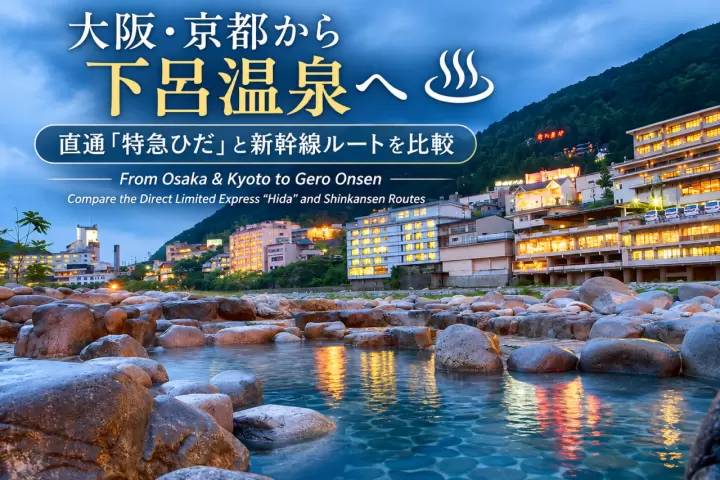
Planning a restorative winter escape to Gero Onsen—one of Japan’s premier hot spring destinations, nestled in the mountainous Gifu Prefecture—presents travelers departing from the Kansai region (Osaka and Kyoto) with a classic logistical dilemma. Should one opt for comfort, simplicity, and cost-efficiency by securing a seat on the rare, direct Limited Express Hida train, or should one prioritize speed and scheduling flexibility via the Tokaido Shinkansen with a transfer at Nagoya Station?
This comprehensive transit analysis investigates the two primary railway pathways from Osaka and Kyoto to Gero Onsen. Based on official operational parameters from JR West and JR Central, this guide evaluates fares, travel times, ticketing mechanics, airport transfers, winter operational hazards, and essential travel advisories for the late 2026 and early 2027 season. Whether you are seeking a seamless, single-seat journey or the maximum scheduling agility afforded by Japan’s high-speed bullet trains, mastering these routes is the key to an effortless Japanese hot spring getaway.
Detailed Chronology & Route Comparison: Direct vs. Shinkansen Transfer
When organizing your departure from the Kansai hub, your choice of transportation fundamentally dictates both your morning schedule and your travel expenditure.
The Direct Route: Limited Express "Hida No. 25"
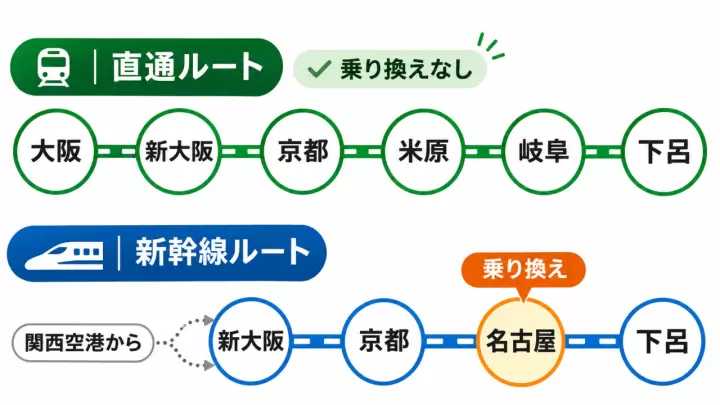
For travelers valuing simplicity—such as families traveling with young children, seniors, or those encumbered by heavy winter luggage—the direct Hida service offers an appealing proposition. Operating just once daily, the Hida No. 25 runs continuously from Osaka and Kyoto into the mountains of Gifu without requiring any mid-journey transfers.
- Pros: Unbeatable convenience (stay seated from departure to arrival); highly competitive pricing; no stressful station navigation.
- Cons: Extremely restrictive timetable (only one morning departure per day); limited capacity; lack of luxury Green Car (first-class) options on the Osaka-originating cars.
The Shinkansen Transfer Route: Speed and Flexibility
If the single morning departure of the Hida No. 25 does not align with your itinerary, or if you wish to maximize your afternoon sightseeing time in Gero, transferring via the Tokaido Shinkansen at Nagoya is the industry standard.
- Pros: Frequent departures throughout the day; significantly faster overall transit times; absolute control over your departure hour.
- Cons: Higher fare structure; necessitates navigating the bustling platforms of Nagoya Station to transfer from high-speed rail to conventional narrow-gauge lines.
Supporting Context & Metrics: Fares, Timetables, and Data Tables
To assist travelers in making an economically and logistically sound decision, the following data sets outline the comparative metrics from Osaka and Kyoto stations, reflecting regular-season rates effective November 2026.
From Osaka Station
| Metric | Direct "Hida No. 25" | Shinkansen + Nagoya Transfer |
|---|---|---|
| Fare (Adult, One-Way, Reserved Standard) | 7,460 yen | 11,160 yen |
| Travel Time (Average) | ~3 hours, 31 minutes | ~2 hours, 44 minutes |
| Transfers Required | None (0) | Two (2: Shin-Osaka & Nagoya) |
| Frequency | 1 train per day | Numerous daily options |
| Primary Advantage | Lower cost; zero-transfer comfort | Higher speed; flexible scheduling |
| Primary Disadvantage | Morning-only departure window | Higher cost; mandatory transfer at Nagoya |
From Kyoto Station
| Metric | Direct "Hida No. 25" | Shinkansen + Nagoya Transfer |
|---|---|---|
| Fare (Adult, One-Way, Reserved Standard) | 6,690 yen | 10,500 yen |
| Travel Time (Average) | ~2 hours, 58 minutes | ~2 hours, 13 minutes |
| Transfers Required | None (0) | One (1: Nagoya Station) |
| Frequency | 1 train per day | Numerous daily options |
| Primary Advantage | Lower cost; direct routing | Faster transit; extensive scheduling |
| Primary Disadvantage | Morning-only departure window | Premium pricing; transfer required |
Note: Fares and limited express surcharges fluctuate depending on seasonal demand tiers (Peak, Regular, and Off-Peak periods). For instance, specific early-December searches indicate minor variances in reserved seat surcharges.
Official Timetable Breakdowns
Understanding the exact departure windows is vital, given the scarcity of direct services.
Outbound Service: Limited Express "Hida No. 25" (Osaka/Kyoto to Gero/Takayama)
- Osaka Station: Departs at 7:58 AM (Weekdays) / 8:02 AM (Saturdays, Sundays, and Holidays)
- Shin-Osaka Station: Departs at 8:04 AM (Weekdays) / 8:07 AM (Weekends/Holidays)
- Kyoto Station: Departs at 8:31 AM (Weekdays) / 8:34 AM (Weekends/Holidays)
- Gifu Station: Hida No. 25 couples with Hida No. 5 originating from Nagoya. Passengers remain in their assigned carriages; no physical train change is required.
- Gero Station: Arrives at 11:29 AM daily.
- (Travelers continuing to the final terminus at Takayama will arrive at 12:14 PM. Ensure you disembark at Gero if your destination is the hot spring town).
Return Service: Limited Express "Hida No. 36" (Gero to Kyoto/Osaka)
- Gero Station: Departs at 4:18 PM (16:18)
- Kyoto Station: Arrives at 7:17 PM (19:17)
- Shin-Osaka Station: Arrives at 7:44 PM (19:44)
- Osaka Station: Arrives at 7:50 PM (19:50)
Sample Shinkansen Transfer Itinerary (Weekday Example)
- Osaka Station: Depart at 7:30 AM via JR Rapid Service to Shin-Osaka.
- Shin-Osaka Station: Depart at 7:45 AM via Tokaido Shinkansen (Nozomi).
- Nagoya Station: Arrive and transfer to the Limited Express Hida No. 3 departing at 8:43 AM.
- Gero Station: Arrive at 10:14 AM.
(Travelers departing from Kyoto can board the corresponding Nozomi service at 8:01 AM to catch the identical Nagoya connection).
Ticketing Protocols, IC Card Restrictions, and Airport Transfers
Navigating Japan’s complex ticketing systems requires careful preparation, particularly when crossing regional corporate rail boundaries.
The IC Card Trap: ICOCA vs. TOICA
A common pitfall for international and domestic travelers alike is attempting to use contactless transit IC cards—such as JR West’s ICOCA—for the entirety of a journey from Osaka or Kyoto to Gero Onsen. Because Osaka and Kyoto operate within the JR West ICOCA network, while Gero Onsen falls under the jurisdiction of JR Central (TOICA network), inter-regional travel across these zones using a single tapped IC card is generally prohibited.
Travelers must purchase complete physical or digital point-to-point tickets covering the basic fare and limited express charges before embarking.
Ticketing Breakdown (Normal Season Example)
- Osaka to Gero (Direct): Basic Fare (4,510 yen) + Limited Express Ticket (2,950 yen) = 7,460 yen
- Kyoto to Gero (Direct): Basic Fare (3,740 yen) + Limited Express Ticket (2,950 yen) = 6,690 yen
- Osaka to Gero (Shinkansen Route): Basic Fare (5,500 yen) + Shinkansen Express Ticket (3,270 yen) + Hida Express Ticket (2,390 yen) = 11,160 yen
- Kyoto to Gero (Shinkansen Route): Basic Fare (4,840 yen) + Shinkansen Express Ticket (3,270 yen) + Hida Express Ticket (2,390 yen) = 10,500 yen
How to Purchase Tickets
- At Station Counters: Visit any Midori no Madoguchi (JR Ticket Office) or multilingual reserved-seat ticket vending machines at major hubs like Osaka, Shin-Osaka, or Kyoto. Clearly state your routing preferences to station agents.
- Online Reservations:
- Domestic/Japanese Users: JR West e5489 portal.
- International Visitors: JR-WEST ONLINE TRAIN RESERVATION system (supports English, Traditional Chinese, Simplified Chinese, and Korean). Reserved tickets can be collected at designated station machines prior to departure.
Crucial Reservation Window: Reserved seats open for booking exactly one month prior to the travel date at 10:00 AM. Because the direct Hida No. 25 operates only once daily, peak travel seasons—such as the New Year holidays, weekends, and periods featuring winter fireworks—sell out weeks in advance.
Furthermore, note that from December 25, 2026, to January 5, 2027, all seats on Limited Express Hida trains will be strictly reserved-seating only, with unreserved cars suspended entirely.
Routing from Kansai International Airport (KIX)
For tourists landing at KIX and heading directly toward Gero Onsen, the standard routing requires a multi-leg journey:
- Kansai Airport ➔ (Limited Express Haruka) ➔ Shin-Osaka Station ➔ (Tokaido Shinkansen) ➔ Nagoya Station ➔ (Limited Express Hida) ➔ Gero Station.
- Average Duration: Approximately 3 hours and 44 minutes.
- Estimated Cost: ~13,990 yen (Adult, one-way, reserved standard class).
Important Timing Note: Because the direct Hida No. 25 departs Osaka in the early morning (~7:58 AM), arriving passengers cannot catch it on the same day they land. Travelers wishing to use the direct train must overnight in Osaka or Kyoto. Additionally, while popular rail products like the Takayama-Hokuriku Area Pass cover extensive regional tracks, they do not cover the direct Osaka-to-Gifu-to-Gero routing or the Kyoto-to-Shin-Osaka Shinkansen segment, making point-to-point ticketing more reliable for this specific corridor.
Future Outlook: Winter Operations, Night Events, and Advisory
Winter Weather Vulnerabilities
Operating through the rugged mountain passes of Gifu Prefecture during the peak winter months exposes the Hida line to potential meteorological disruptions. Heavy snowfall can trigger speed restrictions, delays, or outright cancellations. Because the direct Hida service runs only once per direction daily, a cancellation leaves passengers without a direct alternative. In such scenarios, travelers must pivot to the highly resilient Tokaido Shinkansen corridor via Nagoya, where high-speed trunk lines maintain operations under severe weather conditions far more effectively. Always verify real-time service updates via official JR West and JR Central portals before departure.
Synchronizing Transit with Gero’s Nighttime Festivities
One of the primary strategic errors travelers make is attempting a day-trip or booking the direct return train Hida No. 36 (departing Gero at 4:18 PM) while hoping to experience Gero’s celebrated winter nightlife events.
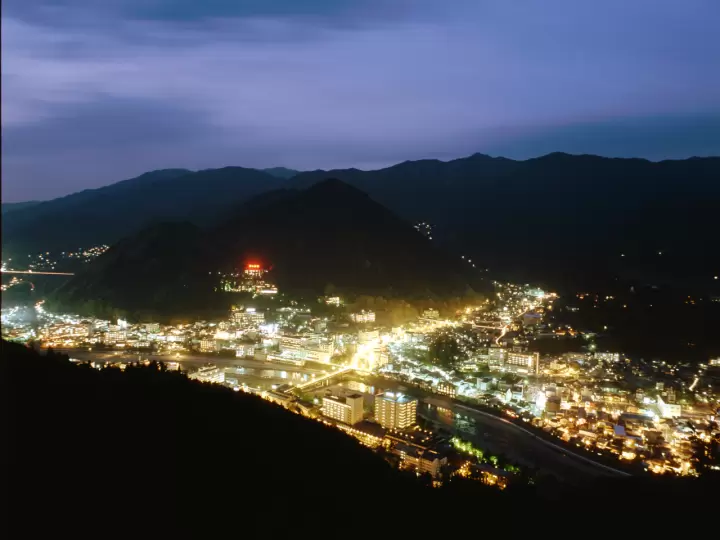
To fully appreciate the region’s winter attractions, overnight lodging in a traditional Gero Onsen ryokan is strongly advised. Key winter calendar highlights include:
- Gero Onsen Winter Fireworks: Held on Saturdays throughout December (specifically December 5, 12, and 19, 2026, starting at 8:00 PM), with a special Christmas Eve performance on December 24.
- Gero-Onsen Gassho-mura Winter Illumination: Scheduled for January 18–22, 2027, from 6:00 PM to 9:00 PM, supported by complimentary shuttle buses operating from the hot spring town center.
- Gassho Village Light-up & Traditional Performances: Running from February 1–12, 2027, featuring traditional Geiko and Maiko dance presentations alongside dynamic Ryujin Taiko drumming exhibitions.
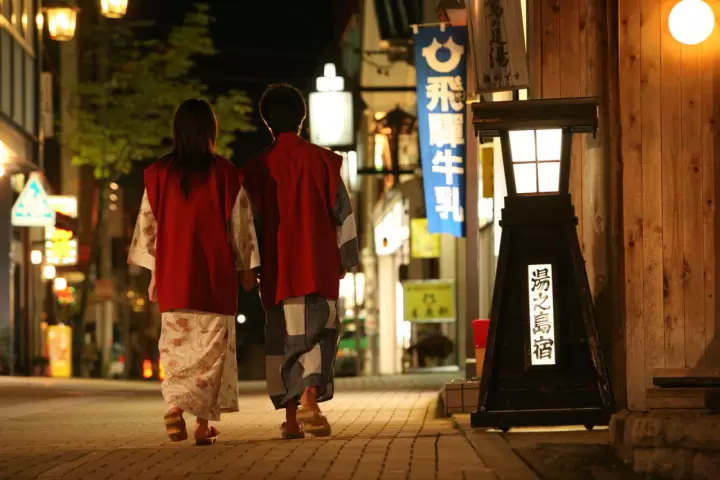
Because all of these marquee events occur well after dark, catching the late-afternoon return train is impossible. Securing a ryokan reservation allows visitors to stroll the atmospheric, steam-wreathed streets in a traditional yukata without the pressure of a ticking transit clock.
Frequently Asked Questions (FAQ)
- Q: Is it possible to travel from Osaka to Gero Onsen without changing trains?
A: Yes. The Limited Express Hida No. 25 runs directly from Osaka Station to Gero Station once per day, departing Osaka at 7:58 AM on weekdays and 8:02 AM on weekends and holidays. - Q: How long does the journey take?
A: The direct Hida train takes approximately 3 hours and 30 minutes. The Shinkansen-via-Nagoya route reduces transit time to roughly 2 hours and 45 minutes, subject to connection efficiency. - Q: Can I board the direct train at Kyoto Station?
A: Yes. Hida No. 25 stops at Kyoto Station at 8:31 AM (weekdays) / 8:34 AM (weekends/holidays). - Q: What is the most economical rail option?
A: Among limited express options, the direct Hida No. 25 is significantly cheaper than the Shinkansen route, priced at 7,460 yen for an ordinary reserved seat from Osaka during the regular season. - Q: Are return trains equally direct?
A: The direct return service, Hida No. 36, departs Gero at 4:18 PM, arriving in Kyoto at 7:17 PM and Osaka at 7:50 PM. All other return times require a transfer at Nagoya.
Final Editorial Advisory: Fares, timetables, and operational policies are subject to periodic revision by railway operators. Travelers are strongly encouraged to consult the official JR West and JR Central web portals to confirm real-time schedules and secure reservations prior to finalizing travel plans.








Belum ada komentar. Jadilah yang pertama berkomentar!