

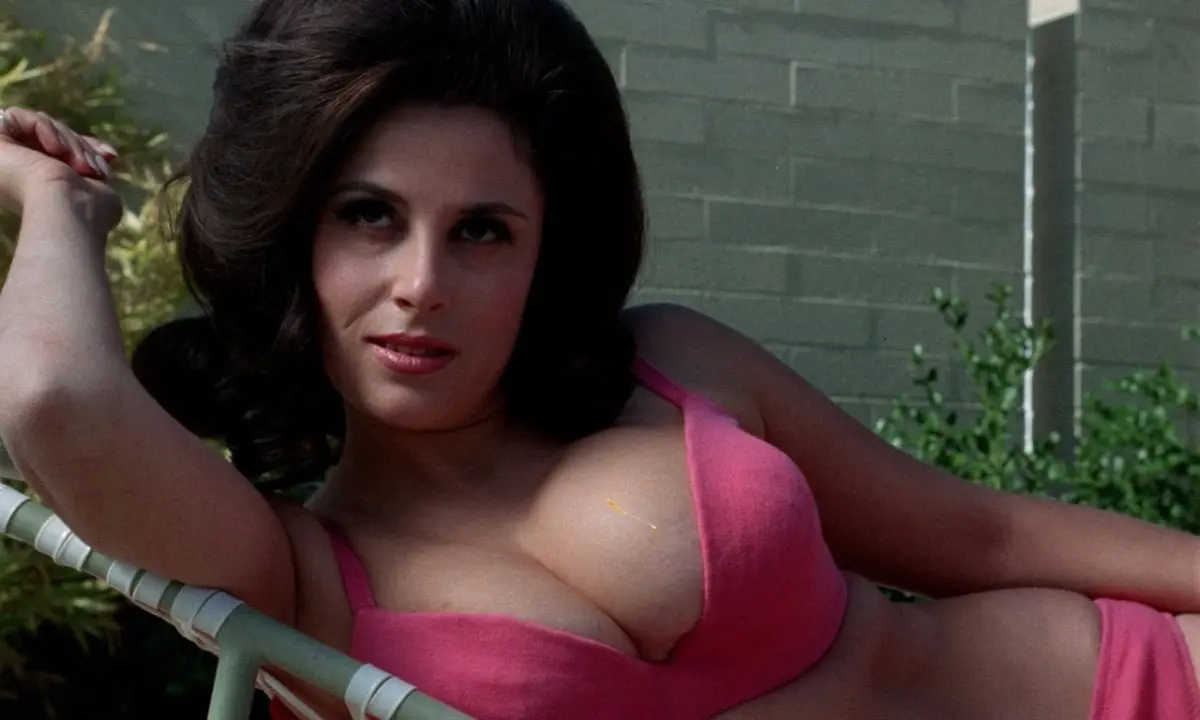
Jerzy Skolimowski’s 1978 psychological horror-thriller The Shout stands as one of the most uniquely disorienting and enigmatic cinematic achievements of the 1970s. Released during a golden era of cerebral, atmospheric mystery films—placing it alongside spiritual contemporaries like Nicolas Roeg’s Don’t Look Now (1973), Peter Weir’s Picnic at Hanging Rock (1975), and The Last Wave (1977)—The Shout has long deserved a definitive home preservation. Now joining those exact brethren on Blu-ray via a pristine 2K digital restoration from The Criterion Collection, Skolimowski’s masterpiece is primed for reappraisal.
Adapted from a short story by Robert Graves, The Shout relies on an unstable narrative framework, blending avant-garde sound design, dreamlike non-linear editing, and profound cultural anxieties. At its core, the film follows Charles Crossley (played with mesmerizing, feral intensity by Alan Bates), a psychiatric facility resident who claims to have learned a lethal, mythical sonic weapon—a literal "shout"—from an indigenous Australian shaman during an 18-year exile. Crossley weaves this terrifying tale to a visitor during an eccentric English cricket match, trapping the audience inside a labyrinth of unreliable narration, domestic psychological warfare, and creeping supernatural dread.
Detailed Chronology
The Unsettling Genesis: Breaking Linear Reality
The Shout generates oddness, tension, and confusion from its very opening frames. The film begins with a high-angle shot of a dirt road vertically dividing a lush green pastoral scene while silvery rain falls. Upon closer inspection, this rain is revealed to be a filmmaker’s sham—a veil directly in front of the camera rather than precipitation hitting the trees or cars.
An off-white Volkswagen Beetle races down the center of the screen as the camera pulls back to reveal a sprawling psychiatric asylum. A nurse in uniform rushes out of the car and hurries into the dark wooden building. She rushes down a corridor toward the camera, directed to the dining room. She enters amid a serene yet mysterious superimposition—a stylistic choice Skolimowski uses throughout the film instead of hard cuts to underline the slippery nature of dreams and memory.
Like a dark fairy tale, the nurse, later identified as Rachel Fielding (Susannah York), pads into a communal dining room where a shrouded figure lies on a table. She pulls back the foot of the shroud to reveal a face, then moves on to a second and a third shroud. As the opening credits roll, the film transitions to the fuzzy image of a tiny, distant figure shambling in zig-zag patterns across a blue sky and purple landscape. A low-key, jingling score composed by Genesis members Anthony Banks and Michael Rutherford blends with howling winds, which the camera eventually reveals to be a desolate, sun-drenched desert.
The Cricket Match and the Unreliable Narrator
The desert wanderer—appearing to be an Aboriginal Australian wearing a British admiral’s tailcoat with a red collar band—approaches the camera aggressively, holding a pointed instrument. Accompanied by a whirring electronic drone, the film cuts to Bates riding a motorcycle with an empty sidecar. He passes the VW Beetle driven by Rachel, alongside her husband Anthony (John Hurt) in cricket whites.
The scene shifts to a quintessential English cricket match at the asylum. Among the arrivals is Robert (Tim Curry), a character who implicitly represents original author Robert Graves. According to archival bonus interviews with Skolimowski and producer Jeremy Thomas, the Polish émigré director deliberately brought an outsider’s perspective to the baffling rituals of the English cricket match, folding them into an intentionally bewildering, non-linear narrative structure.
We learn that Charles Crossley is an asylum resident who has been tampering with the head doctor’s bicycle. The doctor (Robert Stephens) confides to Robert that he will be scoring the match alongside Crossley, a man who claims to have traveled the world and whose soul is allegedly shattered into four distinct parts. Inside a portable shed, Crossley reveals he possesses a traditional "killing bone." He proposes that Robert handle the scoring while Crossley spins a yarn about local avant-garde composer Anthony Fielding and his wife, Rachel. Crossley admits upfront that he constantly alters details to suit his mood, establishing himself as an untruthful, unreliable narrator whose tale forms the spine of the film.
Domestic Intrusion and the Lethal Sound
Crossley’s story picks up where the desert prologue left off. The subjective camera finds the Fieldings napping on a sandy hill. Both wake abruptly, looking backward to find nothing except Rachel’s sandals—one of which is suddenly missing a buckle. Oddly, both Fieldings share the identical dream of the Aboriginal wanderer, though they quickly brush it off as Rachel fixates on her lost shoe.
Anthony works as an avant-garde composer, recording piercing, abrasive sounds in his electronic music laboratory using equipment provided by electronic musician Rupert Hine. When Anthony visits the local church to visit the shoemaker’s wife, a hand in a heavy black coat—reminiscent of the desert wanderer’s tailcoat—lets the air out of Anthony’s bicycle tire. Using this delay, Crossley introduces himself and invites himself to dinner at the Fieldings’ isolated cottage.
Rachel is instantly unnerved by Crossley, especially when he spins wild tales of spending 18 years in Australia without seeing a white man, taking an Aboriginal wife, and practicing infanticide because it was culturally permissible. Most threateningly, he claims to have spent those 18 years mastering a lethal shout taught to him by a shaman.
As the narrative progresses, it becomes impossible to separate truth from fabrication. Has Crossley actually traveled, or is he merely a disturbed fabricator spinning tales out of madness? Regardless, his psychological domination of Rachel and his targeted campaign against Anthony push the domestic drama toward a terrifying, sonic climax.
Supporting Context & Metrics
Production Background and Cultural Tropes
The Shout was produced during a remarkably fertile period for British cinema, bridging avant-garde art-house sensibilities with visceral psychological horror. Released in 1978, the film secured the prestigious Grand Prize of the Jury at the Cannes Film Festival, validating the high-risk creative bets taken by producer Jeremy Thomas and director Jerzy Skolimowski.
The film heavily leans into 1970s cinematic tropes regarding indigenous mysticism, sharing DNA with Peter Weir’s The Last Wave. Both films utilize Aboriginal Australian mysticism as a plot device representing alternative wisdoms beyond mundane Western comprehension. While modern critics debate whether this trope crosses into exoticism, The Shout deliberately complicates the matter by grounding the magic within the fractured, unreliable mind of an institutionalized Englishman, leaving viewers to question if the supernatural elements occur anywhere outside Crossley’s imagination.
Technical Metrics & Restoration Data
- Original Release Date: May 1978 (Cannes Film Festival) / September 1978 (UK)
- Runtime: 86 minutes
- Cinematography: Mike Molloy (utilizing frequent stylistic ties to Nicolas Roeg’s visual vocabulary)
- Editing: Barrie Vince
- Sound Design & Score: Anthony Banks and Michael Rutherford (Genesis), Rupert Hine (Electronic Music), Tony Jackson (Sound Mix)
- Criterion Blu-ray Specifications: 2K digital restoration, uncompressed monaural soundtrack, new interviews with director Jerzy Skolimowski and producer Jeremy Thomas, alongside theatrical trailer archiving.
Official Statements
Reflecting on the unique creative friction that shaped the film, director Jerzy Skolimowski noted in archival Criterion interviews the distinct challenges of capturing British institutional and suburban life through an outsider’s lens:
"Coming to England as a Polish émigré gave me a very specific distance from British rituals—whether it was the impenetrable etiquette of a cricket match or the quiet isolation of coastal cottages. I wanted The Shout to mirror that disorientation. Putting the end at the beginning was an editorial decision that made the film entirely circular, jagged, and zig-zaggy, matching the avant-garde electronic sounds we were building into the acoustic landscape."
Producer Jeremy Thomas, reflecting on the project as the springboard for a legendary career that would later yield Academy Award-winning productions like Bernardo Bertolucci’s The Last Emperor (1987), emphasized the collaborative magic of the production:
"Working with Jerzy on The Shout set the tone for my entire producing philosophy. We weren’t interested in playing by standard commercial rules. We wanted to make something that walked the tightrope between reality and hallucination, supported by extraordinary performances from Alan Bates, Susannah York, and John Hurt. Winning at Cannes proved that audiences were hungry for uncompromising, strange visions."
Future Outlook
The release of The Shout on Blu-ray via The Criterion Collection ensures that this cinematic oddity will find a fresh generation of cinephiles, film historians, and horror scholars. As contemporary horror increasingly values elevated, atmospheric, and psychologically complex storytelling, Skolimowski’s 1978 masterclass serves as a crucial historical touchstone.
Future cinematic scholarship will undoubtedly continue to decode the film’s labyrinthine structure, debating whether Crossley’s terrifying acoustic weapon is a genuine supernatural artifact or merely the manifestation of a shattered psyche. With its pristine 2K restoration now available for home viewing, The Shout finally occupies its rightful place alongside the defining psychological thrillers of the twentieth century, cementing Jerzy Skolimowski’s legacy as one of European cinema’s most daring and uncompromising auteurs.





Belum ada komentar. Jadilah yang pertama berkomentar!