


Executive Overview
The intersection of artificial intelligence and video game development has officially entered a new, highly pragmatic phase for major studios. Pearl Abyss, the South Korean powerhouse developer renowned for its technical prowess and visually arresting open-world titles like Black Desert Online, has doubled down on its integration of generative and analytical artificial intelligence. In its recent Q3 earnings report, the studio outlined an aggressive strategy to expand AI deployment across its entire development pipeline.
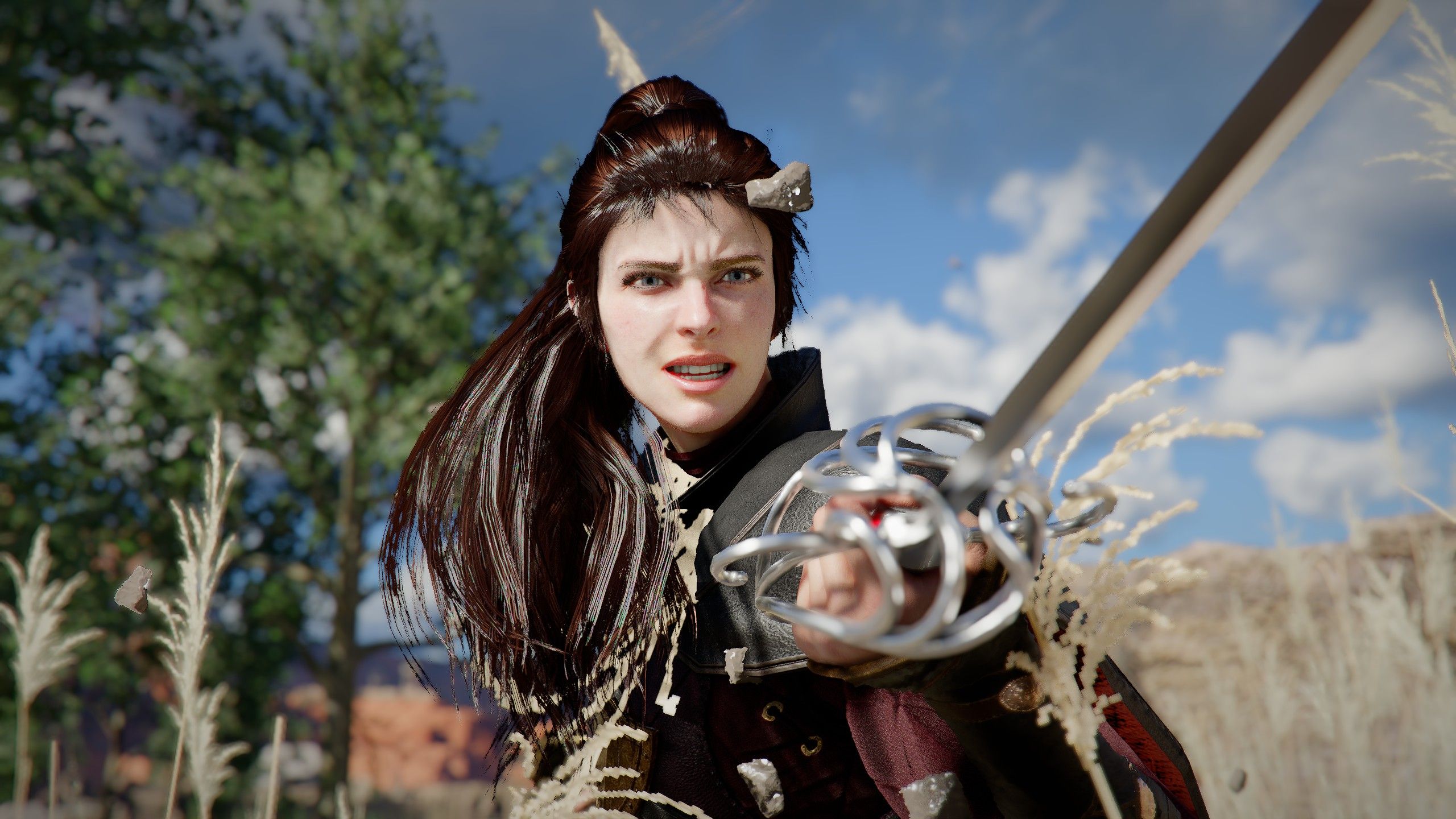
This strategic pivot arrives less than a year after Pearl Abyss found itself at the center of an industry-wide debate regarding transparency, asset creation, and the line between placeholder material and final product. Earlier this year, sharp-eyed players discovered AI-generated 2D visual assets within promotional and early-game materials for the studio’s highly anticipated upcoming action-RPG, Crimson Desert. While Pearl Abyss issued a swift apology—not for utilizing the technology internally, but for letting unfinished, placeholder assets slip into public view—the incident ignited a broader conversation about how modern studios handle generative tools.
Rather than pulling back from the controversy, Pearl Abyss is leaning into it. The company’s leadership maintains that AI is not a replacement for human creativity, but rather an indispensable accelerator for everything from concept validation to automated testing. As the studio prepares for the eventual rollout of Crimson Desert and sets its sights on a 2028 release window for the quirky creature-collector DokeV, its operational framework offers a fascinating case study in how major triple-A developers are transforming their pipelines to meet the escalating costs and demands of modern game creation.
Detailed Chronology: From Accidental Exposure to Strategic Expansion
To understand Pearl Abyss’s current embrace of artificial intelligence, one must examine the timeline of events that brought the studio’s internal workflows into the public eye.
The friction began earlier this year when players dissecting pre-release media and early builds of Crimson Desert identified distinct artifacts and stylistic anomalies characteristic of early-generation AI image tools. These assets—primarily background 2D visual props and atmospheric elements—immediately triggered backlash across social media and gaming forums. In an era where traditional artists face intense economic pressures and widespread concerns over copyright and job displacement, the unannounced presence of AI art in a major commercial release was met with immediate hostility.
Pearl Abyss responded promptly, clarifying that the generative art had been deployed solely during the early prototyping and brainstorming phases. According to the studio, these 2D props were never intended to make it into the final build; they were placeholders meant to be overwritten by human artists once the creative direction and technical frameworks were fully established. However, the studio openly admitted a critical misstep: it had failed to clearly disclose its internal use of AI tools to the public, leading to confusion and broken trust.
Rather than abandoning the technology following the PR misstep, Pearl Abyss used the experience to refine both its asset management protocols and its public messaging. The studio promised greater transparency moving forward, a pledge seemingly honored in its Q3 financial communications. Instead of hiding the deployment of machine learning, Pearl Abyss’s recent shareholder communications boldly detail how artificial intelligence has become a cornerstone of their operational efficiency, signaling a permanent shift in how their games are conceptualized, tested, and built.
Supporting Context & Metrics: How AI is Transforming the Pipeline
The modern triple-A game development landscape is characterized by spiraling budgets, exponentially increasing asset complexity, and development cycles that routinely stretch past half a decade. For studios striving to push graphical fidelity to the absolute edge—a hallmark of Pearl Abyss’s proprietary engine technology—traditional development bottlenecks can severely delay production.
According to Pearl Abyss’s Q3 communications, AI has successfully transitioned from a novelty asset generator into an integral structural tool. The studio highlighted several critical areas where machine learning has fundamentally altered its production pipeline:
1. Rapid Design Concept Validation
Historically, game systems and mechanical concepts required substantial manual implementation before designers could test whether they were fun, balanced, or technically viable. Pearl Abyss has bypassed much of this friction by utilizing AI to rapidly simulate and validate diverse design concepts prior to actual implementation. This allows directors and lead designers to weed out dead-end ideas in days rather than months, resulting in a significantly more efficient allocation of development resources and an accelerated production speed.
2. Automation of Repetitive Tasks
Every video game studio contends with a mountain of tedious, repetitive labor—ranging from basic asset organization and collision mesh generation to low-level scripting tasks. Pearl Abyss is actively scaling AI automation across these repetitive workflows to free up human developers to focus on higher-level creative execution, complex narrative design, and nuanced artistic direction.
3. Content Creation Support and Test Optimization
Beyond basic coding support, AI is being deployed to assist in localized content creation and rigorous quality assurance testing. Test optimization, in particular, has seen massive gains; machine learning models can run thousands of automated playtest scenarios overnight, identifying pathing bugs, memory leaks, and balance discrepancies that would take human QA teams weeks to isolate manually.
Official Statements: Striking a Balance Between Efficiency and Human Artistry
The leadership at Pearl Abyss is acutely aware of the reputational risks associated with the term "artificial intelligence" in gaming communities. Consequently, their corporate disclosures are carefully worded to reassure both investors and players that human developers remain at the absolute helm of the creative process.
In its Q3 earnings letter, the studio explicitly addressed these boundaries:
"While we previously validated game systems only after implementing them manually, we now utilize AI to rapidly validate diverse design concepts prior to actual implementation. This enables a more efficient allocation of development resources and enhances overall production speed."
However, they were quick to contextualize the scope of these tools to prevent misunderstandings reminiscent of the Crimson Desert asset controversy:
"AI serves strictly as a tool to support concept validation and pipeline productivity. Gameplay and content development remain fully driven by our development team."
Expounding upon this philosophy in the broader scope of company strategy, Pearl Abyss reinforced its long-term vision:
"We are integrating AI technologies to enhance development productivity and overall quality. AI is being utilized across various stages of development—including the automation of repetitive tasks, content creation support, and test optimization—and we are expanding its implementation throughout our entire development pipeline.
We view AI not as a substitute for human developers, but as a tool to elevate development efficiency and quality. We will continue to expand our application of AI to deliver higher-fidelity games to the market more expeditiously."
These statements represent a calculated effort to reframe AI not as an existential threat to creators, but as a mandatory utility required to remain competitive in a hyper-accelerated global market.
Future Outlook: Crimson Desert, DokeV, and the Horizon
The ultimate proof of Pearl Abyss’s new AI-integrated pipeline will lie in the execution of its upcoming software slate.
Crimson Desert, originally conceived as a prequel to Black Desert Online before evolving into a massive, standalone single-player action-adventure game, remains the studio’s immediate flagship project. The game has continually dazzled audiences with its hyper-realistic visuals, fast-paced combat system, and sprawling open world. How the final product addresses the visual integrity and artistic soul of the game—while leveraging AI behind the scenes for testing, optimization, and structural prototyping—will be closely watched by industry analysts and gamers alike.
Further down the horizon is DokeV, the vibrant, open-world action-adventure game featuring creature-collecting mechanics that first captured the internet’s imagination with its high-energy reveal trailer back in 2021. Playfully dubbed by many in the community as a "weird GTA for babies" due to its surreal blend of urban exploration and colorful creature companions, DokeV has experienced a prolonged development cycle. In its recent updates, Pearl Abyss confirmed that it is currently aiming for a release window in the second half of 2028.
Whether the implementation of AI-driven pipelines will successfully shepherd DokeV and Crimson Desert across the finish line without sacrificing the artistic craftsmanship players expect remains to be seen. What is certain, however, is that Pearl Abyss has crossed the Rubicon. Artificial intelligence is no longer an experimental side project within the studio; it is the engine driving the future of its game development ecosystem.








Belum ada komentar. Jadilah yang pertama berkomentar!