


By Jody MacGregor
Executive Overview
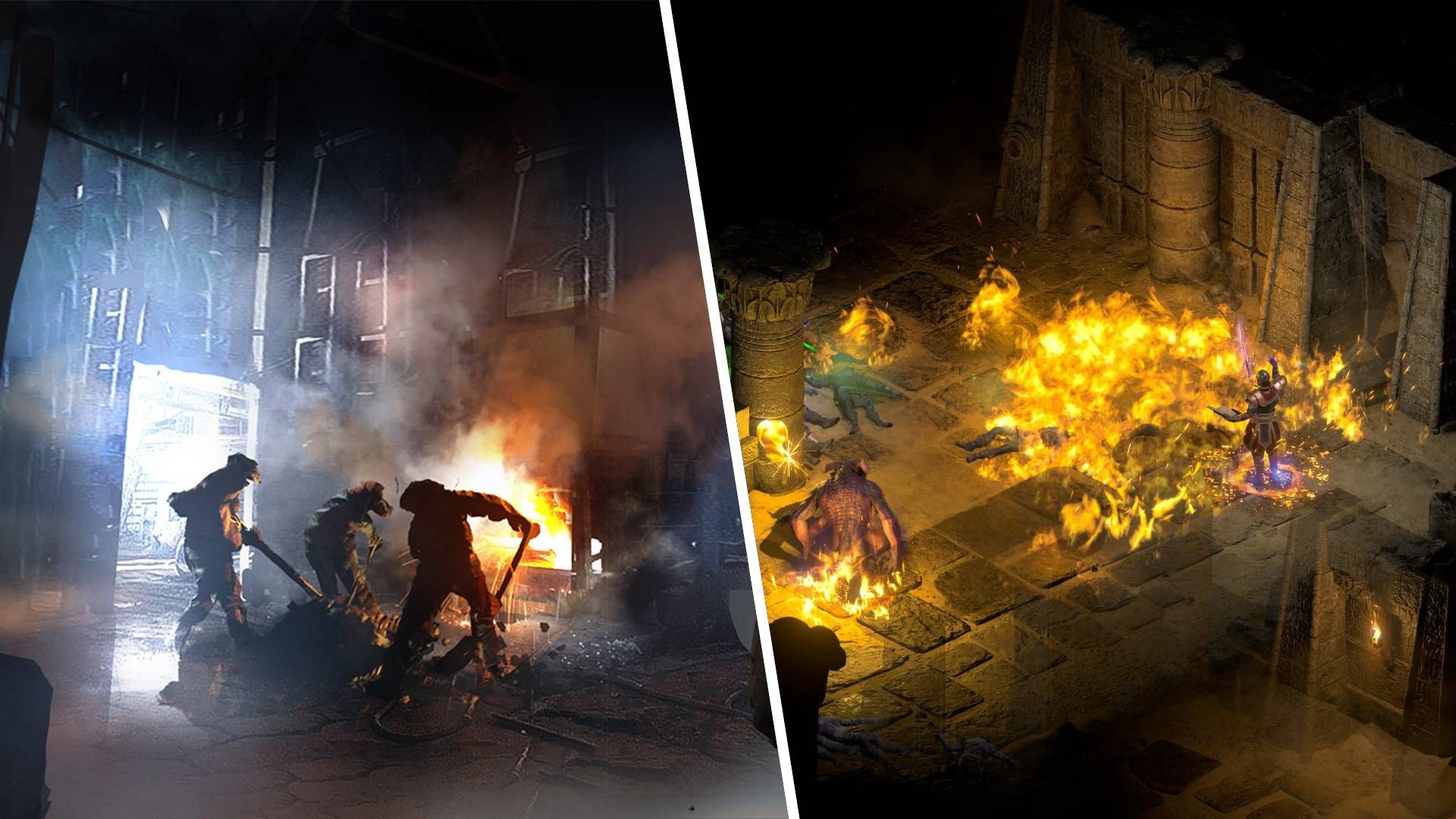
Every time a gamer unleashes a devastating meteor storm in Diablo 2, sets a cluster of goblins ablaze with a well-placed spell in Baldur’s Gate 3, or inadvertently incinerates their own party in a classic CRPG, they are participating in a historical feedback loop spanning over two and a half centuries. Modern video game mechanics are rarely born in a vacuum; they are the downstream effects of cultural, technological, and literary shifts.
This installment of Causality Chain explores the unexpected, winding lineage connecting the smoking blast furnaces of 18th-century Britain to the pixelated and polygonal area-of-effect (AoE) spells that dominate contemporary role-playing games. By charting this historical trajectory, we reveal how the anxieties of the Industrial Revolution birthed J.R.R. Tolkien’s conception of evil magic, which subsequently inspired tabletop wargaming pioneers, ultimately standardizing the mechanics of mass magical destruction in digital media.
Detailed Chronology: From the Forge to the Fantasy Screen
The path from the birth of modern industry to the digital rendering of magical explosions is a sprawling, multi-stage Rube Goldberg machine of human invention.
[1760-1840: Industrial Revolution]
       │
       ▼
[1896: Tolkien's Youth in the Midlands]
       │
       ▼
[1954: Publication of The Lord of the Rings]
       │
       ▼
[1970: Leonard Patt's "Rules for Middle Earth" (First AoE Spell)]
       │
       ▼
[1974-1975: Dungeons & Dragons & Early Mainframe Digital RPGs]
       │
       ▼
[1980s-Present: Golden Box Era to Modern 3D RPGs (*Baldur's Gate 3*, *Diablo*)]
1. The Rise of Industry (1760–1840)
The foundational catalyst of this causality chain lies in the mid-18th-century Industrial Revolution. Driven by technological breakthroughs—such as James Watt’s refined steam engine and Abraham Darby’s pioneering use of coke instead of charcoal in blast furnaces—daily human life underwent a seismic transformation. Artisanal, small-scale craftsmanship was rapidly eclipsed by machine tools, mechanized mass production, and the sprawling factory system.
Societies shifted from agrarian rhythms to urban, industrialized models. Philosophically and culturally, this era sparked deep anxieties regarding humanity’s dominion over nature, introducing machinery that belched black smoke, scarred landscapes, and concentrated destructive power into unprecedented centralized units.
2. The Black Country and the Birth of Mordor (1896)
In 1896, the family of a young J.R.R. Tolkien relocated from industrial Birmingham to rural Worcestershire. The four-year-old Tolkien developed a profound, formative affection for the English countryside. The rolling hills, agrarian quiet, and pastoral quirks—such as his aunt’s farm, "Bag End"—left an indelible mark on his imagination.
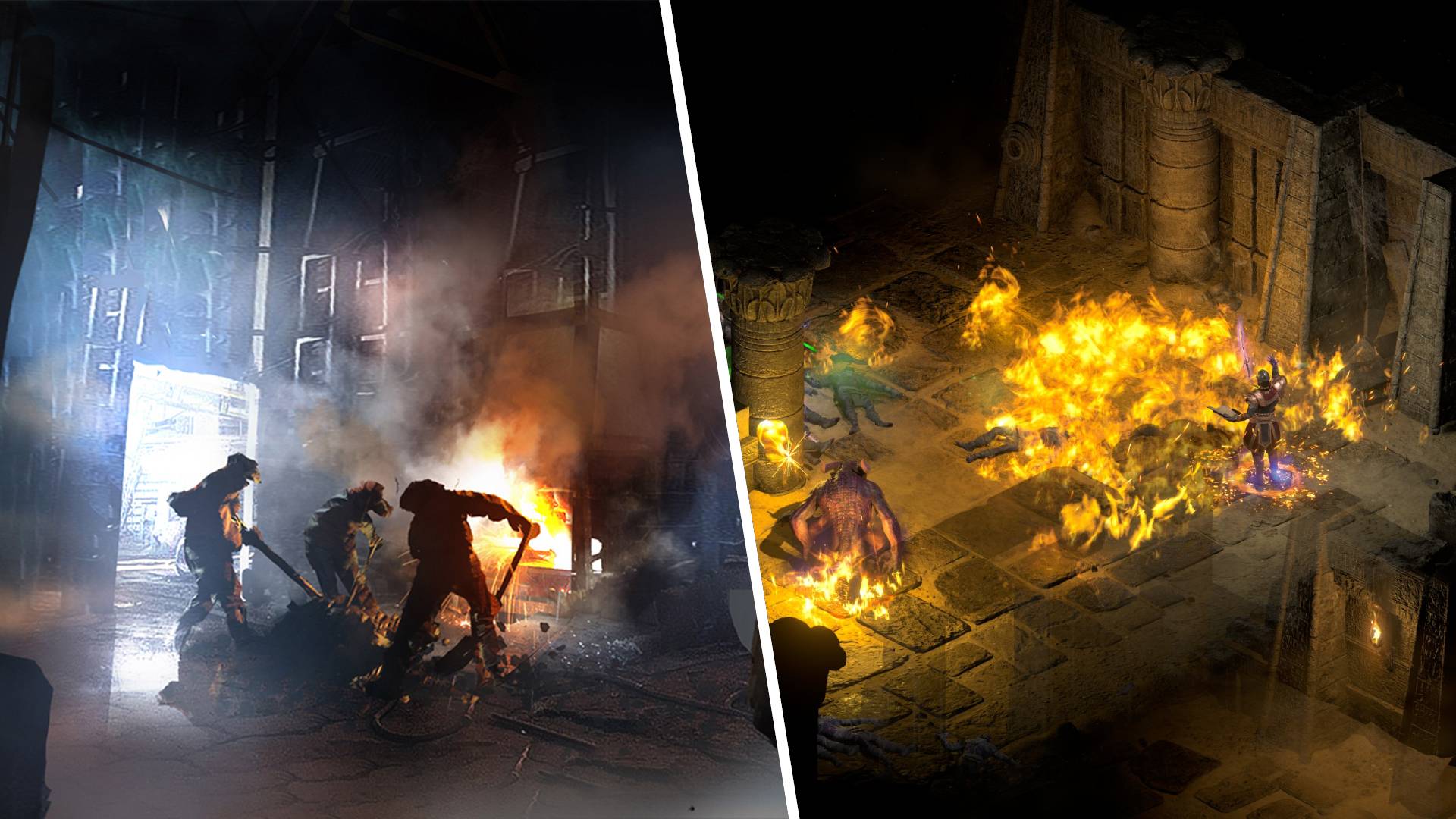
However, this idyllic landscape was short-lived. As Tolkien later lamented, the relentless march of industrialization rapidly consumed his childhood sanctuaries. The soot-darkened West Midlands, colloquially known as "The Black Country," became a real-world crucible for his fiction.
In The Lord of the Rings (published in 1954), Tolkien externalized this ecological trauma through the forces of antagonist factions. Characters like Saruman embody the industrial ethos, carving out smoke-billowing factories around the tower of Orthanc and later industrializing the Shire itself. Saruman’s deployment of destructive, subterranean explosive fire to breach the walls at the Battle of the Hornburg directly mirrors the industrial innovations of the 19th century.

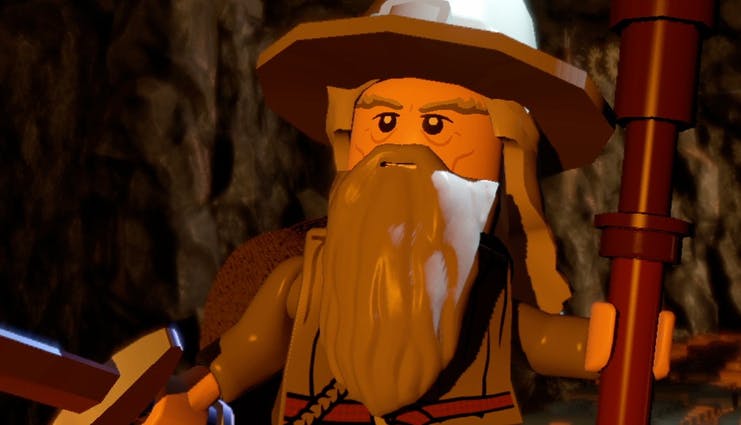
Tolkien contrasted this mechanical, industrialized devilry with the restrained, subtle magic of Gandalf. While Gandalf is a "wielder of the flame of Anor," he predominantly uses magic for subtle illumination or festive fireworks, reserving blazing destruction for desperate crises—and almost always facing narrative regret when he does so.
3. The Tabletop Pivot: Rules for Middle Earth (1970)
Despite Tolkien’s literary caution against industrial-scale fire magic, wargamers interpreted his fantasy universe through a tactical lens. In 1970, Leonard Patt published Rules for Middle Earth within the New England Wargamers Association zine, The Courier.
Patt sought to model Gandalf’s rare, dramatic magical outbursts on the tabletop by treating magic like heavy artillery. This text introduced the first explicit area-of-effect (AoE) rule for a spell: the "fire ball." As Patt wrote:
"Wizards in possession of magic powers can cast a fire ball once every other turn. The distance is 24" and the hit is determined by using a 6" grid with a 2½" burst circle. Any figures under the burst are killed except HEROES and ANTI-HEROES, who are saved by a throw of a 5 or 6."
This pivotal rule not only established the spatial mechanics of magical blasts but also introduced the concept of the "saving throw" to mitigate explosive damage.
4. Codifying Chaos in Dungeons & Dragons (1974)
The wargaming mechanics developed by Patt were quickly inherited by Gary Gygax and Dave Arneson. In 1974, TSR published Dungeons & Dragons, synthesizing earlier fantasy supplements derived from Chainmail.
The original D&D rulebooks cemented the fireball as an iconic wizard utility. Crucially, the spell’s parameters specified a burst radius that would "conform to the shape of the space." When cast improperly within confined subterranean corridors, the fire would blow back toward the caster, introducing tactical risk and spelling doom for countless early-edition magic users.
5. Digital Translation and the Golden Age of CRPGs (1975–1980s)
As computing power evolved, developers sought to translate tabletop rulesets to mainframe and personal computers.
- 1975: University student Daniel Lawrence developed DND (later Telengard), one of the earliest computer RPGs on a PDP-10 mainframe. While it featured a fireball spell, limitations of early combat restricted interactions to one-on-one engagements, temporarily omitting true spatial AoE.
- 1980s: Studios experimented with simulating spatial damage. Wizardry targeted specific enemy groups, while Ultima III and IV introduced multi-target and screen-clearing tremor spells.
- 1988: Strategic Simulations Inc. (SSI) released Pool of Radiance, utilizing official Advanced Dungeons & Dragons 1st Edition rules. This title featured a true spatial fireball spell capable of wiping out enemy battalions—or carelessly roasting the player’s own adventuring party, bringing Tolkien’s cautionary themes full circle into the digital age.
Supporting Context & Metrics
To understand the scale of this design lineage, it is helpful to examine how spatial mechanics evolved across generations of game development:

| Era / Year | Medium | Primary Mechanics for "Fireball" / AoE | Tactical Implication |
|---|---|---|---|
| 1970 | Tabletop Wargame | 2½" burst circle on a 6" grid; fixed-dice saving throw. | Treated magic as artillery strike; eliminated infantry units uniformly. |
| 1974 | Tabletop RPG (D&D) | 20-foot radius; conforms to room geometry with blowback risks. | Demanded spatial awareness and positioning to avoid friendly fire. |
| 1988 | PC CRPG (Pool of Radiance) | Grid-based coordinate targeting using AD&D rulesets. | Digital translation of party risk; miscasts punished players immediately. |
| Modern | 3D Action/Strategy RPGs (Baldur’s Gate 3, Diablo) | Complex physics engines, environmental surface ignition (grease, fire, steam). | Dynamic battlefield manipulation where area-of-effect spells interact with terrain. |
Industry Perspectives and Developer Insights
The translation of tabletop mathematics into digital code required creative engineering from early pioneers who recognized the psychological appeal of destructive magic.
"When adapting tabletop rules to the screen in the 1980s, our primary challenge wasn’t just calculating damage values—it was making spatial destruction feel consequential," noted early CRPG system designers in retrospective industry roundtables. "Players didn’t just want to deal damage; they wanted to manipulate the battlefield. The fireball became the ultimate expression of player agency because it bridged tactical planning with immediate, visceral feedback."
Game narrative analysts frequently point out that the enduring popularity of area-of-effect pyromancy speaks to a deeper player fantasy: overcoming overwhelming numerical odds through a single, decisive stroke of power. Whether confronting hundreds of orcs in Middle-earth or swarms of demons in Diablo, the psychological satisfaction of the AoE spell remains anchored in its historical framing as an engine of mass disruption.
Future Outlook
As video game technology shifts toward advanced procedural generation, real-time ray tracing, and complex physics simulations, the mechanics of area-of-effect spells continue to evolve. Modern engines no longer treat a fireball as a simple radius check against a grid; instead, spells interact dynamically with environmental variables—igniting combustible gasses, melting ice, and altering terrain geometry in real time.
Yet, despite these graphical and systemic leaps, the core design philosophy remains anchored to the foundations laid in the 1970s and 1950s. Every time a modern developer programs a fireball to bounce off a cavern wall or punish a player for poor spatial calculation, they are drawing from a well dug by tabletop wargamers reacting to Tolkien’s grief over the industrialization of the English countryside. The causality chain remains unbroken, ensuring that the echoes of 18th-century blast furnaces will continue to light up computer screens for decades to come.








Belum ada komentar. Jadilah yang pertama berkomentar!