

Executive Overview
User interface design in the digital age walks a fine line between gentle engagement and aggressive monetization. While minor design tweaks—such as subtly glowing subscription prompts or politely placed upgrade banners—can easily be tuned out by the average user, some product changes are so jarring and intrusive that they evoke an immediate, visceral urge to abandon the platform entirely.
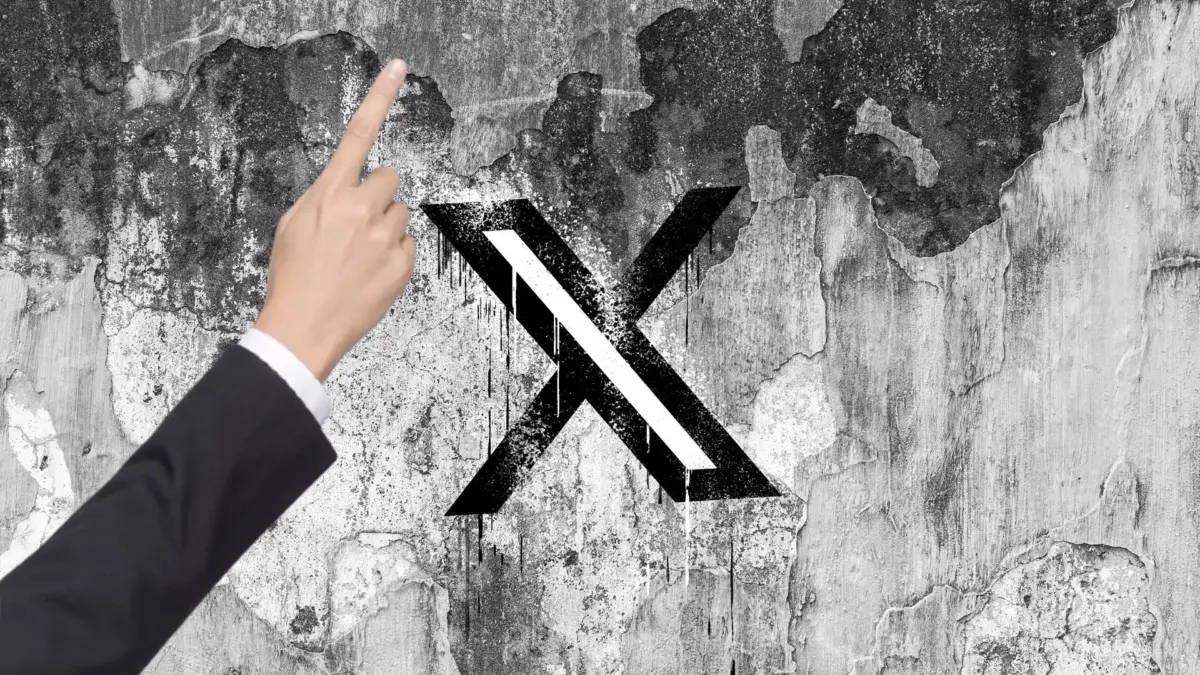
X (formerly Twitter) crossed firmly into the latter category in late October 2026. Over a 24-hour period, a growing wave of users reported encountering a bizarre and startling UI glitch—or deliberate feature—while composing posts: a mysterious, out-of-nowhere graphic of a hand violently pointing directly at the platform’s "promote" button.
Arriving just days before Halloween, the jump-scare tactic instantly polarized the platform. While some digital marketers and growth experts acknowledged its crude effectiveness at drawing eyeballs to paid advertising features, everyday users lambined the intervention as an intrusive digital prank. The timing also coincided with a major leadership handoff in X’s product department, raising serious questions about the platform’s trajectory under new management. This deep dive examines the anatomy of X’s latest growth stunt, user and industry reactions, the leadership transition from Nikita Bier to Peter Sellis, and what this aggressive monetization strategy signals for the future of microblogging.
Detailed Chronology: The 24-Hour "Jump Scare" Outcry
The phenomenon began quietly before spreading like wildfire across X’s feeds. On October 26, 2026, content creators, journalists, and casual users alike began noticing a radical change in the post-composer interface. Without warning, a large graphic depicting a hand—resembling a cartoonish or graffiti-style pointer—would violently emerge from the edge of the screen, directing user attention squarely toward the monetization engine: the "promote" button.
The Community Reacts
The backlash was instantaneous and loud. Users accustomed to X’s traditional minimalist interface felt visually assaulted by the sudden graphic element.
Ershad Kaleebullah, a prominent tech commentator, captured the prevailing sentiment of shock when he posted:
"WTF @elonmusk, if I wanted jump scares I would’ve watched a horror movie instead. P.S. this hand popped out of nowhere and conveniently when the words ‘engagement farming’ are in the tweet."
Kaleebullah’s observation highlighted an intriguing algorithmic wrinkle: many users reported that the intrusive hand seemed to trigger precisely when specific buzzwords related to monetization, reach, or algorithmic performance were typed into the composer window, suggesting a context-aware push for paid amplification.
As screenshots flooded the platform, industry observers began dissecting the psychological weight of the design choice. Dylan Abruscato, president of the TBPN podcast, offered a colorful diagnosis of the UI element’s origin. Sharing a screenshot of the massive arm blocking his workspace, Abruscato remarked:
"I was just about to post when this huge, in-your-face arm popped up pointing at the promote button (yes, this is a real screenshot). The most Nikita coded thing I’ve ever seen. So obstructive, yet so effective."
Abruscato’s reference to "Nikita-coded" behavior pointed directly to Nikita Bier, X’s former head of product renowned for hyper-aggressive, high-retention growth hacks historically deployed in consumer apps.
Supporting Context & Metrics: The Evolution of X’s Monetization Strategy
To understand why a pointing hand graphic generated such intense industry chatter, one must examine X’s broader commercial pressures. Since Elon Musk’s acquisition of the platform, the company has aggressively pivoted away from traditional, brand-safe advertising toward alternative revenue streams. Subscription models (X Premium), creator revenue-sharing programs, and self-serve post-promotion tools have become the core pillars of the platform’s financial engine.
The Mechanics of "Growth Hacking"
In digital product design, "growth hacking" refers to a set of experimental, data-driven tactics focused strictly on rapid business growth, often bypassing conventional UX best practices. Classic growth hacks prioritize conversion metrics—such as click-through rates (CTR) on payment gateways—over user comfort.
The pointing-hand tactic represents a classic execution of high-friction UI manipulation:
- Disruption of Flow: By interrupting the user mid-thought during the content creation phase, the interface forces cognitive re-engagement.
- Visual Hierarchy Subversion: Standard design language relies on subtle cues (color contrasts, whitespace) to guide the eye. A large, literal hand breaks these rules by creating an artificial urgency.
- Intent Hijacking: By targeting creators right at the moment of publication—when they are most invested in the potential reach of their content—the platform attempts to convert organic posting intent into paid advertising revenue.
However, industry analysts warn of diminishing returns with such aggressive strategies. While these tactics may momentarily spike conversion metrics through accidental clicks or startled compliance, they risk alienating core power users who drive the platform’s organic network effects. As one growth strategist noted, "There is a very fine line between clever conversion optimization and pushing your most loyal users into the arms of competitors."
Official Statements and Leadership Dynamics
Adding fuel to the fire, the rollout of the pointing-hand feature coincided with a seismic shift in X’s product leadership suite. The timing prompted widespread speculation over who was steering the ship during this chaotic design experiment.
The Exit of Nikita Bier
Nikita Bier stepped down as X’s head of product in August 2026, concluding a nearly year-long tenure defined by bold, often controversial product rollouts aimed at gamifying social media engagement. Bier’s design philosophy has long favored viral loops, gamification, and aggressive UI prompts designed to maximize user participation and monetization. Because of this reputation, the pointing hand was immediately attributed to his legacy, even weeks after his departure.
Enter Peter Sellis: A New Era for Product
On Monday, October 26, 2026, just as the hand graphic began terrorizing timelines, Peter Sellis officially announced that he had taken over as X’s new head of product. Sellis brings significant Silicon Valley pedigree to the role, having previously served as a senior product executive at major consumer tech companies including Snap and Discord.
In his introductory post on the platform, Sellis wrote:
"I’m joining the team at @X to lead Product. I am a huge believer in @SpaceX’s mission to extend human consciousness to the stars, so it’s time to make shitposting multiplanetary. X is the best way to find out what’s happening in the world right now and talk about it…"
Sellis’s alignment with Musk’s broader technological vision signaled that the platform’s unorthodox corporate culture would remain firmly intact under his watch. Yet, questions immediately swirled regarding whether the sudden appearance of the "promote" hand was a parting gift from the Bier era, an initiation test by the incoming Sellis administration, or an unannounced Halloween-themed stunt designed to generate organic viral marketing through outrage.
When reached for comment, representatives for X did not immediately clarify the origins or official purpose of the feature, leaving the tech community to debate whether the hand was a permanent UI fixture or a short-lived seasonal prank.
Future Outlook: Balancing Monetization and User Experience
As X navigates its post-acquisition evolution, the tension between aggressive revenue generation and user retention remains its most critical internal challenge. The platform’s leadership is under intense pressure to demonstrate financial self-sustainability, which naturally drives experimentation with intrusive monetization tools like the "promote" hand.
However, the severe user pushback highlights the risks inherent in treating core users as mere conversion units. Microblogging platforms thrive on network effects and authentic conversation; when the interface begins to feel like a high-pressure sales floor, users look for exits.
What Lies Ahead for X Under Sellis
Under Peter Sellis, the product team faces a delicate balancing act:
- Refining Monetization Friction: Future iterations of advertising prompts will likely need to be more sophisticated and less jarring to avoid driving away the very creators X relies on for content generation.
- Algorithmic Personalization: Rather than deploying broad, one-size-fits-all jump scares, successful long-term monetization will likely require tailoring financial nudges specifically to accounts demonstrating commercial intent, rather than surprising casual posters mid-sentence.
- Community Trust: Rebuilding and maintaining trust with power users will be paramount as Sellis seeks to merge the platform’s chaotic, unfiltered culture with scalable corporate revenue models.
Ultimately, whether the infamous pointing hand vanishes as a failed Halloween prank or evolves into a permanent fixture of X’s growth playbook, it serves as a fascinating case study in modern product psychology. It proves once again that on Elon Musk’s X, predictability is dead, and the boundaries of user interface design will continue to be pushed to their absolute limits.








Belum ada komentar. Jadilah yang pertama berkomentar!