


Executive Overview
In the high-stakes, fast-paced world of modern video game development, public relations crises can materialize overnight. Few studios, however, have courted controversy quite as deliberately—or weathered the subsequent fallout quite as defiantly—as Saber Interactive. Speaking at Gamescom in a candid interview with PC Gamer, Saber Interactive Chief Creative Officer (CCO) Tim Willits doubled down on the studio’s unfiltered approach to external communications, signaling that no amount of recent social media uproar, online vitriol, or industry backlash will prompt a change in how the developer interacts with the public.
This unyielding stance comes on the heels of a turbulent few months for Saber Interactive, most notably defined by the intense public firestorm surrounding Rideshare Stimulator. What began as standard discourse over the integration of generative artificial intelligence in game development quickly devolved into a full-scale public relations disaster. The controversy featured public spats between studio leadership and former writing staff, accusations of displacement, aggressive public statements from the CEO, backpedaled apologies, and subsequent modifications to press releases.
Yet, as Willits made abundantly clear during his Gamescom appearance, Saber Interactive is unfazed by the noise. Drawing parallels to previous historical dust-ups—such as the community outrage that greeted World War Z’s Epic Games Store exclusivity—leadership remains steadfast in the belief that internet drama is fleeting, but finished products are permanent. By betting on the adage that "games will speak for themselves," Saber is choosing to press forward with its controversial experimental titles, daring players to look past the corporate friction and evaluate the work on its own merits.
Detailed Chronology: How the Rideshare Stimulator Controversy Unfolded
To understand Saber Interactive’s current defensive-yet-defiant posture, it is necessary to examine the precise sequence of events that pushed the studio into the industry’s crosshairs. The unfolding narrative serves as a modern case study in how technological disruption, poor institutional messaging, and volatile executive communication can collide to create a severe PR crisis.
The Genesis of the Dispute
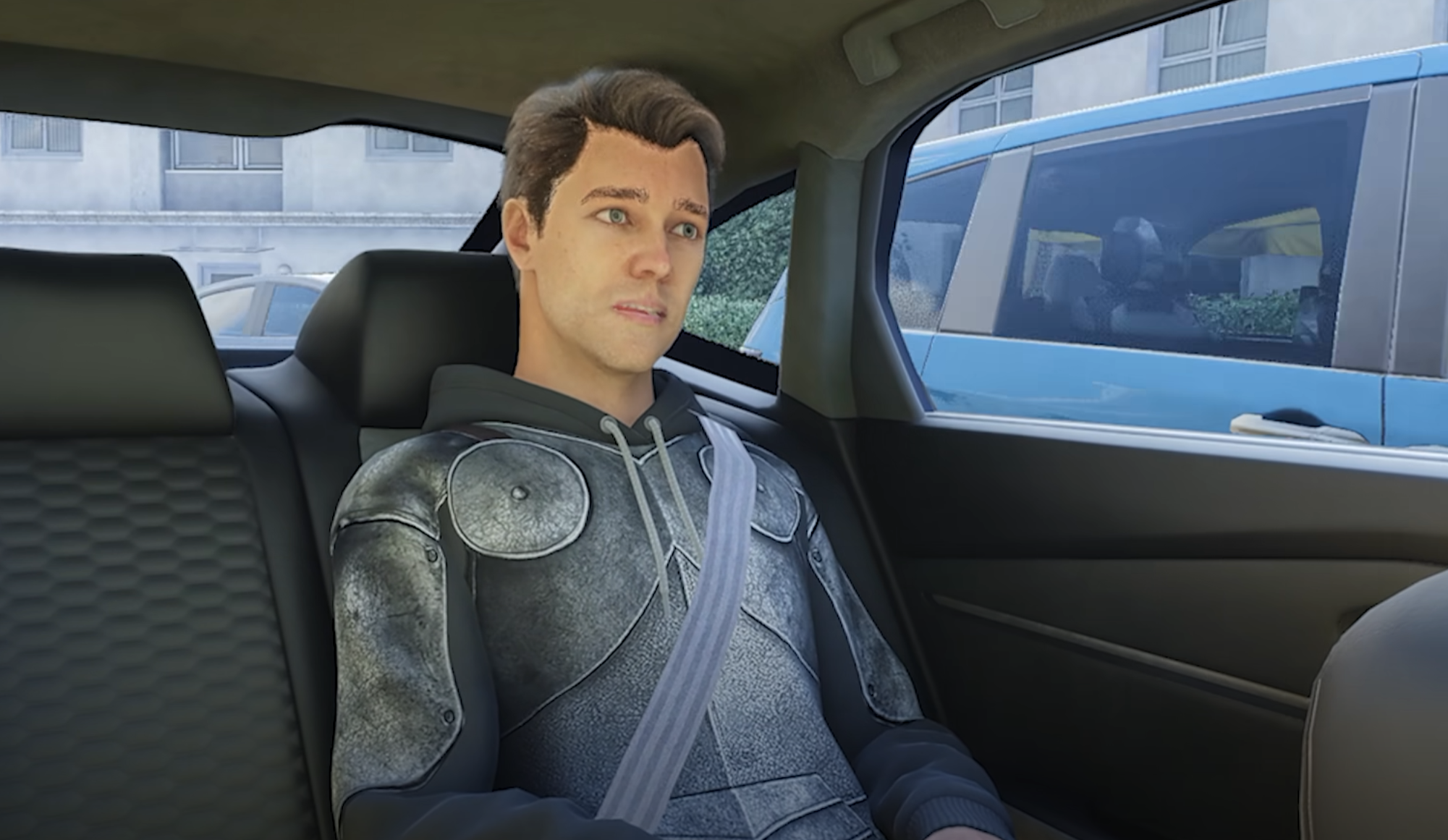
The friction began during the active development of Rideshare Stimulator, a quirky, experimental title designed to capture the mundane yet chaotic realities of modern gig-economy driving. Behind the scenes, the project’s production pipeline involved experimentation with generative AI tools to assist with content creation, dialogue generation, and narrative formatting.
The situation escalated dramatically when Stella Sacco, a former writer who had contributed to Saber Interactive, went public with explosive allegations. Sacco claimed that she had been laid off and subsequently replaced by artificial intelligence tools during the production cycle of Rideshare Stimulator. The accusation struck a deeply sensitive nerve within the global game development community. At a time when developers, writers, voice actors, and artists are increasingly anxious about artificial intelligence infringing upon creative livelihoods, Sacco’s claims instantly galvanized industry sympathy and ignited fierce anti-AI sentiment across platforms like X (formerly Twitter), Reddit, and Bluesky.
The Corporate Response and Escalation
In the early days of the controversy, Saber Interactive’s communications department attempted to defuse the situation with a measured, standard corporate statement disputing the precise details and timeline of Sacco’s claims. Had the studio left the matter there, the firestorm might have slowly smoldered out. Instead, Saber CEO Matt Karch took the unprecedented step of issuing a direct statement to industry outlet This Week In Videogames.
Karch’s statement did not merely deny the allegations; it actively leaned into the controversy. The CEO delivered a fiercely pro-AI manifesto, arguing that artificial intelligence can and should play an active role in shaping modern gaming experiences. Simultaneously, the statement contained pointed, personal criticisms directed at Sacco, transforming a labor and technology dispute into a personalized executive grievance.
Apologies, Alterations, and Secondary Fires
Recognizing the widening PR disaster, Karch subsequently reached out to Sacco to offer a private apology. Following this, the studio released a more measured LinkedIn statement designed to close the chapter on the incident and reflect on the lessons learned regarding corporate communications.
However, the attempted closure was short-lived. Observers quickly noted that Karch’s revised public statement contained a veiled, targeted barb aimed at a different games industry writer who had previously mocked the CEO’s initial comments. This secondary jab quickly drew fresh criticism from journalists and creators alike, prompting yet another quiet edit to sanitize the corporate messaging. By the time the dust temporarily settled, Saber Interactive had alienated a significant cross-section of games media and writing guilds, cementing its reputation as a studio led by executives who simply cannot—or will not—filter their impulses.
Supporting Context & Metrics: Past Controversies and the "Willits Doctrine"
For industry veterans like Tim Willits, however, public relations tempests are nothing new. During his Gamescom interview, Willits adopted an air of philosophical detachment, framing the current AI and labor controversy as just another chapter in a long history of gamer outrage that ultimately bears little relation to a game’s commercial and critical success.
The World War Z Precedent
To illustrate his point, Willits pointed back to Saber Interactive’s handling of World War Z in 2019. Upon its initial announcement, the cooperative zombie shooter faced immense community backlash when Saber inked a deal to release the game as an Epic Games Store exclusive on PC, bypassing Valve’s ubiquitous Steam platform.
At the time, the gaming community was deeply resistant to ecosystem fragmentation, and digital ink was spilled condemning Saber for allegedly "destroying the industry" and bending the knee to corporate storefront exclusivity deals. Saber leadership stood their ground, absorbing the criticism without changing their strategic trajectory.
The metrics ultimately vindicated the studio. World War Z went on to become a massive, enduring commercial success, eventually attracting over 30 million players across various platforms and establishing Saber as a powerhouse in the co-op action genre. For Willits and the executive team at Saber, the takeaway was clear: players will grumble about platform exclusivity, communication blunders, and corporate policies today, but if the core game is fun, those complaints evaporate the moment the software launches.
Applying the Rule to Rideshare Stimulator
Saber is now attempting to apply this exact historical template to Rideshare Stimulator. Despite the heavy baggage of the AI replacement controversy, management believes that once the title is released into the wild, the ideological debates surrounding its creation will be drowned out by the actual player experience.
"I encourage people to check it out when it comes out, play it themselves," Willits remarked to PC Gamer. "They may be like ‘oh, this is cool! I like this,’ you know. And if they don’t like it, fine."
This radical laissez-faire attitude underscores a fundamental philosophical divide in the modern games industry. While indie developers and AAA studios alike are increasingly tip-toeing around public sentiment, implementing rigorous sensitivity training, and sanitizing every public utterance through layers of PR filters, Saber Interactive is deliberately choosing authenticity—even when that authenticity is abrasive, unfiltered, and deeply controversial.
Official Statements and Industry Implications
The fallout from Saber Interactive’s communications strategy raises critical questions regarding the role of executive leadership, the ethics of generative AI in creative pipelines, and the future of corporate public relations in gaming.
The Case for Unfiltered Leadership
Defending the company’s communication style, Willits admitted with a chuckle that Saber’s leadership team has a well-established reputation for "saying what we mean too much." When explicitly asked whether the severe backlash from the Rideshare Stimulator saga would force the company to rethink its messaging strategy or muzzle its executives, Willits’s answer was unequivocal: "No."
This refusal to alter course highlights a belief among certain legacy developers that modern internet outrage is often an echo chamber that does not accurately reflect the broader, silent majority of consumers. In Saber’s view, polished corporate PR often sounds disingenuous, whereas blunt, unfiltered executive commentary—even when clumsy—at least possesses the virtue of raw honesty.
The Broader AI Dilemma
Beyond communication styles, the Saber controversy serves as a lightning rod for the industry-wide debate over artificial intelligence. As tools capable of generating dialogue, textures, code, and conceptual art mature, studios are facing mounting pressure to establish ethical frameworks.
While companies like Saber argue that AI is an inevitable and beneficial tool that can streamline production, expand creative possibilities, and help smaller teams punch above their weight, labor advocates and creative professionals argue that its unchecked implementation represents an existential threat to human employment in the arts. By stubbornly pushing forward with projects like Rideshare Stimulator without conceding ground on the AI debate, Saber is positioning itself at the bleeding edge of a contentious industry shift—willing to take the reputational hits today in exchange for procedural efficiencies tomorrow.
Future Outlook: Can the Games Speak for Themselves?
As Saber Interactive looks toward the future, the central gamble facing the studio is whether Tim Willits’s thesis—that "the games will speak for themselves"—will hold true in an increasingly polarized digital landscape.
The modern consumer market is more interconnected and values-driven than ever before. Incidents involving labor disputes, layoffs, and the integration of controversial technologies can spark coordinated review-bombing campaigns, boycotts, and sustained negative press cycles that can severely dent a game’s launch momentum. For niche or experimental titles like Rideshare Stimulator, which rely heavily on community goodwill and organic word-of-mouth growth to find their audience, alienating the core enthusiast press and creative community carries tangible risks.
Yet, history suggests that Saber’s leadership may not be entirely wrong. The gaming public has a notoriously selective memory. If Rideshare Stimulator delivers a genuinely engaging, innovative, or darkly humorous gameplay loop when it officially launches, a significant portion of the gaming public may well set aside the executive bluster and developer disputes to simply enjoy the product.
Ultimately, Saber Interactive has drawn a hard line in the sand. Eschewing corporate contrition in favor of stoic product-centric optimism, the studio is daring its critics to play the game before they judge it. Whether this brazen strategy proves to be a masterclass in weathering manufactured outrage or a cautionary tale of institutional arrogance remains to be seen. One thing, however, is certain: in an industry often criticized for sterile, focus-grouped conformity, Saber Interactive will continue to march to the beat of its own unapologetic drum.








Belum ada komentar. Jadilah yang pertama berkomentar!