

Executive Overview
For years, stepping into the mist-shrouded, procedurally generated purgatory of Valheim meant confronting an immediate, unyielding bottleneck: your own pockets. Since the survival game’s initial early access launch, players have wrestled with a strictly limited inventory capacity—comprising just eight hotbar slots and 24 general slots. Combined with a weight limit and the frustrating reality that equipped armor items actively occupy precious inventory space, explorers faced a perpetual micro-management loop. Every resource run demanded agonizing triage: do you leave behind precious copper ore, abandon dragon eggs, or drop your hard-earned food supplies just to haul home a new battleaxe?
With the arrival of Valheim 1.0, Coffee Stain Publishing and developer Iron Gate Studio have permanently altered the survival calculus. Players can finally increase their inventory capacity, liberating themselves from the tyranny of cramped storage rows. By introducing tangible inventory expansions via the game’s elusive merchant, Valheim has updated its core gameplay loop, rewarding deep exploration and economic savvy with much-needed quality-of-life improvements. This comprehensive guide explores how to secure these coveted upgrades, locate the elusive vendor Haldor, and leverage your newfound carrying capacity to conquer the tenth Norse realm.
Detailed Chronology: The Journey from Early Access Scarcity to Version 1.0 Abundance
To fully appreciate the gravity of the Valheim 1.0 inventory update, one must examine the historical context of the game’s resource economy. When the title first captivated millions of players in early 2021, its design philosophy leaned heavily into old-school survival friction. Every system—from stamina management to weapon degradation—was engineered to make survival feel hard-won.
The Early Access Struggle (2021–2024)
During the early access years, the inventory limitation was a frequent topic of debate within the community. While mods like Equipment and Quick Slots became almost mandatory downloads for PC veterans seeking relief, vanilla players had to master the art of logistical planning. Base-building required establishing outpost networks, cart systems, and elaborate network highways simply because bringing materials across oceans or through treacherous biomes was limited by human (or Viking) carrying capacity.
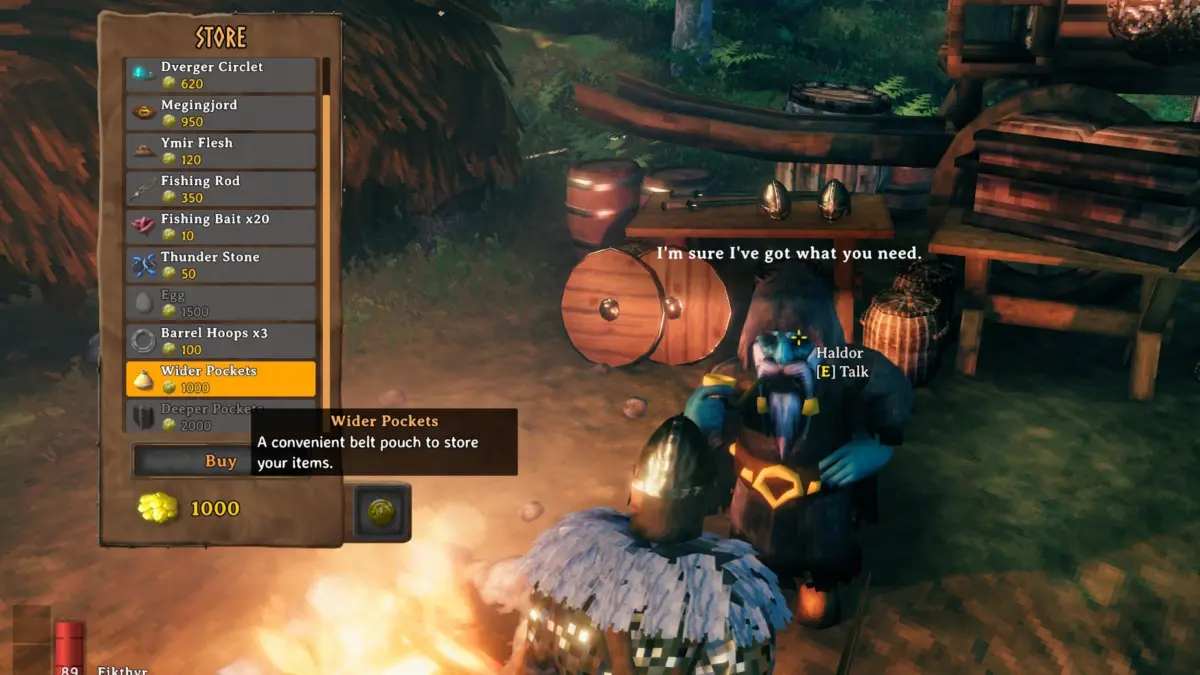
The inclusion of Haldor the Trader provided minor economic utility—allowing players to sell amber, rubies, and silver necklaces for coins—but his inventory remained static. He sold the Ymir Flesh, the Dverger Circlet, the Fishing Rod, and the Megingjord (which increased weight capacity, but not slot count). For years, the physical number of items a player could hold remained completely static at 32 total slots.
The 1.0 Paradigm Shift
The transition to Valheim 1.0 marks a philosophical evolution for the developers. While maintaining the survival genre’s core challenge, the team has acknowledged that inventory bloat in late-game biomes—featuring intricate crafting trees, multiple tier types of food, unique magical components, and varied armaments—had outgrown the original 32-slot restriction.
By tying inventory expansion directly to exploration and currency accumulation, the 1.0 update transforms Haldor from a novelty vendor into an essential progression milestone. Players are no longer forced to choose between carrying their tool assortment and looting a crypt dry; they can systematically purchase up to 16 additional slots, effectively expanding their total capacity by 50%.

Supporting Context & Metrics: Breaking Down the New Inventory Math
Understanding the exact mechanics of the new inventory system is crucial for efficient resource management in Valheim.
The Math of Expansion
- Base Inventory (Pre-1.0): 8 Hotbar slots + 24 Main inventory slots = 32 total slots.
- Maximum Expanded Inventory (Valheim 1.0): 8 Hotbar slots + 40 Main inventory slots = 48 total slots.
- Upgrades Available: Exactly two distinct inventory upgrade items sold by Haldor. Each upgrade appends an entire extra row (8 slots) to your carrying grid.
The Weight vs. Slots Dilemma
It is important for both veterans and newcomers to distinguish between weight capacity and slot capacity:
- Weight Capacity: Governed by your character’s base stamina stats and augmented drastically by the Megingjord belt (also purchased from Haldor), which raises your maximum weight limit from 300 kg to 450 kg.
- Slot Capacity: Governed by the newly introduced inventory expansions.
Even with the Megingjord equipped, players previously found themselves bottlenecked not by the weight of their items, but by the physical grid space available. A player could theoretically carry heavy iron ingots up to the 450 kg limit, but if those ingots occupied multiple split stacks across limited slots, they quickly ran out of room. The combination of the Megingjord and the two 1.0 inventory row expansions creates a synergistic endgame loadout that fundamentally changes how long expeditions can last before forcing a return to base.
How to Find Haldor the Trader and Purchase Your Upgrades
Securing your expanded inventory requires coin—and a fair bit of tracking. Because Haldor does not spawn randomly in the Meadows or spawn predictably near your initial sacrificial stones, finding him is a rite of passage.
Step 1: Venture into the Black Forest
Haldor is a merchant who exclusively sets up camp within the Black Forest biome. However, wandering blindly into the nearest cluster of pine trees and greydwarves will likely result in frustration.
- The Distance Rule: Haldor will only manifest in Black Forest biomes that are a minimum of 1,500 meters away from the exact center of the map (where you first spawn).
- Tracking via Coordinates: For players utilizing console commands, pressing
F5(and typingdevcommandsfollowed bypos) will display your precise coordinates and distance from the map center, helping you verify whether you have ventured far enough outward. - Seed Explorers: If organic exploration feels too daunting, you can input your world seed into third-party tools such as the Valheim World Generator. (Note: Ensure the tool has been updated to fully support Valheim 1.0 data structures for pinpoint accuracy).
Step 2: Recognizing the Camp
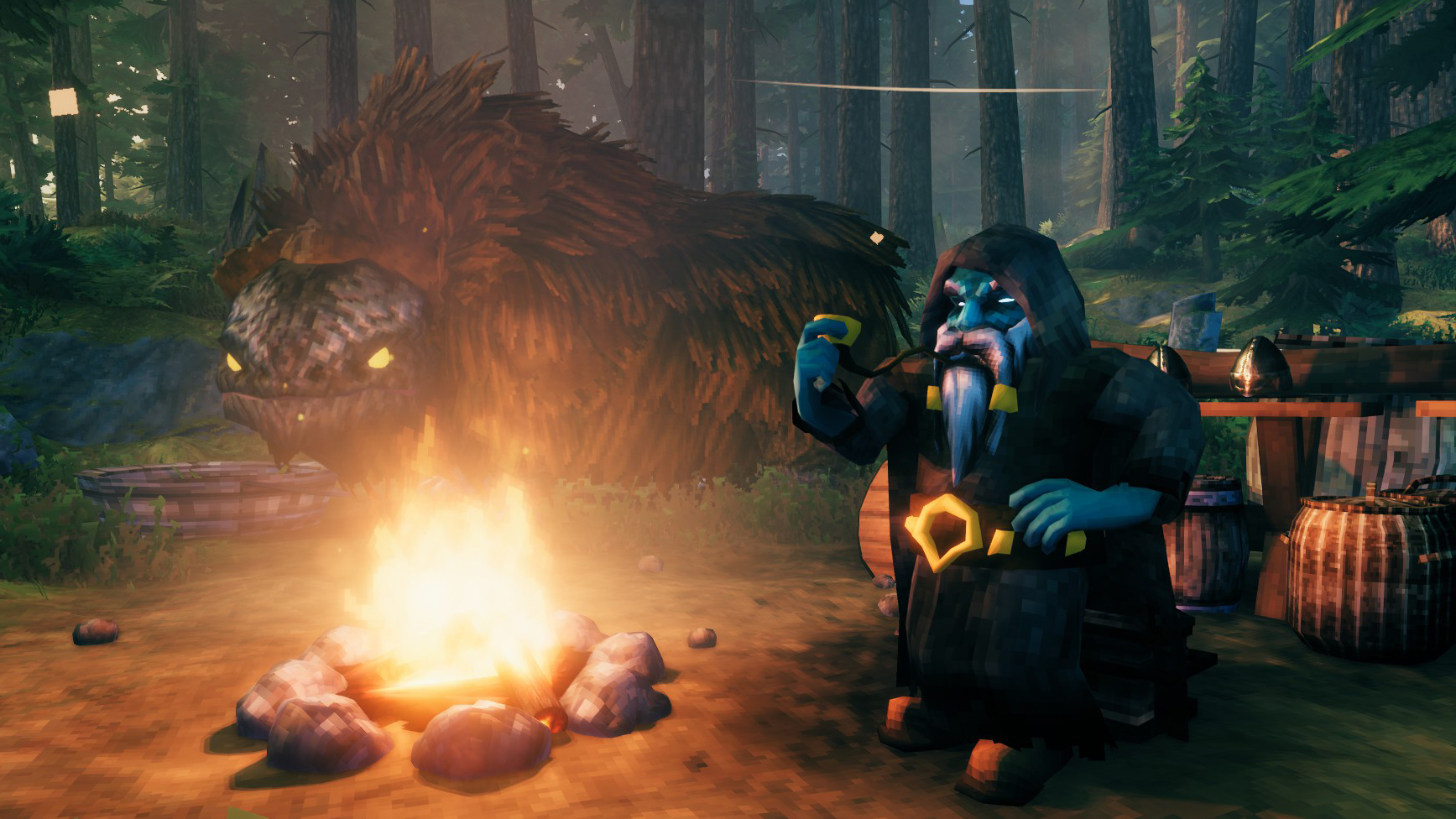
When you draw within a couple hundred meters of Haldor’s camp, a distinct white bag icon will dynamically appear on your minimap. Approaching the camp reveals Haldor sitting by a cozy campfire alongside his trusty, massive Lox companion, trading goods from his heavily laden wagon.
Step 3: Accumulating Currency
Haldor does not accept favors or raw wood; he deals strictly in coins and high-value trade items. To afford the inventory upgrades, you must amass wealth through several methods:
- Exploration: Looting chests buried in burial chambers, sunken crypts, and frost caves.
- Combat: Defeating dangerous foes such as Trolls in the Black Forest or Fulings in the Plains biome, who frequently drop coin stashes.
- Liquidation: Bringing valuable gems and artifacts—such as rubies, amber, and silver necklaces—directly to Haldor to sell them in exchange for spendable coin.
Official Statements and Community Reception
The release of Valheim 1.0 and the inclusion of long-awaited quality-of-life updates have drawn overwhelmingly positive reactions from the gaming community. In community developer logs leading up to the 1.0 release, Iron Gate Studio addressed the persistent feedback regarding inventory management.
"We designed Valheim with a specific degree of survival friction in mind," noted a representative from Iron Gate during a recent community address. "We wanted players to feel the weight of their journeys and the necessity of planning expeditions carefully. However, as the world of Valheim expanded across multiple biomes with exponentially more crafting components, it became clear that the original inventory framework was creating unnecessary friction rather than engaging challenge. Introducing these inventory expansions via Haldor strikes the right balance—it preserves the early-game struggle while offering a tangible, rewarding progression goal for mid-to-late game explorers."
Content creators and long-term players have echoed these sentiments, noting that the removal of inventory anxiety has breathed new life into exploration. Building massive architectural projects or venturing deep into the Ashlands no longer requires constant, immersion-breaking logistics trips back to base just to drop off miscellaneous loot.
Future Outlook: What Next for Valheim’s Economy and Quality of Life?
As Valheim 1.0 settles into the hands of millions of players worldwide, the focus of the community and developers alike turns toward the game’s long-term future. The successful integration of inventory upgrades proves that Iron Gate Studio is listening closely to player feedback regarding quality-of-life mechanics without compromising the survival core that defined the game’s initial charm.
Moving forward, players can expect the economic loop centered around Haldor and potential future merchants to play a more prominent role. With inventory space no longer acting as a hard ceiling on exploration length, developers have greater freedom to introduce diverse, multi-tiered resource systems in subsequent content updates and expansions.
For now, the mandate for every Viking is clear: pack your bags, secure your coins, track down Haldor in the depths of the Black Forest, and claim the extra rows of inventory space that will finally let you loot Valheim to its absolute limits.








Belum ada komentar. Jadilah yang pertama berkomentar!