

Executive Overview
For over a decade, millions of gamers worldwide have laced up their virtual boots, adjusted their iron armor, and embarked on one of modern gaming’s most iconic pilgrimages: the ascent to High Hrothgar. Guided by the ominous warnings of a humble messenger named Klimmek in the quiet village of Ivarstead, players of Bethesda Softworks’ legendary open-world masterpiece, The Elder Scrolls V: Skyrim, are told that reaching the monastery of the enigmatic Greybeards requires traversing The 7,000 Steps.
It is a rite of passage. It is a grueling, dragon-haunted vertical gauntlet leading to the highest peak in Tamriel, the Throat of the World. Yet, almost since the game’s 2011 release, eagle-eyed players have harbored a quiet secret: there are nowhere near 7,000 steps carved into that snowy mountainside. In reality, a literal pedestrian count reveals closer to 700 physical masonry steps, with the remaining distance made up of winding dirt paths, rocky outcrops, and snow drifts.
Now, decades later, as part of Bethesda Game Studios’ sweeping 40th-anniversary retrospective—which also finally brought official news surrounding The Elder Scrolls 6: Sentinel—developers have broken their silence. In behind-the-scenes accounts reflecting on the studio’s rich history, a former level designer admitted the truth that fans long suspected: they genuinely tried to build all 7,000 steps.
This investigative feature examines the fascinating collision between game development constraints, open-world scale compression, and lore fidelity. We explore why fitting 7,000 steps onto a mountain broke Skyrim’s geography, how map-scaling operates in massive sandbox RPGs, and the enduring legacy of the mountain path that forever changed RPG exploration.
Detailed Chronology: From Concept to the Slopes of High Hrothgar
To understand how the legend of the 7,000 steps came to be, we must trace the timeline of Skyrim’s development, the constraints of the Creation Engine, and the painstaking process of sculpting Tamriel’s northernmost province.
The Architectural Blueprint and Lore Expectations
In the rich lore of The Elder Scrolls, monumental architecture often mirrors the sheer grandiosity of the universe’s gods and empires. When writers at Bethesda Game Studios penned the history of the ancient Nords, the journey to High Hrothgar—the sanctuary of the Greybeards, masters of the Voice—needed to feel mythic. It could not simply be a brisk afternoon hike. It had to be a test of physical and spiritual endurance.
Thus, the "7,000 Steps" became an entrenched piece of Tamrielic folklore. When the development team began translating this textual lore into actual 3D geometry around 2008–2010, the directive was clear: build the mountain pass that players had read about for years.
The Developer’s Dilemma: Trying to Fit 7,000 Steps
During Bethesda’s 40th-anniversary celebration, a developer responsible for refining the shapes and environmental dressing of High Hrothgar shared a humorous and revealing anecdote regarding the level design process.
According to the developer, who dedicated significant effort to ensuring the game remained faithful to established lore and real-life scaling principles, an earnest attempt was made to literally construct all 7,000 steps along the mountainside. However, the sheer mathematical and spatial reality of video game design quickly reared its head.
When mapped out using standard architectural spacing in the game engine, a continuous chain of 7,000 steps could not simply zigzag up the slope behind Ivarstead. To accommodate the sheer number of steps required, the path had to extend far past the boundaries of Ivarstead, wrap entirely around the massive bulk of the mountain, and snake its way across the frozen tundra, ultimately terminating perilously close to the city of Whiterun.
It became painfully obvious that 7,000 physical steps is an astronomical distance in a compressed video game world. Faced with the choice between a realistic, geographically sound mountain pass or a level layout that respected the player’s time and the game’s actual map boundaries, the design team had to drastically scale down the physical masonry. The stone steps were concentrated into key dramatic stretches—particularly around the resting tablets detailing the Voice—while the rest of the ascent relied on natural terrain.
The Infamous Frost Troll Incident
While the developers succeeded in making the journey perilous, the team was quick to clarify boundaries of responsibility. The level design team handled the layout, the visual effects, the cliffside foliage, and the scattering of world-building objects.
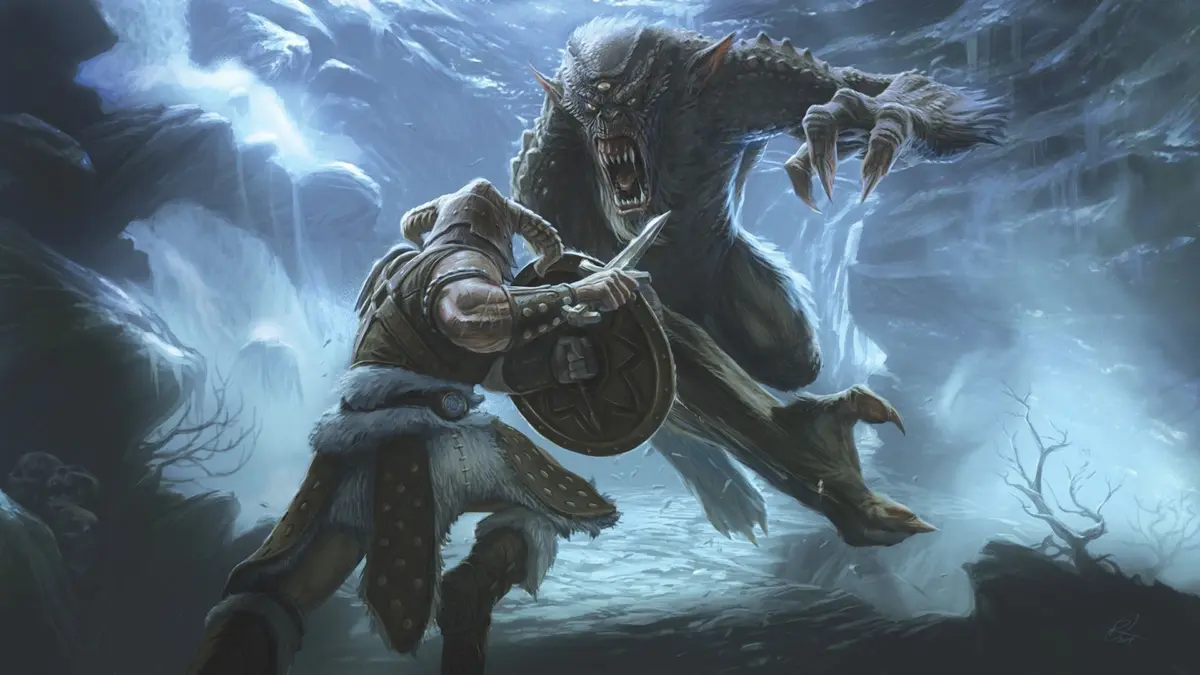
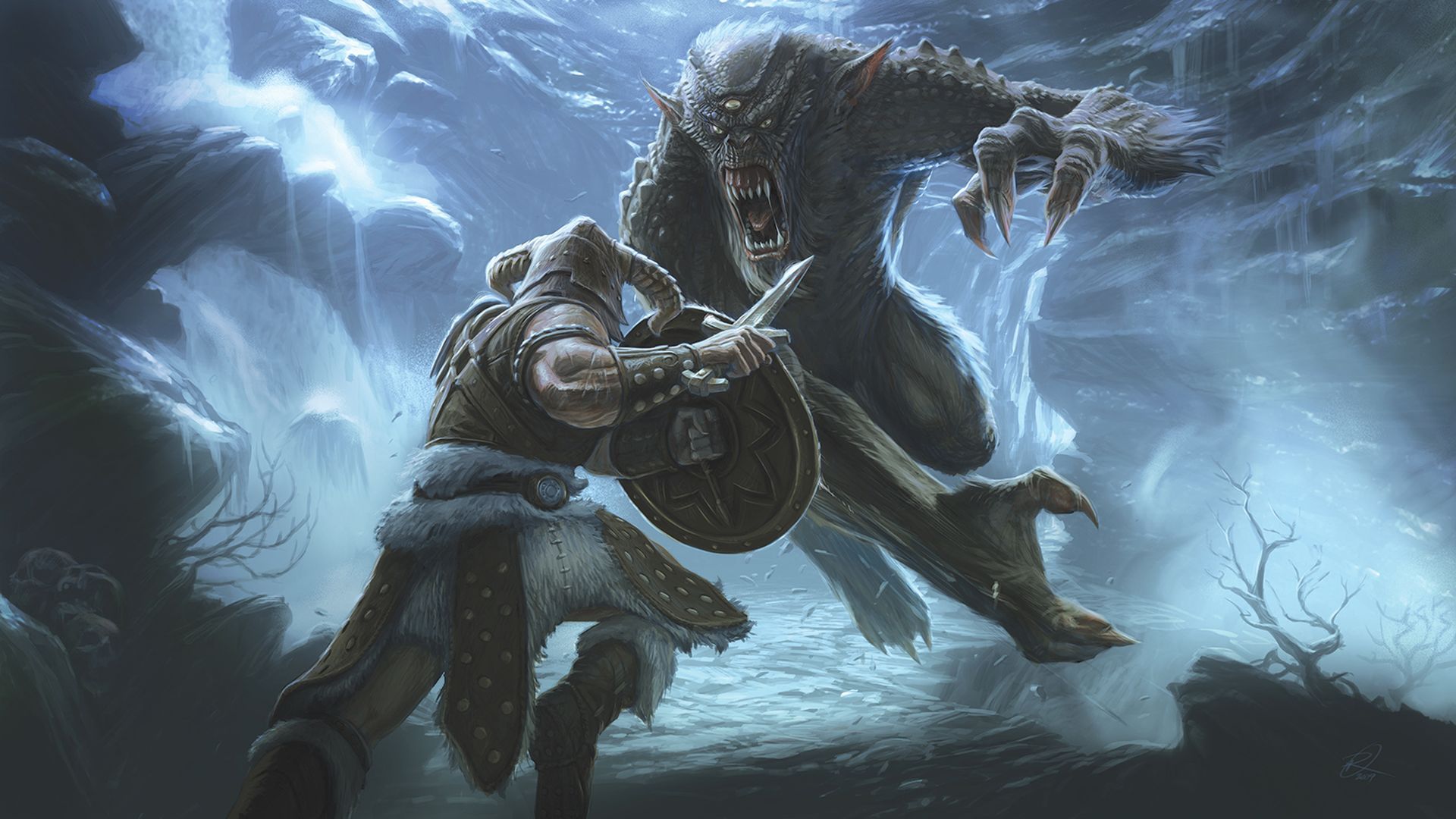
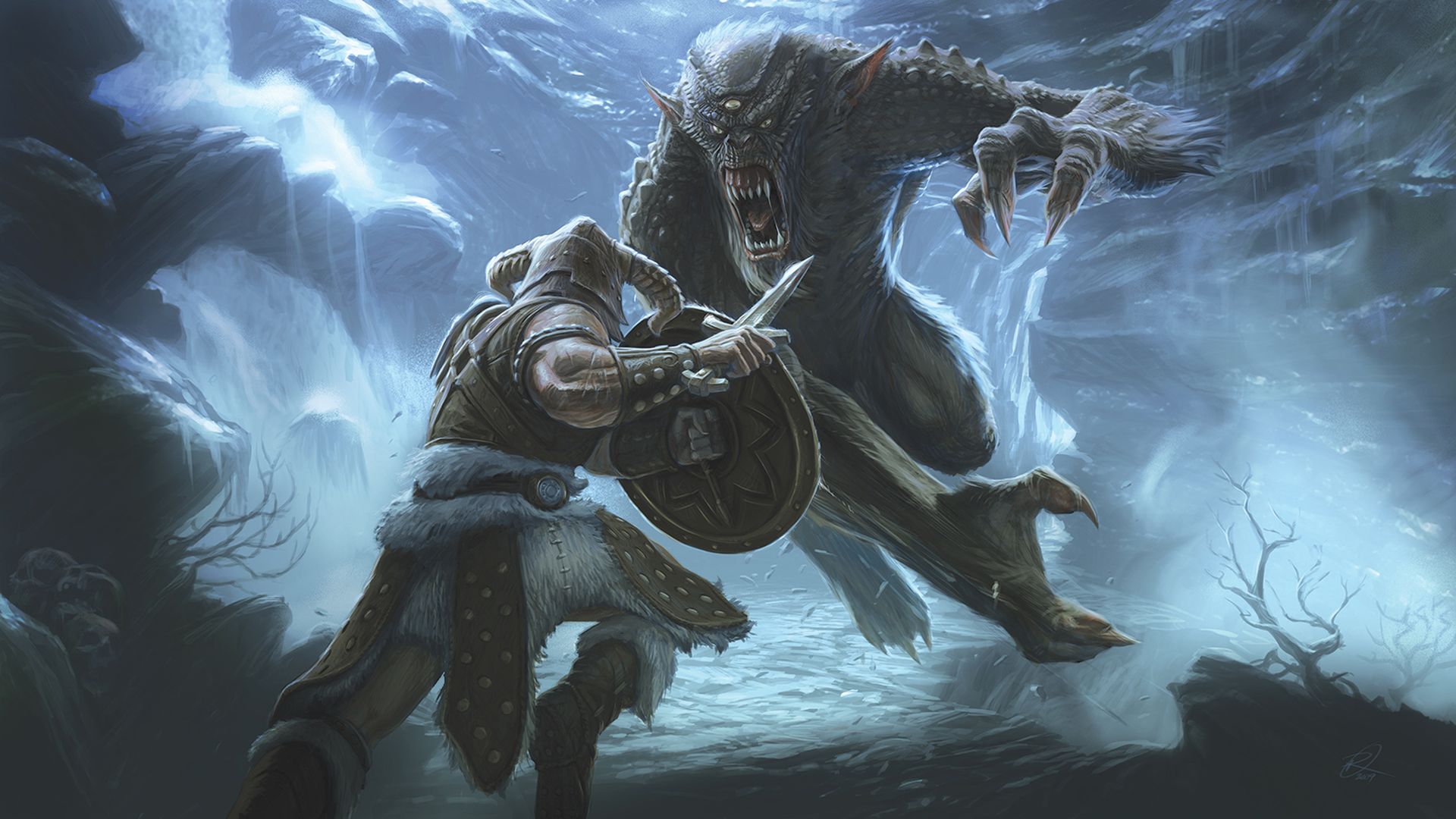
However, the population of hostile wildlife was a different department altogether. The developer explicitly absolved themselves of blame regarding the infamous Frost Troll—a notoriously overpowered early-game predator that ambushes unsuspecting low-level players midway up the mountain, serving as an abrupt and violent reality check. For thousands of Dragonborns, that specific troll remains the defining memory of the ascent, regardless of how many stone steps they actually counted.
Supporting Context & Metrics: Analyzing the Scale of Skyrim
The discrepancy between the lore and the physical reality of The 7,000 Steps highlights a fundamental truth of open-world game design: compression is king.
The Numbers Game: Lore vs. Reality
To appreciate the architectural feat—and the logistical nightmare—of Skyrim, let us examine the numbers compiled by dedicated community researchers, such as those at the Ultimate Elder Scrolls Portal (UESP):
- The Lore Count: Exactly 7,000 steps, representing a grueling holy pilgrimage for the devout and the ambitious.
- The Physical Step Count: Approximately 700 carved stone steps. The rest are obscured by snow, erosion, or simply omitted due to spatial constraints.
- The Footstep Equivalency: According to community movement and distance calculations, ascending the mountain from Ivarstead to the doors of High Hrothgar requires roughly 2,400 individual character footsteps under standard walking or running conditions.
Why Open Worlds Must Lie About Distance
The Elder Scrolls V: Skyrim spans roughly 15 to 16 square miles of landmass. While this sounds large for a player navigating it on foot or on horseback, in the grand context of a continent, it is minuscule.
If Bethesda had attempted a 1:1 scale representation of the province of Skyrim—let alone an accurate physical representation of 7,000 steps leading up a lore-accurate mountain—the geography would become absurd. To maintain immersion without requiring players to spend literal hours walking between settlements, open-world developers practice scale compression.
Consider other staples of Bethesda’s design philosophy:
- Solitude, the proud and wealthy capital of Haafingar and seat of the Skyrim’s High King, features a permanent resident population of fewer than 100 individuals in-game.
- Whiterun, the bustling commercial heart of the region, features only a handful of farms to feed an entire city.
In these virtual ecosystems, every named NPC on screen represents dozens of unseen citizens off-camera. Similarly, every physical step the Dragonborn climbs on the Throat of the World is meant to symbolically represent an entire series of arduous switchbacks and vertical miles that have been compressed for gameplay pacing. For every single step rendered on your screen, narrative convention asks you to multiply that effort by nearly tenfold.
Official Statements and Developer Reflections
The revelation regarding the 7,000 steps is part of a broader, nostalgic wave of reflections from Bethesda Game Studios as the company marks four decades of game development. Over the years, veterans of the studio have opened up about the trial-and-error nature of building worlds that feel organic.
Bethesda’s open-world philosophy has always prioritized environmental storytelling over sterile accuracy. The mountain path to High Hrothgar is studded with ten "Windsock" tablets—stone monuments inscribed with teachings about the Thu’um (the Voice)—which break up the journey and provide spiritual milestones for the player. Even if the math behind the steps doesn’t add up to the literal translation, the emotional and atmospheric design achieved its goal: by the time the player reaches the summit and steps into the freezing, wind-whipped courtyard of High Hrothgar, they genuinely feel as though they have conquered a titan of nature.
Furthermore, the timing of these behind-the-scenes insights coincided with monumental announcements regarding the future of the franchise, including official updates on The Elder Scrolls 6: Sentinel. As the studio looks forward to the next generation of fantasy role-playing games, looking back at the clever illusions and design hacks used in Skyrim serves as a reminder of how technical limitations often spark the most memorable creative solutions.
Future Outlook: What This Means for The Elder Scrolls 6
As the gaming community eagerly anticipates the eventual release of The Elder Scrolls 6, the conversation surrounding world design, scale, and lore fidelity has evolved. Modern hardware—powered by advanced solid-state drives, massive memory allocations, and procedural generation assistance—offers developers tools that were unimaginable when Skyrim was compiled on Xbox 360 and PlayStation 3 hardware in 2011.
Will Future Mountains Be True to Scale?
With vastly superior rendering distances, streaming capabilities, and processing power, future entries in the franchise will undoubtedly feature larger, more complex landscapes. Developers will have the technical freedom to build massive mountain ranges, sprawling wildernesses, and settlements that feel closer to their theoretical lore sizes.
However, industry veterans note that raw technical capability does not eliminate good design sense. Even if an engine can render a literal 7,000 steps up a mountain without breaking a sweat, game directors must still weigh whether player engagement benefits from an hour-long, uninterrupted uphill hike. Pacing, rhythm, and the careful placement of emergent encounters (like our old friend the Frost Troll) remain far more important to the player experience than mathematical cartographic precision.
The Enduring Legacy of The Path to High Hrothgar
Ultimately, the myth of the 7,000 steps has cemented itself in gaming folklore not despite its mathematical impossibility, but because of the journey it evokes. It stands as a shining example of how players fill in the blanks left by technical compression with their own imaginations.
When The Elder Scrolls 6 finally launches and players find themselves staring up at a new horizon, a new mountain, or a new impossible monument, they will carry with them the lessons learned on the slopes of the Throat of the World. They will watch out for frost trolls, they will read the roadside markers, and—whether they count 700 steps or 7,000—they will take that first step upward into adventure.






Belum ada komentar. Jadilah yang pertama berkomentar!