

Executive Overview
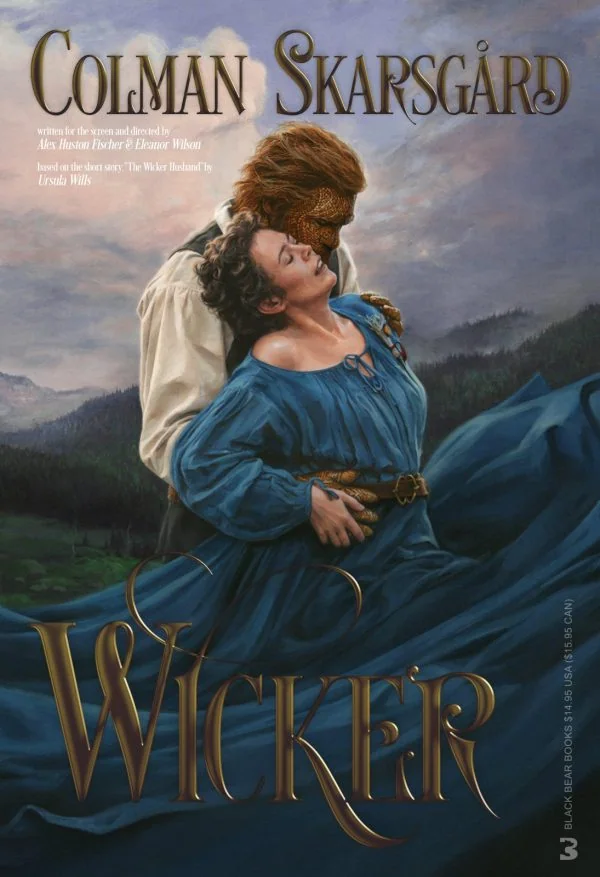
In the cinematic landscape of 2026, few films have managed to balance whimsical folklore, sharp social satire, and visceral body horror quite as deftly as Wicker. Written and directed by the visionary filmmaking duo Eleanor Wilson and Alex Huston Fischer, and adapted from a short story by Ursula Wills-Jones, the film presents a bizarre yet profoundly resonant fable. Set in a fictional, isolated seaside village defined by archaic gender roles and rigid social stratification, Wicker tells the story of an ostracized fisherwoman who takes matters into her own hands—literally—by commissioning a local craftsman to weave her a husband out of plant fibers.
Boasting a heavyweight ensemble cast led by Olivia Colman as the Fisherwoman, Alexander Skarsgård as her immaculate Wicker Husband, and Peter Dinklage as the eccentric Basket Weaver, alongside Elizabeth Debicki, Marli Siu, and Richard E. Grant, the film immediately commands attention. Behind its deadpan comedic premise lies a piercing exploration of patriarchal complacency, female self-worth, insecurity, and the radical, terrifying nature of experiencing a truly healthy relationship for the first time.
While initial trailers might have framed Wicker as a high-concept quirky comedy, the final feature defies easy categorization. It seamlessly bridges the gap between whimsical fantasy-romance and pitch-black satirical drama, punctuated by striking practical effects and makeup wizardry. This review-analysis explores the thematic underpinnings, world-building mechanics, narrative progression, and societal ripples of one of the most provocative releases of the year.
Detailed Chronology: The Unraveling of a Woven Reality
Act I: The Plight of the Fictional Coastline
To understand the emotional and satirical weight of Wicker, one must first examine the suffocating societal structure of the film’s setting. In this unnamed, windswept seaside community, every resident is defined strictly by their vocation—a conceit that strips away individual identity in favor of functional societal cogs. The gender dynamics are stark and deeply regressive: women upon marriage are literally fitted with collars, serving as subservient appendages to their husbands.
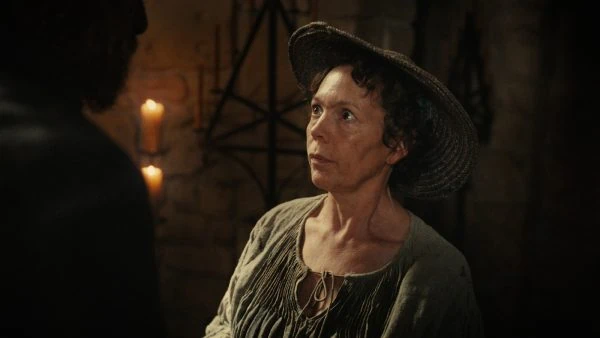
Into this oppressive environment steps Olivia Colman’s Fisherwoman. Perpetually single, unkempt, and subjected to relentless verbal abuse regarding her appearance, hygiene, and lack of conventional desirability, she exists at the absolute bottom of the village’s social hierarchy. Throughout the opening acts, Wilson and Huston Fischer establish the village’s bleak normalcy. Even the local rituals are steeped in patriarchal conditioning. A prime example is the town’s twisted equivalent of a bouquet toss: Peter Dinklage’s Basket Weaver crafts an elaborate basket filled with handwoven eggs that burst open with colorful dust clouds—a bizarre, cringe-inducing parody of modern gender-reveal parties meant to determine who will be betrothed next.
In a twist of cruel irony, the Fisherwoman is inadvertently chosen as the "winner" of this ritual, thrusting her into the crosshairs of the village leadership, personified by Elizabeth Debicki’s Tailor’s Wife—a woman who functions primarily as a mouthpiece for her husband’s regressive ideology. Desperate to escape ridicule and perhaps leaning into a rebellious prank scheme, the Fisherwoman commissions Dinklage’s Basket Weaver to construct the impossible: a perfect man.
Act II: The Arrival of Perfection and the Village Awakening
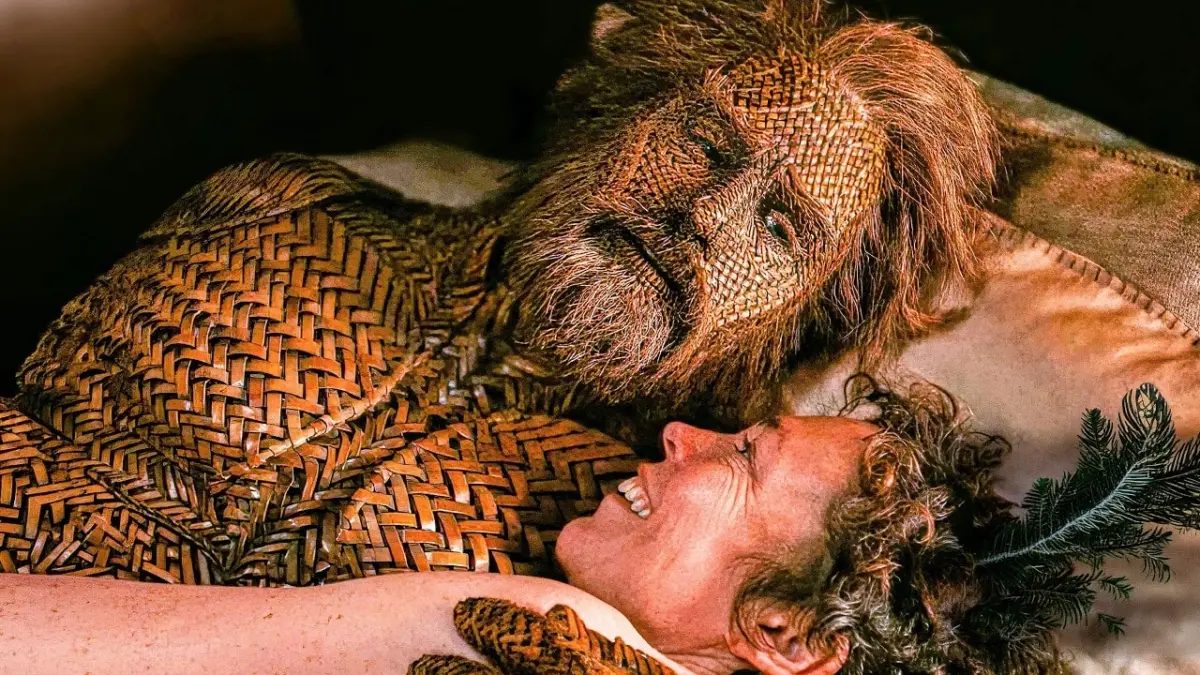
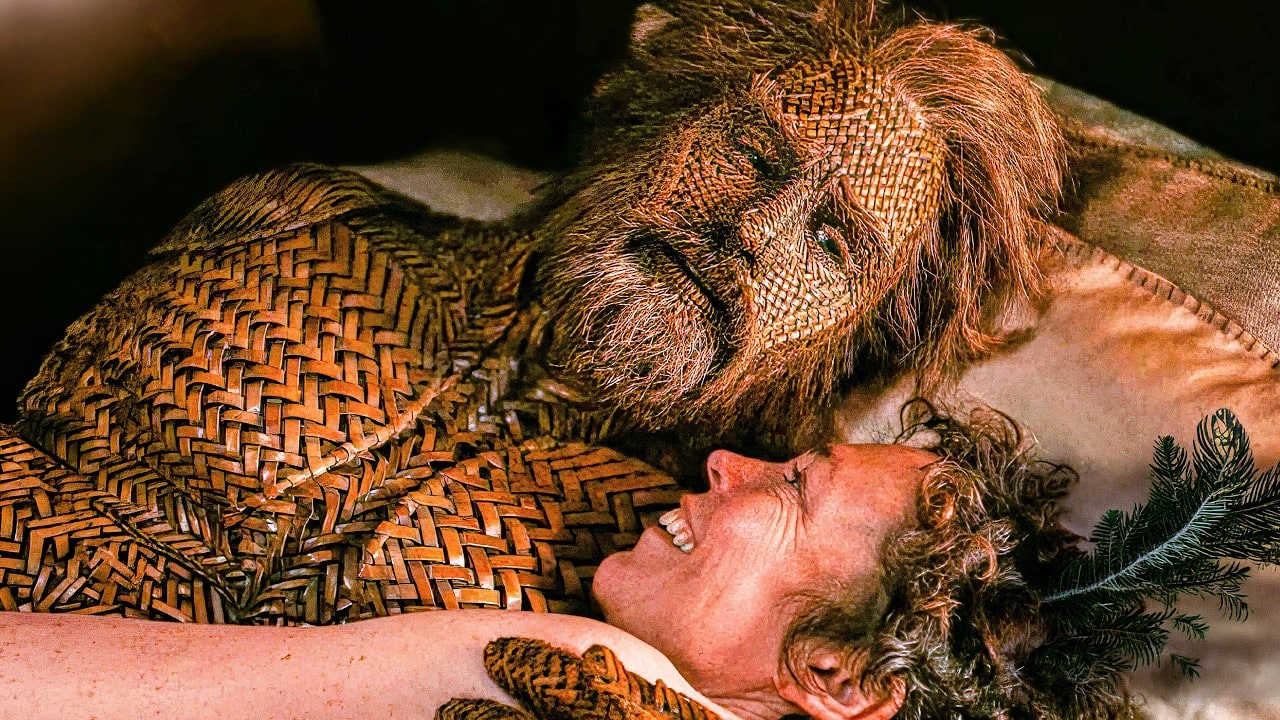
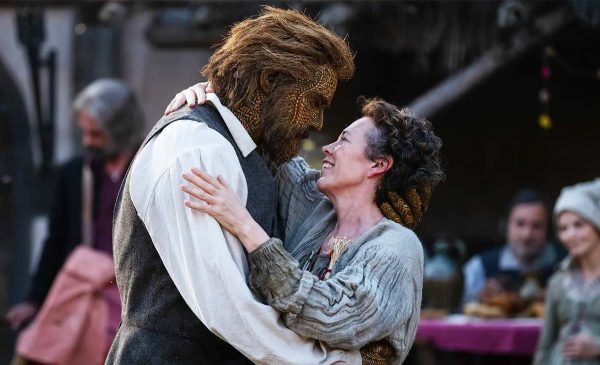
A month later, the satirical stakes are raised dramatically with the arrival of the Wicker Husband, portrayed with astonishing physical commitment by Alexander Skarsgård. Supported by breathtaking practical effects and prosthetic design, Skarsgård’s character is a masterclass in non-verbal performance. Beneath layers of intricately woven plant fibers lies an evocative, grounded presence.
The Wicker Husband immediately upends the village’s status quo. He addresses household repairs and garden labor without a hint of complaint. More importantly, he introduces the Fisherwoman to mutual intimacy—engaging in vigorous, passionate encounters that prioritize her pleasure rather than serving as a mechanical fulfillment of male desire. His unwavering calmness, slow-paced dialect, and boundless patience stand in stark contrast to the volatile, lazy, and self-absorbed human men of the village.
Predictably, it is not long before the village women take notice. The presence of the Wicker Husband acts as an unflattering mirror, highlighting the profound shortcomings, complacency, and emotional laziness of their own husbands. What begins as a personal joke for the Fisherwoman rapidly snowballs into a community-wide existential crisis, testing the fragile ego of the town’s male population and triggering paranoid whispers among the women.
Act III: Bizarre Turns and the Takedown of Dogma
Adapted from Ursula Wills-Jones’ concise source material, Wicker faces the classic adaptation hurdle: can a high-concept short story sustain a feature-length runtime without wearing out its welcome? Wilson and Huston Fischer answer this definitively by injecting the narrative with bizarre, unexpected tonal shifts.
As the film progresses past the initial novelty of the premise, it pivots toward deeper psychological territory. The Fisherwoman, having spent a lifetime absorbing relentless bullying, struggles to accept genuine affection. As a poignant piece of dialogue highlights within the film: "It’s easier to believe something bad than good." Her internal insecurity mirrors the external terror gripping the village.
The filmmakers utilize body horror, subtle violence, and escalating psychological dread to dismantle the town’s foundational values. The Basket Weaver, initially introduced as a quirky artisan fascinated by construction, emerges near the climax as a surprising moral compass, forced to reckon with the runaway consequences of his creation. By the time the credits roll, the film has evolved from a romantic fable into a full-scale systemic takedown of institutionalized misogyny, leaving characters—and the audience—to question what a truly healthy, reciprocal relationship looks like when divorced from societal conditioning.
Supporting Context & Metrics
- Direction and Screenplay: Eleanor Wilson and Alex Huston Fischer, praised for their distinct visual style and ability to weave disparate genres into a cohesive narrative.
- Source Material: Adapted from the acclaimed short story by Ursula Wills-Jones.
- Cast Highlights: Olivia Colman (Fisherwoman), Alexander Skarsgård (Wicker Husband), Peter Dinklage (Basket Weaver), and Elizabeth Debicki (Tailor’s Wife), supported by Marli Siu, Nabhaan Rizwan, and Richard E. Grant.
- Genre Classification: Fantasy, Romantic Comedy, Satire, Body Horror, and Relationship Drama.
- Design & Effects: A triumphant showcase for practical makeup effects, creature design, and set decoration, successfully turning organic plant material into a sympathetic, expressive romantic lead.
- Critical Reception: Certified hit among critics for its daring tonal balance, earning widespread acclaim for its performances, particularly Colman’s vulnerable humanity and Skarsgård’s uncanny physical execution.
Official Statements and Production Insights
The journey of bringing Wicker to the silver screen was characterized by meticulous attention to practical craft over digital convenience. In behind-the-scenes production notes, co-directors Eleanor Wilson and Alex Huston Fischer emphasized their desire to ground the film’s fantastical elements in tactile reality.
"We never wanted the Wicker Husband to feel like a CGI construct or a simple man-in-a-suit gag," Wilson noted in a pre-release interview. "Every piece of foliage, every twist of vine and reed had to convey emotion. Alexander Skarsgård spent hours in makeup chairs not just to look like a structure, but to learn how to move with a deliberate, haunting grace that contrasts sharply with the frantic, messy energy of the human villagers."
Alexander Skarsgård discussed the unique challenge of portraying an inanimate object brought to life with emotional depth:
"Playing a character constructed from wicker forces you to rethink how you communicate. You don’t rely on traditional micro-expressions in the same way; instead, posture, rhythm, and spatial awareness become everything. His perfection isn’t threatening because he’s aggressive—it’s threatening to the village because it exposes how little effort the human men have put into their own relationships."
Olivia Colman, reflecting on her character’s emotional arc, highlighted the tragedy and triumph embedded within the satire:
"The Fisherwoman has been told she is worthless for so long that when someone treats her with absolute kindness, her first instinct is suspicion. That is a very human trauma response. Playing someone who has to unlearn a lifetime of cruelty—while falling in love with a literal basket—was one of the wildest, most rewarding acting experiences of my career."
Future Outlook
As Wicker continues its theatrical run and finds its home on premium video-on-demand platforms and physical media (including anticipated 4K Ultra HD collectors’ releases), its cultural footprint is expanding rapidly. Film historians and genre enthusiasts are already citing Wilson and Huston Fischer’s work as a benchmark for modern satirical folklore—a subgenre that blends the unsettling rural dread of films like The Wicker Man with the biting, romantic subversion of modern feminist fairy tales.
Looking forward, the success of Wicker signals a healthy appetite in the commercial and independent markets for high-concept, risk-taking cinema that refuses to stay inside conventional genre boxes. By proving that body horror and romantic comedy can coexist in a narrative exploring systemic misogyny and self-acceptance, Wilson and Huston Fischer have firmly established themselves as vital voices in contemporary filmmaking.
Future analysis will undoubtedly dissect how Wicker uses its heightened absurdism to hold up a mirror to modern dating dynamics, emotional labor, and the ongoing quest for equitable partnerships. For now, audiences are left to marvel at a cinematic world where art, craft, and emotion intertwine as seamlessly as the vines that built the year’s most unforgettable leading man.




Belum ada komentar. Jadilah yang pertama berkomentar!