

Executive Overview
In a stunning convergence of classical Edo-period heritage and modern digital pop culture, Tokyo’s prestigious Printing Museum has launched a groundbreaking mini-exhibition titled "Polaris -Icons and Artists Across the Ages-". Running from September 19 through January 11, the exhibition showcases a striking, unconventional crossover: Japan’s pioneering virtual idol, Hatsune Miku, integrated into the iconic woodblock print aesthetics of master ukiyo-e artist Katsushika Hokusai.
This cultural collision bridges centuries of artistic innovation. While Hokusai revolutionized printmaking in the 19th century by making intricate art accessible to the common masses via woodblock duplication, Hatsune Miku shattered modern creative paradigms in the 21st century as a decentralized, synthetic pop icon fueled by crowdsourced digital composition. Curated to explore the threads connecting these two disparate cultural phenomena, the exhibition features illustrations by acclaimed digital artist Rella, historical ukiyo-e educational displays, immersive dioramas, interactive hand-stamping workshops, and an exclusive suite of commemorative merchandise.
Priced exceptionally accessibly at just 550 yen (approximately $3.50 USD) for general museum admission—with a modest 500-yen supplement for the hands-on printing workshop—the exhibition offers an affordable, deeply educational, and visually captivating experience for art historians, traditional craft enthusiasts, and Vocaloid fandoms alike.
Detailed Chronology
The Genesis of a Digital-Traditional Dialogue
The conceptual seeds for the "Polaris" exhibition were planted earlier in the year, capturing public imagination when a series of collaborative illustrations debuted online. Helmed by illustrator Rella, the art project reimagined Hatsune Miku and her fellow Vocaloid icons navigating the sublime landscapes of Katsushika Hokusai’s immortal series, Thirty-six Views of Mt. Fuji.
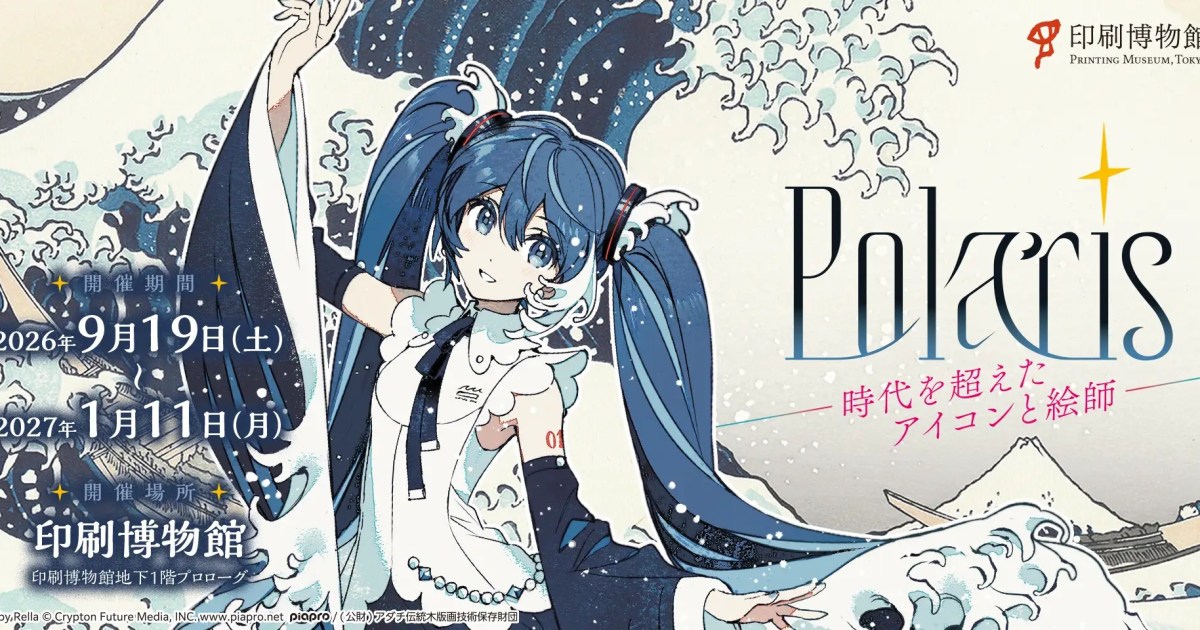
Initially conceived as a limited-run merchandising campaign offering fans prints, keyholders, and pins featuring Miku styled after Hokusai’s legendary compositions, the sheer popularity of the art forced a cultural re-evaluation. Industry observers and cultural preservationists recognized that the artwork was more than mere commercial tie-in material; it served as a thoughtful commentary on mass production, reproducibility, and the democratization of art across epochs.
Transition to the Museum Space
Responding to intense public demand and critical praise, the Printing Museum in Tokyo stepped forward to elevate the digital illustrations into a formal museum-grade retrospective. Announced in mid-September via official channels, the exhibition space was carefully structured to juxtapose Rella’s modern digital compositions with tangible artifacts of historical printmaking.
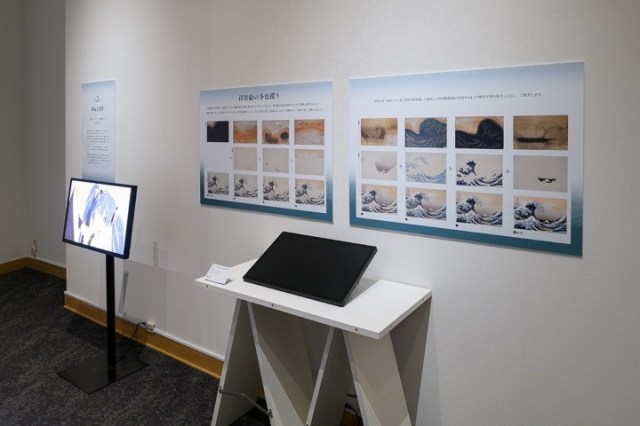
Rather than treating the Vocaloid presence as a gimmick, the curators designed the exhibition to create a symbiotic dialogue. Visitors entering the hall are greeted by high-fidelity reproductions of the original Hokusai prints that served as the structural backdrops for Rella’s work. Alongside these visual comparisons are meticulous breakdowns of the ukiyo-e (pictures of the floating world) production pipeline, detailing the laborious mechanics of carving separate woodblock stamps for every individual layer of color required to complete a multi-hue master print.
Interactive Highlights and Creative Installations
The exhibition moves beyond static wall displays by incorporating imaginative, tactile installations that reward close inspection:
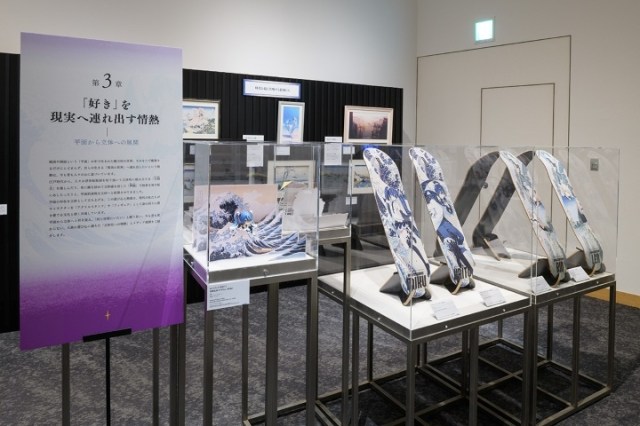
- The Great Wave Diorama: One of the crown jewels of the installation is a physical, three-dimensional diorama that integrates a collectible figurine of the Great Wave off Kanagawa-inspired iteration of Hatsune Miku directly into a physical recreation of the rolling seascape that birthed her stylized outfit.
- Skateboard Deck Canvases: Bridging traditional motifs with contemporary street culture, Rella’s ukiyo-e Vocaloid designs have been printed onto high-quality skateboard decks, highlighting the enduring adaptability of classic woodblock aesthetics in modern graphic design.
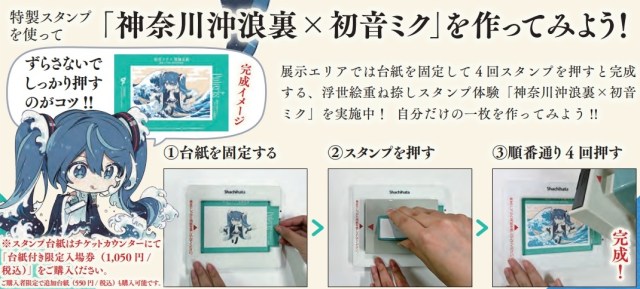
- The Ukiyo-e Stamping Workshop: Serving as the centerpiece of the interactive experience, the museum hosts a specialized workshop area. Here, attendees can roll up their sleeves and try their hand at traditional woodblock stamping techniques, creating their own physical souvenir copy of a super-deformed (chibi) version of the Great Wave Miku artwork.
Supporting Context & Metrics
Historical Parallels: Hokusai and Miku
To understand the profound nature of this exhibition, one must examine the shared DNA between Hokusai and Hatsune Miku. In the early 1800s, Katsushika Hokusai utilized the commercial medium of ukiyo-e woodblock printing to produce affordable art for everyday citizens. This mechanical reproducibility stripped fine art of its exclusivity, allowing commoners to own landscapes and portraits that previously would have been restricted to the elite ruling classes.
Fast-forward to August 2007: Crypton Future Media released Hatsune Miku, a software voicebank powered by Yamaha’s Vocaloid technology, personified by an anime-style turquoise-haired avatar. Miku functioned as an open-source cultural canvas. Creators across the globe could compose songs, animate music videos, and write stories using her voice and likeness without traditional gatekeepers. Just as woodblock printing allowed art to be endlessly multiplied and distributed among the populace, digital software allowed musical composition and character design to escape the confines of major record labels, giving birth to a decentralized, global ecosystem of participatory art.
Financial and Logistical Overview
Despite its high-profile subject matter, the "Polaris" exhibition remains remarkably accessible to the general public, aligning with the populist spirit shared by both ukiyo-e printmakers and the Vocaloid community.
- Exhibition Polaris -Icons and Artists Across the Ages-
- Run Dates: September 19, 2026 – January 11, 2027
- Venue: Printing Museum, Tokyo (Toppan Koishikawa Honsha Building)
- Address: 1-3-3 Suidobashi, Bunkyo-ku, Tokyo-to
- Operating Hours: 10:00 AM – 6:00 PM (Closed on Mondays, or Tuesdays if the preceding Monday is a national holiday)
- General Admission Fee: 550 yen (approx. $3.50 USD), which grants access to the museum’s permanent collections and rotating exhibits.
- Workshop Fee: An additional 500 yen for participation in the ukiyo-e stamping workshop.
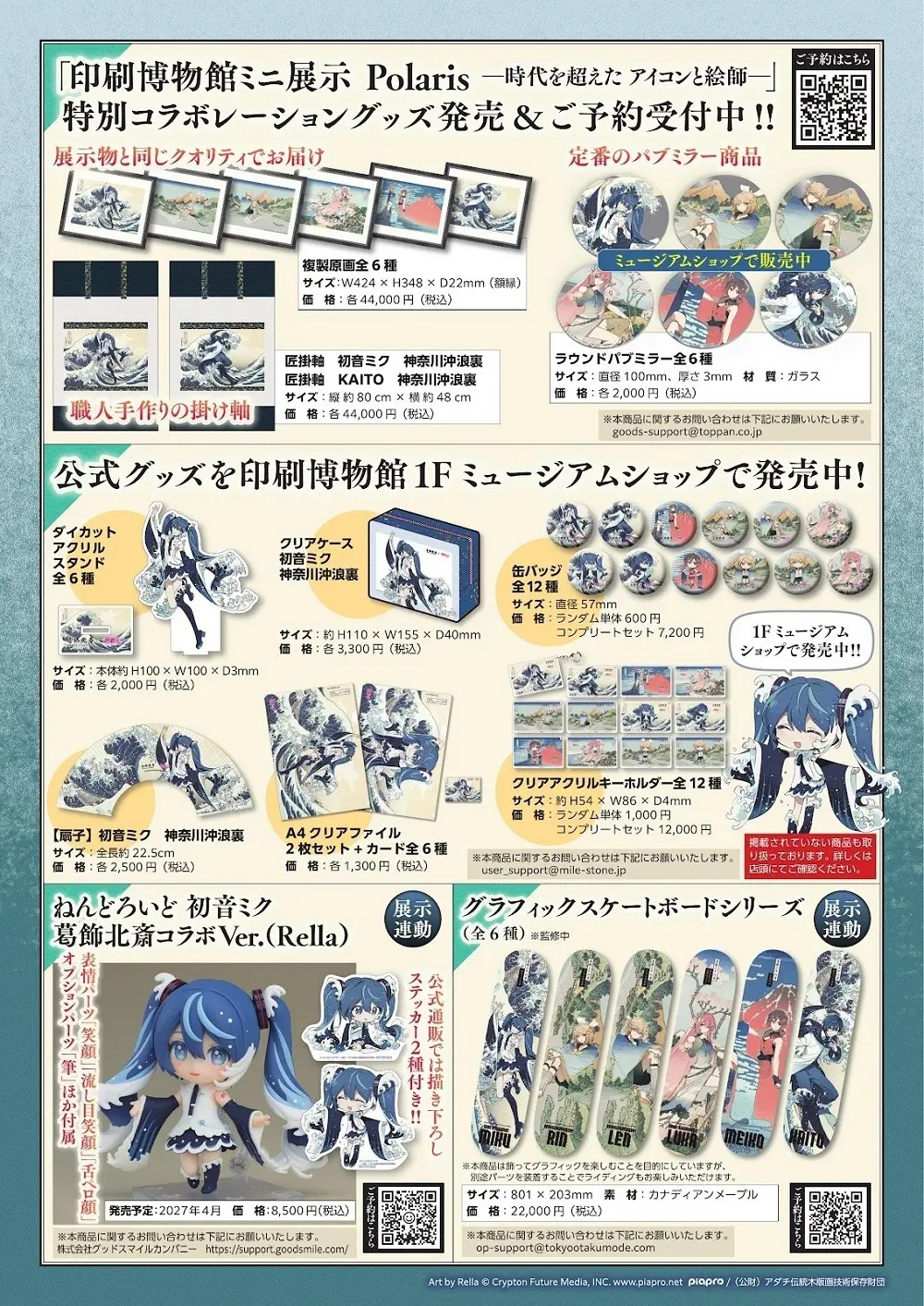
- Merchandise Availability: The museum gift shop features an extensive array of exclusive items, including art prints, enamel pins, keyholders, traditional folding fans (sensu), and stationery items bearing the crossover artwork.
Official Statements & Curatorial Vision
The Printing Museum, Tokyo—an institution dedicated to preserving, studying, and educating the public on the history and evolution of human communication technology—framed the "Polaris" exhibition as an exploration of how humanity continually reinvents reproducibility.
In promotional statements released via PR Times and official museum literature, curators emphasized that the guiding star ("Polaris") of the exhibition is the enduring human impulse to share stories and artistic expression through mass-reproducible mediums.
"Centuries separate the carved cherry-wood blocks of the Edo period from the digital data packets of synthesized vocal software," noted a museum spokesperson during the exhibition’s opening week. "Yet, both movements represent a revolutionary democratization of culture. Hokusai put landscapes into the hands of ordinary Edo citizens; Miku put musical creation into the hands of internet creators worldwide. This exhibition celebrates the parallel journeys of technologies that expand who gets to be an artist, and who gets to enjoy art."
Illustrator Rella echoed these sentiments in past commentary regarding the collaboration, expressing deep reverence for how classic Edo compositions could naturally accommodate modern character design without losing the emotional gravity and stylistic rhythm inherent in Hokusai’s original masterpieces.
Future Outlook
The launch of "Polaris -Icons and Artists Across the Ages-" signals a growing trend within Japanese cultural institutions: the seamless integration of otaku pop culture with high-brow historical scholarship. Rather than viewing contemporary subcultures as transient commercial fads, progressive museums like Tokyo’s Printing Museum are recognizing that phenomena like Hatsune Miku represent legitimate chapters in the ongoing evolution of visual media and collaborative art.
Industry analysts predict that the success of this mini-exhibition will likely pave the way for similar institutional collaborations. As virtual idols continue to mature and cross paths with traditional craftsmanship—ranging from Kyoto textiles and Edo glassware to classical woodblock printing—the boundaries separating high art from digital pop culture will continue to dissolve.
For local residents, international travelers, and digital art enthusiasts visiting Tokyo between now and January 11, the Printing Museum offers a rare opportunity. Visitors can trace the physical evolution of ink on paper while holding a piece of futuristic pop history in their hands, proving that true artistic icons truly do transcend the ages.








Belum ada komentar. Jadilah yang pertama berkomentar!