

Executive Overview
In an era defined by ephemeral content and real-time audience engagement, platforms continually race to provide creators with intimate, low-friction tools to connect with their followers. YouTube—traditionally the undisputed king of long-form, polished, and evergreen video content—has officially taken a decisive step further into the short-form, temporary content ecosystem.
Following an extensive, closed-beta testing period that spanned over a year, YouTube has announced the official rollout of its "Stories" feature to all eligible creators with 10,000 or more subscribers. This strategic expansion marks a paradigm shift in how the platform views community-building. No longer confined to heavily produced video uploads and community tab text posts, creators can now bring their audiences behind the scenes, offer real-time life updates, and preview upcoming projects using lightweight, vertical video formats that automatically expire after seven days.
By integrating Stories into the core mobile app experience—complete with interactive elements, creative customization tools, and robust comment moderation—YouTube is bridging the gap between traditional video distribution and transient social media engagement. This comprehensive report delves into the mechanics of the new rollout, the strategic implications for digital creators, the technical features accompanying the launch, and what this means for the broader landscape of online video content.
Detailed Chronology: From Beta Testing to Platform-Wide Release
The journey toward universal adoption of YouTube Stories has been methodical, iterative, and heavily dependent on creator feedback. Understanding how the feature evolved provides critical context into why YouTube has chosen this precise moment for a wider release.
Phase 1: The Closed Beta and Experimental Iterations
Roughly a year prior to the official announcement, YouTube initiated a closed beta test of the Stories format (initially known as "Reels" during its earliest conceptual stages). The platform selected a diverse cross-section of creators—spanning beauty vloggers, tech reviewers, and documentary-style creators—to test how temporary video content could integrate into the YouTube ecosystem.
During this pilot phase, creators like FashionbyAlly utilized the format to provide rapid, spontaneous fashion updates and day-to-day announcements. Meanwhile, analytical and vlogging duos such as Colin and Samir used Stories to pull back the curtain, giving their fanbases an unfiltered look at the creative process, editing bays, and logistical hurdles of running a high-output YouTube channel.
Phase 2: Gathering Data and Refining the UX
Throughout the testing window, YouTube’s product and engineering teams actively monitored user behavior, engagement metrics, and creator friction points. Feedback indicated that creators desperately needed a lightweight alternative to traditional uploads—something that didn’t require days of editing, color grading, and thumbnail design, but still maintained the high-fidelity ecosystem of YouTube.
Simultaneously, viewers demonstrated an appetite for unpolished, authentic content that sat comfortably outside the traditional subscription feed. Armed with this telemetry, YouTube optimized the creation tools, streamlined the mobile publishing workflow, and built a dedicated moderation framework to ensure that Stories would remain a safe, brand-friendly space for all age groups.
Phase 3: The 10K+ Subscriber Threshold Launch
Today marks the formal transition from an exclusive beta to a scaled platform feature. By restricting the initial rollout to creators with 10,000 or more subscribers, YouTube has adopted a measured deployment strategy. This threshold ensures that the feature is granted to established creators who already possess an active, engaged audience capable of testing community response mechanics—such as the newly introduced Stories comments and interactive reactions—at scale.
Technical Features, Creation Tools, and Community Mechanics
YouTube Stories is not merely a carbon copy of ephemeral features found on competing platforms like Instagram, Snapchat, or Facebook. It has been built from the ground up to integrate seamlessly into the existing YouTube mobile application infrastructure.
1. Simplified Creation Workflow
Accessibility is central to the Stories product design. To produce and publish a Story, a creator simply needs to:
- Open the YouTube mobile application on iOS or Android.
- Tap the prominent video camera icon located at the top of the interface.
- Select the "Create Story" option from the menu.
From there, creators are greeted with an intuitive interface equipped with familiar, robust creative tools. Creators can overlay text, apply color filters, adjust audio with music integrations, and decorate their frames with custom, "YouTubey" stickers designed specifically to resonate with the platform’s native visual culture.
2. Enhanced Community Interaction and Comment Moderation
One of the most critical differentiators of YouTube Stories is its deep integration into the platform’s comment and community management architecture. YouTube recognized early on that ephemeral content often suffers from a lack of meaningful discourse, devolving into superficial engagement.
To combat this, the platform has integrated a fully functional commenting system directly into Stories:
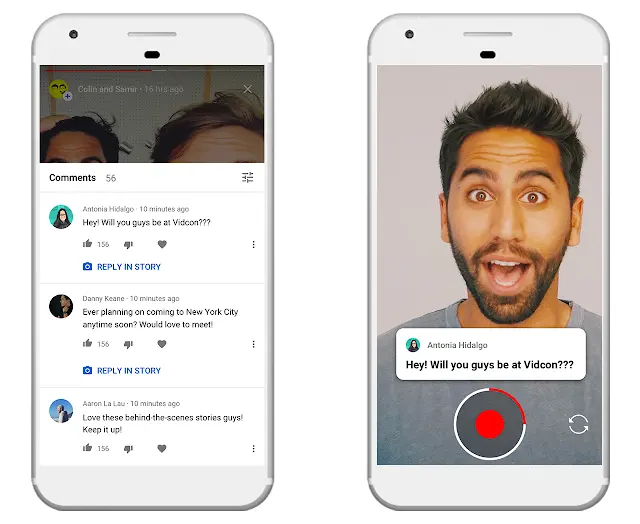
- Public Conversations: Viewers can leave comments directly on a Story, view other fans’ remarks, and participate in community discussions.
- Voting Mechanics: Fans can cast thumbs-up and thumbs-down votes on individual comments, allowing community-driven sorting to bubble the best discussions to the top.
- Creator Validation: Creators retain the ability to "heart" fan comments, signaling appreciation and driving further engagement.
- Direct Multimedia Replies: In a groundbreaking feature for ephemeral content, creators can respond to a fan’s comment using a photo or a video. When published, this reply becomes visible to the entire community, transforming a private interaction into a public, engaging dialogue.
- Comprehensive Moderation Tools: Safety and brand protection are paramount. YouTube has ensured that all existing comment moderation tools—including automated spam filters, blocked word lists, and manual review queues used for standard video uploads—are fully operational within Stories.
3. Visibility, Distribution, and the 7-Day Lifecycle
Content lifespan and algorithmic discoverability are critical concerns for digital creators. YouTube Stories operate on a distinct visibility model designed to maximize reach without cluttering permanent subscription feeds:
- The 7-Day Window: Once published, a Story remains active and viewable within the mobile app for exactly seven days. This duration provides ample time for casual viewers and international fans across different time zones to discover and consume the content before it automatically vanishes.
- Targeted Distribution: Stories do not just live in a vacuum. They can appear in multiple high-traffic areas across the YouTube app:
- Directly on the Subscriptions tab for loyal subscribers who check in daily.
- On the Home feed for both subscribers and non-subscribers alike.
- In the "Up Next" recommendation list located directly below standard video player views, capturing passive viewers as they transition between videos.
Supporting Context & Metrics: The Ephemeral Economy
To fully appreciate the strategic significance of YouTube’s move, one must examine the broader macro-trends governing digital media consumption over the past half-decade.
The Rise of Ephemeral Media
The concept of vertical, temporary video content—pioneered by Snapchat and subsequently popularized by Instagram Stories, Facebook Stories, and TikTok’s temporary posting features—fundamentally altered digital psychology. Audiences transitioned from demanding hyper-curated, permanent portfolios to craving raw, unfiltered, and immediate access to the creators they admire.
Before this rollout, YouTube creators seeking to leverage ephemeral content were forced to fragment their audiences, driving their core subscriber bases away from YouTube to Instagram or Twitter to share behind-the-scenes moments. By building a native Stories product, YouTube effectively plugs this retention leak, keeping users within its walled garden for longer session durations.
Subscriber Threshold Economics
Choosing the 10,000-subscriber milestone as the baseline for eligibility is a calculated business and operational decision. Channels with 10K+ subscribers typically represent the professionalized tier of content creation—individuals and teams who rely on YouTube as a primary or substantial secondary source of income.
By gating the feature behind this milestone, YouTube achieves two vital goals:
- Server and Infrastructure Management: Limiting initial deployment prevents catastrophic server strain that could occur if millions of micro-creators simultaneously began uploading high-volume vertical video content.
- Quality Control: Established creators are generally more experienced in community management and compliance with YouTube’s stringent Community Guidelines, mitigating the risk of widespread policy violations on a brand-new feature format.
Official Statements and Industry Reception
While the rollout has just begun, initial reactions from early beta testers and digital media analysts have highlighted the profound implications of the feature.
Industry analysts have pointed out that YouTube’s multi-surface distribution strategy—pushing Stories into the Home feed and the Up Next panel—gives creators an unprecedented promotional vehicle. Unlike traditional social media platforms where stories are sequestered to a static horizontal bar at the top of the app, YouTube’s algorithm is actively leveraging the feature to cross-pollinate audiences between long-form video libraries and short-form updates.
Early beta creators have been vocal about the qualitative improvements in audience loyalty. In statements echoing across creator forums and community feedback boards, content producers noted that the ability to drop a 15-second teaser for an upcoming documentary or poll fans on their preference for a future video topic has dramatically accelerated audience feedback loops.
As YouTube stated in its official release communication:
"We applied feedback that we got from you to build a product specifically designed with you, the YouTube creator, in mind. We’re excited to see how you continue to use Stories to reach out to your community. Give it a try today!"
Future Outlook: What Lies Ahead for YouTube Ecosystems
The launch of Stories for creators with 10K+ subscribers is unlikely to be the final destination for YouTube’s product roadmap. As the digital video landscape continues to evolve at a blistering pace, several future trajectories emerge:
1. Democratization of the Feature
As server capabilities expand and optimization protocols improve, it is a near certainty that YouTube will lower the subscriber threshold over time. Eventually, creators with smaller followings, or even standard users, may gain access to the feature, mirroring the trajectory of community tabs and live-streaming capabilities.
2. Monetization and Brand Integrations
Currently, Stories serve primarily as a community-building and promotional tool. However, as brands continually seek out authentic, transient placements, future iterations of YouTube Stories could very well incorporate sponsored content tags, affiliate links, and native merchandise shelves, opening up lucrative secondary revenue streams for creators.
3. Advanced Analytics and Data Insights
For data-driven creators, understanding audience drop-off and engagement metrics on 7-day content is essential. Future updates to YouTube Studio will likely introduce granular analytics dedicated strictly to Stories performance, tracking metrics such as completion rates, sticker taps, and subscriber conversions derived directly from temporary posts.
Conclusion
YouTube’s official rollout of Stories represents a mature, highly calculated evolution of the world’s largest video platform. By blending the immediacy of ephemeral media with the robust infrastructure of YouTube’s comment moderation, recommendation algorithms, and multi-surface distribution, the platform has armed its creator community with a powerful new instrument for connection. For creators crossing the 10,000-subscriber threshold, the digital frontier just got a little closer, a little faster, and significantly more engaging.





Belum ada komentar. Jadilah yang pertama berkomentar!