

Executive Overview
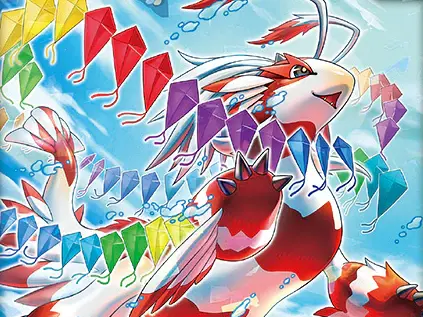
The landscape of competitive Yu-Gi-Oh! Rush Duel is once again shifting with the official announcement and card reveal of Lostream Nereides (cataloged under the official database identifier RD/SJMP-JP068). As the game continues to mature since its inception by Konami, card design philosophies have increasingly gravitated toward hybrid mechanics, resource management through mill strategies, and robust defensive utility. Lostream Nereides encapsulates this modern design trajectory, introducing a high-impact Level 7 WIND Sea Serpent Union Effect Monster that promises to redefine how duelists approach backrow protection and resource recycling in Sea Serpent strategies.
This comprehensive investigative report analyzes every facet of Lostream Nereides. From its exact card text, structural parameters, and summoning conditions to its graveyard-milling requirement and continuous backrow protection effect, we explore how this card fits into the broader Rush Duel ecosystem. Furthermore, we examine the systemic impact of Union mechanics within the Rush Duel format, provide historical context on the evolution of WIND Sea Serpent archetypes, and project the future outlook of competitive deck-building trends following this release.
Detailed Chronology & Card Specifications
The Discovery and Official Unveiling
The revelation of RD/SJMP-JP068 originated directly from the primary authoritative source for the franchise, the YU-GI-OH! Official Site (yu-gi-oh.jp). Released via promotional channels, the initial database entry for Lostream Nereides quickly circulated through international communities, sparking intense debate among competitive theorists, casual collectors, and format analysts alike.
In Rush Duel, promotional cards and specialized set drops often serve as strategic injects designed to bolster underrepresented types and attributes. By targeting the WIND Attribute and the Sea Serpent Type simultaneously, Konami has signaled a clear intent to elevate specific hybrid typings that historically lacked cohesive, game-ending support columns.
Comprehensive Card Anatomy & Statistical Breakdown
To fully understand the competitive gravity of Lostream Nereides, one must dissect its fundamental parameters down to the individual stat block and operational mechanics:
- Card Name: Lostream Nereides
- Card Number: RD/SJMP-JP068
- Monster Type: Effect Monster / Union Monster
- Attribute: WIND
- Monster Type (Race): Sea Serpent
- Level: 7
- ATK (Attack): 2300
- DEF (Defense): 1000
Summoning Mechanics & Efficiency
Lostream Nereides breaks standard tribute overheads by featuring a specialized alternative summoning condition:
“You can Tribute Summon this card in Attack Position by Tributing 1 WIND monster.”
In a traditional format, a Level 7 monster typically demands two tributes, presenting a significant resource bottleneck that can stall momentum. By reducing the tribute requirement to a single WIND monster, Lostream Nereides drastically lowers the barrier to entry for establishing a powerful board presence. This design choice rewards deck architects who lean heavily into homogeneous Attribute construction, allowing players to leverage minor utility WIND monsters as immediate launching pads for a high-impact Level 7 threat.
Operational Text and Sequence of Play
The card’s operational loop relies on an active activation requirement followed by a targeted resolution effect:
- [REQUIREMENT]: “Send the top 2 cards of your Deck to the Graveyard.”
- [EFFECT]: “Choose 1 face-up monster on your field and equip this card to it as an Equip Spell Card.”
- [CONTINUOUS EFFECT]: “Other Spell/Trap Cards on your field cannot be destroyed by your opponent’s effects.”
The Union Synergy
By transitioning from a monster zone into an Equip Spell Card, Lostream Nereides adopts the classic "Union" identity tailored specifically to the accelerated pacing of Rush Duel. This movement clears the main Monster Zone for subsequent summons—a critical consideration given the strict monster count limitations inherent to the format—while simultaneously shielding the player’s remaining backrow from opponent-driven disruption.
Supporting Context & Metrics: The Mechanics of Modern Rush Duel
The Economy of Milling and Resource Management
The [REQUIREMENT] clause of Lostream Nereides mandates sending the top two cards of the player’s Deck to the Graveyard. In older iterations of the Yu-Gi-Oh! Trading Card Game (TCG/OCG), sending cards from the deck to the graveyard blindly was occasionally viewed as a gamble, though historically proven powerful. In Rush Duel, however, the Graveyard is not merely a waste receptacle; it is an active, highly utilized secondary hand.
- Fueling Graveyard Recovery: Many Sea Serpent and WIND-based strategies rely on graveyard-retrieval spells, recursion effects, and specific threshold counts. Milling two cards accelerates these counts without expending extra card advantage from the hand.
- Deck Thinnning and Velocity: While the primary goal of the mill is activation cost, it inherently thins the deck, increasing the statistical probability of drawing power pieces, maximum components, or key legends on subsequent turns.
- Risk Mitigation: Duelists must calculate the risk of milling essential restricted cards (such as LEGEND cards). However, the immediate reward—securing an equip-based protective state—virtually always outweighs the stochastic risk in aggressive or mid-range lists.
ATK/DEF Benchmarks in the Level 7 Metagame
With an Attack stat of 2300, Lostream Nereides sits comfortably in the mid-tier of Level 7 monsters. While certain flagship boss monsters cross the 2500 thresholds and beyond, Lostream Nereides compensates for its slightly modest combat statistics through its utility profile.
It is important to evaluate 2300 ATK within the context of Rush Duel‘s damage calculations. Many utility monsters and secondary attackers sit below this threshold, meaning Lostream Nereides can successfully pressure opponent boards or trade efficiently. Furthermore, because its primary function often culminates in attaching itself as an Equip Spell, its base stats become secondary to the continuous protective aura it grants the rest of the player’s backrow.
Defending the Backrow: The Anti-Destruction Aura
The meta-defining core of Lostream Nereides lies in its continuous effect:
“Other Spell/Trap Cards on your field cannot be destroyed by your opponent’s effects.”
In Rush Duel, backrow cards—ranging from devastating Trap cards activated during the opponent’s Battle Phase to lingering utility Spells—win and lose games. As card pools expand, opponents gain access to increasingly sophisticated removal options designed to dismantle defensive setups before committing to offensive pushes.
By rendering other Spell/Trap cards impervious to destruction via opponent effects, Lostream Nereides forces opponents into awkward tactical dilemmas:
- Forced Sub-Optimal Plays: Opponents must either expend resources clearing Lostream Nereides itself first (which may be protected or backed by its own localized defenses) or attack blindly into potentially live, indestructible traps.
- Preservation of Defensive Integrity: Traps such as Mirror Force, formatting-specific barrier cards, and archetype-locked disruption staples remain safely anchored on the field, ensuring that the defending player dictates the terms of engagement during the Battle Phase.
Official Statements and Community Discourse
Insights from the YU-GI-OH! Official Site Release
The announcement roll-out by Konami via the official portal emphasized the tactical flexibility of hybrid Union structures. Editorial notes accompanying the database drop highlighted how cards like Lostream Nereides bridge the gap between aggressive board development and long-term resource preservation. By providing a streamlined one-tribute option for a high-level monster that actively alters the board state into an equipment piece, developers aimed to give WIND and Sea Serpent players a versatile Swiss-army-knife card capable of adapting to diverse game states.
Community Reactions via Discord and Social Channels
Following the reveal, community hubs—most notably the dedicated Yu-Gi-Oh! and Rush Duel Discord servers—erupted into analytical discussions regarding the card’s practical applications.
- The Pro-Union Faction: Many competitive players praised the single-tribute condition. In discussions shared across community channels, analysts pointed out that dropping the tribute requirement from two monsters to one drastically reduces the "brick" potential of running higher-level monsters in non-dedicated builds.
- The Defensive Meta Theorists: Debates frequently centered around the efficacy of backrow protection. While some veteran duelists noted that the card’s protection applies exclusively to other spells and traps (meaning the equipped card or the monster it attaches to does not inherently gain blanket immunity from all forms of removal), others emphasized that safeguarding multi-card setups creates an insurmountable defensive wall for control-oriented strategies.
- Creative Deckbuilding Speculation: Community members immediately began cross-referencing Lostream Nereides with existing WIND support engines, Sea Serpent searchers, and generic graveyard-recycling toolkits, proving that the card has captured the imagination of builders looking to innovate outside mainstream meta templates.
Future Outlook: Competitive Impact and Strategic Projections
Integrating Lostream Nereides into Current and Emerging Metas
As the Rush Duel format continues to evolve, deck builders constantly seek cards that offer multi-layered value. Single-card solutions that advance board presence, manage the graveyard, and secure defensive perimeters represent the pinnacle of modern card design.
- Sea Serpent Archetype Integration: Sea Serpent decks have historically oscillated between explosive swarming tactics and specialized attribute manipulation. Lostream Nereides provides an alternative boss-adjacent engine that can be accessed reliably using standard WIND search infrastructure, diversifying the type’s tactical toolkit.
- Anti-Control and Trap-Heavy Matchups: In mirrors or matchups defined by heavy backrow engagement, the ability to protect existing Spells and Traps from targeted destruction gives the user an asymmetrical advantage. Opponents relying on removal-heavy side decks or main-deck destruction effects will find their disruption pipelines choked.
Long-Term Viability and Collectibility
Beyond strictly competitive parameters, promotional releases like RD/SJMP-JP068 hold distinct value for collectors and enthusiasts. Union monsters occupy a storied, nostalgic lineage within the broader Yu-GI-Oh! franchise history, and their specialized implementation in Rush Duel creates a unique collecting subset.
As tournament scenes expand and regional metas adapt to newly imported mechanics, cards that rewrite resource management rules—such as the two-card mill paired with an equip transition seen in Lostream Nereides—frequently retain long-term relevance. Duelists and collectors alike are advised to secure their copies early, as the card’s unique blend of attribute support, alternative tribute summoning, and persistent backrow defense ensures it will remain a subject of deep strategic exploration for many formats to come.






Belum ada komentar. Jadilah yang pertama berkomentar!