

Executive Overview
Does art imitate life, or does life serve as a mere shadow of artistic creation? In his seminal work On Writing, novelist Stephen King famously argued that life isn’t a support system for art, but rather the other way around. Yet, few contemporary pop auteurs have blurred the boundaries between lived reality and simulated performance quite as aggressively as Charli XCX.
With her eighth studio album, Music, Fashion, and Film, the British singer-songwriter pushes past the neon-soaked, chart-dominating frenzy of her sixth record, brat, into uncharted territories of self-aware satire, existential fatigue, and industry critique. Facing profound creative burnout, Charli turned the very conditions of her existence—her jet-setting lifestyle, high-fashion obligations, and the suffocating pressures of hyper-relevancy under capitalism—into the primary subject matter of her music.
This deep-dive feature explores the architecture of Music, Fashion, and Film, analyzing how Method acting, meta-commentary, and a dark, dystopian vision of stardom converge to create a definitive statement on modern fame. From the tongue-in-cheek mechanics of Notes app apologies to surprising moments of unvarnished vulnerability, Charli XCX is not merely participating in the pop machine; she is performing a public autopsy on it.
Detailed Chronology: From Brat Summer to the Dystopia of Music, Fashion, and Film
The Creative Drought and the Paris Intervention
The genesis of Music, Fashion, and Film was born out of exhaustion. Following the monumental, culture-shifting campaign of brat, Charli XCX found herself creatively drained. In a candid 2026 Rolling Stone interview, she admitted to feeling entirely unready to write anything new. The cultural machinery that demanded perpetual output had ground one of pop’s most innovative minds to a halt.
Enter longtime collaborator A.G. Cook. Recognizing the paralyzing weight of the singer’s writer’s block, Cook devised an unorthodox psychological intervention. Knowing Charli was scheduled to be in Paris for a high-profile fashion week, Cook pushed her back into the recording studio with a conceptual framework designed to trick her into creation.
“I knew that by being thematically at fashion week, she could Method act the whole, ‘Charli’s going to record an album in Paris during fashion week’ scenario,” Cook explained. By collapsing the distance between her actual life and the performance of her career, the duo unlocked the portal to her eighth album. Life and art did not merely imitate one another; they collided, merged, and became indistinguishable.
From Mockumentary Satire to Album Autopsy
Music, Fashion, and Film acts as the capstone project to the brat era, expanding upon inquiries already initiated in The Moment, a fictional mockumentary that aggressively satirized the commercial commodification of her own success.
Where brat was an exploration of hedonism, insecurity, and messy authenticity, Music, Fashion, and Film investigates the mechanics of relevancy itself. It asks a chilling question: What happens when "coolness" betrays its own creators under the unyielding pressure of late-stage capitalism? The resulting record depicts stardom not as a glamorous fantasy, but as a hyper-stylized, alienating dystopia.
Supporting Context & Metrics: Deconstructing the Tracklist and Cultural Aesthetics
1. "SS 26": The PR Machine and the Runway to Oblivion
The album’s aesthetic is established early with "SS 26," a track that lampooning the hyper-rehearsed, sanitized nature of celebrity public relations. Delivering deadpan lyrics like, "I wrote a really good Notes app apology," Charli leans directly into the armor of modern internet contrition.
By weaponizing the clichés of forced public accountability, she signals that accusations of calculated celebrity behavior no longer faze her—she has co-opted them. In the song’s striking music video, high-fashion models walk the length of a runway straight off the edge into oblivion, while Charli stares knowingly and unblinkingly into the camera lens as the picture slowly fades to black.
2. "Rock Music": The Death of the Dancefloor
Musically, Music, Fashion, and Film marks a surprising stylistic pivot as Charli’s first album to incorporate live guitars. However, this departure is far from a earnest bid for rock-cred authenticity.
Introducing the album’s bleak satirical vantage point, she casually declares, "The dancefloor is dead." This calculated pivot is less an artistic reinvention and more an exercise in profound public ambivalence. By adopting the stereotypical, devil-may-care posturing associated with rock music, she parodies her own well-documented indifference to the limelight, weaponizing fan expectations against themselves.
3. "Wink Wink": Breaking the Fourth Wall of Celebrity
Meta-satire reaches its peak on "Wink Wink," a track that solidifies subversion as her foundational artistic state. During the chorus, she croons, "I’m not a bad girl anymore, I promise."
The brilliant punchline of the song operates on dual levels: literally, the statement is a performative falsehood; emotionally, the underlying sentiment—a deep-seated fatigue of being constantly misunderstood by the public—is entirely truthful.
4. "Persona": The Weight of Sincerity
Amidst the layers of irony and systemic critique, Music, Fashion, and Film makes space for devastating moments of sincerity. Mirroring "I Think About It All the Time" (her poignant brat meditation on motherhood), the track "Persona" explores sentimentality lurking in the shadow of a towering career.
The song captures two industry acquaintances sparring through an exchange of subtle, passive-aggressive brags. The suffocating professional tension instantly dissolves, however, when Charli drops her guard with a disarming admission: "You call me your best friend, I secretly love it."
Official Statements and Visual Metaphors
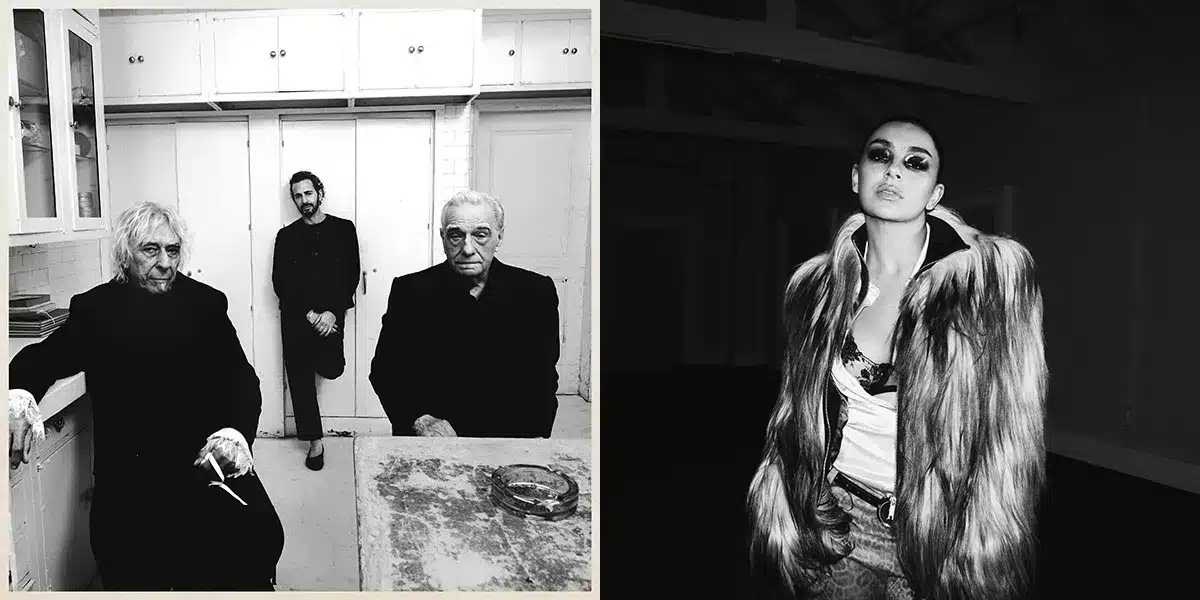
The overarching philosophy of Music, Fashion, and Film was further illuminated during Charli’s interview with journalist Angie Martoccio. Eschewing traditional green rooms or luxury hotels, she invited the press to the Hollywood Forever Cemetery—a sprawling resting place for Hollywood royalty.
While cheerfulness has long since ceased to be a mandatory requirement for pop stardom, Charli transcends the trendy, morose "anti-celebrity" disposition that has dominated recent pop culture. Having metaphorically immortalized her own cultural footprint on brat, she now steers the concept of "cool"—an ephemeral currency that relies entirely on temporary relevancy—to its logical, sobering conclusion: an interrogation of mortality, permanence, and decay.
This meditation on impermanence reaches its zenith in the album’s closing track, "Nothing Lasts Forever." The song features an unexpected spoken-word outro by legendary film director David Cronenberg, who recounts his firsthand experience of a near-fatal accident. Cronenberg reflects:
"When I was lying there on the sidewalk, I did not think about art at all. I thought about people."
It is a profound acknowledgment that while life may indeed be primary and art secondary, the human compulsion to create persists regardless. As an introductory quote in the "SS 26" music video bluntly declares: "Fashion won’t save us, but let’s go on the runway and walk."
Future Outlook: The Indestructible Engine of Creation
By autopsying fame, capitalism, and her own cultural footprint, Charli XCX has managed to turn the machinery of modern pop stardom inside out. Yet, in dismantling the illusions of cool and the dystopia of celebrity, she has arrived at the most resilient, permanent truth of the creative industries.
Having experienced the dizzying, unsustainable pinnacle of modern success, Charli XCX has not found cynicism or permanent retirement. Instead, she has uncovered the one aspect of the creative world that outlasts trends, algorithms, and empires: the relentless, irrepressible human desire to make something entirely new.







Belum ada komentar. Jadilah yang pertama berkomentar!