

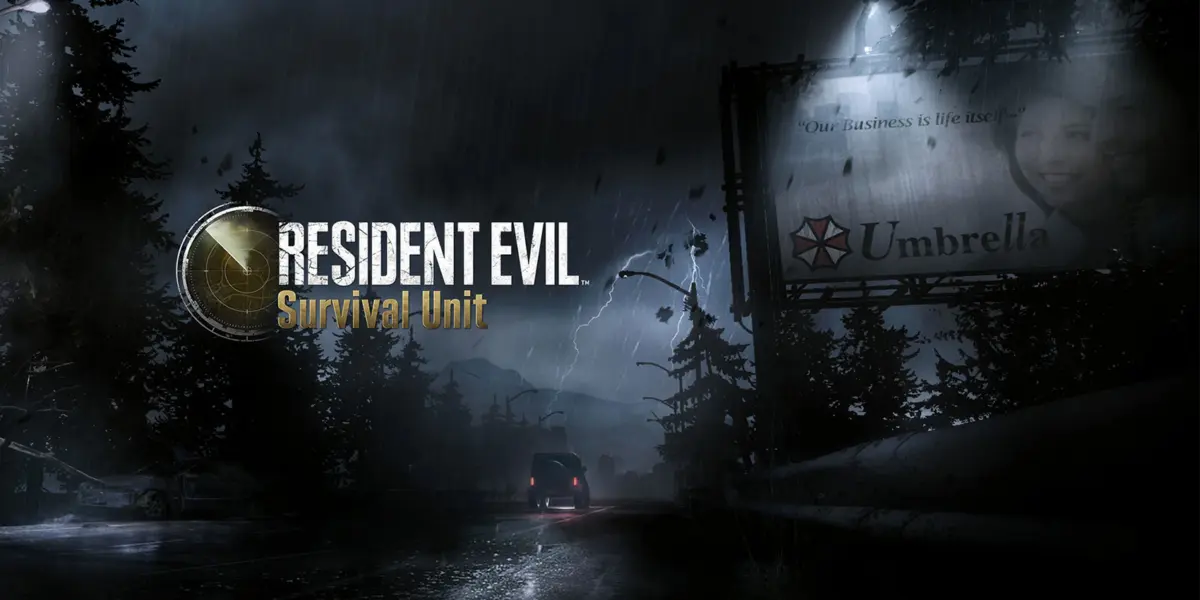
Update (November 18): Following weeks of speculation and an initial announcement that pointed toward a late 2025 release window, Sony subsidiary Aniplex Inc. has officially pushed Resident Evil: Survival Unit live on the Apple App Store and Google Play Store. Players eager to dive into this unique tactical adaptation of Capcom’s legendary survival horror franchise can now download and pre-register for the title ahead of its formal rollout.
Executive Overview
The expansion of Capcom’s Resident Evil intellectual property into the mobile gaming ecosystem is not a new phenomenon, but Resident Evil: Survival Unit represents a significant evolution for the nearly thirty-year-old franchise. Developed by mobile specialist JOYCITY and published under the banner of Sony’s Aniplex Inc., this new entry breaks away from traditional third-person action and horror paradigms to embrace a fully realized real-time strategy (RTS) and resource-management framework.
Set within a parallel storyline that unfolds concurrently with the fan-favorite events of Resident Evil 2 and Resident Evil 3, the game forces players to look at Raccoon City through a completely different lens. Rather than gripping a single controller or navigating tight, atmospheric corridors as Leon S. Kennedy or Jill Valentine, commanders behind the screen must oversee broad territorial expansion, resource gathering, base fortifications, and tactical unit deployments.
With oversight from veteran Resident Evil producer Masachika Kawata and production insights from former Square Enix stalwart Shinji Hashimoto, Survival Unit bridges the gap between casual mobile accessibility and deep, hardcore strategic decision-making. As the title rolls out globally to iOS and Android devices, it stands as a major litmus test for how traditional AAA horror properties can transition successfully into the competitive mobile strategy market.
Detailed Chronology: From Concept to App Store Launch
The journey of Resident Evil: Survival Unit from a whispered rumor within industry circles to a tangible App Store release has been swift, calculated, and tightly orchestrated by its stakeholders.
Early November 2025: The Initial Reveal
The gaming world was first introduced to Resident Evil: Survival Unit during an unexpected corporate announcement by Aniplex Inc. and developer JOYCITY. At the time, the publishers kept tight-lipped regarding specific mechanics, offering only a broad conceptual overview: it would be a mobile strategy game set within the iconic zombie-infested universe, targeting a late 2025 global release window. Fans of the franchise immediately began dissecting what a "strategy-based Resident Evil" could possibly entail, given that previous mobile efforts—such as Resident Evil: Degeneration or port-based iterations of core titles—had largely stuck to action or shooter formulas.
The YouTube Broadcast and Deep-Dive Event
Following the initial teaser, Aniplex hosted a comprehensive multi-language YouTube broadcast event that blew the lid off the project. During this presentation, executive producer Shinji Hashimoto and other key development personnel showcased actual conceptual frameworks, gameplay loops, and story alignments. It was revealed during this stream that Survival Unit occupies a parallel narrative space during the chaotic, outbreak-stricken days of Resident Evil 2 and Resident Evil 3.
![Resident Evil Survival Unit for iOS now up for pre-order, if you don’t mind waiting [U: Launched]](https://i0.wp.com/9to5mac.com/wp-content/uploads/sites/6/2025/07/resident-evil-survival-unit.jpg?resize=1200%2C628&quality=82&strip=all&ssl=1)
Crucially, the broadcast provided clarity on the game’s release timeline. While the App Store initially displayed a placeholder date of December 31, industry analysts and subsequent updates pointed to a much sooner, staggered rollout.
Mid-November: Surprise App Store Debut
Shattering expectations set by the initial late-2025 projection, Aniplex and JOYCITY fast-tracked the release pipeline. On November 18, the application officially materialized on both the Apple App Store and Google Play Store. Accompanying the digital storefront listings was the launch of an official dedicated web portal where players could secure pre-registration rewards, track community milestones, and access lore deep-dives.
Supporting Context & Metrics: Why Strategy Fits the Survival Horror DNA
At first glance, marrying the high-octane, claustrophobic dread of survival horror with the macro-management mechanics of a strategy game might seem incongruous. However, an analysis of the genre’s core pillars reveals a profound thematic synergy.
The Economics of Scarcity
Survival horror has always been defined by resource scarcity. Whether managing healing herbs, gunpowder stocks, or scarce handgun ammunition in the classic PlayStation iterations, players must constantly calculate risk versus reward. Resident Evil: Survival Unit scales this psychological pressure up to a systemic level.
Instead of worrying about a single inventory box, players must manage communal stockpiles across an entire network of survivors and outposts. Every bullet crafted, every barricade reinforced, and every scouting expedition launched carries a heavy opportunity cost. If resources run dry, entire sectors of the player’s base fall to the relentless hordes of the Umbrella Corporation’s bio-weapons.
+-------------------------------------------------------------------------+
|                  THE SURVIVAL STRATEGY ECOSYSTEM                        |
+--------------------------+----------------------------------------------+
| Core Pillar              | Mobile Strategy Implementation               |
+--------------------------+----------------------------------------------+
| Resource Management      | Communal stockpiles, supply line logistics   |
| Tactical Positioning     | Outpost fortification, choke-point defense   |
| Character Integration    | Hero units with unique leadership perks      |
| Narrative Framing        | Parallel timelines alongside RE2 / RE3       |
+--------------------------+----------------------------------------------+
The Mobile Market Landscape
From a financial and logistical standpoint, the move to mobile strategy makes immense commercial sense for Sony and Aniplex. The global mobile gaming market commands the lion’s share of interactive entertainment revenue, with strategy titles showing exceptionally high user retention and monetization health. By leveraging the globally recognized Resident Evil brand—which has shipped well over 150 million units across its mainline console and PC history—Aniplex can capture both nostalgic hardcore veterans and the massive, constantly engaged mobile strategy demographic.
Furthermore, JOYCITY brings a proven track record in developing scalable mobile multiplayer infrastructure. By integrating clan systems, alliance warfare, and cooperative defense missions, Survival Unit transcends a simple single-player narrative experience, transforming it into a persistent social ecosystem where players worldwide must band together to stave off global infection.
![Resident Evil Survival Unit for iOS now up for pre-order, if you don’t mind waiting [U: Launched]](https://9to5mac.com/wp-content/uploads/sites/6/2025/07/resident-evil-survival-unit.jpg?quality=82&strip=all&w=1600)
Official Statements and Developer Insights
The strategic pivot behind Resident Evil: Survival Unit has been a focal point of discussion among the title’s veteran executive team. During the official YouTube broadcast event, industry heavyweights offered deep context regarding the creative decisions that shaped the project.
Shinji Hashimoto, executive producer and industry veteran renowned for his decades of foundational work at Square Enix (including instrumental roles in the Final Fantasy and Kingdom Hearts franchises), elaborated on why the team bypassed traditional action genres in favor of macro-strategy:
"We felt that the game’s unique ‘survival element’ of surviving with only limited resources fits very well with strategy games. Because of that, we chose the strategy genre that allows players worldwide to enjoy the world of Resident Evil from a different perspective."
Complementing Hashimoto’s production oversight is Masachika Kawata, a linchpin of Capcom’s internal development teams who has served as a producer on numerous landmark Resident Evil titles, including Resident Evil 4, Resident Evil 7: Biohazard, and the critically acclaimed remakes of RE2 and RE3. Kawata’s direct involvement ensures that despite the genre shift, the lore, tone, aesthetic design, and character integrity of the Raccoon City incident remain strictly authenticated against franchise canon.
The integration of iconic protagonists—including Leon S. Kennedy, Jill Valentine, Claire Redfield, and Carlos Oliveira—functions not merely as fan service, but as a core mechanical feature. In Survival Unit, these legendary operatives act as high-tier tactical commanders. Each hero brings distinct specializations, combat buffs, and leadership perks to the player’s settlements, bridging the gap between personalized character attachment and grand-scale tactical mobilization.
Future Outlook: What Lies Ahead for Resident Evil: Survival Unit
With Resident Evil: Survival Unit now live on iOS and Android storefronts, attention immediately turns to its long-term operational roadmap, community reception, and potential impact on future multi-platform experiments by Capcom and its partners.
Live-Service Integration and Content Updates
As a mobile strategy title, Survival Unit is designed to be a living, breathing product. Players can expect seasonal updates tied to broader franchise milestones, special crossover events featuring villains and heroes from across the multi-decade timeline, and expanding map expansions that push the parallel narrative beyond the borders of Raccoon City.
![Resident Evil Survival Unit for iOS now up for pre-order, if you don’t mind waiting [U: Launched]](https://9to5mac.com/wp-content/themes/ninetofive/dist/images/google-preferred-source-badge-dark.png)
Key performance indicators to watch in the coming months include:
- Server Stability and Scalability: Managing massive concurrent player counts during global alliance wars.
- Monetization Balance: Ensuring that resource scarcity gameplay loops remain engaging and fair without leaning excessively into aggressive pay-to-win mechanics.
- Narrative Expansion: How deeply the parallel storylines during RE2 and RE3 will weave into established franchise lore, and whether secondary characters cut from other games will eventually join the roster.
Broader Industry Implications
The success or failure of Resident Evil: Survival Unit will likely serve as a bellwether for how legacy Japanese publishers handle mobile adaptations moving forward. By partnering specialized mobile developers (JOYCITY) with entertainment giants (Aniplex/Sony) under the watchful eye of original IP holders (Capcom), companies are demonstrating a willingness to experiment with trusted franchises in non-traditional genres.
For fans of survival horror, the game offers a novel way to interact with a beloved universe while waiting for mainline console announcements. For strategy enthusiasts, it injects a polished, high-production-value coat of paint onto familiar RTS mechanics.
As commanders begin logging into the App Store and Google Play to stake their claims in a ruined Raccoon City, Resident Evil: Survival Unit stands ready to test whether humanity can truly strategize its way out of a localized viral apocalypse.









Belum ada komentar. Jadilah yang pertama berkomentar!