

Executive Overview
The video game industry stands at a critical crossroads. Over the past several years, the once-idyllic landscape of independent studio culture has been aggressively swallowed up by corporate conglomerates, leading to unprecedented waves of restructuring, studio closures, and mass layoffs. Nowhere has this friction been more palpable than within the ecosystem of Microsoft’s gaming division, where the glowing promises of post-acquisition stability have increasingly given way to the cold calculus of shareholder-driven downsizing.
In a powerful display of solidarity last week, the Communications Workers of America (CWA) and the Bethesda Game Studios OneBGS union mobilized workers, activists, and allies across the United States and Canada—with concurrent broadcasts on Twitch—for the "Save Our Devs" rally. The central objective of these demonstrations was unambiguous: to call out corporate greed and systemic layoffs across the gaming sector, while forcefully demanding fair first contracts across Microsoft’s vast network of development studios.
At the heart of this labor movement are the developers themselves, whose creative lifelines have been upended by sweeping structural changes. Speaking to Kotaku, Bethesda artist Alex Nguyen illuminated the profound psychological and operational shift that has taken place since Bethesda’s parent company, ZeniMax Media, was acquired by tech giant Microsoft. What was once a haven for long-term, stable careers defined by institutional longevity has transformed into a high-anxiety environment plagued by recurrent layoffs and the steady erosion of corporate memory.
As corporate leadership preaches grand, sweeping visions of reaching billions of daily players, the architects of these virtual worlds are left picking up the pieces—confronting a stark reality where massive job cuts and unsustainable workloads threaten the very foundation of creative risk-taking.
Detailed Chronology: From Acquisition Optimism to the "Reset" Reality
To understand the current labor uprising, one must trace the trajectory of Microsoft’s aggressive expansion strategy over the past half-decade. The timeline of this corporate evolution reveals a stark contrast between executive rhetoric and the grim day-to-day realities experienced on the ground by game developers.
The Acquisition Era and Promises of Autonomy
When Microsoft officially announced its acquisition of ZeniMax Media—the parent company of Bethesda Softworks, Bethesda Game Studios, id Software, MachineGames, and Arkane Studios—for a staggering $7.5 billion in late 2020 (finalized in March 2021), industry executives painted a picture of unbridled creative freedom. Leadership assured developers and fans alike that Bethesda would continue operating with a high degree of autonomy, backed by the immense financial security and cloud infrastructure of a multi-trillion-dollar parent corporation.
For many veteran developers who had spent decades building careers at ZeniMax studios, this acquisition felt like a golden parachute. It promised the resources needed to realize ambitious visions without the immediate pressures of publicly traded volatility.
The Turning Point: Waves of Industry-Wide Restructuring
However, the promised stability began to fracture as macroeconomic pressures shifted and tech-sector growth cooled. Throughout 2023 and 2024, the gaming industry experienced a relentless cascade of layoffs. Major publishers, eager to trim fat following pandemic-era overexpansion, began systematically dismantling studios.
The situation at Xbox escalated dramatically when Microsoft executed a staggering series of workforce reductions. In early 2024, following its monumental acquisition of Activision Blizzard, the company laid off 1,900 employees across its gaming divisions. Stunned developers found themselves scrambling for their livelihoods, realizing that even record-breaking contributions offered little protection against corporate restructuring.
The crisis deepened further when Xbox announced an even more sweeping purge: the elimination of 3,200 positions and the abrupt shuttering of four distinct studios. This wave of cuts did not spare Bethesda or its sister companies, transforming what was once viewed as a lifelong career destination into a revolving door of uncertainty.
The "Save Our Devs" Mobilization
By late August 2026, the cumulative toll of these decisions catalyzed direct labor action. The CWA and the OneBGS union—representing workers at Bethesda Game Studios—stepped up to the front lines. The "Save Our Devs" rallies held across North America served as both a grieving ground for lost colleagues and a militant warning to executive leadership. Workers carried signs highlighting the human cost of corporate consolidation, demanding that Microsoft respect labor rights, cease treating creative talent as disposable assets, and negotiate fair, binding first contracts.
Supporting Context & Metrics: The Human Cost of Corporate Consolidation
The structural shifts within Microsoft’s gaming division are part of a broader, systemic crisis gripping the interactive entertainment sector. Behind every quarterly earnings report and restructuring memo lies a human toll that fundamentally alters how video games are made, maintained, and remembered.
The Erosion of Institutional Knowledge
One of the most insidious consequences of yearly layoffs is the wholesale destruction of institutional knowledge. As Alex Nguyen pointed out in his interview with Kotaku, modern video game development relies heavily on specialized, highly complex proprietary engines, intricate toolsets, and deeply ingrained team dynamics.
When a studio undergoes sudden downsizing, the departures are rarely strategic; they are often broad, sweeping cuts that sweep away veteran engineers, artists, and designers. Nguyen highlighted a harrowing scenario: if a complex system requires specialized expertise understood by only five individuals, laying off all five creates an insurmountable morale and productivity vacuum. The remaining team members are forced to reinvent the wheel, turning valuable development time into a frustrating cycle of relearning what the studio already mastered years prior.
The Lifespan of Live-Service and "Fixer-Upper" Games
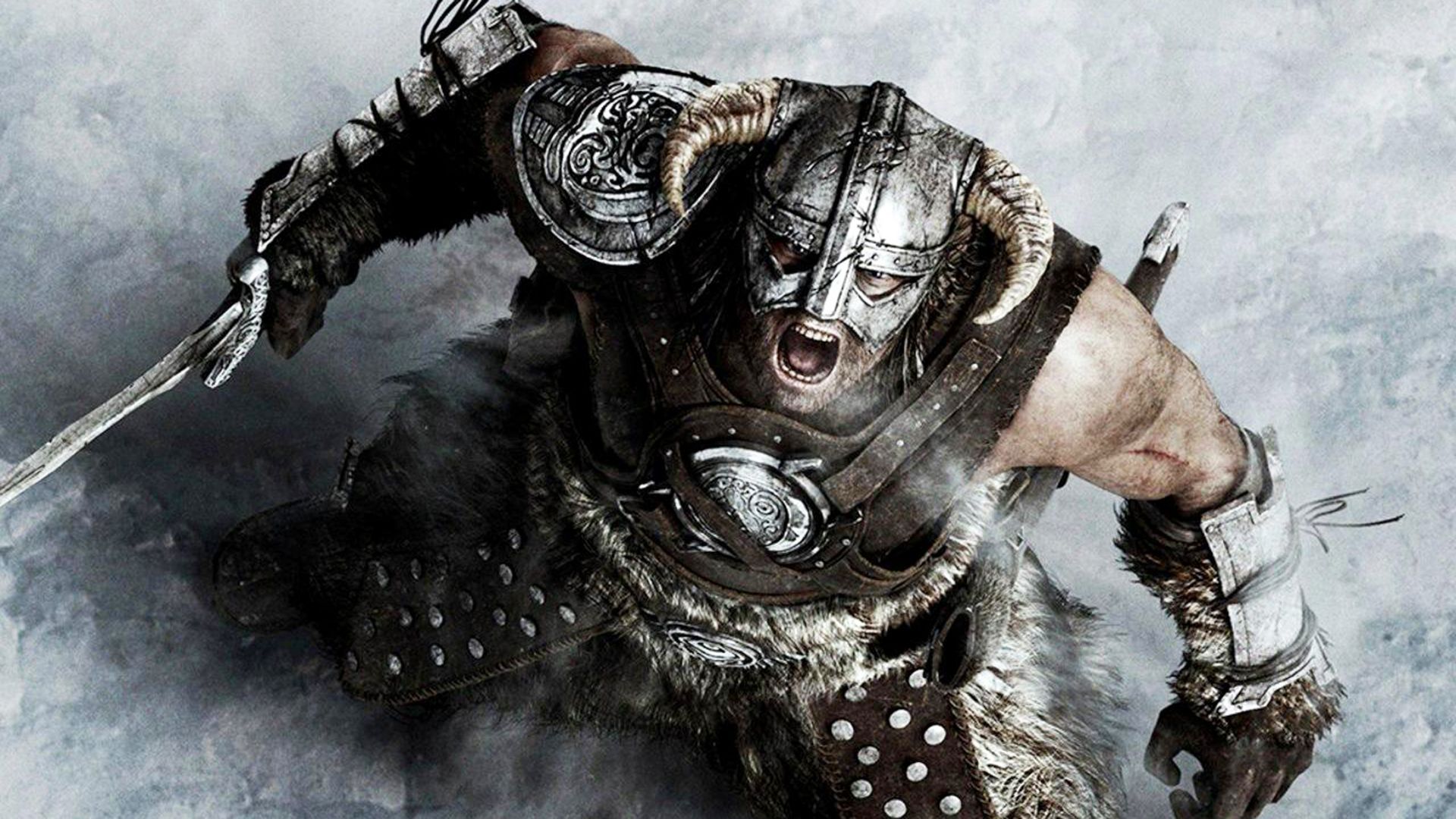
The modern gaming landscape is littered with titles that launched in rocky states but eventually blossomed into beloved cultural phenomena through years of dedicated post-launch support. Titles like Fallout 76 and The Elder Scrolls Online are prime examples of this phenomenon.
However, Nguyen and other labor advocates emphasize that these redemption arcs are entirely dependent on sustained labor, institutional patience, and adequate time. Under the crushing pressure of quarterly profitability metrics and accelerated restructuring cycles, publishers are increasingly unwilling to nurture struggling projects. Instead of giving development teams the runway required to fix, iterate, and refine, modern corporate management opts for rapid abandonment or premature downsizing, starving creative works of the very resources they need to thrive.
The Death of the Long-Term Career
For generations, working at Bethesda or ZeniMax was viewed as a prestigious, lifetime career choice. Many developers settled in Maryland, Texas, and other hub locations with the explicit expectation of retiring from the company. This psychological contract—hard work and creative dedication in exchange for long-term security and community stability—was a primary selling point for talent acquisition.
The transition to Microsoft-style corporate governance effectively severed this social contract. The introduction of recurring, unpredictable layoffs has replaced loyalty with hyper-vigilance, prompting skilled developers to either exit the industry entirely or seek refuge outside the major corporate monoliths.
Official Statements and Executive Disconnect
The widening chasm between executive leadership and rank-and-file developers is perhaps best illustrated by the stark contradiction between public relations messaging and internal corporate actions.
Phil Spencer’s Legacy and the Rhetoric of Risk
During his tenure as the head of Xbox, Phil Spencer frequently positioned himself as a champion of developer autonomy and creative risk-taking. In interviews leading up to and following major acquisitions, Spencer repeatedly emphasized that nurturing and protecting creative teams was the division’s highest priority.
"Nurturing and protecting creative teams that want to go take risks is the priority," Spencer noted, while candidly admitting that the company didn’t always succeed. Yet, critics and union organizers point out that these comforting sentiments rang hollow against the backdrop of thousands of pink slips distributed on his watch. The idealistic vision of empowering creators collided violently with the ruthless execution of top-down financial directives.
Asha Sharma and the "Billion-Player" Delusion
The leadership transition brought new faces and even more ambitious—some would argue delusional—metrics to the forefront. Current Xbox head Asha Sharma captured industry-wide bewilderment when she articulated a corporate mandate for Xbox games to cater to over a billion people each day—a target roughly 24 times greater than the peak concurrent population of Steam.
Simultaneously, Sharma’s administration announced a major strategic "reset," which directly precipitated the sweeping 3,200-job cuts. In official company communications, leadership pointed the finger at previous over-expansion strategies, arguing that the division had "simply spread ourselves too thin."
For workers who bore the brunt of these strategic miscalculations, this narrative is deeply insulting. Developers argue that they are being asked to pay the price for executive overreach and unrealistic growth targets. When leadership sets unattainable goals—such as capturing a fraction of the global population that dwarfs the entire PC gaming market—and subsequently fails to meet them, the penalty is invariably paid by the workers whose livelihoods are sacrificed on the altar of corporate realignment.
Future Outlook: Unionization as the Industry’s Last Line of Defense
As the dust settles on the "Save Our Devs" rallies, the trajectory of Microsoft’s gaming studios—and the broader interactive entertainment industry—hangs in the balance. The friction between unbridled corporate expansion and organized labor has reached a historic turning point.
The Rise of Game Industry Labor Movements
For decades, the video game industry was infamously difficult to unionize, plagued by a culture of crunch, passion-exploitation, and high turnover. However, the aggressive waves of layoffs executed by tech giants like Microsoft, Sony, EA, and Embracer have catalyzed a massive awakening among developers.
The success of the Bethesda Game Studios OneBGS union and its alignment with the Communications Workers of America signals a fundamental paradigm shift. Workers are no longer willing to rely on the hollow benevolence of corporate executives. Instead, they are organizing, demanding collective bargaining rights, and insisting on enforceable employment contracts that protect institutional knowledge, curb arbitrary downsizing, and ensure fair compensation.
What Lies Ahead for Xbox and Bethesda
Looking forward, Microsoft faces a severe crisis of trust. The reputation that once made Xbox an attractive home for premier development talent has been severely tarnished. Prospective hires are increasingly wary of entering corporate environments where job security is tied to the volatile whims of quarterly shareholder reports.
If Microsoft and other industry leaders wish to foster genuine innovation and deliver the landmark titles that fans expect, they must fundamentally recalibrate their relationship with labor. Creative risk-taking cannot thrive in an atmosphere of perpetual fear and institutional amnesia.
Until executive leadership recognizes that sustainable development requires sustainable labor practices, movements like the "Save Our Devs" rally will not be an isolated anomaly, but rather the vanguard of a permanent, industry-wide labor revolution fighting to preserve the heart and soul of video game creation.





Belum ada komentar. Jadilah yang pertama berkomentar!