

Executive Overview
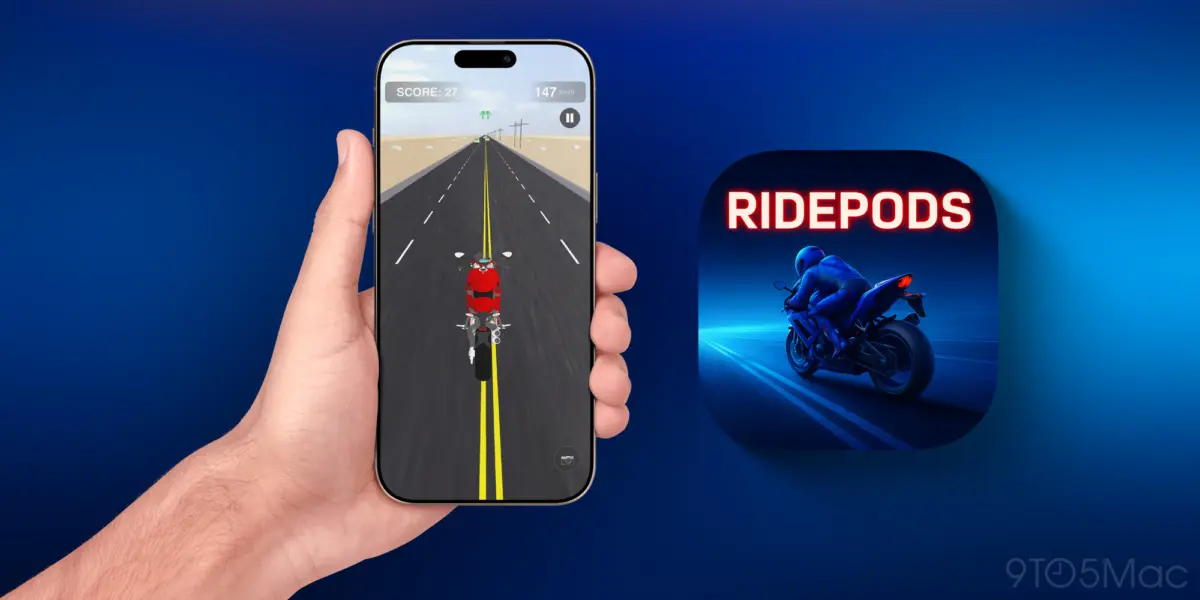
The landscape of mobile gaming and wearable technology has always been defined by incremental updates—faster processors, higher-resolution displays, and more responsive touchscreens. However, creative leaps that redefine how we interact with our devices are remarkably rare. Enter RidePods, a clever and wildly innovative new racing game currently making waves on the Apple App Store.
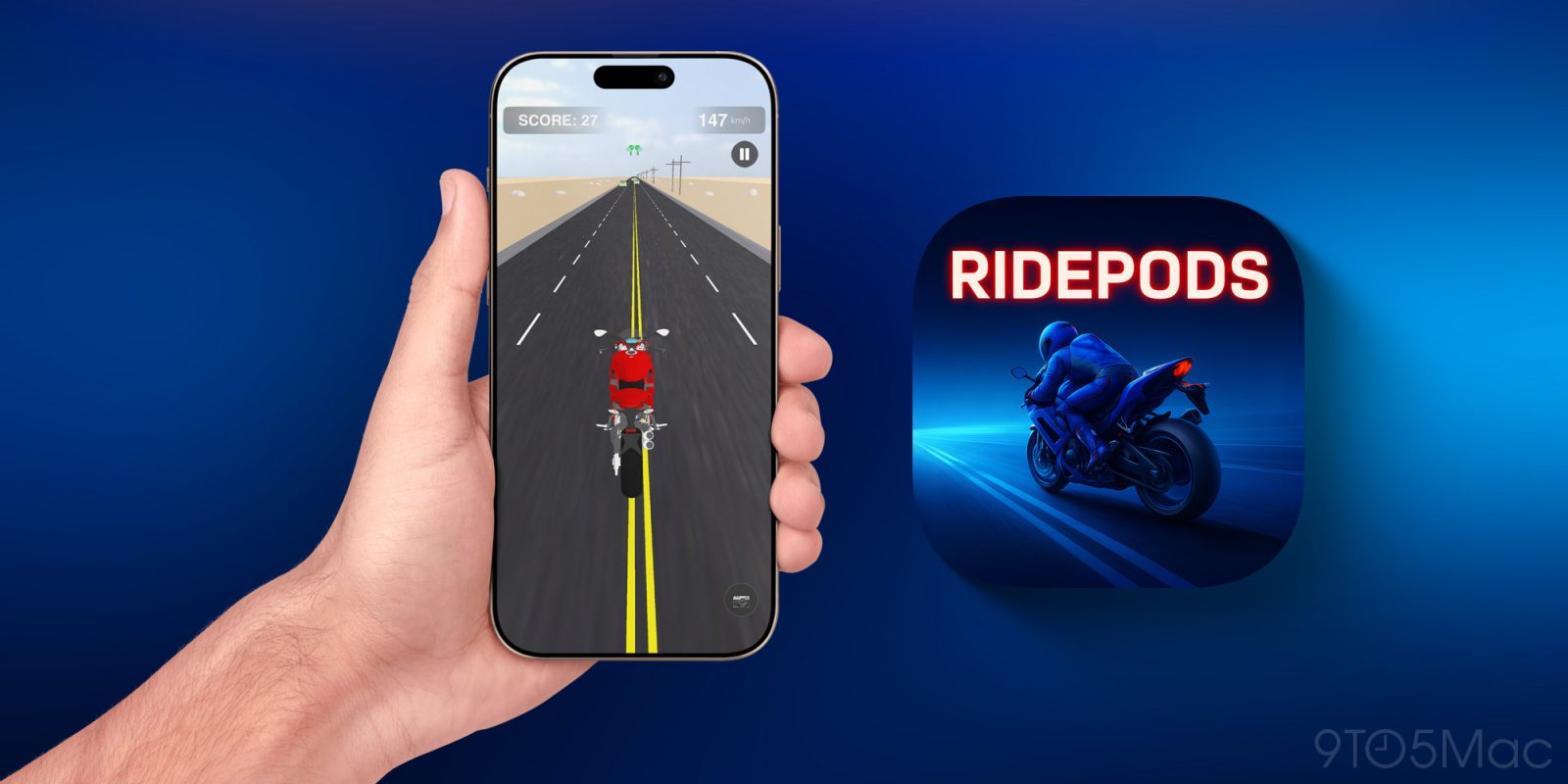
Developed to push the boundaries of standard peripheral usage, RidePods turns a familiar everyday accessory—Apple’s AirPods—into a fully functional, motion-tracking game controller. Rather than requiring traditional on-screen touch controls or external Bluetooth gamepads, RidePods leverages the sophisticated internal gyroscopes and accelerometers built into modern AirPods. The result is a hands-free gaming experience where players literally steer a virtual motorcycle by turning their heads.
While Apple’s ecosystem has continually rolled out advanced audio features like Personalized Spatial Audio and dynamic head tracking primarily for media consumption, developers are now finding novel ways to repurpose these sensors. This article provides a comprehensive deep dive into the mechanics of RidePods, the underlying technology enabling head-tracking gaming, user experience implications, and what this innovative application means for the broader future of wearable-assisted mobile entertainment.
Detailed Chronology: The Evolution of AirPods from Audio Gear to Gaming Peripherals
The Audio Genesis
When Apple first introduced the AirPods line, they were designed strictly as wireless audio output devices meant to cut the cord and seamlessly integrate with the iPhone, iPad, and Mac ecosystems. Over successive generations, Apple steadily infused these tiny earbuds with advanced silicon (such as the H1 and H2 chips) and sophisticated sensor arrays.
The Introduction of Spatial Audio and Head Tracking
A major turning point for AirPods hardware came with the introduction of spatial audio coupled with dynamic head tracking. Initially rolled out to deliver a theater-like surround sound experience, this feature tracked the exact orientation of the user’s head relative to their iOS device. If you turned your head to the left, the audio channels dynamically shifted so that the sound source appeared to remain anchored to your iPhone or iPad screen.
Under the hood, this required ultra-low-latency inertial measurement units (IMUs) capable of measuring micro-movements in real time. Apple spent years refining these algorithms to ensure zero perceptible audio lag and optimal battery conservation.
The Convergence of Sensors and Software
While Apple’s software updates—such as those arriving in recent iOS iterations—have continuously expanded AirPods capabilities (adding features like noise control management, conversation awareness, and touch gestures), third-party developers have largely watched from the sidelines.
The tipping point occurred when independent developers began experimenting with CoreMotion APIs and spatial audio data accessibility. Recognizing that the hardware inside AirPods was essentially identical to the motion-tracking tech found in VR headset controllers or dedicated gamepads, creators began conceptualizing applications that utilized these sensors for non-audio purposes.
The Launch of RidePods
First brought to widespread public attention by tech publication The Verge, the launch of RidePods on the App Store marked a formal paradigm shift. It transformed internal architectural features originally built for immersive listening into the primary input mechanism for an interactive racing game. The app quickly drew attention from mobile gamers and tech enthusiasts alike, sparking discussions across developer forums regarding the untapped potential of wearable sensors.
Supporting Context & Metrics: Under the Hood of RidePods
To truly understand how RidePods operates, one must look at the convergence of hardware compatibility, software integration, and human-computer interaction (HCI) design.
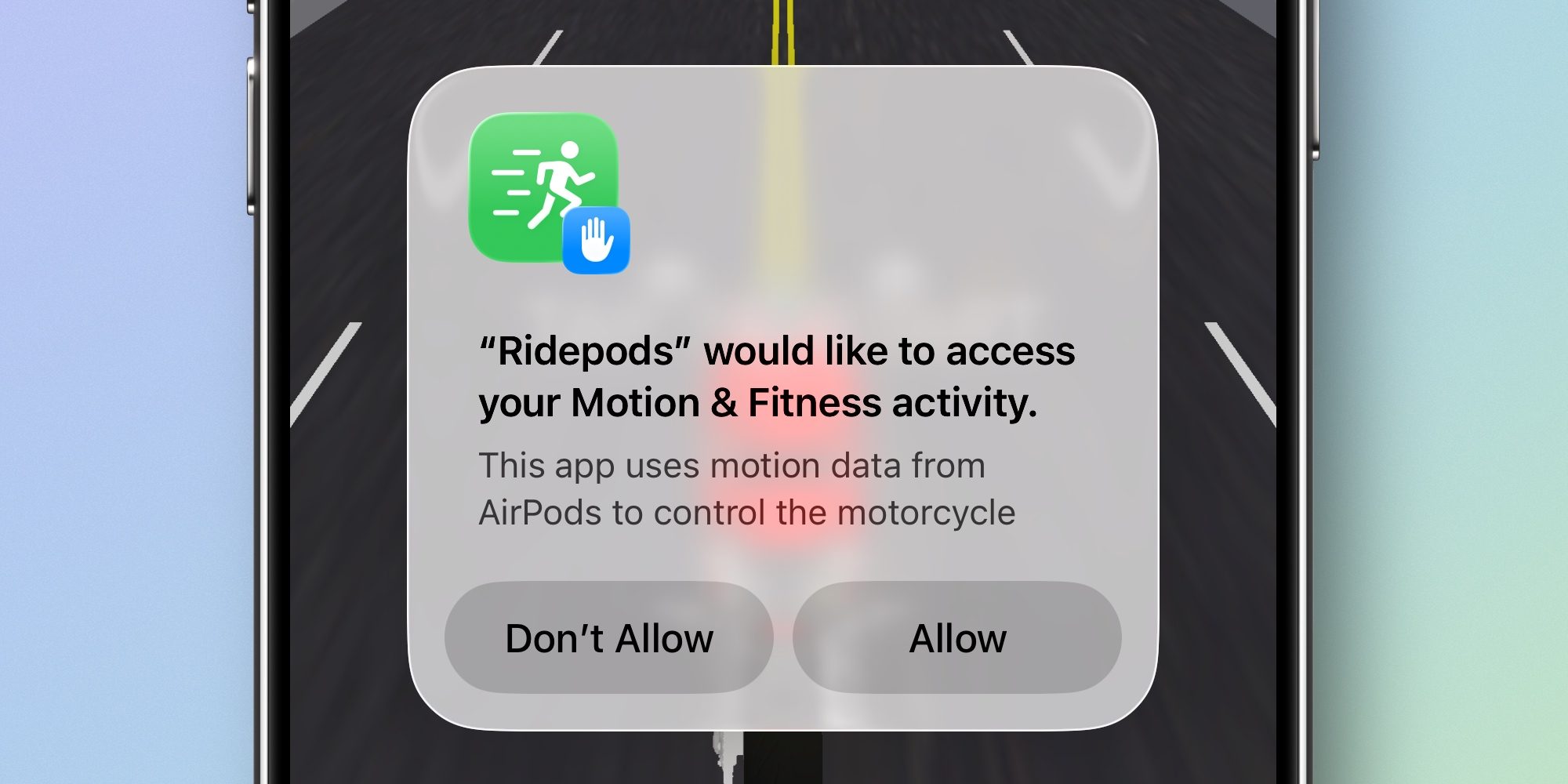
How Motion-Tracking Steering Works
Playing RidePods is deceptively simple yet mechanically fascinating:
- Device Pairing: The user pairs a compatible pair of AirPods to their iPhone or iPad and launches the RidePods application.
- Calibration: The game establishes a baseline orientation, recognizing the user’s neutral head position.
- The Race Begins: As the virtual motorcycle accelerates down the track, the player simply tilts or turns their head to the left or right.
- Real-Time Translation: The IMUs inside the AirPods instantly register the angular velocity and directional shift, translating those physical movements into steering inputs within the game engine with minimal latency.
Hardware Compatibility Breakdown
Because the feature relies strictly on advanced spatial tracking capabilities, RidePods is not universally compatible with every generation of Apple’s earbuds. To utilize the hands-free steering mechanic, users must own AirPods models equipped with native dynamic head-tracking support. This includes:
- AirPods (3rd generation and later)
- AirPods Pro (1st and 2nd generations)
- AirPods Max
This targeted compatibility ensures that the underlying sensor precision meets the strict responsiveness thresholds required for fast-paced gaming.
Ergonomics and User Experience (UX) Metrics
From a UX perspective, utilizing headphones as game controllers presents unique design challenges. Historically, physical controllers require tactile feedback (buttons, analog sticks, triggers), while touchscreens provide visual feedback.
- The Comfort Factor: Developers of RidePods wisely avoided forcing users to tap or squeeze the stems of their AirPods repeatedly while gaming—an action that would quickly become fatiguing and dislodge the earbuds from the user’s ears. By restricting the control scheme entirely to head rotation, the gameplay remains physically comfortable.
- Session Lengths: Early reviews and player metrics indicate that while head-tracking gaming is an immensely fun, novel, and engaging party trick, it occupies a specific niche. Most users report optimal play sessions lasting between 10 to 20 minutes. Prolonged continuous head-turning can lead to mild neck fatigue or vestibular disorientation, meaning head-tracking is currently best suited for casual, arcade-style bursts rather than marathon gaming sessions.
Official Statements and Industry Insights
While Apple has not officially partnered with the creators of RidePods, industry analysts and software engineers have been quick to weigh in on the implications of turning audio hardware into game peripherals.

"We are witnessing an era where consumer electronics are increasingly multi-functional. Accessories that consumers already own—like wireless earbuds—are being retrofitted through clever software engineering to serve entirely new purposes. It lowers the barrier to entry for innovative gaming mechanics without requiring consumers to purchase expensive dedicated hardware."
— Mobile App Market Analyst
Software developers familiar with Apple’s CoreMotion framework have also noted that games like RidePods highlight the robust, low-latency communication pipeline established between iOS devices and Apple’s custom silicon chips. The fact that motion data can be captured, processed, and applied to a rendering game loop without creating noticeable input lag is a technical achievement in its own right.
Furthermore, accessibility advocates have pointed out that motion-controlled audio accessories could pave the way for more inclusive gaming designs. Hands-free input methods open up new avenues for users with limited mobility in their hands or fingers, proving that innovations born out of novelty often yield profound accessibility benefits.
Future Outlook: Where Head-Tracking Gaming Goes From Here
The launch of RidePods serves as a fascinating proof-of-concept. It raises a compelling question: What comes next for wearable-assisted mobile gaming?
Expanding Beyond Racing Genres
While motorcycle and car racing simulators are a natural fit for head-leaning mechanics, the potential applications stretch far wider. Imagine flight simulators where pitching your head upward pulls the aircraft nose up, or first-person exploration games where looking around your physical room translates directly into looking around a digital landscape. Action-adventure titles could incorporate dodge mechanics triggered by quick head bobs.

Integration with Vision Pro and Spatial Computing
As Apple continues to expand its ecosystem around spatial computing—most notably with the Apple Vision Pro—the synergy between spatial audio, head tracking, and optical tracking will only deepen. Developers who master motion-input mechanics on the iPhone today are likely laying the foundational design language for tomorrow’s augmented and virtual reality applications.
Challenges to Overcome
Despite the excitement, developers venturing into this space must navigate distinct hurdles:
- Motion Sickness: Disconnects between visual motion on a screen and vestibular feedback from head movement can induce mild motion sickness in sensitive users. Careful tuning of acceleration curves and camera stabilization is mandatory.
- Battery Drain: Continuous polling of high-frequency IMU sensors in both AirPods and iPhones increases power consumption, shortening play sessions.
- Accidental Inputs: Users frequently move their heads during everyday life (talking, looking at notifications, shifting positions). Software must intelligently distinguish between deliberate gameplay inputs and natural, casual movements.
Conclusion
RidePods may have entered the App Store as a quirky, clever experiment, but its cultural and technical impact stretches much further. By transforming standard AirPods into hands-free steering wheels, it challenges our traditional definitions of what an accessory can do. As developers continue to experiment with the latent capabilities of everyday consumer tech, the line between audio gear and interactive controllers will continue to blur—paving the way for a more immersive, imaginative future in mobile gaming.









Belum ada komentar. Jadilah yang pertama berkomentar!