

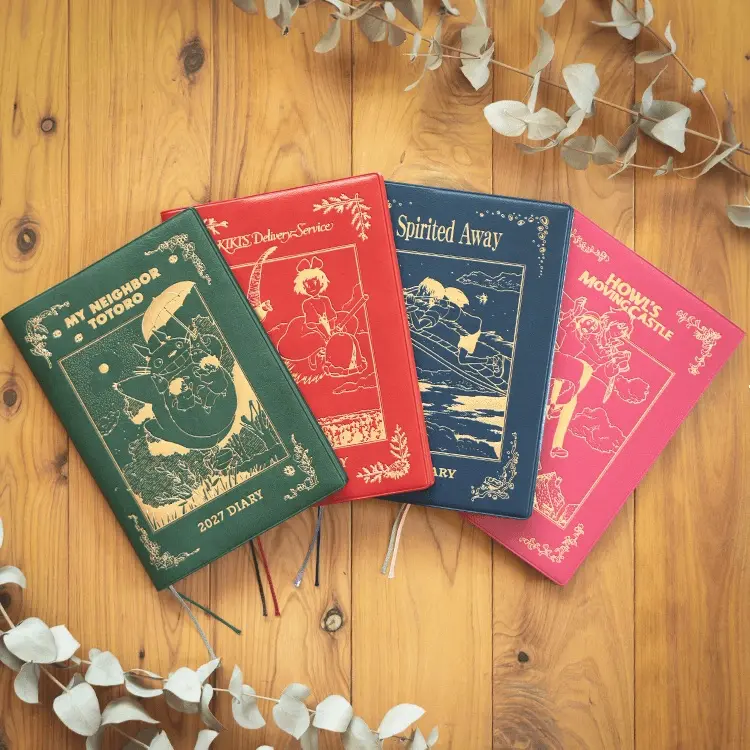
As the twilight of the current year approaches, the global phenomenon of Studio Ghibli stationery releases returns to delight enthusiasts, collectors, and organizational minimalists alike. The renowned Japanese retail chain Donguri Kyowakoku, alongside the official Ghibli Museum Store, has officially pulled back the curtain on its highly anticipated 2027 collection of daily planners, notebooks, and art calendars. For dedicated fans of Hayao Miyazaki’s cinematic universe, these items represent far more than mere utilitarian instruments; they are miniature galleries, tactile art pieces, and daily companions designed to infuse mundane administrative routines with a persistent touch of hand-drawn magic.
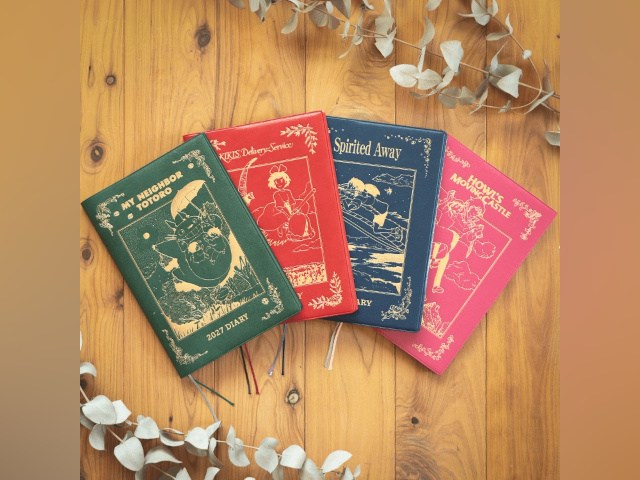
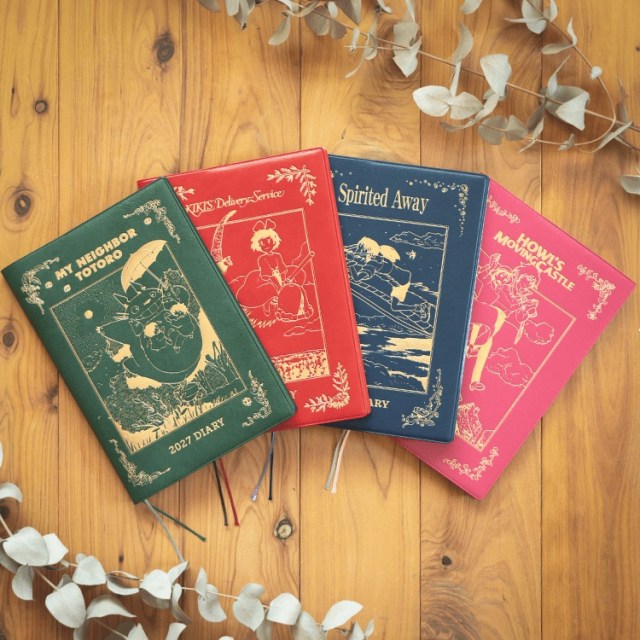
The 2027 lineup comprises four meticulously engineered B6-sized planners—priced at an accessible 2,090 yen (approximately $13.15 USD)—and two distinct calendar series that span the studio’s rich, decades-long history. Featuring flagship cinematic milestones such as My Neighbor Totoro, Spirited Away, Kiki’s Delivery Service, and Howl’s Moving Castle, these schedule books balance whimsical artistic direction with practical, high-grade functionality. With smooth faux-leather bindings, foil-stamped motifs that capture the dynamic emotional beats of each narrative, and thoughtfully curated internal layouts, the collection bridges the gap between high-end collectible merchandise and everyday professional stationery.
Detailed Chronology: The Evolution of the 2027 Studio Ghibli Stationery Lineup
The release of Ghibli’s annual schedule books follows a carefully plotted developmental and retail timeline, building anticipation across international fan communities as the calendar year draws to a close. The 2027 collection exhibits an unprecedented level of narrative integration between the exterior aesthetics and interior organizational spaces of each volume.
The B6-Sized Planners: Specifications and Narrative Design
Measuring 19 by 13.5 by 10 centimeters (roughly 7.48 by 5.31 by 3.94 inches) and housing 128 pages of high-opacity, fountain-pen-friendly paper, each planner is engineered for portability without compromising writing space. The exterior bindings feature smooth, premium faux-leather surfaces. Ghibli’s design philosophy places action-packed vignettes on the front covers—celebrating peak moments of movement and discovery—while the rear covers feature quieter, more contemplative scenes that ground the viewer in the atmospheric calm of the films.
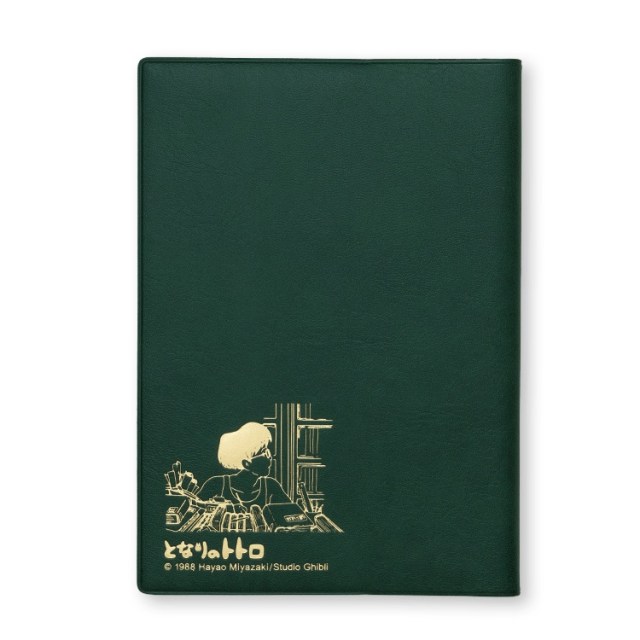
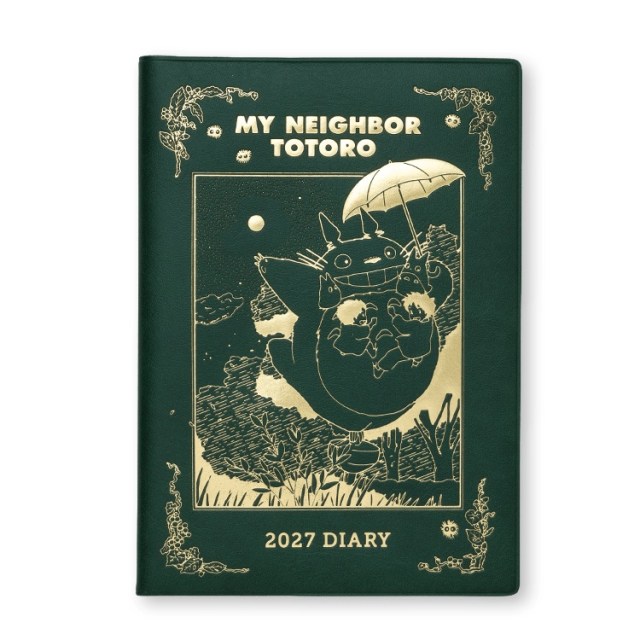
1. My Neighbor Totoro Planner
- Exterior: The front cover depicts the iconic nocturnal flight sequence where the Large, Medium, and Small Totoros sail through the starry sky atop a giant spinning top alongside Mei and Satsuki. The rear cover shows Satsuki and Mei’s father working late at his desk, gazing upward as if catching a fleeting glimpse of the whimsical procession.
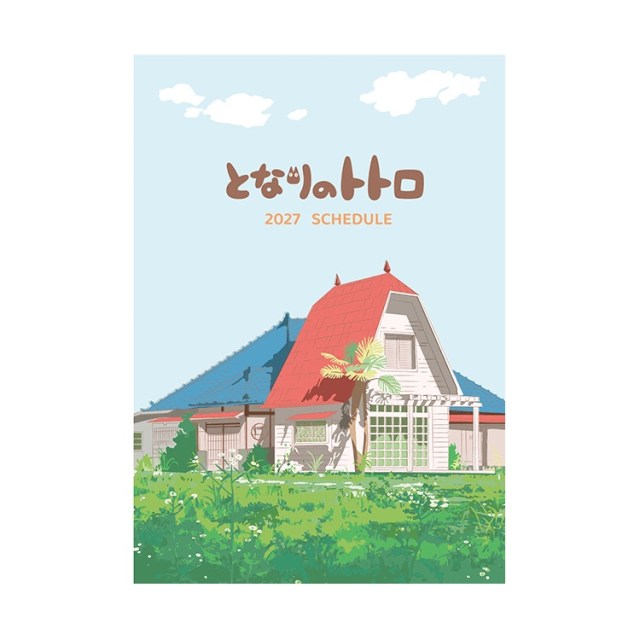
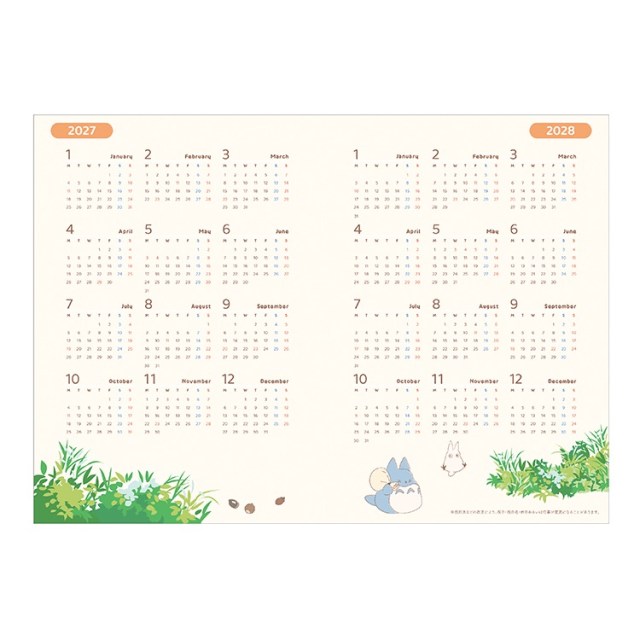
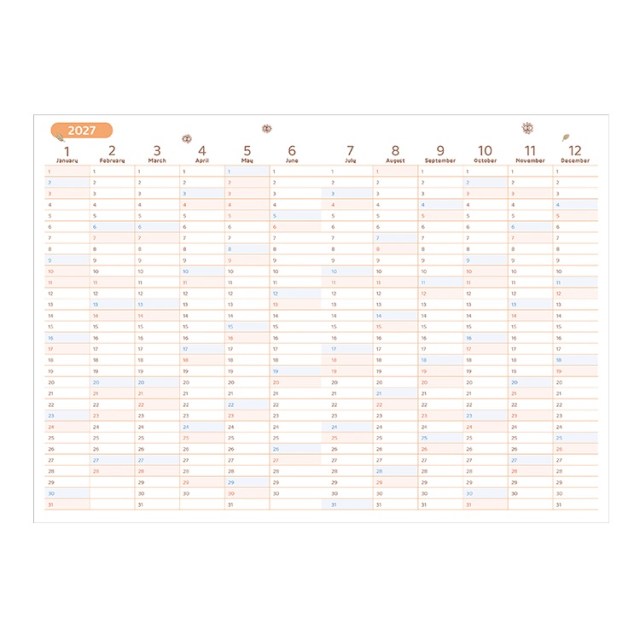
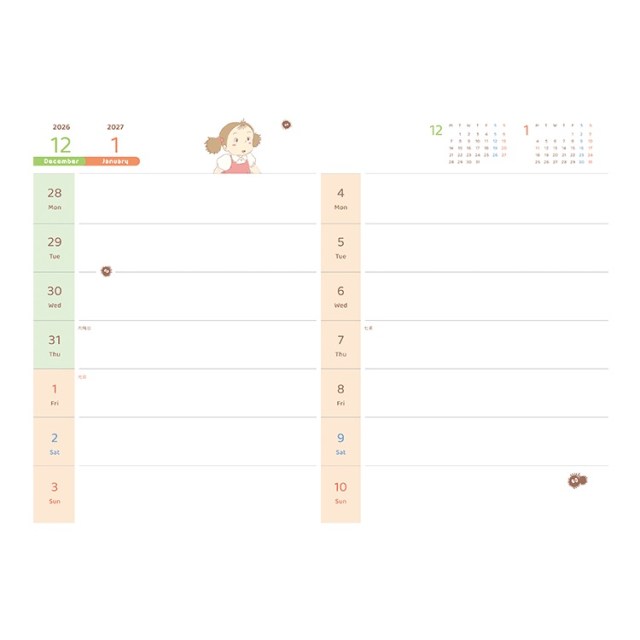
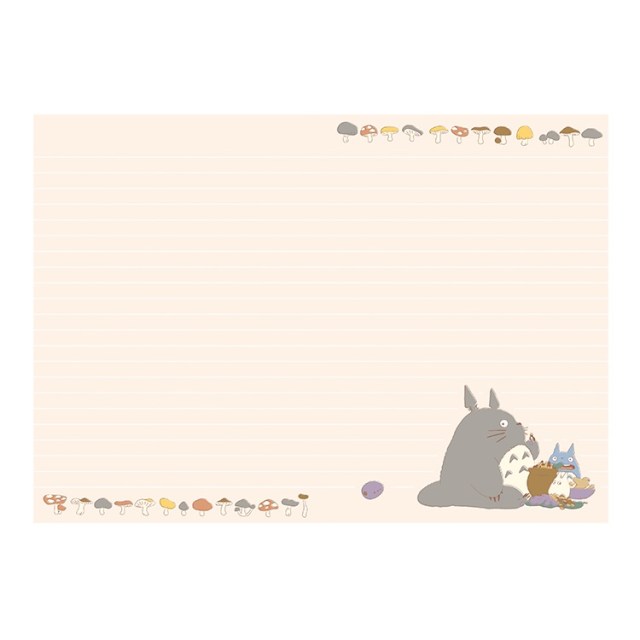
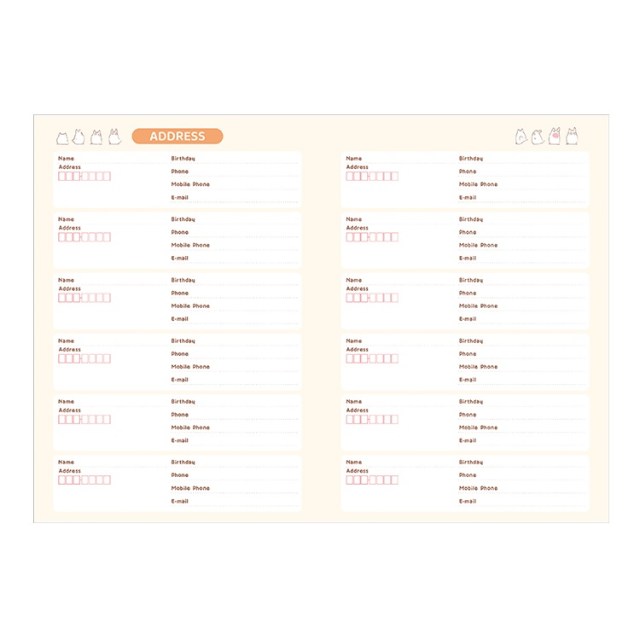
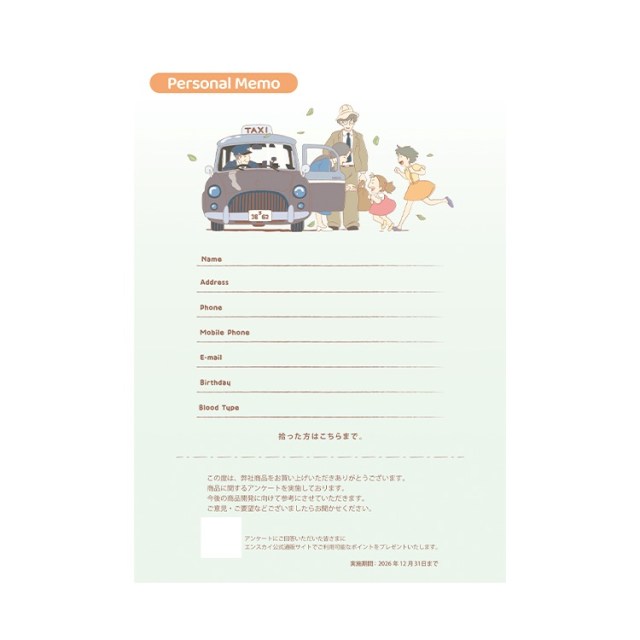
- Interior Architecture: The opening pages feature an establishing shot of the rustic countryside home where the Kusakabe family relocates. Month-at-a-glance spreads, weekly layouts, and note-taking sections (featuring both lined and grid formats) are peppered with tiny soot sprite (susuwatari) and forest spirit motifs. The book rounds out with personal information sections and perforated memo cards intended for sharing notes with friends.
2. Spirited Away Planner
- Exterior: The cover design whisks the user away to Zeniba’s cozy cottage in Swamp Bottom. Chihiro is featured alongside Boh (transformed into a mouse), Yu-Bird (in his diminutive fly form), and No Face, before preparing to ride back to the magical bathhouse atop Haku in his dragon manifestation.
- Interior Architecture: The monthly schedules incorporate iconic visual callbacks, such as the slate-gray boiler room and translucent train tracks over water. The note-taking pages cleverly feature Yubaba’s stern, watchful gaze alongside tranquil scenes of No Face quietly knitting by Zeniba’s fireside, encouraging users to maintain emotional equilibrium during stressful workweeks.
3. Kiki’s Delivery Service Planner
- Exterior: Capturing the breezy optimism of aviation and youthful independence, the cover showcases Kiki and Jiji riding their broomstick through a flock of wild geese during the fateful stuffed-toy delivery mission, moments before gale-force winds blow them off course.
- Interior Architecture: The diary honors Kiki’s journey from her pastoral childhood home to the bustling seaside town of Koriko. Easter eggs from the Guchokipanya bakery are embedded into the margins of the weekly and monthly grids, while the memo sections feature sketches reminiscent of Ursula’s woodland cabin retreat.
4. Howl’s Moving Castle Planner
- Exterior: Rendered in a striking gold-on-pink colorway, this planner celebrates Sophie and Howl’s romantic flight across the cobblestone rooftops of a town modeled after real-world Colmar in northeastern France. The back cover highlights magical companions Calcifer and Heen.
- Interior Architecture: The internal pages weave the complex themes of pacifism, aging, and transformation throughout the schedule blocks. The architectural marvel of the walking castle itself acts as a recurring structural motif across the notes pages, providing a sturdy, imaginative backdrop for daily task lists.
Supporting Context & Metrics: Material Quality and Collector Value
Beyond their visual allure, the structural integrity of these items has undergone rigorous refinement for the 2027 product cycle. Consumers purchasing stationery items from specialty chains like Donguri Kyowakoku or the Ghibli Museum Store expect a tactile experience that justifies the import costs and retail pricing.
Paper Engineering and Writing Performance
Stationery analysts and bullet journal enthusiasts frequently scrutinize paper weight, ghosting resistance, and ink bleeding. The 2027 Ghibli planners utilize a custom-milled paper stock optimized for dual-medium usage. Whether written on with a traditional Japanese fine-nib ballpoint pen or a heavy-flow graphite pencil, the paper offers a satisfying tooth while preventing ink feathering. The B6 dimension provides an optimal writing surface area—large enough for detailed daily logs, yet compact enough to slide effortlessly into a handbag or briefcase.
The 2027 Studio Ghibli Art Frame Calendar (3,300 Yen)
For those seeking a more permanent wall display, the Art Frame Calendar offers a unique modular design. Retailing at 3,300 yen, the calendar is divided into a lower calendar grid and an upper display frame. Users insert loose art sheets—swapped out monthly or bi-monthly—between a transparent protective cover and an archival frame mat.
The 2027 edition curates promotional and conceptual art from 23 feature-length Ghibli films. Notably, this collection includes Nausicaä of the Valley of the Wind—a work produced technically prior to the formal incorporation of Studio Ghibli in 1985, yet universally recognized as the spiritual cornerstone of the studio’s aesthetic. Other featured titles include Spirited Away, Kiki’s Delivery Service, and Howl’s Moving Castle. Because the art sheets are printed on heavy cardstock and are unblemished by calendar grids on their reverse sides, fans routinely repurpose them as standard wall art prints once the calendar year concludes.
The My Neighbor Totoro Wall Calendar (1,980 Yen)
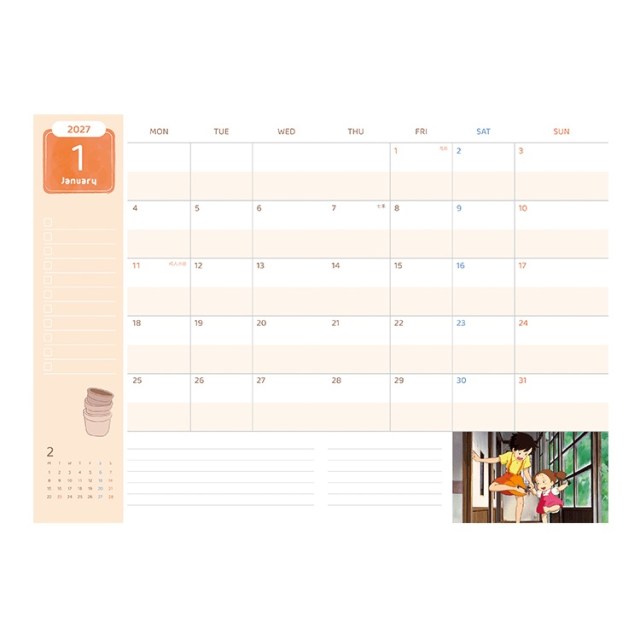
Priced at 1,980 yen, the dedicated Totoro calendar serves as a more traditional, highly focused alternative. It highlights classic cinematic tableaus: Totoro and Mei interacting beneath the garden canopy, Satsuki and Mei waiting with the forest spirit at the rural bus stop in the pouring rain, and the breathtaking kinetic energy of the Catbus streaking across power lines. The layout prioritizes ample blank white space within individual date cells, ensuring that family appointments, reminders, and holidays can be jotted down without obscuring the delicate watercolor illustrations underneath.
Official Statements and Distribution Strategy
The launch of the 2027 collection reflects Studio Ghibli’s ongoing commitment to physical merchandise that encourages analog mindfulness in an increasingly digital era. While corporate press releases from Donguri Kyowakoku remain modest, brand representatives have repeatedly emphasized the therapeutic value of physical planning.
"In an era where daily schedules are dominated by smartphone notifications and algorithmic reminders, sitting down with a physical book to write out one’s plans represents an act of intentional self-care," notes a retail merchandising lead for the chain. "By integrating the quiet, contemplative pacing of Ghibli films into these pages, we hope to offer our customers a tangible anchor for their daily lives."
Global Availability and Purchasing Channels
The complete range of 2027 diaries, art calendars, and specialty wall calendars is currently available for purchase through several official channels:
- Physical Retail: All brick-and-mortar storefronts of the Donguri Kyowakoku specialty chain across Japan.
- Museum Access: The physical Ghibli Museum Shop located within the Mitaka-no-Mori Ghibli Museum grounds.
- Digital Commerce: The official Ghibli Museum Online Shop, which accommodates domestic fulfillment and select international proxy shipping networks for overseas collectors.
Future Outlook: The Intersection of Nostalgia and Practical Design
As Studio Ghibli transitions further into its fifth decade of operation—following the critical success of Hayao Miyazaki’s Academy Award-winning feature The Boy and the Heron—the cultural footprint of its foundational catalog remains as potent as ever. Annual stationery releases like the 2027 planner and calendar collection demonstrate the studio’s remarkable merchandising longevity.
Rather than relying purely on digital expansion or streaming media adaptations, Ghibli continues to champion physical craftsmanship. These items fulfill a dual purpose: they serve as reliable, structurally sound planning tools for the professional or student, and they act as accessible entry points for art collectors who wish to curate a small piece of the Ghibli archive within their personal workspaces. As pre-orders and inventory move swiftly through retail channels, it is evident that the public’s appetite for structured, beautifully illustrated nostalgia shows no signs of waning.








Belum ada komentar. Jadilah yang pertama berkomentar!