

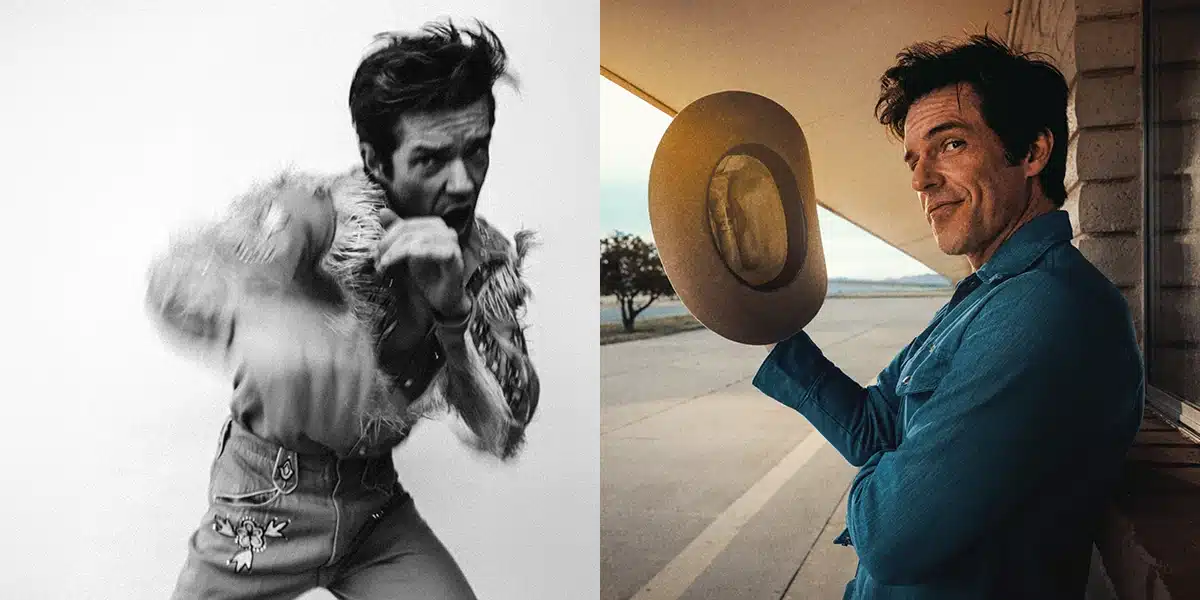
The enduring legacy of Bruce Springsteenian romanticism—characterized by the eternal, bruising friction between the relentless pull of earthly circumstances and the blinding, unadulterated longing for freedom—remains one of the most vital currencies in American rock and roll. When Springsteen sang of a "town [that] rips the bones from your back," he was not merely describing a geographic coordinate; he was evoking a complex matrix of family, DNA, early conditioning, and emotional-cognitive wiring. The desperate impulse to "run" points directly to our primal craving to transcend who we are, where we live, and the inescapable parameters of the life we were handed at birth.
For decades, artists have mined this foundational tension—what the ancient Greeks understood as the eternal tug-of-war between immutable fate and the boundless desire for liberation. Few contemporary songwriters have embraced this lineage as profoundly, or with such glittering pop theatricality, as Brandon Flowers. As the principal songwriter and frontman for The Killers, and through an increasingly sophisticated solo career, Flowers has spent decades mapping the contours of small-town desperation and the yearning for escape.
With his third solo record, THRASHER, Flowers returns explicitly to this grand Americana playbook, weaving high-gloss production values with stark, country-inflected storytelling. The result is a masterclass in modern roots-pop: a panoramic, emotionally devastating, and deeply hook-driven exploration of restlessness, generational trauma, and the impossibility of going home again. By balancing the stark tragedies of small-town survival with soaring, life-affirming melodies, THRASHER positions Flowers not merely as a disciple of Springsteen, Petty, and Mellencamp, but as a vital chronicler of the modern American condition in his own right.
Detailed Chronology: From Las Vegas Neon to the Nashville Highway
To understand the scope and ambition of THRASHER, one must trace the evolutionary trajectory of Brandon Flowers’ songwriting, a path that has consistently oscillated between the neon-soaked excess of his adopted hometown of Las Vegas and the dusty, weather-beaten backroads of traditional Americana.
The foundation of Flowers’ fascination with small-town claustrophobia was laid during his tenure with The Killers. On breakthrough works like 2006’s cinematic Sam’s Town and the stark, stripped-down 2021 masterpiece Pressure Machine, Flowers documented characters trapped in dead-end environments, wrestling with day-to-day routines, addiction, and petty crime while projecting grand fantasies onto the horizon.
When Flowers branched out into his solo output, his focus shifted temporarily. His rootsy 2010 solo debut, Flamingo, and its glitzy 2015 follow-up, The Desired Effect, did not deal explicitly with small-town geography or the literal engines of escape. Instead, they turned inward, tackling the psychological heavy lifting required to shed destructive habits, sever ties with the past, and forge an envisioned future. Even without the backdrop of rural grit, these records captured the signature Springsteenian ache: aching for an alternate life while resigning oneself to the complex reality of the present.
With THRASHER, Flowers reunites these twin impulses—the glitter of the Strip and the dust of the highway—into a cohesive, chronological journey through memory, regret, and resilience.
The record opens with "Does It Ever Cross Your Mind?", a track that immediately bridges Nashville and Las Vegas. Propelled by burnished guitars, crisp percussion, and a punchy bassline that evokes a hybrid of the Honky-Tonk Highway and a casino floor, the song introduces listeners to Flowers’ mature vocal delivery—reminiscent of a spiritually cleansed, booze-free, and smokeless Jay Farrar. Here, Flowers tackles the cosmic lottery of birth ("I could’ve been born in Bangladesh / But I wasn’t, I was born here") while anchoring the listener to a grander, celestial framework ("This world is full of mystery / But somewhere from the secret we descend").
As the album unfolds, the narrative grows sharper and more urgent. On the hyper-trebly "Tiger’s Blood," we encounter a constellation of small-town archetypes—a former cheerleader, "peach fuzz boys," and ghosts of Flowers’ former self—all desperate to abandon "this podunk place." Musically drawing clear lines back to Springsteen’s The River, early Tom Petty, and 1980s John Mellencamp, the track builds to a towering chorus of pedal-steel glissandos and spry, brittle drums designed for both dimly lit clubs and massive stadiums.
Midway through the journey comes "Plans," the album’s melodic centerpiece. Brimming with chamber strings and clean vocal harmonies that evoke the domestic tranquility of black-and-white television sitcoms, the track serves as a poignant meditation on the friction between human aspiration and reality. Flowers observes that our lives rarely align with our meticulously drafted to-do lists, navigating the shift from melancholy to tongue-in-cheek observation with the vocal dexterity of a countrypolitan Neil Diamond.
Supporting Context & Metrics: The Architecture of Escape and Resilience
The thematic architecture of THRASHER relies heavily on the juxtaposition of breezy, mainstream-ready pop production and harrowing lyrical candor. This contrast is not accidental; it serves as a musical metaphor for how humans mask internal suffering with outward presentation.
| Track Title | Musical Palette & Influences | Core Thematic Focus |
|---|---|---|
| "Does It Ever Cross Your Mind?" | Honky-Tonk meets Las Vegas; burnished guitars, punchy bass. | The cosmic lottery of birth, existential wonder, and grounding roots. |
| "Tiger’s Blood" | Trebly guitars, pedal-steel glissandos; echoes of Springsteen & Mellencamp. | Small-town claustrophobia and the universal impulse to flee. |
| "Plans" | Chamber-pop strings, clean harmonies; countrypolitan cadence. | The divergence between life’s expectations and reality. |
| "Paradise" | Sincere yet satirical George Jones delivery. | Intergenerational trauma, paternal obligation, and deferred dreams. |
| "Miss America" | Atmospheric, stark reverb manipulation; cinematic tension. | Domestic abuse, addiction, and the brutal weight of familial history. |
The emotional apex of the album arrives with "Paradise," where Flowers adopts the persona of a sincere yet subtly satirical George Jones. The song details the complicated mechanics of a father-son relationship defined as much by anger and guilt as by duty:
"I cared for my old man right until the bell rang / He never really cared for me / He left us for another life / … Sounded like it might be paradise."
As the album progresses into its latter half, the atmosphere darkens significantly, directly echoing the tone of Pressure Machine. The epistolary track "Miss America" is written from the shattering perspective of a mother fleeing a speed-addicted husband to return to her parents’ home. With unsettling allusions to violence and generational abuse, the song utilizes dynamic shifts in reverb and instrumental dryness to create an unsettling sense of physical and emotional distance.
This descent into emotional realism continues on "The Red Ground," which opens with marching-band horns and chamber-strings before settling into a sobering thesis statement: it is fundamentally impossible to recreate a past experience or reclaim a lost Eden. If one manages to stumble back to the past, it will inevitably have transformed into something alien; true salvation requires forging a new version of peace in an unfamiliar location.
The journey culminates in "An American Dream," a psychedelic and deeply surreal closer that integrates bizarre cultural flashpoints—such as Elvis Presley cruising in a jet-black Tesla Model X wearing ’68 comeback leather—with heartbreaking realism. In its most devastating lyrical turn, Flowers dials a familiar pay phone only to be confronted by the stark reality of grief: "I picked up the pay phone and dialed my parents / Only I had forgotten my mother had passed." Yet, true to the album’s overarching thesis, the song resolves with a pub-ready, communal hook that celebrates human endurance: "Gold and silvër, God and glitter / Lights that flicker on hubcap chrome."
Official Statements & Artistic Vision
Speaking on the conceptual framework driving THRASHER, critics and industry insiders have noted how the record functions as a meditation on human adaptability. Unlike works that view resignation as a total defeat, Flowers’ latest project frames adaptability as a core biological and spiritual imperative.
Artistic statements embedded within the project’s press rollout emphasize that while THRASHER refuses to shy away from acute human suffering—particularly in its exploration of domestic volatility, addiction, and generational estrangement—its primary engine remains fundamentally life-affirming.
"We are engineered to want, to push against the boundaries of our conditioning, and yet we are remarkably resilient creatures when those walls close in," notes analysis surrounding the album’s production. By marrying dark, diaristic narratives of broken homes and lost innocence with soaring, ebullient melodies, Flowers achieves a rare alchemy: a record that honors the profound weight of our troubles while simultaneously paying tribute to the indomitable human capacity to survive them.
Future Outlook
With THRASHER, Brandon Flowers has successfully solidified his status not merely as a stadium-rock icon tethered to the explosive synth-pop of the early 2000s, but as a master songsmith deeply anchored in the traditions of American roots music.
Looking forward, the critical and commercial reception of THRASHER signals a clear validation of Flowers’ parallel career paths. By proving he can step away from the amphitheaters of The Killers to craft intimate, Nashville-infused narrative song cycles without losing his ear for massive, stadium-sized hooks, he has carved out a rare longevity.
As contemporary music continues to grapple with the complexities of Americana, nostalgia, and geographic displacement, artists like Flowers provide a vital bridge between past traditions and modern realities. THRASHER demonstrates that the impulse to run, to heal, and to reconcile with the ghosts of our upbringing is as potent today as it was when Springsteen first turned the key in his ignition. The highway stretches out endlessly before us, and if Brandon Flowers’ latest work is any indication, the journey—however fraught with heartbreak—remains entirely essential.







Belum ada komentar. Jadilah yang pertama berkomentar!