

Executive Overview
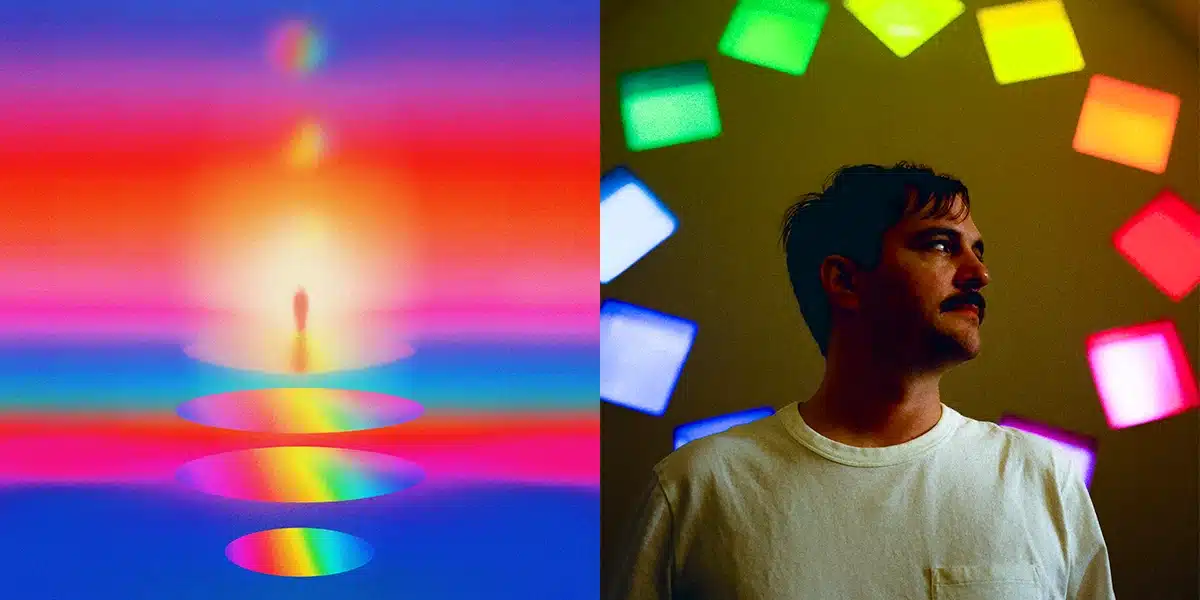
When the music publication PopMatters reviewed the 2016 sophomore album Primitives by the Texan multi-instrumentalist Roger Sellers, recording under the moniker Bayonne, the critic coined a delightfully distinct lineage: "If Debussy and Phil Collins fell in love, Bayonne would be their baby." It was a clever, evocative appraisal that has only grown more prescient with time. On his fourth full-length studio release, Filters, Bayonne deepens his artistic inquiry into the synthesis of adult contemporary pop-rock luminaries—such as Phil Collins and Enya—and the granular, loop-based production architecture of modern bedroom pop.
Yet, Filters is no mere exercise in 1980s pastiche or nostalgic window-dressing. Instead, Bayonne filters these grand, expansive pop idioms through contemporary digital workflows, creating a paradoxical musical space. It is a world where pristine, crystalline arrangement and total solitary control brush up against digital decay, human fatigue, and the haunting ghosts of synthetic and organic textures.
Clocking in as a masterclass in modern multi-instrumentalism, Filters challenges listeners to parse the boundaries between physical performance and virtual illusion. As Bayonne constructs immaculate ecosystems out of resonating pianos, chiming vibraphones, field recordings, and ethereal harps, he invites us to consider a pressing contemporary question: What happens when an artist achieves absolute dominance over their sonic environment? And more intriguingly, what happens when that meticulously curated perfection begins to crack at the seams?
Detailed Chronology: The Making and Mechanics of Filters
To understand the spatial and atmospheric density of Filters, one must trace the meticulous sequential construction of its tracks, where every micro-texture feels intentionally placed, down to the last droplet of synthetic precipitation.
The Atmospheric Entry: "Unexpected"
The album’s portentous opener, "Unexpected," wastes no time establishing the stylistic boundaries of Bayonne’s sonic world. The track does not merely begin; it materializes. Gently strummed acoustic guitars and a warm, resonating piano gradually accumulate weight, building into a lush, enveloping soundscape. Soon, they are joined by the crystalline chime of vibraphones, the woody warmth of marimbas, and the breezy, airy glissandos of a harp.
Crucially, "Unexpected" also introduces the album’s first structural tension. An oscillating synthesizer, running smoothly through the mix, is intermittently warped by subtle digital pitch-bending. It is a micro-moment of dissonance that evokes the sensory memory of a magnetic cassette tape getting caught and chewed up by rotating internal spools. This calculated imperfection signals to the listener that Filters is not merely an exercise in hi-fi clarity; it is a living, breathing machine prone to friction.
The Hydrological Motif: Rain, Memory, and Movement
Throughout the record, water serves as a recurring, unifying motif. Synthetic rain pads mingle seamlessly with genuine field recordings captured by Bayonne during invigorating hiking and nature excursions. This sonic marriage recalls the bright, Latin-tinged percussive piano work of Joe Jackson, while the sweeping, grandiose production values nod toward the spacious sonic ambition of mid-period Talk Talk.
On tracks like "January," this naturalistic integration reaches an apex. A pedal steel guitar emerges so organically from the arrangements that it risks going entirely unnoticed. Its pitch-bending properties lend it a celestial, hovering quality that mirrors the harp, blurring the lines between traditional Americana instrumentation and ambient sound design.
The Climax of Control: "Alone For Now"
As the album marches toward its dramatic center, "Alone For Now" stands out as the record’s most expansive and emotionally heavy track. Driven by a galloping, relentless tom-tom rhythm laid down by studio percussionist Matt Toman (who handles drums across the record), the track builds in intensity until the sheer kinetic energy forces the recording past its gain threshold.
The audio briefly disintegrates, collapsing into a cavernous, echoing abyss. In a record defined by immaculate cleanliness, these moments of deliberate overload and apparent digital malfunction are among its most thrilling. They introduce unpredictable elements of physical resistance into an otherwise mathematically controlled environment.
Supporting Context & Metrics: The Paradigm of "Sophisti-Hop"
To contextualize Bayonne’s achievement within the wider ecosystem of modern music, one must examine the intersection of 1980s production ethics and contemporary bedroom-producer culture.
The Aesthetics of Isolation and Control
In traditional pop and rock recording paradigms—such as those utilized by Phil Collins during his 1980s commercial zenith—the final product was invariably shaped by creative friction. A full band or an ensemble of seasoned session players inevitably introduces friction simply because no two human musicians will interpret, feel, or respond to an arrangement in precisely the same way. The personality of the drummer clashes pleasantly with the tendencies of the guitarist; the accidental blue note from a bassist alters the trajectory of a bridge.
Bayonne’s methodology represents the exact inverse of this communal approach. Operating largely as a solitary creator, he conceives, performs, arranges, and mixes the vast majority of his musical environments himself. This grants him an extraordinary, almost microscopic degree of control over every transient, frequency, and tail-end reverb.
| Production Element | Traditional 1980s Adult Pop | Bayonne’s Filters Approach |
|---|---|---|
| Primary Driver | Ensemble collaboration & live studio sessions | Solitary composition & loop-based layering |
| Texture Sources | Acoustic drums, brass, electric guitars, hardware synths | Piano, vibraphone, field recordings, virtual instruments |
| Source of Friction | Interpersonal creative clashes and live imperfections | Digital artifacts, tape degradation, clipping thresholds |
| Vocal Mix | Centrally anchored front-man performance | Airy, delicate falsetto integrated into the environment |
The Birth of "Sophisti-Hop"
This hyper-controlled methodology births what some critics jokingly—yet astutely—refer to as "sophisti-hop." While the term sounds playfully facetious, the underlying musicological reality is profound. Filters demonstrates how the lush, orchestral sophistication of adult contemporary pop can successfully coexist with the modular, cut-and-paste logic of modern hip-hop and electronic bedroom production.
Bayonne takes the compositional DNA descended from sampling, looping, and MIDI sequencing and applies it to instruments historically associated with classical or jazz traditions (vibraphones, harps, and grand pianos). The resulting metrics of density are staggering: tracks often feature dozens of micro-melodic loops running in parallel, creating an auditory tapestry so tightly woven that it becomes difficult to isolate a physical performance from a software-generated patch.
Official Statements & Critical Perspectives
In interviews surrounding the release of Filters, Bayonne has consistently emphasized his fascination with environmental sound design and the emotional weight of repetition. Unlike artists who view loops as a lazy shortcut to arrangement, Bayonne views them as architectural pillars.
"When you build a song entirely out of interlocking loops, you aren’t just writing a melody; you are constructing an ecosystem," Bayonne notes in production retrospectives. "Every sound has to breathe with the others, or the whole ecosystem suffocates. The challenge is keeping it vibrant rather than sterile."
Music critics have taken note of this delicate tightrope walk. Reviewers across indie music spheres have praised the album’s textural richness while simultaneously interrogating its central paradox: Can music be too harmonious?
As cultural critic commentary on Filters points out, Bayonne is exceptionally gifted at making disparate, contradictory textures coexist peacefully. Pianos and vibraphones, synthesizers and raw field recordings, harps and pedal steel guitars—everything sits together in remarkable, almost utopian harmony. Yet, this raises a fascinating artistic critique: What if one of those elements refused to cooperate?
Critics have observed that listeners occasionally crave a moment of friction—a jarring blue note, an unresolved dissonant chord, or an abrupt key change that feels like a human accident rather than a pre-calculated arrangement. The brilliance of Filters lies precisely in this tension between the absolute serenity of its creator’s vision and the subconscious human desire for disruption.
Future Outlook: Where Does the Solitary Producer Go From Here?
As the music industry continues to lean heavily into bedroom production, digital audio workstations (DAWs), and AI-assisted mixing tools, albums like Filters serve as vital guideposts. They prove that a single human being, armed with a laptop, a collection of acoustic instruments, and an extraordinary ear for arrangement, can build a universe entirely from scratch.
However, Filters also points toward an intriguing crossroads for Bayonne’s future output. The record demonstrates the absolute zenith of what one musician can achieve in isolation. The sonic architecture is pristine, the textures are sumptuous, and the arrangements are endlessly imaginative.
The million-dollar question for Bayonne’s next musical chapter is simple yet profound: What might happen if something—or someone—pushed back?
If Sellers were to invite external collaborators, unpredictable live ensembles, or intentionally uncooperative instrumentalists into his meticulously calibrated studio environment, the results could shatter the boundaries of his established sound. Whether he chooses to lean even further into his solitary, hyper-controlled digital ecosystems or elects to open the doors to outside friction, Bayonne has cemented his status as one of modern pop’s most visionary sonic architects. Filters is not just an album to be listened to; it is a landscape to be inhabited—and one that leaves us eagerly anticipating the storms that might finally rattle its pristine glass walls.








Belum ada komentar. Jadilah yang pertama berkomentar!