

Executive Overview
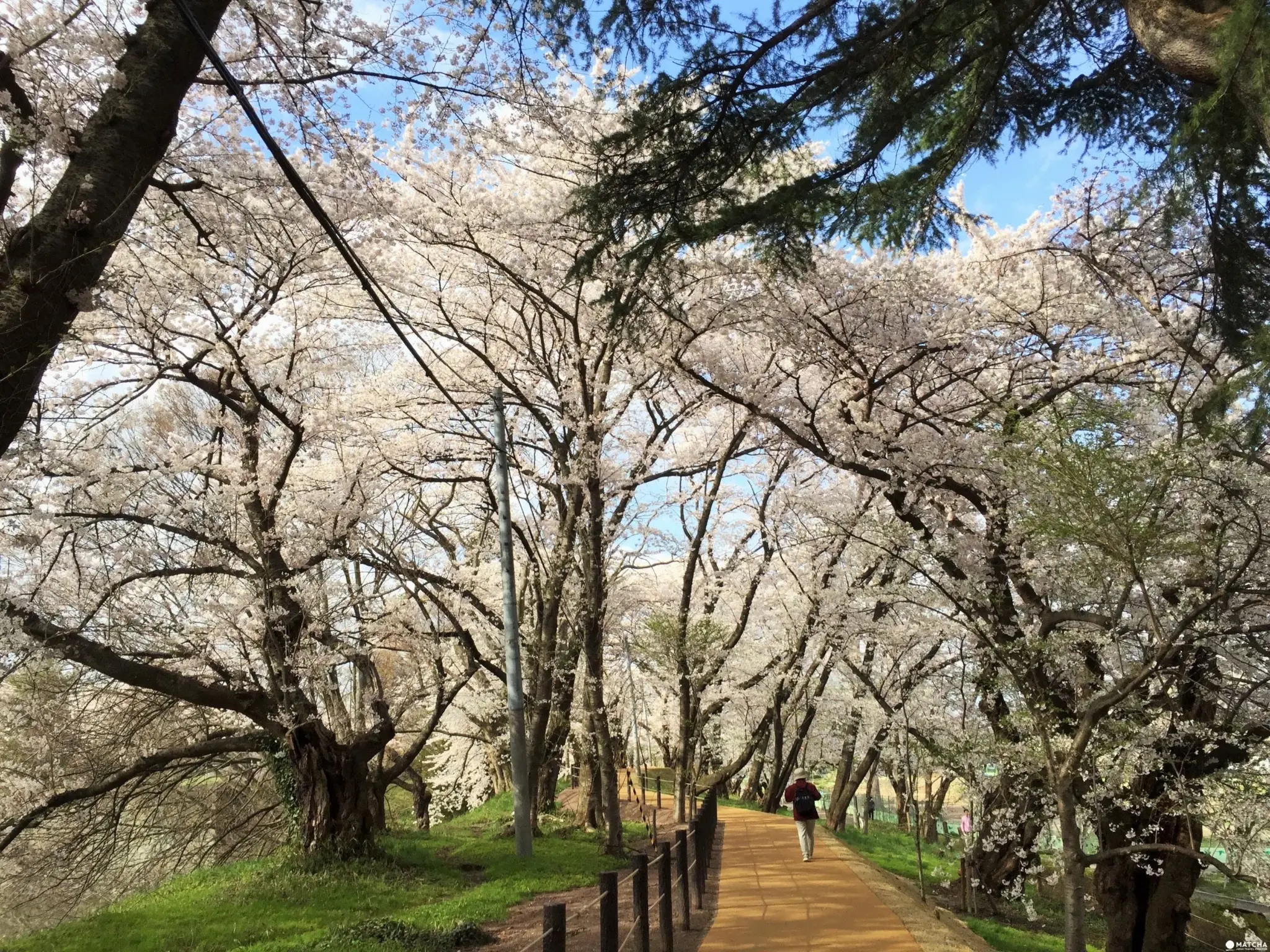
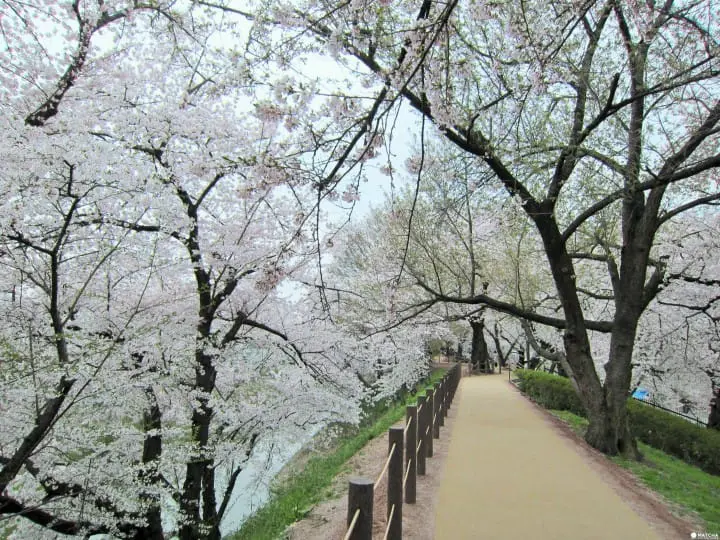
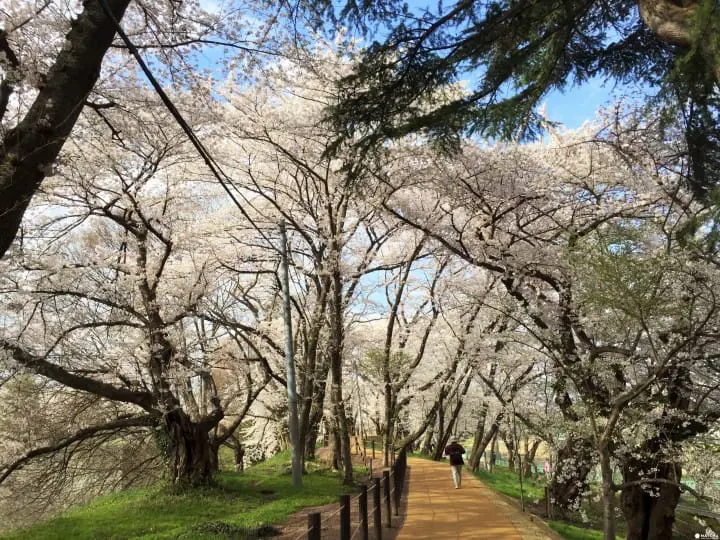
Spring in Japan is globally synonymous with the fleeting, ethereal beauty of sakura (cherry blossoms). While international travelers frequently flock to the congested urban corridors of Tokyo, Kyoto, and Osaka to catch the seasonal spectacle, a quieter, more profound experience awaits in the northern Tohoku region. Nestled within Yamagata City lies Kajo Park, a sprawling historic sanctuary that seamlessly marries feudal-era Japanese architecture with the breathtaking grandeur of 1,200 blooming cherry trees.
Spanning an impressive 35.9 hectares (approximately 88 acres, equivalent to the surface area of 67 football fields), Kajo Park is Japan’s fifth-largest castle ruin site and the absolute largest within the Tohoku region. Built originally in 1357 by Shiba Kaneyori, the founder of the powerful Mogami clan, the grounds serve as a living museum of Japanese military engineering, political history, and botanical mastery.
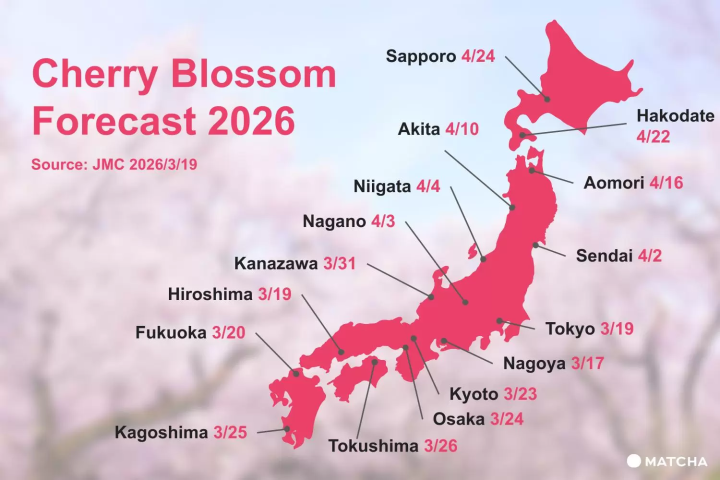
According to authoritative forecasts issued by the Japan Meteorological Corporation, the 2026 Yamagata cherry blossom season is projected to commence around April 10, with trees achieving full bloom by approximately April 14. For travelers seeking to bypass the overwhelming crowds of Japan’s metropolitan hubs, Kajo Park offers an enchanting, crowd-free alternative. Whether strolled in the quiet serenity of a weekday morning, admired under the dramatic canopy of evening illuminations, or experienced through the vibrant festivities of a weekend cultural gathering, Kajo Park represents an indispensable addition to any discerning traveler’s sakura bucket list.
Detailed Chronology: The Historical Evolution of Yamagata Castle and Kajo Park
To fully appreciate the visual splendor of Kajo Park during the spring bloom, one must understand the complex, layered history etched into its stone walls and ancient moats. The site’s origins date back to the mid-14th century, firmly embedding the grounds into the tumultuous medieval annals of northern Japan.
1. The Medieval Foundation (1357)
The fortress—historically known as Yamagata Castle (Yamagata-jō)—was established in 1357 by Shiba Kaneyori, a regional commander dispatched by the northern branch of the Ashikaga shogunate. Kaneyori selected the strategic basin of the Yamagata plain as an ideal defensive stronghold. Surrounded by natural river barriers and fertile agricultural lands, the rudimentary castle layout began to take shape as a regional power base.
2. The Golden Age of Yoshiaki Mogami (Late 16th to Early 17th Century)
The castle reached its architectural and political zenith under its 11th lord, Yoshiaki Mogami (1546–1614). A brilliant tactician and political survivor during the violent Sengoku (Warring States) period, Mogami aligned himself strategically with Tokugawa Ieyasu. Following the decisive Battle of Sekigahara in 1600, Mogami was rewarded with a massive territorial expansion, making his domain one of the wealthiest in the north.
Under Yoshiaki’s direction, Yamagata Castle was massively expanded into a formidable concentric fortification comprising three distinct defense rings: the Honmaru (innermost keep area), Ninomaru (second compound), and Sannomaru (outer perimeter). At its peak, the expansive castle grounds were protected by deep water moats and towering earthwork ramparts topped with defensive stone walls.
3. Decline, Demolition, and Modern Restoration
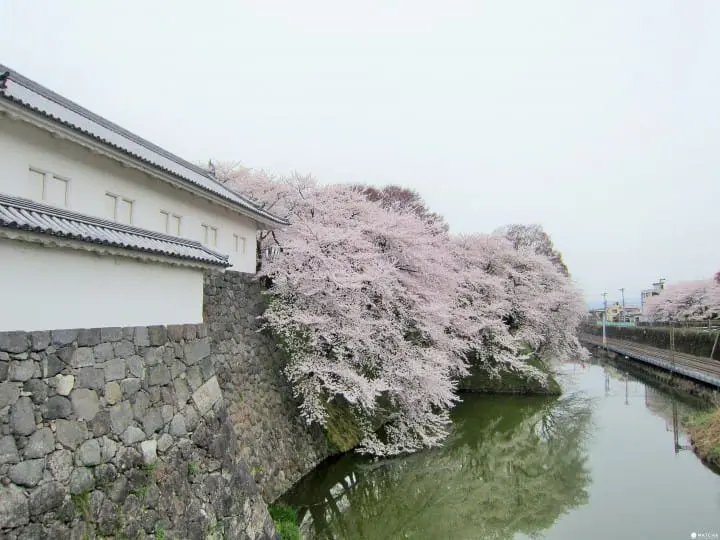
Following the decline and subsequent attainder of the Mogami clan in the decades following Yoshiaki’s death, the castle passed through several daimyo families before falling into disrepair during the Edo period. The Meiji Restoration of 1868 brought the dismantling of Japan’s feudal structures; consequently, most of Yamagata Castle’s wooden structures were demolished, leaving behind only the foundational stone walls, sprawling moats, and a network of defensive earthworks.
In 1986, the city government designated the site as Kajo Park ("Kajo" literally translating to "Castle Fortress"), initiating a multi-decade archaeological and architectural revitalization project. Today, visitors can witness meticulously reconstructed features of the fortress, including:
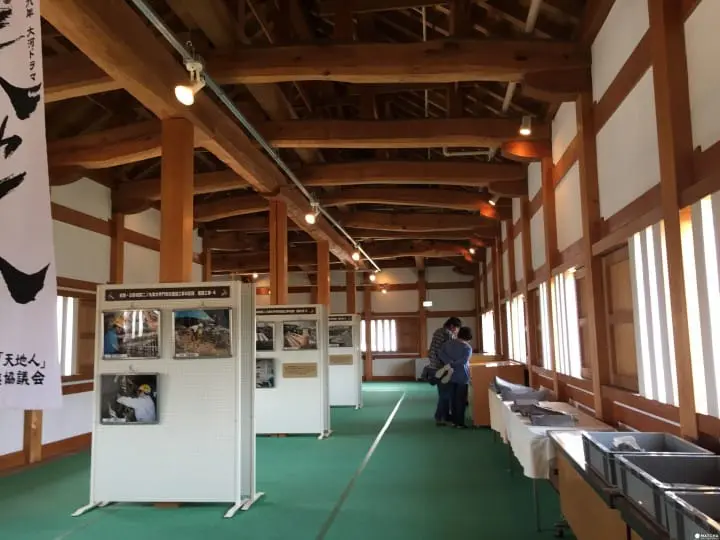
- The Ninomaru Higashi-Otemon (Eastern Great Gate): A majestic multi-story entry fortification rebuilt using traditional carpentry techniques.
- Associated Corner Watchtowers (Yagura): Reconstructions that offer a tangible glimpse into the castle’s defensive capabilities during the height of the Edo period.
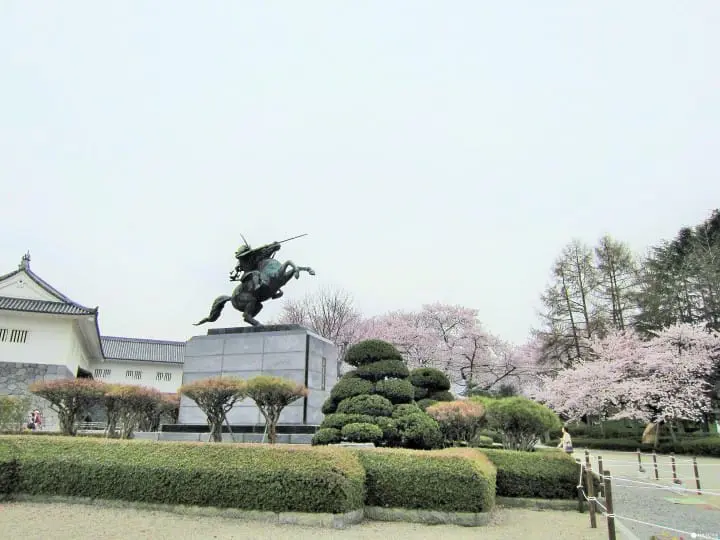
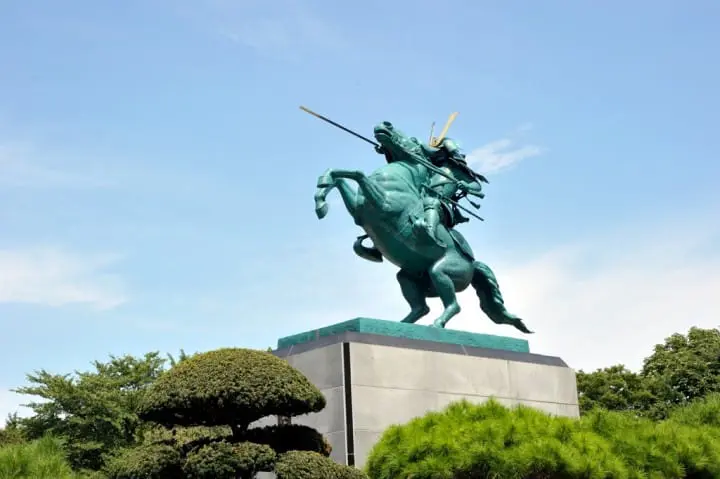
- The Equestrian Statue of Yoshiaki Mogami: An engineering marvel positioned near the park’s main entrance. The bronze statue depicts the Lord mounted on a rearing horse, balanced precariously on just two hooves—possessing the smallest ground contact point of any monumental bronze casting in Japan.
Supporting Context & Metrics: Flora, Geography, and Cultural Hubs
While the historical architecture provides structural gravity to Kajo Park, the botanical landscape transforms the site into a sensory wonderland every spring.
The Botanical Landscape: 1,200 Sakura Trees
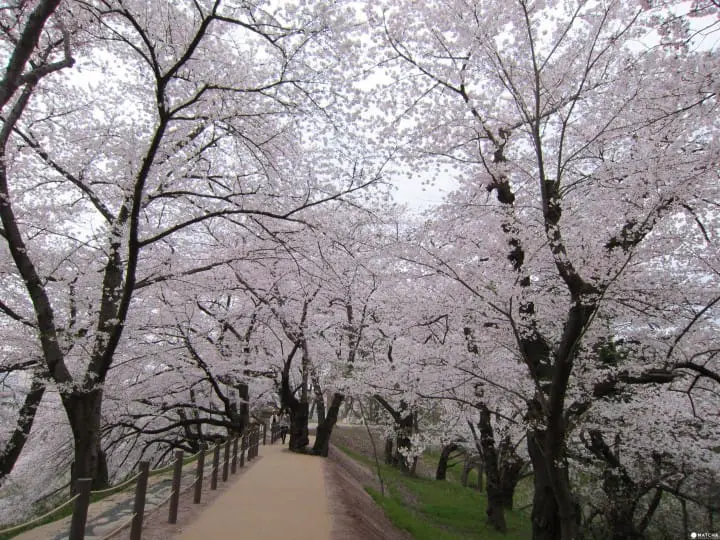
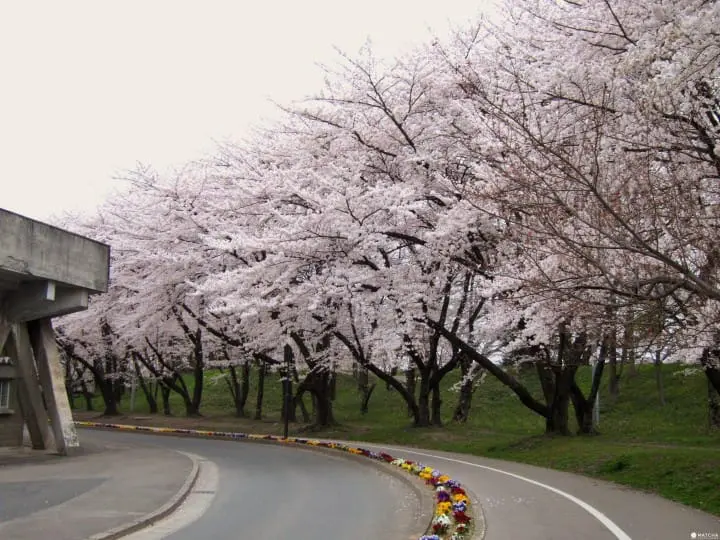
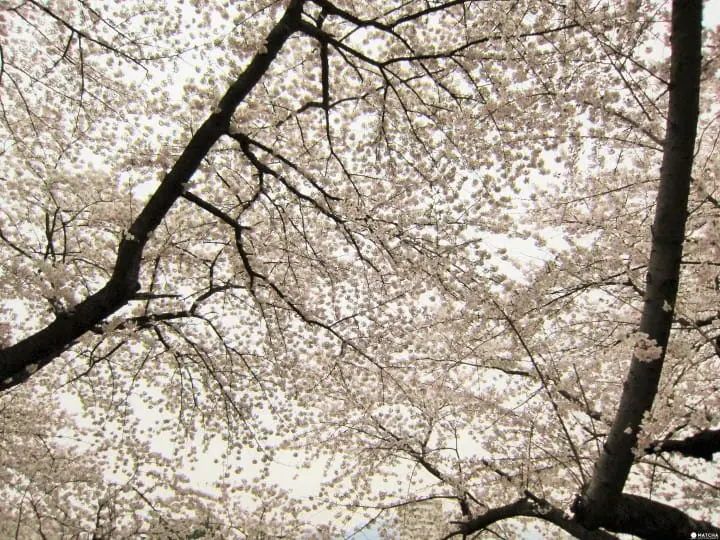
The park perimeter and interior pathways are lined with approximately 1,200 cherry trees, a significant portion of which are century-old specimens. The predominant species is the Somei Yoshino (Prunus × yedoensis), renowned for its pale pink blossoms that burst into simultaneous, cloud-like canopies.
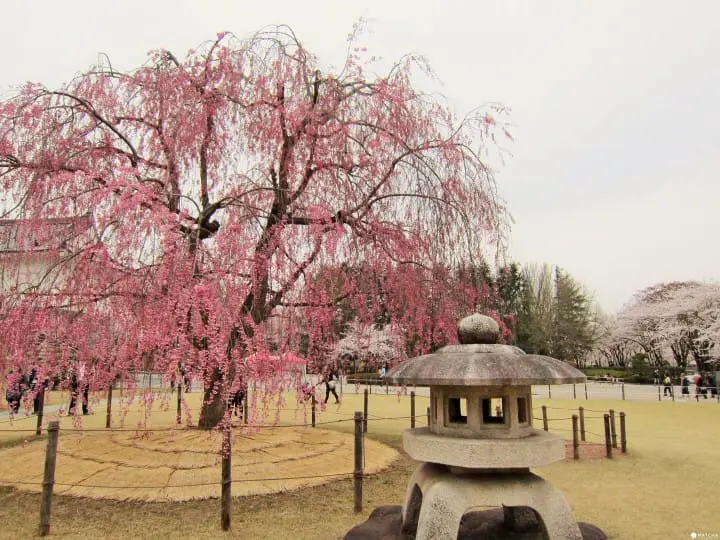
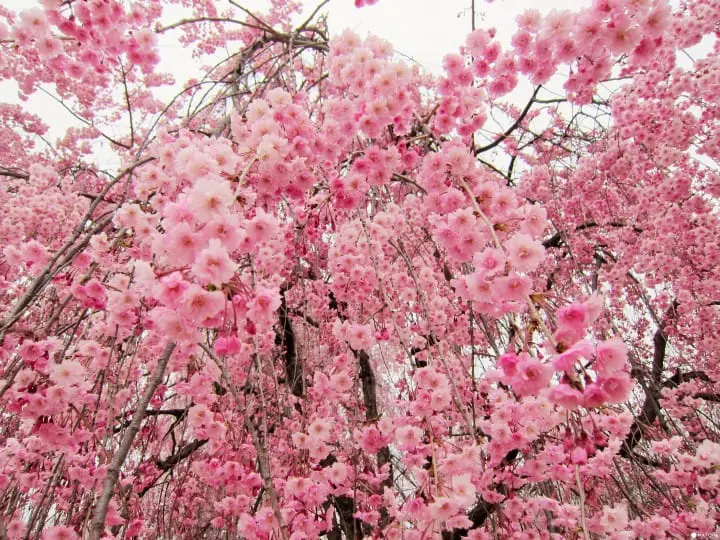
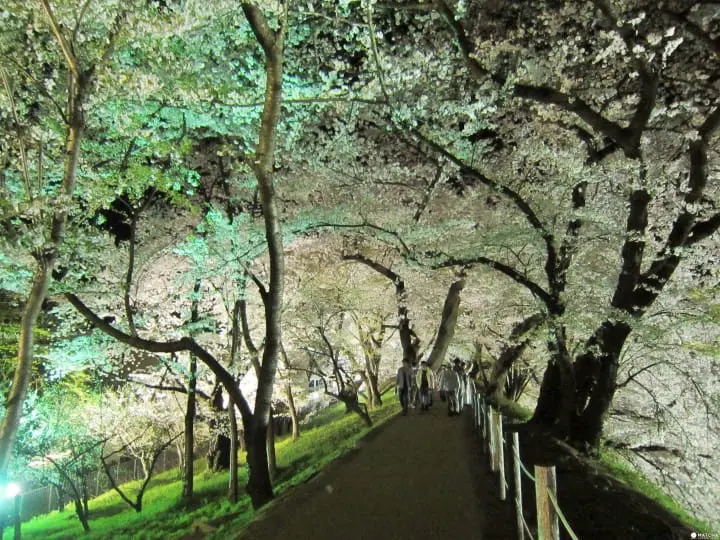
In addition to the standard Yoshino cherry trees, the park features a striking collection of weeping cherry trees (Shidarezakura). When these magnificent specimens reach peak bloom, their sweeping branches cascade downward like pink waterfalls, creating an ethereal, storybook atmosphere. Visitors are advised to allocate a minimum of one hour to complete a leisurely circuit of the park’s perimeter trail, allowing ample time to pause beneath the natural pink tunnels formed by the overhead branches.
A Multi-Disciplinary Cultural Hub
Kajo Park is unique among Japanese castle ruins because it functions not merely as a historical relic or botanical garden, but as the premier cultural epicenter of Yamagata City. Nestled within the expansive grounds are several major civic institutions:
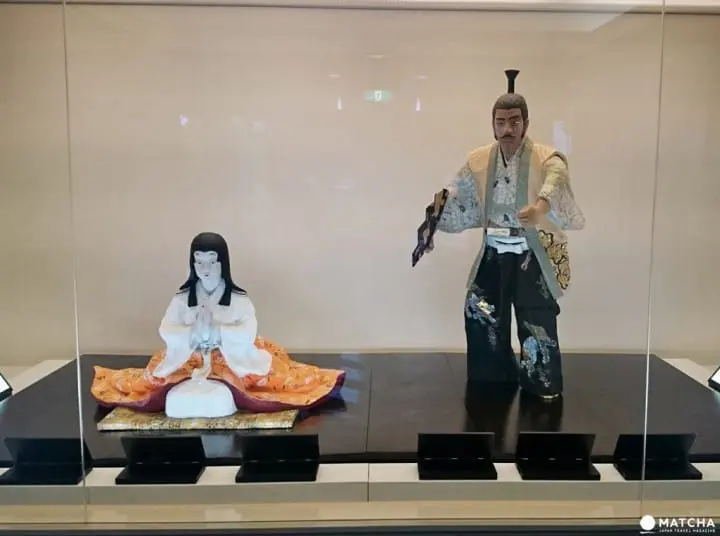
- The Mogami Yoshiaki Historical Museum: Dedicated to the artifacts, weapons, and historical documents associated with the castle’s most famous lord.
- The Yamagata Prefectural Museum: Showcasing regional natural history, prehistoric Jōmon artifacts, and local folklore.
- The Yamagata Museum of Art: Housing an impressive collection of domestic and international fine art, including works by French masters like Cézanne, Monet, and Renoir.
- The Yamagata City Local History Museum: Preserving regional archives and historical municipal records.
This unique integration allows visitors to pair a contemplative morning sakura walk with an afternoon immersion in world-class art and regional archaeology.
Official Statements and Practical Visitor Information
Local authorities and tourism bureaus heavily promote Kajo Park as an exemplar of sustainable, crowd-free cultural tourism within the Tohoku region.
The 2026 Forecast and Operational Metrics
- Expected First Bloom (Kaika): Approximately April 10, 2026.
- Expected Full Bloom (Mankai): Approximately April 14, 2026.
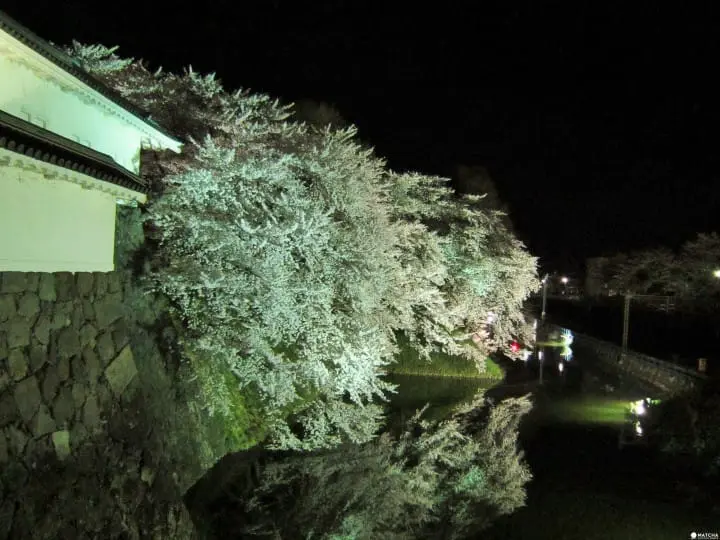
- Illumination Hours: Daily during the peak sakura window, from 18:00 to 22:00, transforming the park via dramatic architectural and arboreal lighting.
- Gate Entry: Access to the park grounds is free of charge and open 24 hours a day (though museum operating hours and indoor gate exhibits operate on standard daytime schedules, typically closing by 17:00).
- Address: 1-7 Kajocho, Yamagata City, Yamagata Prefecture 990-0826.
Weekday Serenity vs. Weekend Festivities
Tourism officials emphasize the dual nature of the visitor experience depending on the day of the week:

- Weekdays: Recommended for travelers seeking a contemplative, meditative escape. The pathways are quiet, punctuated only by birdsong and the rustle of spring breezes, making it ideal for landscape photography without human congestion.
- Weekends: Characterized by vibrant local energy. The park comes alive with traditional food stalls (yatai), live performances, traditional Yamagata maiko appearances, and civic giveaways featuring complimentary matcha tea and local culinary specialties like Yamagata noodles.
Future Outlook: Sustainable Tourism and Strategic Regional Development
As international tourism to Japan reaches unprecedented post-pandemic highs, government bodies and regional destination marketing organizations (DMOs) are increasingly turning their attention to secondary and tertiary destinations. The overarching goal is twofold: alleviate the severe over-tourism plaguing traditional "Golden Route" hotspots (Tokyo, Hakone, Kyoto) while driving sustainable economic growth into regional economies like the Tohoku prefecture.
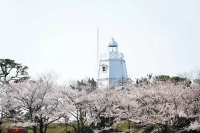
Yamagata Prefecture’s strategy for Kajo Park centers on infrastructure improvements that preserve the delicate ecosystem of the ancient castle ruins while enhancing accessibility for foreign tourists. Future municipal plans include expanding multilingual digital signage throughout the grounds, increasing the accessibility of the walking trails surrounding the stone moats, and promoting off-peak travel windows to ensure the historical integrity of the park is maintained.

Furthermore, Kajo Park’s unique geographical positioning—adjacent to active railway tracks where regional trains pass directly alongside the historic stone walls and cherry-lined moats—presents a dream scenario for rail and photography enthusiasts. Strategic marketing campaigns aim to position Yamagata not merely as a winter ski and hot-spring (onsen) destination, but as a premier spring destination capable of offering world-class, unhurried sakura viewing.

For the modern traveler willing to venture slightly off the beaten path, Kajo Park stands as a shining example of Japan’s enduring historical preservation and botanical brilliance—a place where the past whispers through ancient stone walls, and spring unfolds in breathtaking, tranquil pink splendor.







Belum ada komentar. Jadilah yang pertama berkomentar!