

Executive Overview
Just 30 minutes away from the bustling urban sprawl of Nagoya lies Ogaki, a historic castle town steeped in centuries of heritage, intricate water culture, and traditional craftsmanship. Often celebrated as the "City of Water" due to its remarkably abundant and pristine groundwater, Ogaki offers modern travelers a seamless step back in time. For anyone seeking an enriching, highly affordable, and culturally immersive day trip, the local tourism board has introduced a revolutionary yet historically inspired offering: the "Puratto Nishimino Tsuko Tegata."
Priced at an exceptionally modest 600 yen (tax included), this tourist passport bridges centuries of Japanese history with modern travel convenience. Modeled after the tsuko tegata—the strict travel identification permits required by travelers navigating checkpoints during the Edo period—this contemporary iteration takes the physical form of a miniature, beautifully crafted wooden masu (a traditional Japanese square measuring box). Accompanying this keepsake are five admission and hospitality vouchers.
By simply purchasing the pass at one of 16 designated locations, including the Mino Tourist Information Center on the second floor of JR Ogaki Station, visitors unlock free entry to premier cultural institutions, exclusive souvenirs, and special merchant treats across the city. Valid from the date of purchase through March 31st of the following year, the pass breaks free from the constraints of rigid single-day itineraries, inviting travelers to explore at their own leisure. This comprehensive guide outlines the historical significance of the pass, provides a meticulously curated walking itinerary, details Ogaki’s famous culinary treasures—such as the cooling mizu manju—and analyzes the broader economic and cultural impact of this unique municipal tourism initiative.
![[30 minutes from Nagoya] Enjoy the castle town of Ogaki at a great price! A day trip guide using a travel pass.](https://resources.matcha-jp.com/resize/720x2000/2026/08/12-268813.webp)
Detailed Chronology: A Step-by-Step Itinerary Through the City of Water
To fully appreciate the scope of Ogaki’s historic core, visitors can utilize a half-day or full-day walking tour engineered specifically around the versatility of the Puratto Nishimino Tsuko Tegata. Because the majority of Ogaki’s premier attractions lie within a comfortable 10-to-20-minute walk from JR Ogaki Station, travelers can effortlessly leave heavy luggage in station coin lockers and set off unencumbered.
Phase 1: Arrival and Pass Acquisition at JR Ogaki Station
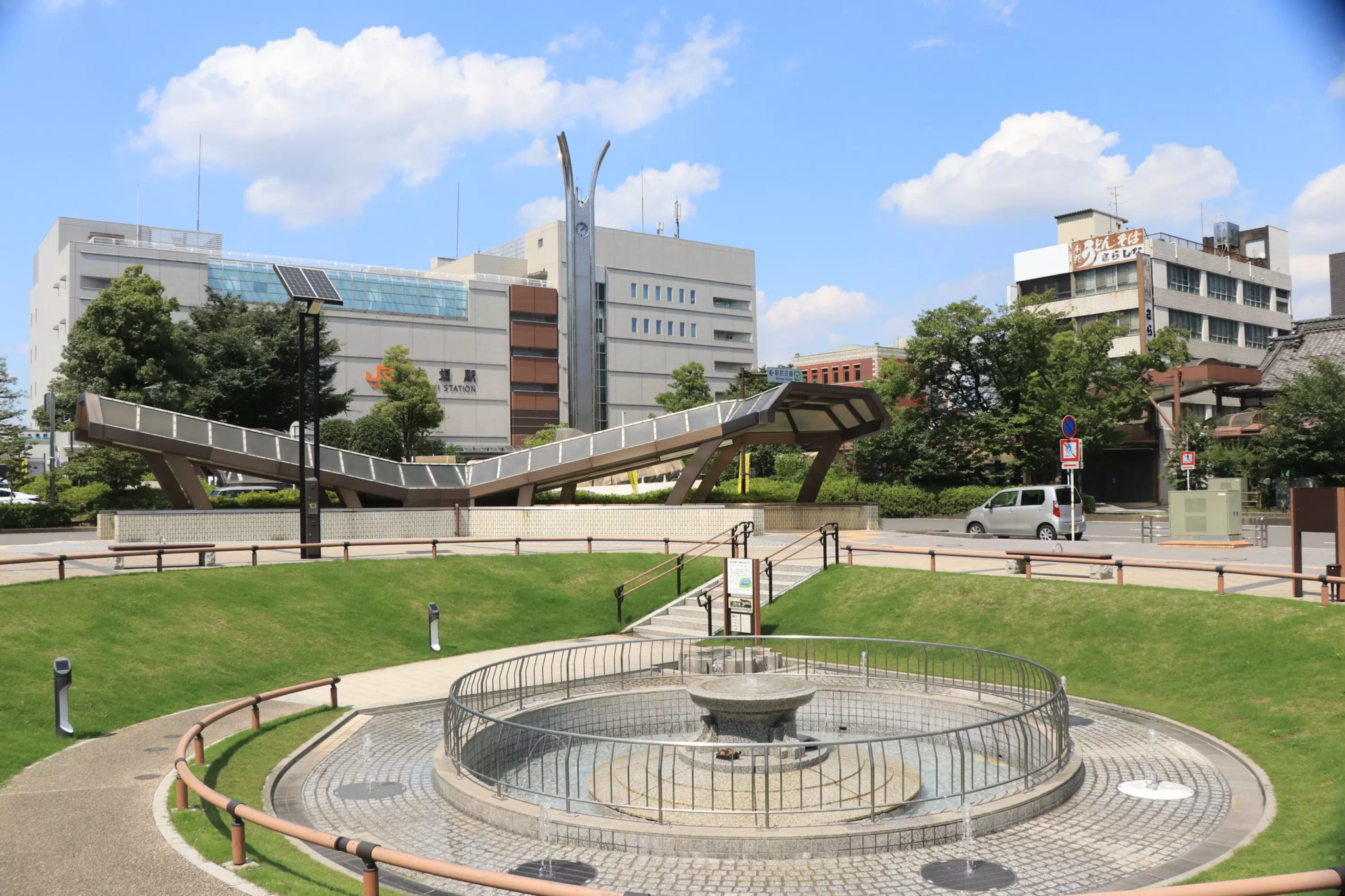
The journey begins the moment travelers step off the JR Tokaido Main Line (Rapid), which connects Nagoya Station to Ogaki in a mere 30 minutes. Upon arrival at JR Ogaki Station, visitors should head immediately to the Mino Tourist Information Center, situated conveniently on the second floor just outside the ticket gates.
Here, travelers purchase the 600-yen Puratto Nishimino Tsuko Tegata. The package includes:
![[30 minutes from Nagoya] Enjoy the castle town of Ogaki at a great price! A day trip guide using a travel pass.](https://resources.matcha-jp.com/resize/720x2000/2026/08/21-269386.webp)
- A Miniature Wooden Masu (3-shaku size): Measuring a delightful 56mm in length, 56mm in width, and 39mm in height, this traditional Ogaki craft serves as both an aesthetic souvenir and a physical collector’s log for the trip.
- The Nishimino Tsuko Tegata Pass: A booklet containing five individual tickets redeemable at participating cultural facilities and local storefronts.
Travelers are advised to pick up a localized tourist map at the desk to chart their course before stepping out into the castle town.
Phase 2: Ascending History at Ogaki Castle
- Transit: Approximately a 10-minute walk south from JR Ogaki Station.
- Pass Usage: Requires one ticket.
Setting off on foot through the tranquil streets, travelers soon arrive at Ogaki Castle. Originally constructed in 1535 by Kichizaemon Miyagawa—a military commander belonging to the Toki clan and governor of Mino—the castle holds a profound place in Japanese feudal history. Most notably, it served as the strategic command headquarters for Ishida Mitsunari during the decisive Battle of Sekigahara in 1600.
Though the original structure was designated a National Treasure in 1936, it was unfortunately reduced to ashes during the aerial bombardments of July 1945. Demonstrating remarkable resilience, the local community oversaw the reconstruction of the castle tower in April 1959, restoring it as the proud architectural and cultural symbol of Ogaki. Today, using a ticket from the Tsuko Tegata pass grants visitors complimentary entry. Inside, guests receive a commemorative "memory stamp" pressed directly into their wooden masu cup, and they can ascend the tower to take in sweeping, panoramic views of the modern city framed by its historical roots.
![[30 minutes from Nagoya] Enjoy the castle town of Ogaki at a great price! A day trip guide using a travel pass.](https://resources.matcha-jp.com/resize/720x2000/2026/08/12-268837.webp)
Phase 3: Unveiling Feudal Legacy at the Ogaki City Kyodo Kan (Local History Museum)
- Transit: Approximately a 10-minute walk from Ogaki Castle.
- Pass Usage: Requires one ticket.
Situated in close proximity to the castle grounds is the Ogaki City Kyodo Kan. Opened on October 9 to commemorate the 350th anniversary of the Toda clan’s entry into Ogaki Castle, this museum is dedicated to preserving and promoting regional heritage.
The facility is systematically structured to educate visitors on the intricate socio-political fabric of the Ogaki Domain through several distinct exhibition rooms:
- Toda Lord Commemoration Room: Showcases portraits of successive feudal lords, authentic samurai armor, and furnishings emblazoned with the Toda family’s kuyo crest. An integrated audio guide featuring personal headphones allows for deeper historical immersion.
- Local Art Room: Displays fine works of art and cultural artifacts created by historical figures and luminaries who shaped the landscape of Ogaki.
- Local History Room: Features extensive timelines and archival documents tracing the origins and evolution of the region.
- Entrance Lobby: Highlights a dramatic replica of Toda Ujitsune on horseback, a bust of Toda Ujitomo, a meticulously detailed 1/200 scale architectural model of Ogaki Castle, and a striking replica of the folding screens depicting the Battle of Sekigahara.
Presenting the pass here earns visitors another unique stamp for their wooden box, permanently recording their engagement with Ogaki’s samurai past.
![[30 minutes from Nagoya] Enjoy the castle town of Ogaki at a great price! A day trip guide using a travel pass.](https://resources.matcha-jp.com/resize/720x2000/2026/08/12-268839.webp)
Phase 4: Following the Poetic Trail to Funamachi Kawaminato
- Transit: Approximately a 15-minute walk from the Kyodo Kan.
- Pass Usage: Requires one ticket.
Continuing the journey northward toward the waterways brings travelers to the Oku no Hosomichi Musubi no Chi Memorial Museum. Positioned directly adjacent to Ogaki Funamachi Kawaminato—an area officially designated as a National Scenic Place and a historic milestone along the famous travel routes of legendary poet Matsuo Basho—this facility celebrates literary history.
The complex is divided into specialized zones:
- Bashokan: Houses rare manuscripts, historical materials related to Basho and his masterwork Oku no Hosomichi, and immersive 3D visual presentations.
- Senkenkan: Honors the intellectual achievements of Ogaki’s prominent historical predecessors.
- Exchange Hall: Welcomes weary travelers with comprehensive tourist resources.
The adjacent waterfront scenery captures the very tranquil atmosphere that inspired Basho at the conclusion of his legendary poetic journey.
![[30 minutes from Nagoya] Enjoy the castle town of Ogaki at a great price! A day trip guide using a travel pass.](https://resources.matcha-jp.com/resize/720x2000/2026/08/18-269055.webp)
Phase 5: Rejuvenation at the Masu Cafe and Sweet Interludes
- Transit: Located within the central shopping and river districts.
- Pass Usage: Requires remaining tickets for merchant treats and hospitality.
After absorbing centuries of military history and poetic reflection, travelers can immerse themselves in Ogaki’s living traditions by visiting the unique Masu Cafe, operated by local woodworking firm Ohashi Ryoki. Established in the fall of 2018 within the city’s central shopping district, this pioneering establishment celebrates a local crafting tradition spanning over 1,300 years—during which Ogaki grew to command roughly 80% of Japan’s national masu production market.
The cafe’s interior is an architectural marvel of woodcraft: walls, tables, and serving plates are constructed entirely from aromatic cypress (hinoki). Here, visitors can sample specialty items such as MASUPRESSO (espresso served in a wooden measuring cup, pairing rich coffee notes with the calming scent of cypress) and MASU CHIFFON (a delicate chiffon cake baked directly inside a wooden box).
Furthermore, this district is the epicenter of Ogaki’s famous confectionery culture. By presenting the Tsuko Tegata pass at participating local shops, travelers receive special hospitality tokens, ranging from complimentary regional sweets to exclusive souvenirs.
![[30 minutes from Nagoya] Enjoy the castle town of Ogaki at a great price! A day trip guide using a travel pass.](https://place.matcha-jp.com/resize/200x2000/2023/11/30-15-33-41-160788ad2f5de013ea7167af2a69f7fa8a2e.webp)
Supporting Context & Metrics: The Culinary and Craft Heritage of Ogaki
To understand why a 600-yen wooden pass holds such cultural weight, one must examine the foundational pillars of Ogaki’s local identity: water and wood.
The City of Water and the Magic of Mizu Manju
Ogaki’s geography is defined by subterranean hydrology. Countless natural springs gush forth throughout the urban landscape, supplying crystal-clear, high-quality groundwater that has sustained the community for generations. This pristine water resource directly birthed Ogaki’s most famous culinary export: Mizu Manju.
Available typically from April through September each year, Mizu Manju is a quintessential summer Japanese confection (wagashi). It consists of smooth, sweetened red bean paste (anko) wrapped inside a crystal-clear, translucent dough crafted from traditional kudzu starch. When consumed, the sweet treat offers an immediate sensation of cool refreshment and gentle, refined sweetness.
![[30 minutes from Nagoya] Enjoy the castle town of Ogaki at a great price! A day trip guide using a travel pass.](https://place.matcha-jp.com/resize/200x2000/2026/08/12-16-47-43-32173323a337c3c2b2cc13aefd704a6ad151.webp)
Travelers utilizing the walking district near Ogaki Station can visit legendary purveyors within a short radius:
| Store Name | Address | Remarks |
|---|---|---|
| KINCHOEN SOHONKE Ogaki Ekimae Store | 1-17 Ogaki City-cho, Ogaki City | Participating merchant for the Tsuko Tegata pass |
| KINCHOEN SOHONKE Kuruwamachi Store | 2-10 Kuruwamachi, Ogaki City | Participating merchant for the Tsuko Tegata pass |
| TUCHIYA, Ogaki Station Front Store | 1 Ogaki City-cho, Ogaki City | Local confectionery landmark |
| MOCHISO | 1-61 Kuruwamachi, Ogaki City | Traditional sweet artisan |
The Economy of the Wooden Masu
The inclusion of a genuine wooden masu as the physical medium of the tourist pass is a masterstroke of regional marketing. Traditionally used in Japan to measure quantities of rice or sake, masu manufacturing in Ogaki represents an unbroken lineage of master carpentry. Accounting for 80% of Japan’s domestic output, local artisans utilize Japanese cypress (hinoki), prized for its straight grain, durability, and soothing aromatic qualities. As visitors carry their masu from site to site—accumulating physical ink stamps inside the square cavity—the object transitions from a simple utility item into a deeply personal, tactile record of travel.
Official Statements and Practical Logistics
City tourism officials emphasize that the Puratto Nishimino Tsuko Tegata was designed to encourage slower, more mindful exploration. Rather than rushing tourists through turnstiles, the pass fosters a personal connection between the visitor, local merchants, and municipal heritage custodians.
![[30 minutes from Nagoya] Enjoy the castle town of Ogaki at a great price! A day trip guide using a travel pass.](https://place.matcha-jp.com/resize/200x2000/2023/12/06-14-10-47-1607b889138bbb2adf4e20e5fc27206e6926.webp)
Essential Visitor Information
- Selling Price: 600 yen (tax included).
- Validity Period: Valid from the date of purchase through March 31st of the following year, allowing multi-visit flexibility for regional travelers.
- Primary Sales Locations: Available at 16 designated sites, prominently including the Nishimino Tourist Information Center (2nd floor of JR Ogaki Station) and the Oku no Hosomichi Haiku Journey Museum.
- Official Inquiry Contact: Ogaki Tourism Association (TEL: 0584-77-1535).
- Official Website: https://www.ogakikanko.jp/tegata/
Transit Access Guide
- From Nagoya Station: Approximately 30 minutes via the JR Tokaido Main Line (Rapid service).
- From Gifu Station: Approximately 10 minutes via the JR Tokaido Main Line.
- From Maibara Station: Approximately 30 minutes via the JR Tokaido Main Line.
- By Automobile: Approximately 10 minutes from the Ogaki Interchange on the Meishin Expressway. Free parking is available at the Oku no Hosomichi Haiku Journey Museum, making it an ideal alternative starting point for motorists. Rental bicycles are also available for visitors wishing to expand their touring radius across the Suimon River promenades.
Future Outlook: Sustainable Tourism and Regional Revitalization
As regional destinations across Japan seek innovative ways to disperse tourism revenue beyond major metropolitan hubs like Tokyo, Kyoto, and Osaka, initiatives like Ogaki’s Puratto Nishimino Tsuko Tegata offer a blueprint for sustainable, community-driven tourism.
By tying a municipal discount pass to a hyper-local traditional handicraft (the masu), the Ogaki Tourism Association has successfully transformed a routine administrative ticket into an engaging tactile experience. Future projections for the program include expanding the roster of participating merchant shops, introducing seasonal stamp designs, and integrating multilingual digital guides to assist the growing demographic of international travelers discovering the Chubu region.
Ultimately, for a modest investment of 600 yen and a 30-minute train ride from Nagoya, visitors are granted an open invitation to explore the flowing waters, samurai history, and warm hospitality of a quintessential Japanese castle town—one stamp in a wooden box at a time.






Belum ada komentar. Jadilah yang pertama berkomentar!