

Executive Overview
Kyoto, the ancient capital of Japan, has long captivated the global imagination. Each year, millions of travelers descend upon its narrow, lantern-lit alleys, UNESCO World Heritage temples, and immaculately preserved gardens to absorb a living history that spans over a millennium. Yet, despite the staggering volume of tourism, a persistent disconnect has remained: while visitors consume the city’s visual and architectural splendor, few depart with a tangible, hand-crafted artifact of their own creation. Souvenirs are frequently mass-produced commodities purchased in gift shops rather than personal testaments to a deep cultural exchange.
In an effort to bridge this gap, the renowned Tokyo-based creative digital arts studio Naked is introducing a transformative new initiative. Launching on September 8, a series of interactive, English-accessible cultural workshops will commence at Kyoto Station. Spearheaded by Naked under their expansive Naked Garden One Kyoto project, these sessions offer visitors a rare, hands-on masterclass in traditional Japanese craftsmanship. Situated on the seventh floor of the East Square within Kyoto Station—specifically inside Niwa, a dynamic cultural space established in 2025—the program allows travelers to craft custom gold leaf bags, weave intricate bamboo baskets, design traditional flower arrangements, and assemble authentic samurai armor plates.
By combining cutting-edge spatial design with centuries-old artisan traditions, this initiative redefines the modern tourist experience. Designed with international visitors in mind, the workshops eliminate linguistic barriers through bilingual instruction and comprehensive English guides. At a modest price point of 4,500 yen (approximately $28 USD), which includes a complimentary artisan matcha latte or coffee, the program provides a frictionless, highly accessible entry point into Japan’s rich cultural heritage. This report provides an exhaustive investigation into the mechanics, cultural significance, and logistical framework of Naked’s groundbreaking Kyoto Station workshops.
Detailed Chronology: The Evolution of Niwa and the Workshop Initiative
To fully understand the significance of the September 8 workshop launch, one must trace the evolutionary trajectory of Naked’s interventions in the historic capital. The project is not an isolated pop-up, but rather the latest milestone in a sustained effort to merge contemporary digital artistry with Japan’s tangible and intangible heritage.
Phase 1: Digital Metamorphosis of Heritage Sites
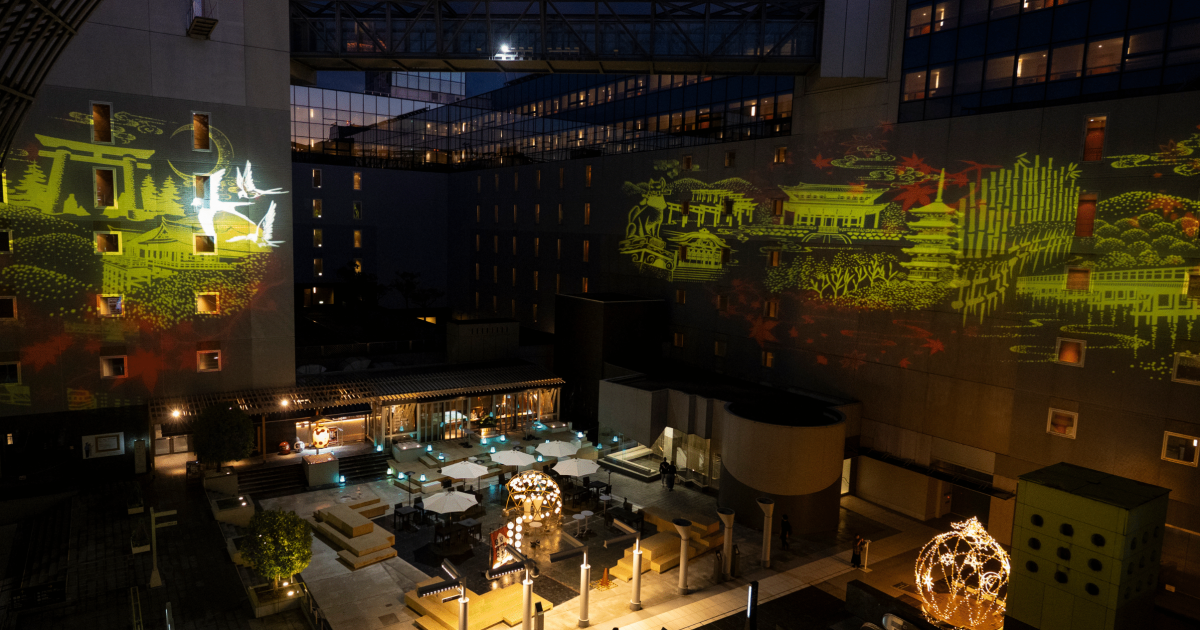
For years, Naked has established itself as an industry leader in spatial design, projection mapping, and immersive digital installations. The studio gained international acclaim through its high-profile collaborations with historical landmarks, most notably its recurring nighttime illumination and digital art exhibitions at Nijo Castle, a UNESCO World Heritage site in Kyoto. These exhibitions successfully demonstrated that historical spaces could be recontextualized through modern technology, drawing millions of enchanted spectators.
Phase 2: The Birth of Naked Garden One Kyoto and the Niwa Installation
Building upon the success of its castle installations, Naked expanded its footprint across the entire city via the umbrella initiative Naked Garden One Kyoto. The overarching mission of this project is to connect Kyoto’s fragmented living heritage into a cohesive, interactive ecosystem for global travelers.
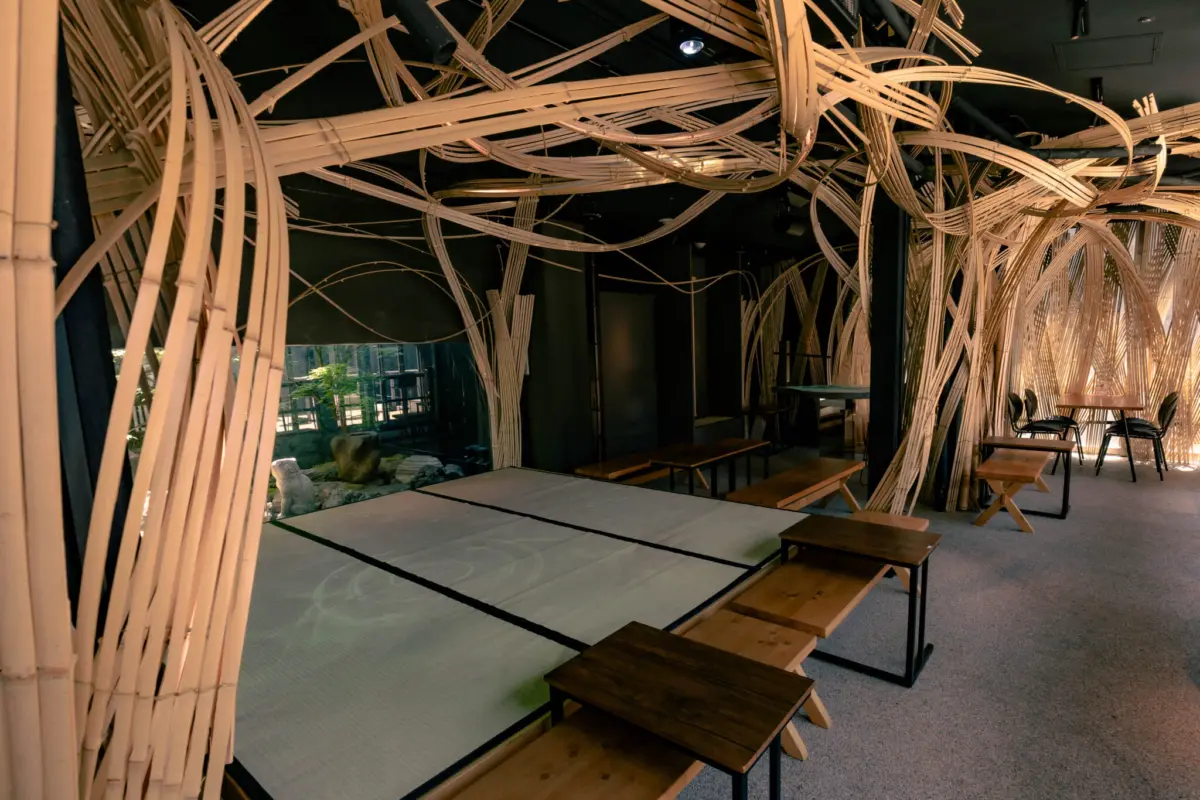
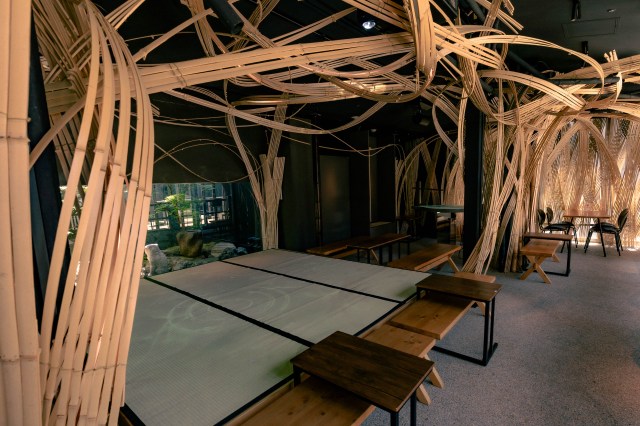
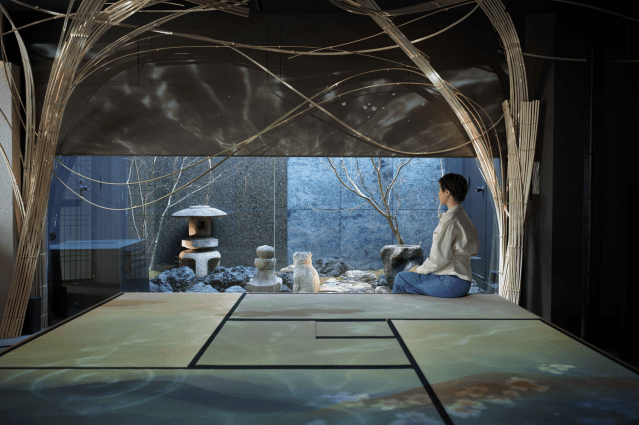
As a physical anchor for this mission, Naked unveiled Niwa in 2025. Located strategically on the seventh floor of the East Square inside Kyoto Station—the city’s primary transportation gateway—Niwa was conceived as an urban oasis. The space broke away from conventional commercial interior design by incorporating dynamic bamboo installations, a meticulously raked traditional rock garden (karesansui), and a light-filled, hyper-modern tearoom known as Kiwa. Niwa served as a tranquil decompression chamber for travelers arriving via the Shinkansen, offering a meditative preview of Kyoto before they even stepped out into the bustling city streets.
Phase 3: The September 8 Workshop Rollout
Recognizing that passive appreciation of Niwa’s aesthetics was only step one, Naked conceptualized a mechanism for active participation. The studio identified a critical demand among international tourists for authentic, low-barrier, yet deeply educational crafting experiences.
Beginning September 8, Niwa will transition part of its schedule into an active academy of traditional arts. Held every Tuesday and Thursday between 2:00 p.m. and 5:00 p.m., the workshops introduce a rotating curriculum of master-led craft sessions. Designed to fit seamlessly into the itineraries of transient travelers, each session lasts between 40 and 60 minutes, ensuring that participants can acquire a sophisticated artisan skill whether they have a brief layover before catching a train or are seeking a meaningful kickoff to an extended stay in the Kansai region.
Supporting Context & Metrics: The Anatomy of the Craft Workshops
The curriculum curated by Naked is a masterclass in representing Kyoto’s diverse artistic legacy. Rather than offering generic crafts, the studio has partnered with esteemed traditional practitioners to deliver authentic modules spanning textiles, metallurgy, botany, and basketry.
The Curriculum: Four Pillars of Traditional Craftsmanship
Participants can choose from a rotating schedule of distinct workshops, each highlighting a unique facet of Japanese material culture:
-
Ikebana (Japanese Flower Arranging)
- The Discipline: Under the expert guidance of an instructor dispatched from Ikenobo—the founding and oldest school of Japanese flower arranging—participants learn the philosophical underpinnings of ikebana.
- The Experience: Unlike Western floral design, which often emphasizes symmetry and volume, the Ikenobo philosophy focuses on asymmetry, linear minimalism, and bringing out the raw, natural beauty of seasonal flora. Students learn how space, line, and form communicate respect for nature.
-
Surihaku and Yuzen Dyeing (Textile Arts)
- The Discipline: Textile enthusiasts can dive into Kyoto’s world-renowned dyeing and embellishment traditions.
- The Experience: Students can attempt traditional yuzen hand-painting on fine handkerchiefs or engage in surihaku, an exquisite technique involving the stenciling of gold and silver leaf onto fabric. Participants can use pre-designed traditional patterns or bring their own custom images to apply gold and silver leaf onto high-quality tote bags, walking away with a personalized, high-fashion souvenir.
-
Shikai Nami Bamboo Basketry
- The Discipline: Bamboo manipulation is one of Kyoto’s foundational crafts, deeply tied to the city’s bamboo groves, such as the famous Arashiyama forest.
- The Experience: Participants learn the intricate mechanics of weaving a traditional shikai nami ("four-seas wave") bamboo basket. This rigorous yet meditative process requires patience and spatial awareness, resulting in a durable, geometrically striking vessel suitable for home decor or functional use.
-
Odoshi (Samurai Armor Lacing)
- The Discipline: For history buffs and martial arts enthusiasts, the workshop offers a rare encounter with odoshi, the complex historical technique used by samurai to lace individual iron or leather armor plates (kozane) together using vibrant silk cords.
- The Experience: Participants handle authentic materials and learn the specific knotting and patterning techniques that once protected feudal lords on the battlefield, gaining an intimate appreciation for the functional aesthetics of samurai gear.
Logistical Framework and Pricing Metrics
To ensure broad accessibility without sacrificing the intimacy of the instructional experience, Naked has engineered a highly efficient operational model:
- Location: Niwa, 7th Floor, East Square, Kyoto Station.
- Frequency: Every Tuesday and Thursday.
- Time Slots: 2:00 p.m. to 5:00 p.m. (Sessions run 40 to 60 minutes).
- Class Capacity: Strictly capped at a maximum of 6 participants per session to ensure personalized, one-on-one attention from instructors. Individual bookings (one person) are fully accommodated.
- Pricing Structure: 4,500 yen (approx. $28 USD) per participant. Crucially, this fee is all-inclusive, covering all raw crafting materials, expert instruction, and a complimentary artisan matcha latte or specialty coffee sourced directly from Niwa’s in-house cafe, Kiwa.
- Language Accessibility: Zero preparation is required by the attendee. Sessions feature bilingual instruction supplemented by crystal-clear, professionally translated English text guides, eliminating any intimidation factor for non-Japanese speakers.
- Booking Ecosystem: Reservations can be made seamlessly online via major international and domestic ticketing platforms including KKday and Asoview, or via same-day walk-in bookings at Niwa up until 4:00 p.m. on workshop days.
Official Statements & Industry Perspectives
The launch of the Niwa workshops represents a significant evolution in how cultural institutions and creative studios approach sustainable tourism in over-visited Japanese municipalities.
Artistic directors at Naked have emphasized that the primary goal of the initiative is to transition the international visitor from a passive observer to an active participant in cultural preservation. In statements released via PR Times, representatives noted that while digital art installations like projection mapping successfully capture the visual wonder of Kyoto, they must be paired with tactile, human-to-human interactions to truly honor the city’s living legacy.
"Kyoto is not a museum piece frozen in amber; it is a breathing ecosystem of master artisans, textile dyers, flower arrangers, and metalworkers whose livelihoods depend on the continuation of their crafts," a Naked studio spokesperson indicated. "By placing these workshops directly inside the transportation hub of Kyoto Station, we are removing the physical and logistical barriers that often prevent travelers from seeking out traditional masters. We are inviting them to pause their journeys, use their hands, and carry a piece of Kyoto’s soul back across the globe."
Local tourism boards and cultural preservation societies in Kyoto have welcomed the initiative. For decades, traditional craft guilds have faced mounting pressures due to aging artisan populations and declining domestic demand. By introducing international travelers to crafts like surihaku and odoshi in an accessible, English-friendly format, initiatives like Niwa introduce a vital new demographic of global patrons who can champion and financially support these heritage industries long after returning to their home countries.
Furthermore, hospitality analysts have praised the strategic placement of the workshops within Kyoto Station. As cities across Japan grapple with the localized strains of overtourism, decentralized and well-managed micro-workshops help disperse visitor energy while offering high-value, low-impact educational experiences that enrich traveler satisfaction.
Future Outlook: Redefining the Gateway Experience
As the September 8 launch approaches, the implications of Naked’s Niwa workshops extend far beyond a simple afternoon activity. This pilot project establishes a compelling blueprint for the future of urban tourism infrastructure in Japan and potentially across global transit hubs.
Scalability and Curriculum Expansion
Industry insiders speculate that if the Tuesday and Thursday sessions at Kyoto Station achieve anticipated occupancy rates, Naked may look to expand the operational window to additional days of the week or introduce evening twilight sessions tailored to late-arriving Shinkansen passengers. Furthermore, the rotating curriculum provides infinite scalability; future iterations of the workshop could introduce Kyoto-specific ceramics (Kiyomizu-yaki), incense blending (kodo), or traditional bookbinding (kyo-tohon).
The Model for Frictionless Cultural Onboarding
The true triumph of the Niwa initiative lies in its elimination of friction. Traditionally, engaging with a master craftsman in Kyoto required complex bureaucratic introductions, fluency in the Japanese language, specialized travel to remote neighborhood ateliers, and significant financial commitments. By democratizing access—placing world-class instruction inside a high-speed rail terminal for $28, complete with a matcha latte and English documentation—Naked has invented a new category of "transit-integrated cultural onboarding."
As global travel continues to rebound and evolve, modern tourists increasingly seek authenticity, sustainability, and personal enrichment over passive sightseeing. By empowering visitors to weave bamboo, lace samurai armor, and dye textiles with their own hands before they even leave the train station, Kyoto is setting a new global standard for how historic cities can welcome, educate, and inspire the world.
For further details, schedules, and online reservations, prospective travelers can consult the official Niwa Website or book directly via partner portals such as KKday and Asoview.







Belum ada komentar. Jadilah yang pertama berkomentar!