

Executive Overview
Master mystery novelist Keigo Higashino has once again captured the imagination of readers and filmgoers worldwide. Following a phenomenal literary run that has seen cumulative sales of his acclaimed novel The Swan and the Bat exceed 1.95 million copies across the series, the gripping narrative has officially leaped from the page to the silver screen. Released nationwide on September 4, 2026, the live-action film adaptation brings a profound sense of gravity, suspense, and emotional resonance to theaters across Japan.
![[Aichi, Tokoname] Feature Articles on the film "Swans and Bats"](https://resources.matcha-jp.com/resize/720x2000/2026/09/08-270391.webp)
Yet, beyond the compelling performances of its cast and the intricate plotting inherent to Higashino’s legacy, the film serves as a love letter to a specific geographic canvas: Tokoname City and Anjo City in Aichi Prefecture. Serving as the vital emotional and narrative backbone of the story, the atmospheric alleyways, ancient pottery paths, and quiet coastal harbors of Tokoname breathe raw life into the cinematic frame.
![[Aichi, Tokoname] Feature Articles on the film "Swans and Bats"](https://resources.matcha-jp.com/resize/720x2000/2026/09/08-270392.webp)
This comprehensive feature explores the intersections of fiction, film, and geography. As a tribute to the legendary author—who sadly passed away on July 23, 2026, leaving behind an unmatched footprint in the global mystery genre—we invite readers and travelers to retrace the steps of the story’s central characters. By navigating the iconic locations of The Swan and the Bat, fans can step directly into the world of a master storyteller, uncovering how regional heritage and modern cinema intertwine.
![[Aichi, Tokoname] Feature Articles on the film "Swans and Bats"](https://resources.matcha-jp.com/resize/720x2000/2026/09/08-270393.webp)
Detailed Chronology: The Narrative Catalyst and Cinematic Journey
The Crime and the Confession
The intricate plot of The Swan and the Bat begins with a singular, harrowing event: the brutal stabbing death of Shiroishi Shiraishi, a lawyer widely respected within his community for his integrity, kindness, and honest nature. The investigation appears to reach a swift, startling conclusion when Tatsuro Kuraki steps forward and confesses to the murder.
![[Aichi, Tokoname] Feature Articles on the film "Swans and Bats"](https://resources.matcha-jp.com/resize/720x2000/2026/09/08-270394.webp)
"I did it. I am the culprit in ‘all the incidents,’" Kuraki declares, an admission that should have closed the file permanently. However, a profound sense of unease ripples through the lives of those left behind. Kazuma Kuraki, the suspect’s son, and Mirei Shiraishi, the victim’s daughter, find themselves deeply unsettled by the hollow ring of their fathers’ past words and actions.
![[Aichi, Tokoname] Feature Articles on the film "Swans and Bats"](https://resources.matcha-jp.com/resize/720x2000/2026/09/08-270398.webp)
Bound by lingering questions that refuse to dissipate—Why did my father commit murder? Why did my father have to be killed?—the suspect’s son and the victim’s daughter forge an unlikely alliance. When two individuals who should never have crossed paths join hands, the absolute nature of the official "truth" begins to fracture, giving way to a labyrinth of hidden motives and generational secrets.
![[Aichi, Tokoname] Feature Articles on the film "Swans and Bats"](https://resources.matcha-jp.com/resize/720x2000/2026/09/08-270399.webp)
Arrival at Tokoname: Gateway to the Past
The narrative shifts dramatically when Kazuma and Mirei travel to Tokoname City in Aichi Prefecture in frantic pursuit of their fathers’ hidden histories. Situated conveniently—approximately 30 minutes from Nagoya Station and a mere 10 minutes from Chubu Centrair International Airport—Tokoname Station serves as the geographical and emotional gateway for the investigators.
![[Aichi, Tokoname] Feature Articles on the film "Swans and Bats"](https://resources.matcha-jp.com/resize/720x2000/2026/09/08-270401.webp)
As the characters step out into the historic pottery town, boasting a legacy spanning a thousand years as one of Japan’s six ancient kilns, the mystery accelerates rapidly. The landscape ceases to be a mere backdrop; it becomes an active participant in the uncovering of secrets. Visitors standing near the local bus stops can spot the exact camera angles utilized during production, capturing the station sign from behind shelters to replicate the tense, immersive atmosphere experienced by Kazuma and Mirei.
![[Aichi, Tokoname] Feature Articles on the film "Swans and Bats"](https://resources.matcha-jp.com/resize/720x2000/2026/09/08-270402.webp)
Navigating the Pottery Footpath and Denden-zaka
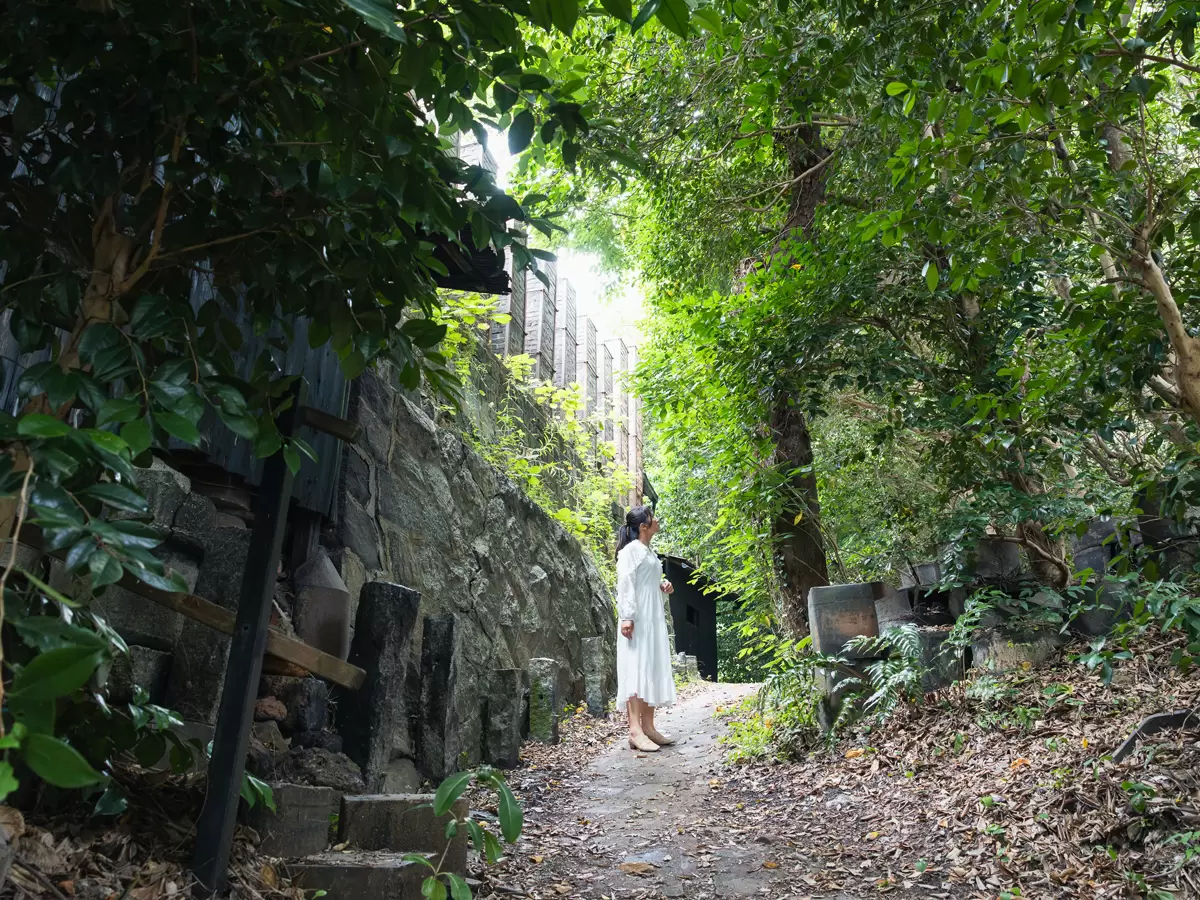
Moving deeper into the town, the protagonists traverse the legendary Pottery Footpath, a network of historic alleys that leads directly into the soul of Tokoname’s ceramic heritage. Among these, Denden-zaka (The Clay Pipe Slope) stands out as a masterclass in cinematic atmosphere.
![[Aichi, Tokoname] Feature Articles on the film "Swans and Bats"](https://resources.matcha-jp.com/resize/720x2000/2026/09/08-270403.webp)
Lined with traditional shochu bottles stacked meticulously along weathered walls and paths embedded with kesawa—discarded clay rings utilized during the ancient firing process of ceramic pipes—the slope projects a powerful sense of nostalgia. It was here, amidst the rustic earthen architecture, that Mirei utters expressions of quiet awe in the film, perfectly capturing the eerie, timeless ambiance that defines Higashino’s work.
![[Aichi, Tokoname] Feature Articles on the film "Swans and Bats"](https://resources.matcha-jp.com/resize/720x2000/2026/09/08-270404.webp)
Nearby, the iconic Noborigama (Climbing Kiln)—a nationally designated Important Tangible Folk Cultural Property featuring ten towering chimneys—provides a striking visual anchor. Featured prominently in promotional trailers, this monumental kiln underscores the deep historical weight of the setting, anchoring the fictional intrigue in authentic Japanese craftsmanship.
![[Aichi, Tokoname] Feature Articles on the film "Swans and Bats"](https://resources.matcha-jp.com/resize/720x2000/2026/09/08-270406.webp)
Uncovering Clues: From Workshops to Post Offices
As the investigation intensifies, the characters’ path leads them past unique local landmarks, including the vacant lot fronting the workshop and gallery shop "Touhei Hachi." Sharp-eyed fans will instantly recognize this rustic clearing, overgrown with weeds and haphazardly stacked with pots and clay pipes, from the striking photograph gracing the inner cover of the paperback edition. Visitors can physically align their paperbacks with the actual scenery, creating a seamless bridge between the literary page and physical reality.
![[Aichi, Tokoname] Feature Articles on the film "Swans and Bats"](https://resources.matcha-jp.com/resize/720x2000/2026/09/08-270407.webp)
Continuing their inquiries, the duo visits a small post office near Kamachi Station—a structure closely mirroring the real-life Tokoname Onizaki Post Office. POP displays featuring Tokoname City’s beloved mascot, "Tokotan," greet visitors inside, while electric-assist shared bicycles rented from the Tokoname Tourist Information Center provide travelers with efficient transit to neighboring sites.
![[Aichi, Tokoname] Feature Articles on the film "Swans and Bats"](https://resources.matcha-jp.com/resize/720x2000/2026/09/08-270408.webp)
A short bicycle or walking excursion leads adventurers to the Nishinokuchi area, where pivotal investigative scenes were filmed. Here, historical commerce endures through establishments like Yoshino, a handmade shrimp cracker specialty shop operating for over 80 years, and adjacent neighborhood fresh fish and vegetable vendors that retain the unhurried, authentic pace of a traditional Japanese port town.
![[Aichi, Tokoname] Feature Articles on the film "Swans and Bats"](https://resources.matcha-jp.com/resize/720x2000/2026/09/08-270409.webp)
The Whirlwind Climax at Onizaki Fishing Port
The final leg of the characters’ journey brings them from the earthy tones of the pottery town to the dramatic coastal expanses of the port. At the Onizaki Fishing Port (Kamachi), located roughly a five-minute walk from Kamachi Station, the story accelerates toward its breathtaking climax.
![[Aichi, Tokoname] Feature Articles on the film "Swans and Bats"](https://resources.matcha-jp.com/resize/720x2000/2026/09/08-270410.webp)
Bathed in the golden hues of the setting sun, the harbor offers a stark visual shift. The transition from cramped, clay-lined alleyways to wide-open, wind-swept ocean views mirrors the internal psychological tension building within Kazuma and Mirei. It is here, against the backdrop of bobbing fishing boats and lapping waves, that the final pieces of the puzzle fall into place, delivering a narrative resolution that leaves both characters and audiences profoundly shaken.
![[Aichi, Tokoname] Feature Articles on the film "Swans and Bats"](https://resources.matcha-jp.com/resize/720x2000/2026/09/08-270412.webp)
Expanding the Investigation to Anjo City
While Tokoname anchors the atmospheric pottery and coastal elements of the tale, it shares its cinematic stage with Anjo City, the secondary geographic setting of The Swan and the Bat. Featured prominently in the novel’s depiction of Shinome-cho and surrounding neighborhoods, Anjo was also utilized extensively during on-location principal photography. Following a thorough exploration of Tokoname’s winding alleys and coastal vistas, fans frequently extend their pilgrimage to Anjo to complete their immersion into the dual-city topography of Higashino’s universe.
![[Aichi, Tokoname] Feature Articles on the film "Swans and Bats"](https://resources.matcha-jp.com/resize/720x2000/2026/09/08-270411.webp)
Supporting Context & Metrics
To fully appreciate the cultural and economic footprint of The Swan and the Bat, it is essential to examine the quantitative and qualitative data surrounding the novel and its cinematic rollout:
![[Aichi, Tokoname] Feature Articles on the film "Swans and Bats"](https://resources.matcha-jp.com/resize/720x2000/2026/09/08-270414.webp)
- Literary Reach: The Swan and the Bat series has achieved massive commercial success, surpassing 1.95 million total copies sold across Japan, cementing Keigo Higashino’s status as an undisputed titan of modern mystery fiction.
- Release Timing: The live-action feature film made its grand debut in theaters nationwide on September 4, 2026, following an intensive production schedule across Aichi Prefecture.
- Geographic Proximity: Tokoname City’s accessibility plays a vital role in tourism metrics; the city sits just 30 minutes from Nagoya Station and a mere 10 minutes from Chubu Centrair International Airport, making it an ideal destination for international and domestic cinephiles alike.
- Limited Promotional Campaigns: To celebrate the film’s launch, the Tokoname Tourist Information Center rolled out an exclusive visitor initiative. The first 300 visitors who present valid proof of viewing the film (such as a physical ticket stub or e-ticket confirmation screen) receive a complimentary, limited-edition Beckoning Cat postcard (one per person while supplies last).
- Historical Infrastructure: Tokoname’s featured locations include a 1,000-year history as one of Japan’s six ancient kilns, alongside nationally protected cultural assets such as the multi-chimneyed climbing kiln (Noborigama).
Official Statements and Behind-the-Scenes Insights
The production of The Swan and the Bat in Aichi Prefecture generated immense local pride, bridging municipal governance, regional commerce, and national entertainment media.
![[Aichi, Tokoname] Feature Articles on the film "Swans and Bats"](https://resources.matcha-jp.com/resize/720x2000/2026/09/08-270413.webp)
The Author’s Final Vision
Before his passing on July 23, 2026, Keigo Higashino reflected on the profound personal and artistic weight of the novel. In statements shared with publishing executives, Higashino remarked, "My goal for the future is to surpass this work." This intrinsic drive for narrative perfection is precisely why The Swan and the Bat stands out within his extensive bibliography—not merely as a whodunit, but as a deep psychological examination of familial duty, guilt, and redemption. The film adaptation honors this philosophy by respecting the granular details of the source material, utilizing authentic regional backdrops rather than soundstages.
![[Aichi, Tokoname] Feature Articles on the film "Swans and Bats"](https://resources.matcha-jp.com/resize/720x2000/2026/09/08-270419.webp)
Actor Testimonials and Regional Hospitality
During an exclusive interview on CBC TV’s regional program "Chant!", the two lead actors shared intimate details regarding their time filming on location in Tokoname City. Beyond praising the stark, moody beauty of the pottery paths and coastal horizons, both actors singled out a surprising local culinary highlight: Onizaki Nori (Onizaki Seaweed).
![[Aichi, Tokoname] Feature Articles on the film "Swans and Bats"](https://resources.matcha-jp.com/resize/720x2000/2026/09/08-270420.webp)
Brought to the film set in massive quantities by the Mayor of Tokoname as a gesture of hospitality, the seaweed quickly became a staple for the cast and crew during gruelling shoot schedules. Available in traditional roasted and seasoned varieties, as well as innovative modern flavors such as butter-flavored nori and mentaiko (spicy cod roe) nori, Onizaki seaweed is produced locally and sold through the Onizaki Fisheries Cooperative and the Tokoname Tourist Information Center. The actors commended the snack not only for its rich umami flavor but as a comforting taste of Aichi Prefecture’s deep-rooted community spirit.
![[Aichi, Tokoname] Feature Articles on the film "Swans and Bats"](https://resources.matcha-jp.com/resize/720x2000/2026/09/08-270421.webp)
Future Outlook: Cinematic Tourism and Preserving Higashino’s Literary Legacy
The release of The Swan and the Bat marks more than a successful box office opening; it signals a thriving future for locational tourism (seichi junrei) in Aichi Prefecture. As fans increasingly seek tactile, real-world connections to their favorite narratives, municipalities like Tokoname and Anjo are positioning themselves as premier cultural destinations.
![[Aichi, Tokoname] Feature Articles on the film "Swans and Bats"](https://resources.matcha-jp.com/resize/720x2000/2026/09/08-270422.webp)
Sustainable Fan Engagement
Local tourism boards have demonstrated remarkable adaptability in welcoming cinematic travelers. By supplying electric-assist shared bicycles at the Tokoname Tourist Information Center, the city encourages eco-friendly exploration of otherwise narrow or steep pathways like Denden-zaka and the Tokoname Ceramic Forest. Furthermore, initiatives like the limited-edition Beckoning Cat postcard campaign demonstrate how local commerce can successfully leverage cinematic releases to boost foot traffic for independent businesses, ranging from 80-year-old shrimp cracker shops like Yoshino to generational fresh fish vendors.
![[Aichi, Tokoname] Feature Articles on the film "Swans and Bats"](https://resources.matcha-jp.com/resize/720x2000/2026/09/08-270423.webp)
A Lasting Literary Monument
As the literary and cinematic communities continue to mourn the loss of Keigo Higashino, projects like the film adaptation of The Swan and the Bat ensure that his creative spirit remains vibrantly alive. Every traveler who matches their paperback cover to the rusted pipes of "Touhei Hachi," every fan who pauses at the Onizaki Fishing Port at sunset, and every reader who untangles the emotional threads left behind by Kazuma and Mirei participates in a living memorial.
![[Aichi, Tokoname] Feature Articles on the film "Swans and Bats"](https://resources.matcha-jp.com/resize/720x2000/2026/09/08-270424.webp)
Higashino may have aspired to surpass this work, but in The Swan and the Bat, he crafted an emotional and structural labyrinth that will continue to captivate audiences for generations. Through the preserved kiln walls, coastal winds, and welcoming alleyways of Tokoname and Anjo, the world of the novel breathes on—inviting all who dare to seek the truth to walk its storied paths.





Belum ada komentar. Jadilah yang pertama berkomentar!