

Executive Overview
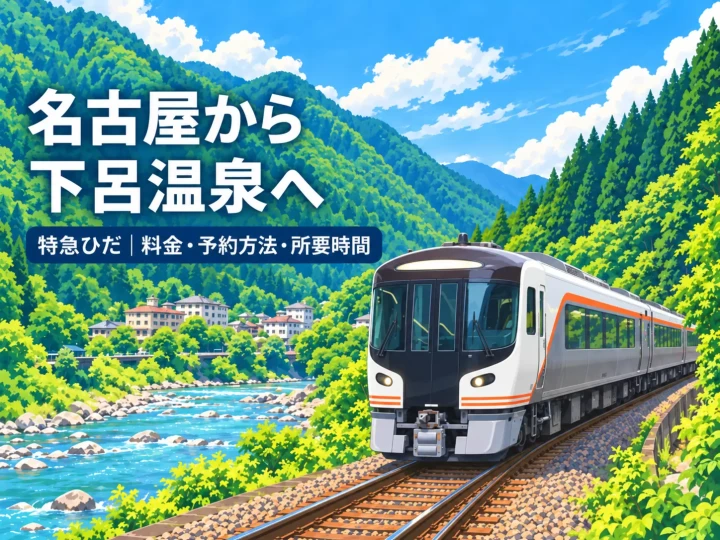
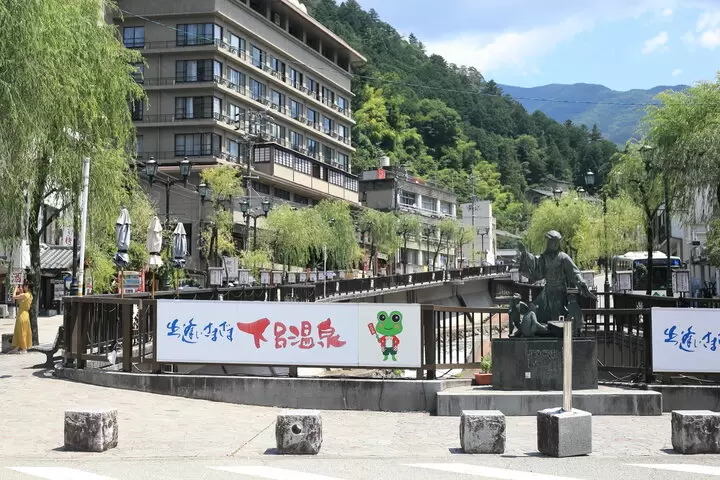
For travelers seeking an authentic immersion into Japan’s storied therapeutic landscape, Gero Onsen stands as one of the country’s premier hot spring destinations. Nestled within the rugged, densely forested mountains of Gifu Prefecture’s Hida region, this historic spa town has drawn bathers for centuries with its alkaline, silk-textured waters. Yet, the journey to tranquility begins long before one reaches the steamy footbaths of the valley; it starts on the platform of JR Nagoya Station.
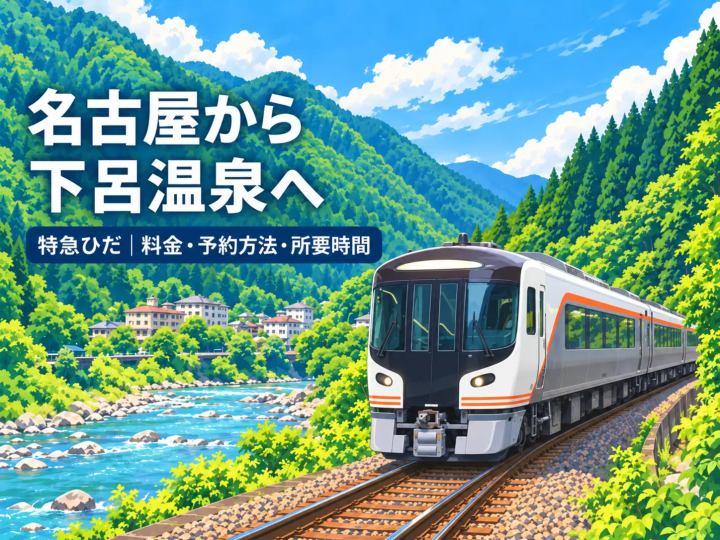
The most efficient, seamless, and widely recommended artery connecting Nagoya to Gero Onsen is the JR Limited Express "Hida" train. Operating multiple daily direct runs through dramatic mountain passes and alongside rushing river valleys, the Hida service transforms a standard regional commute into an integral component of the Hida sightseeing experience.
This comprehensive guide breaks down every logistical facet of the journey. Whether you are arriving directly from Chubu Centrair International Airport (NGO) or navigating domestic transit, this report outlines ticket pricing frameworks, modern IC card integration, optimal daily timetables, critical seasonal reservation alerts, and broader regional rail passes to ensure an unhindered voyage.
Detailed Chronology: Step-by-Step Transit Mechanics
Phase 1: Airport Arrival to Nagoya Station (For International Travelers)
For international visitors touching down at Chubu Centrair International Airport, reaching Gero Onsen requires a two-step rail sequence: transitioning from the Meitetsu Line to the JR Conventional Network at Nagoya.
- The Airport Express (µ-SKY): Upon clearing customs and baggage claim, proceed to the Meitetsu station terminal located within the airport complex. Board the Meitetsu Limited Express "µ-SKY," celebrated as the fastest transit link between the airport and downtown Nagoya, clocking in at approximately 28 minutes to Meitetsu Nagoya Station.
- Special Car Considerations: Because all cars on the µ-SKY are designated special class, passengers must purchase both a base fare ticket and a supplemental seat reservation voucher known as a "µ-Ticket."
- The Inter-Station Transfer: Arriving at Meitetsu Nagoya Station, travelers must navigate on foot to the adjacent JR Nagoya Station. While physically close, the two networks operate through distinct, independent ticket gates. Visitors hauling heavy luggage or experiencing Japanese rail systems for the first time should budget a minimum of 20 to 30 minutes for this transition, factoring in orientation and station congestion.
Phase 2: Boarding the JR Limited Express "Hida"
Upon entering JR Nagoya Station, locate the designated conventional platforms for the Limited Express "Hida," typically departing from tracks 3 or 4.
- Direct Connectivity: The train operates with zero transfers required, carrying passengers straight to JR Gero Station. This direct routing eliminates the anxiety of mid-route changes for travelers encumbered by heavy baggage.
- Travel Duration: According to official data from the Gero Onsen Tourism Association, the journey from Nagoya to Gero Station spans approximately 1 hour and 30 minutes.
- Scenic Value: As the train clears the urban sprawl of Nagoya, the landscape dramatically transitions. Sweeping views of towering green mountains and the winding Hida River dominate the left-hand and right-hand windows, offering an immediate visual introduction to the natural beauty of the Japanese Alps.
Supporting Context & Metrics: Fares, Classes, and Ticketing
Navigating the financial and structural requirements of the JR Tokai network requires an understanding of Japanese railway conventions. To legally board a limited express train in ordinary class with a reserved seat, passengers must secure two distinct fares: a base train ticket and a limited express ticket.
Standard Fare Breakdown (One-Way, Adult)
| Fare Component | Description | Cost (JPY) |
|---|---|---|
| Base Train Ticket | Nagoya Station to Gero Station | ¥2,310 |
| Limited Express Ticket | Ordinary Car, Reserved Seat | ¥2,390 |
| Total Estimated Fare | Standard One-Way Journey | ¥4,700 |
Note: Express train pricing can fluctuate based on seasonal adjustments, specific promotional packages, and seat classification. Travelers should verify exact pricing at the time of purchase via official digital interfaces.
Advanced Savings: Digital and Early-Bird Options
For tech-savvy travelers or those planning weeks ahead, cost-reduction alternatives exist within the JR Tokai digital ecosystem:
- The "Limited Express Ticketless Early Bird 7": Under specific qualifying conditions—such as pairing the itinerary with an overarching Shinkansen booking via designated digital reservation platforms (e.g., the EX Service) and purchasing at least seven days in advance—the limited express surcharge drops from ¥2,390 to ¥1,510. This brings the total one-way expenditure down to ¥3,820, yielding an immediate ¥880 savings.
- e5489 Service: Managed by JR West, the online reservation engine "e5489" allows international and domestic travelers to secure digital limited express tickets up to one month prior to departure, and as late as two minutes before the train pulls out of Nagoya Station. Note that a digital express ticket must be paired with either a physical paper base ticket or a compatible transportation IC card to successfully pass through automated gates.
The Evolution of IC Card Usage at Gero Station
Historically, traditional IC cards (Suica, Pasmo, Icoca) were largely incompatible with regional excursions deep into the Takayama Main Line, leading to widespread confusion among tourists.
However, current regulations implemented by JR Tokai permit the use of TOICA and interoperable major Japanese IC cards for the base fare segment between Nagoya and Gero Stations, provided the journey is direct.
The Correct IC Card Workflow:
- Secure your Limited Express "Hida" express ticket separately via ticket counter, automated kiosk, or the "e5489" platform.
- Tap your compatible IC card at the automated entrance gates of JR Nagoya Station.
- Board the Limited Express "Hida" and retain your express seat designation slip.
- Tap your IC card at the exit gates of JR Gero Station to automatically settle the base fare (¥2,310).
Caution: IC cards cannot be utilized universally across all remote stations along the Takayama Main Line, nor can they substitute for the limited express surcharge ticket. Travelers planning multi-stop itineraries should verify station-specific IC card validation rules in advance.
Official Timetable & Operational Schedules
To facilitate precise itinerary planning, reference the primary operating schedules for the Limited Express "Hida" connecting Nagoya and Gero.
Outbound: Nagoya to Gero Onsen
| Train Number | Weekday Schedule (Nagoya ➔ Gero) | Weekend & Holiday Schedule (Nagoya ➔ Gero) |
|---|---|---|
| Hida No. 1 | 07:43 ➔ 09:25 | 07:43 ➔ 09:25 |
| Hida No. 3 | 08:43 ➔ 10:14 | 08:43 ➔ 10:14 |
| Hida No. 5 | 09:39 ➔ 11:29 | 09:39 ➔ 11:29 |
| Hida No. 7 | 10:48 ➔ 12:27 | 10:48 ➔ 12:27 |
| Hida No. 9 | 11:43 ➔ 13:26 | 11:43 ➔ 13:26 |
| Hida No. 11 | 12:48 ➔ 14:28 | 12:48 ➔ 14:28 |
| Hida No. 13 | 14:48 ➔ 16:28 | 14:48 ➔ 16:28 |
| Hida No. 15 | 16:03 ➔ 17:58 | 16:03 ➔ 17:58 |
| Hida No. 17 | 18:12 ➔ 20:04 | 18:12 ➔ 20:04 |
| Hida No. 19 | 20:17 ➔ 22:02 | 20:17 ➔ 22:02 |
Inbound: Gero Onsen to Nagoya
| Train Number | Weekday Schedule (Gero ➔ Nagoya) | Weekend & Holiday Schedule (Gero ➔ Nagoya) |
|---|---|---|
| Hida No. 2 | 07:31 ➔ 09:12 | 07:31 ➔ 09:12 |
| Hida No. 4 | 08:45 ➔ 10:34 | 08:45 ➔ 10:34 |
| Hida No. 6 | 10:27 ➔ 12:04 | 10:27 ➔ 12:04 |
| Hida No. 8 | 12:22 ➔ 14:04 | 12:22 ➔ 14:04 |
| Hida No. 10 | 13:21 ➔ 15:04 | 13:21 ➔ 15:04 |
| Hida No. 12 | 14:22 ➔ 16:09 | 14:22 ➔ 16:09 |
| Hida No. 14 | 15:32 ➔ 17:05 | 15:32 ➔ 17:05 |
| Hida No. 16 | 16:18 ➔ unassigned | 16:18 ➔ 18:06 |
| Hida No. 18 | 17:22 ➔ 19:06 | 17:22 ➔ 19:06 |
| Hida No. 20 | 19:30 ➔ 21:03 | 19:30 ➔ 21:03 |
Future Outlook & Critical Advisories for Travelers
The September 2026 Peak Operational Mandate
Transport authorities have issued a strict operational advisory for late summer travelers. From September 18th through September 23rd, 2026, the Limited Express "Hida" will operate under an All-Reserved Seating Configuration.
- No Unreserved Boarding: During this multi-day holiday window, spontaneous boarding of unreserved cars will be strictly prohibited. All passengers must secure a designated seat prior to boarding.
- Tourist Pass Holders Take Note: International visitors utilizing regional sightseeing passes (such as the Takayama-Hokuriku Area Tourist Pass) must actively exchange their pass vouchers for physical reserved-seat tickets at a JR ticket office or automated machine prior to entering the platform. Holding a pass alone does not guarantee a seat during peak allocation periods.
Regional Pass Evaluation: Is the Takayama-Hokuriku Pass Worth It?
For tourists expanding their itineraries beyond Gero to include Takayama, Shirakawa-go, and Kanazawa, the Takayama-Hokuriku Area Tourist Pass (priced at ¥19,800 for adults and ¥9,900 for children over a 5-day consecutive window) offers extensive value. However, analysts emphasize that travelers executing a simple, direct round-trip exclusively between Nagoya and Gero Onsen will experience a net financial loss using the pass, as individual point-to-point ticket purchases remain significantly cheaper. Comprehensive multi-destination mapping is strongly advised prior to purchase.
Arrival at Gero Station: Local Transit & Tourism Integration
Upon stepping onto the platform at JR Gero Station, travelers are immediately welcomed by the crisp mountain air and the faint scent of sulfur.
- Accommodation Shuttles: Many traditional ryokan and resort hotels situated within the valley maintain private shuttle fleets servicing the station. Visitors should confirm pick-up protocols directly with their lodging providers prior to arrival.
- On-Foot Exploration & Local Buses: For those heading to cultural landmarks such as the Gero-Onsen Gassho-mura (an open-air folk village featuring authentic thatched-roof farmhouses relocated from Shirakawa-go), a 20-minute scenic walk or a 6-minute local bus ride bridges the gap.
- Seasonal Attractions: Beyond the ubiquitous public footbaths (ashiyu) scattered throughout the township and culinary staples like Hida beef, seasonal events such as the Gero Masu Sake Walk (scheduled from September 1st through October 31st, 2026) offer visitors the chance to sample regional sake using traditional wooden square cups (masu) while touring the historic spa district.
By mapping your transit strategy, honoring reservation windows during peak holiday periods, and selecting the ticketing tier that matches your itinerary, the journey from Nagoya to Gero Onsen becomes an effortless prologue to an unforgettable Japanese alpine retreat.








Belum ada komentar. Jadilah yang pertama berkomentar!