

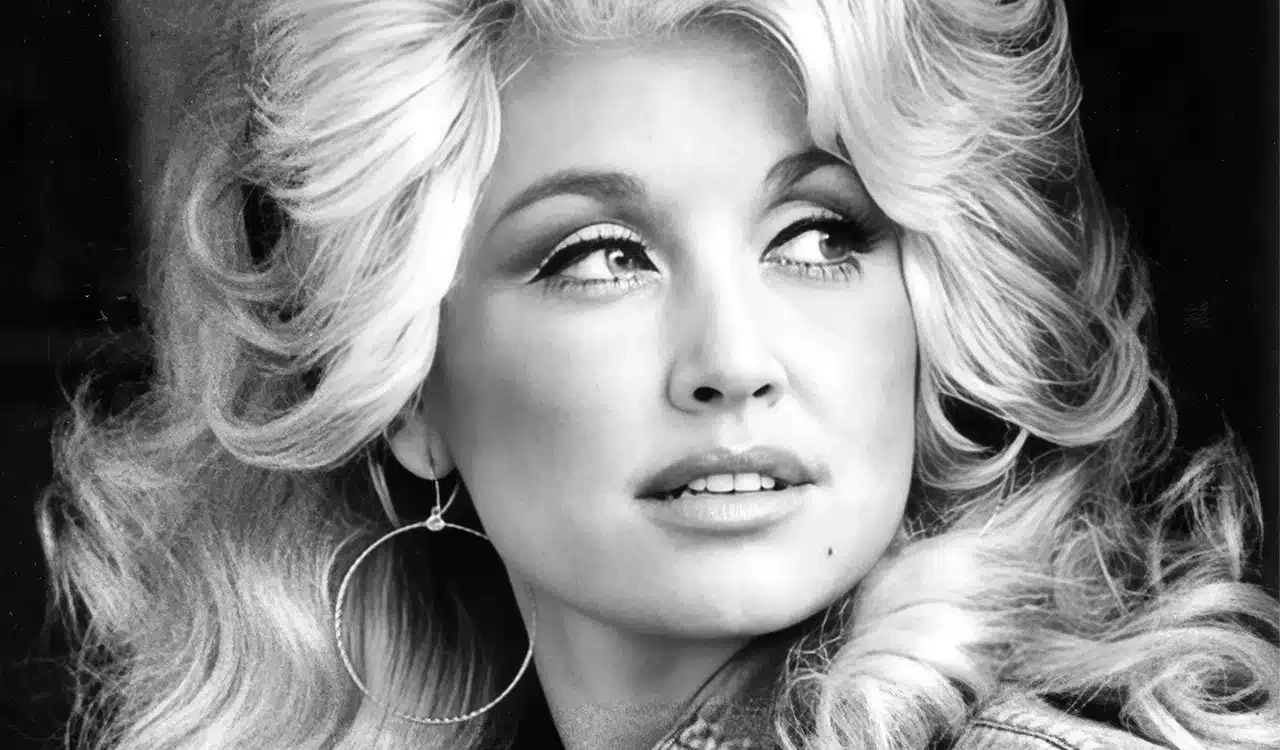
Executive Overview
The passing of Dolly Parton in August 2026 marks the end of a singular era in American entertainment, prompting a thorough reappraisal of a theatrical filmography that often felt strangely constrained compared to her towering cultural footprint. For an artist whose iconography seemed custom-built for the silver screen—defined by platinum cascades, rhinestones, hyper-stylized silhouettes, and self-effacing wit—her cinematic output was relatively concise. Across a mosaic of comedies, ensemble melodramas, and off-screen musical contributions, a persistent question defines her relationship with the medium: What could cinema possibly do with an artist whose most elaborate, carefully constructed character—Dolly Parton herself—had been fully realized long before a movie camera ever turned in her direction?
Emerging from the grinding poverty of rural East Tennessee, Parton conquered the music industry through sheer tenacity and melodic genius, forging timeless anthems like "Coat of Many Colors," "Jolene," and "I Will Always Love You." By the time Hollywood came calling in the late 1970s and 1980s, she was already a master of her own artistic destiny. Rather than hiding behind classical character transformations, Parton embraced a self-aware, hyper-visible persona that weaponized the visual shorthand used to caricature working-class Southern women, transforming it instead into an unassailable armor of empowerment.
Her film career became a fascinating laboratory for how Hollywood handled an authentic pop-culture architect. While some directors treated her body and persona as mere packaging—reducing complex authorship to a series of easy visual gags—others gave her the space to engage in genuine dramatic ensemble work. From the office-floor rebellions of 9 to 5 to the sanctuary of Truvy’s beauty parlor in Steel Magnolias, Parton proved that her cinematic value lay not in "disappearing" into a role, but in making audiences confront their own preconceived notions of identity, artifice, and truth.
Detailed Chronology: From Mountain Roots to the Silver Screen
The Pre-Cinematic Foundation (1946–1979)
Born in 1946 in Pittman Center, Tennessee, Parton was the fourth of twelve children raised in a cash-poor Appalachian household. Her early introduction to public performance came through local radio and regional television, culminating in her breakout tenure on The Porter Wagoner Show starting in 1967. By breaking away to pursue an independent solo career, she established absolute creative control over her catalog.
By the mid-1970s, songs like "Jolene" and "I Will Always Love You" demonstrated an astonishing narrative economy, compressing autobiography, class consciousness, and emotional vulnerability into three-minute masterpieces. Simultaneously, Parton engineered her signature aesthetic. Borrowing elements from the campy caricatures of Southern femininity, she transformed herself into a living cartoon of glamour—one whose razor-sharp intellect and relentless self-deprecation always arrived just ahead of any critic’s punchline. When Hollywood finally approached her, she was an artist entirely secure in her craft.
The Peak Ensemble Years: 9 to 5 and Steel Magnolias (1980–1989)
Parton’s feature film debut in Colin Higgins’s 9 to 5 (1980) remains the gold standard of her cinematic career. As Doralee Rhodes, a secretary falsely rumored to be having an affair with her sexist boss Franklin Hart Jr. (Dabney Coleman), Parton played directly into the audience’s assumptions about her body. Alongside Jane Fonda and Lily Tomlin, she anchored a farce rooted in genuine labor politics. Famously composing the title track by clicking her acrylic nails together to mimic the rhythm of a typewriter, Parton turned a workplace grievance anthem into a No. 1 Billboard hit, a Grammy sweep, and an Academy Award nomination.
+-------------------------------------------------------------------+
|                     THE EVOLUTION OF A PERSONA                    |
+----------------------+----------------------+---------------------+
|      1970s Era       |      1980s Era       |     2000s–2020s     |
| Songwriting Mastery  | Cinematic Expansion  | Legacy & Authorship |
|                      |                      |                     |
| • "Coat of Many      | • *9 to 5* (1980)    | • *Transamerica*    |
|   Colors"            | • *The Best Little   |   ("Travelin' Thru")|
| • "Jolene"           |   Whorehouse..."     | • *Dumplin'* (2018) |
| • "I Will Always     | • *Steel Magnolias*  |   (Soundtrack       |
|   Love You"          |   (1989)             |   Curator)          |
+----------------------+----------------------+---------------------+
Following the uneven missteps of The Best Little Whorehouse in Texas (1982)—where director Colin Higgins occasionally leaned too heavily into treating Parton as pure spectacle—and the notorious critical disaster Rhinestone (1984), Parton found her footing again in Herbert Ross’s Steel Magnolias (1989). As Truvy Jones, the Louisiana salon owner who treats appearance as a sacred line of defense against grief, Parton fit seamlessly into a powerhouse female ensemble. Eschewing the need to dominate every frame, she demonstrated a profound talent for reactive acting, utilizing subtle facial expressions and impeccable comedic timing within a shared social space.
The Later Years: Radio Booths, Choir Lofts, and Off-Screen Authorship (1992–2026)
As her career progressed into the 1990s and 2010s, Parton’s cinematic presence evolved. In Straight Talk (1992), she played an accidental radio psychologist, leveraging her natural conversational intimacy. In Todd Graff’s Joyful Noise (2012), she went toe-to-toe with Queen Latifah in a clash of musical egos.
Yet, some of her most potent cinematic contributions occurred entirely off-screen. Her original song "Travelin’ Thru," written for Duncan Tucker’s Transamerica (2005), earned her a second Oscar nomination, while her complete sonic curation of the Netflix film Dumplin’ (2018) proved that her distinct cultural mythology could anchor a narrative without her ever stepping in front of the lens.
Supporting Context & Metrics
Evaluating Dolly Parton’s box-office footprint and cultural legacy requires looking beyond standard Hollywood metrics. While blockbusters like 9 to 5 grossed over $103 million domestically against a modest budget, cementing her viability as a bankable movie star, her true financial and cultural metrics lie in her multi-media integration:
- The Whitney Houston Phenomenon: When Whitney Houston covered "I Will Always Love You" for The Bodyguard (1992), it became one of the best-selling physical singles of all time, generating massive royalties for Parton and cementing the song’s status as a global standard.
- Award Recognition: Parton secured two Academy Award nominations for Best Original Song ("9 to 5" and "Travelin’ Thru"), multiple Grammy Awards, and a Golden Globe nomination for her work in The Best Little Whorehouse in Texas.
- Critical Reappraisal: Academic and film-critic circles have increasingly recognized Parton’s performances not as vanity projects, but as sophisticated masterclasses in feminist camp theory and self-representation.
Official Statements and Industry Tributes
In the wake of her passing, figures from across the entertainment industry have come forward to honor her unique cinematic and musical legacy:
"Dolly didn’t just act in movies; she brought an entire philosophy of working-class survival and radical joy into spaces that weren’t built for women like us. She was the smartest person in any room she walked into, and she always let you think you were running the show."
— Jane Fonda, Co-star in 9 to 5"Working alongside Dolly on Joyful Noise was a masterclass in timing, grace, and generosity. She never demanded the spotlight; she simply illuminated the entire room and invited everyone else to share the warmth."
— Queen Latifah, Co-star and collaborator
Film historians and cultural critics have similarly noted that Parton’s refusal to conform to traditional Hollywood standards of "naturalness" paved the way for modern understandings of performative identity.
Future Outlook: The Enduring Blueprint of Dolly
As Hollywood enters a post-Parton era, the blueprint she left behind remains entirely unreplicable. Modern cinema frequently wrestles with questions of authenticity, branding, and manufactured persona, yet Dolly Parton solved this artistic riddle decades ago. She demonstrated that artifice does not equal dishonesty, and that high glamour can coexist with profound, salt-of-the-earth empathy.
Future generations of filmmakers will undoubtedly continue to draw inspiration from her songwriting catalog, her Appalachian mythology, and her fearless public persona. Yet, the central paradox of her cinematic life will remain: Hollywood never quite figured out how to fully contain Dolly Parton, primarily because Dolly Parton had already written, cast, and produced her own definitive masterwork long before the cameras started rolling.









Belum ada komentar. Jadilah yang pertama berkomentar!