

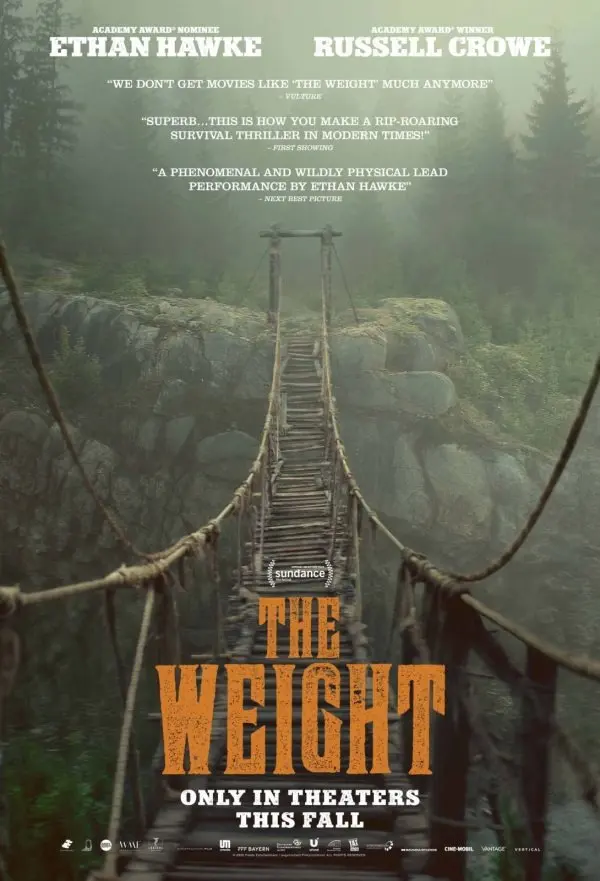
Executive Overview
Set against the suffocating, unforgiving backdrop of the Great Depression, The Weight (2026) marks a commanding feature directorial debut for Padraic McKinley. Written by Leo Scherman and Matthew Booi—drawing from an original story crafted alongside Matthew Chapman—the film thrusts audiences into a harrowing, sweat-soaked descent into the heart of an untamed Oregonian wilderness. Anchored by powerhouse central performances from Ethan Hawke and Russell Crowe, the narrative investigates desperation, moral ambiguity, and the crushing financial and emotional debts that define an era defined by economic ruin.
The plot centers on Samuel Murphy (Ethan Hawke), a battle-scarred veteran and resourceful mechanic striving to keep his young daughter, Penny (Avy Berry), fed and housed as eviction looms closer by the day. Following an unfortunate and heavy-handed brush with local law enforcement, Samuel is separated from his daughter and swept into a brutal prison labor camp. There, inmates are tasked with clearing arduous terrain for construction projects under the watchful eye of a ruthless warden, Clancy (Russell Crowe).
Clancy has a monumental, illicit problem on his hands: new federal legislation has criminalized the private possession of gold. Desperate to hide a fortune in precious metal, the warden identifies Samuel as a man of extraordinary ingenuity following a dangerous boulder-clearing feat. Samuel is handed an impossible proposition: lead a handpicked crew of convicts across 100 miles of impenetrable wilderness to transport the gold bars to a secure drop-off point. Success guarantees his early release and the preservation of his family; failure, or the loss of even a single bar, means permanent imprisonment—while a strict one-month ticking clock threatens to permanently surrender Penny to the foster care system.
Earning widespread critical acclaim—exemplified by a stellar five-star rating from Flickering Myth—The Weight synthesizes white-knuckle suspense with genuine human tragedy. Eschewing cheap thrills for methodical, grueling realism, McKinley’s film establishes an immediate masterclass in cinematic tension, recalling the gritty, mechanized peril of William Friedkin’s Sorcerer while carving out an entirely distinct, atmospheric identity of its own.

Detailed Chronology of the Trek: From Mine to Wilderness
The Catalyst and the Setup
The narrative kicks into high gear within the oppressive confines of the labor camp. Samuel Murphy’s introduction is defined by quiet calculation; rather than acting out in mindless defiance, he observes his environment with the calculating eye of a seasoned mechanic. When a colossal boulder threatens to stall road construction, Samuel orchestrates a clever, physics-based solution that catches Warden Clancy’s discerning eye.
This ingenuity earns him the most dangerous assignment imaginable. Clancy, frantic to covertly transport a massive cache of gold out of the mines before federal authorities close in, recruits Samuel for a five-day overland trek through the treacherous, densely packed forests of Oregon. Samuel is given the autonomy to select his own detail—an eclectic, volatile mix of hardened criminals and political prisoners—escorted by a pair of armed henchmen. They are soon joined by Anna (Julia Jones), an indigenous miner eager to escape the subterranean depths, who offers vital survival knowledge for the brutal path ahead.
The Crucible of the Bridge Sequence
The Weight does not build slowly to a singular climax; instead, it sets a punishing, unrelenting standard of terror early in the journey. This is anchored by a chest-tightening sequence involving a rickety, structurally compromised rope bridge spanning a dizzying canyon.
To cross safely without collapsing the structure, the men must move the gold bars across one at a time. The sequence transforms into a terrifying game of physical dexterity and acute spatial awareness. Ethan Hawke’s Samuel stands planted on a precariously narrow, swaying patch of footing in the exact middle of the chasm, functioning as a human balance beam. He must catch heavy, flying gold bars hurled from one side, stabilize his footing against gale-force winds and shifting ropes, and chuck them the remaining distance to the opposite cliff.

This sequence operates as a masterclass in spatial choreography. If a single bar drops into the abyss below, the mission—and any hope of early freedom—is instantly forfeited. It is a pit-in-your-stomach spectacle that immediately locks the audience into the physical exhaustion of the characters, setting a relentless baseline for the trials yet to come.
The Five-Day Descent into Madness
As the days bleed together, the journey transforms from a logistics mission into a grueling psychological and physical gauntlet. The terrain fights back with merciless indifference, throwing flash floods, sheer cliffs, and unforgiving weather patterns at the exhausted detail. Yet, the external threats are frequently eclipsed by the volatile friction brewing within the group.
Unlike lesser survival thrillers where supporting players act merely as cannon fodder, the screenplay ensures every member of Samuel’s crew carries distinct ideological and personal weight. The interactions shift dynamically between philosophical debates, bitter arguments, and moments of profound vulnerability. The ensemble features:
- Rankin (Austin Amelio): A temperamental, volatile wildcard whose unpredictable outbursts constantly threaten to shatter the group’s fragile unity.
- An unnamed socialist political prisoner (Avi Nash): Wrongly classified by the system as white to suppress his identity, bringing sharp socio-political commentary to the campfire debates.
- A mild-mannered farmer (Lucas Lynggaard Tønnesen): Out of his depth in the criminal underworld, serving as an emotional proxy for the innocence lost during the era.
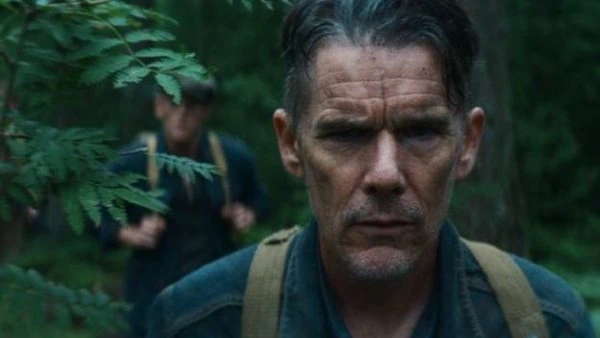
As the physical toll mounts, the narrative culminates in traditional, explosive action sequences, blending hand-to-hand combat, gunfights, and breathless aquatic escapes. The camera, operated expertly by cinematographer Matteo Cocco, stays relentlessly close to the actors. Rather than deploying hyper-edited action cuts, Cocco’s camera actively circles characters mid-confrontation, trapping the viewer inside the claustrophobic panic of the forest.
Supporting Context & Metrics
Historical and Cinematic Backdrop
The Weight operates at the intersection of historical drama and survivalist action, tapping into the collective trauma of the Great Depression. The inclusion of the legislative ban on private gold ownership—referencing the historical Emergency Banking Act and Executive Order 6102 signed by Franklin D. Roosevelt in 1933—provides an authentic political engine for Crowe’s corrupt warden.
From a cinematic standpoint, the film has drawn immediate, favorable comparisons to William Friedkin’s 1977 masterpiece Sorcerer (itself an adaptation of Georges Arnaud’s novel The Wages of Fear). However, critics note that McKinley avoids derivative imitation. Where Sorcerer relied on the volatile mechanics of nitroglycerin transport, The Weight trades liquid explosives for the unyielding, physical burden of solid gold, emphasizing the psychological toll of a father racing against a foster-care adoption deadline.
Production and Technical Metrics
- Release Year: 2026
- Director: Padraic McKinley (Feature directorial debut)
- Screenplay By: Leo Scherman and Matthew Booi (from a story by Leo Scherman, Matthew Booi, and Matthew Chapman)
- Cinematography: Matteo Cocco
- Music / Score: Latham Gaines and Shelby Gaines
- Primary Locations: On-location shoots within the rugged, dense forests of Oregon, enhancing the stark, organic realism of the physical trials.
- Critical Reception: Highly praised, earning a maximum five-star rating from prominent outlet Flickering Myth, specifically highlighting its grueling tone, practical stunt work, and stellar lead performances.
Cast and Character Directory
- Ethan Hawke as Samuel Murphy (A battle-scarred veteran, resourceful mechanic, and desperate father)
- Russell Crowe as Warden Clancy (A ruthless, pragmatic prison warden attempting to illegally offload contraband gold)
- Julia Jones as Anna (An indigenous miner seeking liberation who aids the expedition)
- Austin Amelio as Rankin (A volatile, unpredictable member of the prison detail)
- Avi Nash as the socialist political prisoner
- Lucas Lynggaard Tønnesen as the mild-mannered farmer
- Avy Berry as Penny Murphy (Samuel’s young daughter facing imminent foster care placement)
- Ensemble Cast: Rounding out the extensive supporting roster are Sam Hazeldine, George Burgess, Jeff Hallman, Alec Newman, Cameron Brady, Eric Ford, Peter Lewys Preston, Neil McGarry, and Dylan Page.
Official Statements & Production Insights
While traditional press junkets for the 2026 release are still unfolding, early production notes and critical analyses shed light on McKinley’s directorial philosophy. Approaching the material with a documentarian’s eye for physical labor, McKinley sought to minimize reliance on CGI, opting instead for practical terrain navigation and tactile physical performances.
Ethan Hawke’s involvement was reportedly secured early in development, with the actor leaning heavily into the physical demands of the role. Rather than portraying an idealized cinematic action hero, Hawke projects a weary, bruised vulnerability—a man whose motivations are entirely rooted in the desperate preservation of his parental bond with young Avy Berry.
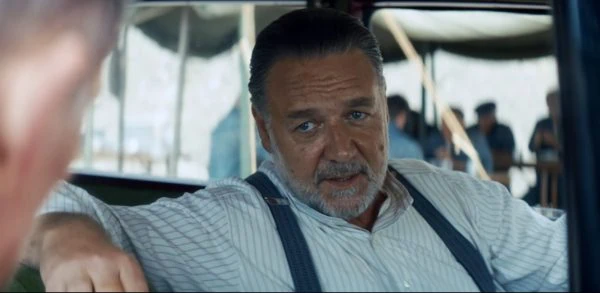
Russell Crowe brings a grizzled, imposing authority to Warden Clancy, steering clear of cartoonish villainy. Instead, Clancy is framed as a product of a collapsing system—a man whose survival depends entirely on successfully laundering illicit wealth through the most dangerous men he can round up. The interplay between Hawke’s desperate paternal sacrifice and Crowe’s calculating self-preservation forms the magnetic core of the film’s dramatic tension.
Furthermore, the musical contributions of Latham and Shelby Gaines have been widely lauded for executing a "delirious tone." The score avoids soaring, triumphant orchestral swells, opting instead for heavy, industrial, and discordant soundscapes that mirror the physical exhaustion and psychological unraveling of the characters.
Future Outlook and Critical Legacy
As The Weight rolls out across cinematic and digital distribution channels throughout 2026, its trajectory signals a significant milestone for its key creators. For Padraic McKinley, executing a critically triumphant feature debut of this scale immediately positions him as a visionary filmmaker to watch, capable of balancing large-scale physical set-pieces with intimate, character-driven dramatic stakes.
The film’s early success points toward potential recognition during upcoming awards seasons, particularly concerning Matteo Cocco’s immersive cinematography, the harrowing sound design, and the powerhouse lead turns from Hawke and Crowe. By proving that high-concept survival thrillers can coexist with rich, politically resonant historical subtext, The Weight has established a formidable high-water mark for 2026 cinema—proving that cinematic gold is forged not in comfort, but in the crushing pressure of endurance.









Belum ada komentar. Jadilah yang pertama berkomentar!