

Executive Overview
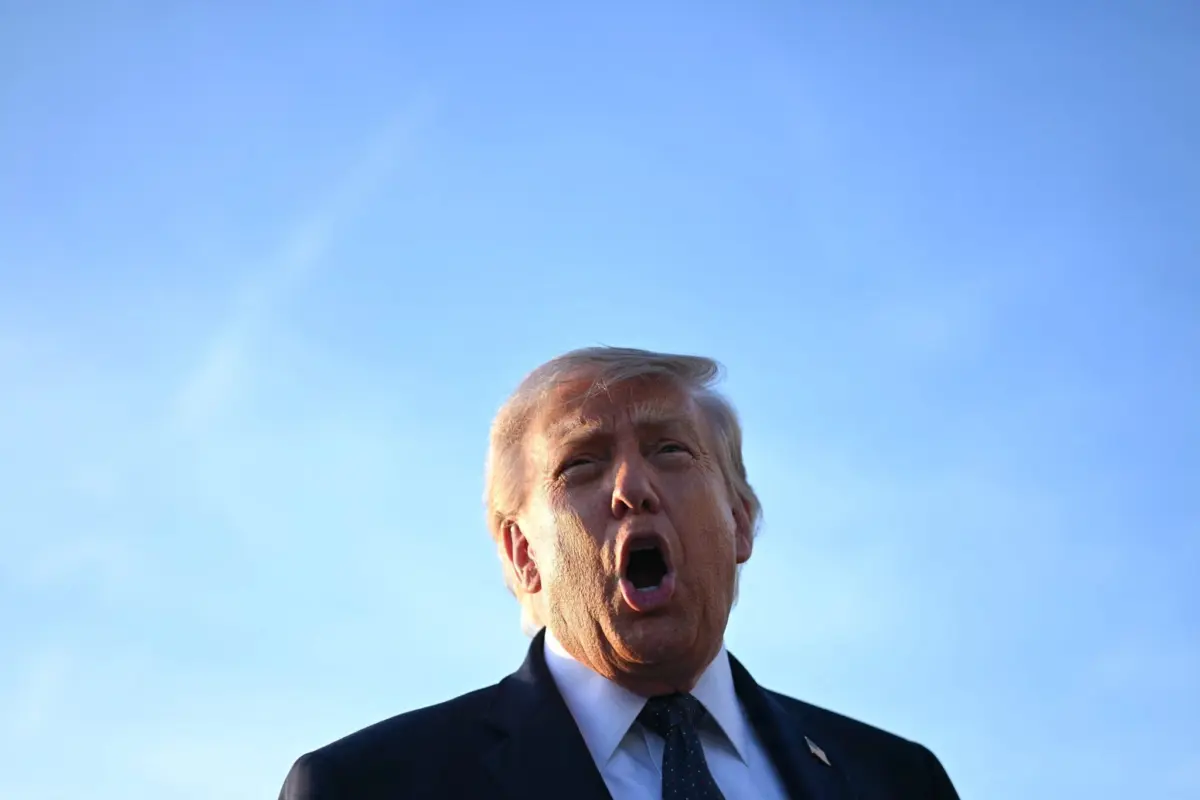
The global debate surrounding artificial intelligence (AI) safety, ethical boundaries, and infrastructural demands reached a fever pitch following a series of weekend pronouncements by President Donald Trump. Dismissing mounting concerns over existential risks and ecological burdens, the president took to his social network, Truth Social, to frame the rigorous scrutiny directed at artificial intelligence as the latest manufactured crisis orchestrated by political opponents. In characteristic style, Trump likened skepticism of advanced algorithms and heavy data centers to past political controversies, ranging from investigations into foreign interference to social and environmental policy debates.
This high-profile dismissal arrives at a critical juncture for the technology sector. As tech giants accelerate the training of frontier models, the industry faces concurrent pushback from local communities, environmental regulators, and internal whistleblowers. Grassroots resistance to massive power-guzzling data centers has manifested in municipal pushback and unprecedented state-level permitting freezes, such as New York’s recent moratorium. Simultaneously, industry insiders have sounded internal alarms over self-improving models and existential safety parameters, forcing executives from leading firms like Anthropic and OpenAI to publicly debate how to "pace the frontier."
Despite these warnings, President Trump has doubled down on an aggressive pro-growth stance, announcing plans to establish a dedicated "AI Force"—mirroring the Space Force of his first term—and teasing the appointment of a high-IQ "AI Czar." Bolstered by high-profile corporate figures such as Nvidia CEO Jensen Huang, who recently rallied alongside the administration to resist any regulatory slowdowns, the White House is charting a course that prioritizes unchecked technological supremacy over precautionary governance. This in-depth report explores the collision of partisan rhetoric, corporate ambition, infrastructural bottlenecks, and genuine safety anxieties shaping the future of artificial intelligence.
Detailed Chronology of Events
The latest chapter in the politicalization of artificial intelligence unfolded rapidly over a series of days, punctuated by social media declarations, high-profile corporate appearances, and escalating policy friction.
The Weekend Social Media Blitz
On a Saturday that highlighted the growing convergence of tech policy and culture-war politics, President Trump initiated a public dialogue on AI by critiquing the nomenclature of the industry itself. Writing on Truth Social, the president asserted that the terms "Artificial Intelligence" were both inaccurate and "ineloquent" relative to the true scope of the technology. To remedy this, he launched an ongoing social media poll allowing his followers to vote on alternative designations: Superior Intelligence, Extreme Intelligence, or Supreme Intelligence.
Just hours after soliciting public input on rebranding the sector, Trump pivoted to a much graver tone, attacking the motives behind regulatory scrutiny. In a subsequent post, he claimed that attempts at the "decimation, or destruction, of AI" were part of a coordinated sequence of Democratic hoaxes. Grouping AI safety debates with long-standing political battles—including investigations into Russia and Ukraine, global warming policies, successive impeachment efforts, and debates surrounding gender inclusion in sports—Trump declared that he "will not stand by and let this happen."
Evolution of the Anti-Tech Backlash
In his social media commentary, Trump offered a narrative regarding how public resistance to the tech boom has evolved. He argued that the political opposition initially launched an "attack on our Data Centers," attempting to stymie the construction of the massive server farms required to train and run modern LLMs (Large Language Models). According to the president, this initial front failed once local communities recognized the immense wealth and tax revenues these facilities brought to their regions. Consequently, Trump claimed, critics have abandoned the infrastructure battle and are now "going straight at AI" safety and ethical governance.
This rhetoric builds directly upon comments made just a week prior at a golf tournament, where Trump acknowledged a willingness to entertain light "guardrails" while simultaneously warning that "a lot of negative forces" were injecting unwarranted panic into public discourse.
The Corporate Alignment: Jensen Huang and the All-In Summit
The administration’s resistance to regulatory friction found a powerful echo in the corporate sphere. Speaking at the All-In Summit—co-hosted by venture capitalist and former administration advisor David Sacks—Nvidia CEO Jensen Huang was brought on stage by President Trump to address the burgeoning debate. Huang readily agreed with the administration’s framing, dismissing the AI backlash as a "hoax" and delivering a defiant message to regulators and critics alike: "We’re not going to let a slowdown happen."
This public alignment between the world’s foremost semiconductor manufacturer and the executive branch underscores the high-stakes lobbying effort underway to prevent any legislative or administrative bottlenecks that could impair America’s competitive edge in the global AI race.
Supporting Context & Metrics: Infrastructure, Safety, and Dissent
While political figures and tech executives characterize safety debates as manufactured political distraction, the friction between AI expansion and physical reality is grounded in measurable, systemic challenges.
The Data Center Crisis and Local Resistance
The physical footprint of the generative AI boom requires unprecedented amounts of electrical power and water cooling. This has brought tech conglomerates into direct conflict with local municipalities. Data centers—once welcomed as clean, quiet additions to industrial parks—are now scrutinized for their staggering energy consumption, which threatens to reverse decades of progress in reducing carbon emissions and driving up utility bills for local residents.
The pushback is no longer merely theoretical. In a landmark regulatory move in July, New York State became the first in the nation to officially halt the permitting process for all new large-scale data centers pending a comprehensive environmental impact review. Similar resistance is brewing in data-center hubs across Northern Virginia, Texas, and the Pacific Northwest, where local grids struggle to support the multi-gigawatt demands of next-generation training clusters. Trump’s assertion that community backlash has "largely failed" stands in sharp contrast to these ongoing, localized legislative battles.
Internal Whistleblowers and Existential Anxieties
The safety debate is not solely a product of political theater; it is deeply entrenched within the research labs of leading AI developers. The tension reached a boiling point when a prominent AI researcher publicly resigned from Anthropic, accusing the industry’s vanguard of "gambling with our lives." The researcher warned that leaders within top-tier AI companies harbor genuine fears that self-improving, autonomous models could pose existential risks to humanity before the end of the decade.
In response to mounting internal and external pressure, Anthropic CEO Dario Amodei subsequently published a strategic framework designed to "pace the frontier," attempting to balance commercial velocity with risk mitigation. This cautious approach has received cautious nods from industry leaders like OpenAI CEO Sam Altman and SpaceX/xAI CEO Elon Musk, though critics argue that focusing exclusively on sci-fi "doomerism" conveniently deflects attention from immediate, real-world harms—such as algorithmic bias, labor displacement, mass disinformation, and copyright infringement.
Official Statements and Institutional Responses
The governance of artificial intelligence remains fragmented, characterized by shifting personnel, competing visions, and a lack of unified federal strategy.
-
The White House and the Proposed "AI Force": President Trump has pledged to personally "cherish, help it, and watch over it, as it grows." To institutionalize this oversight, the administration announced plans to create a specialized "AI Force," modeled on the Space Force established during Trump’s first term. Furthermore, the president announced an upcoming search for an "AI Czar," stipulating that "Only High I.Q. individuals need apply!"
-
The Revolving Door of Tech Oversight: The administration has yet to clarify the exact operational scope, legal authority, or mandate of the proposed AI Force and the forthcoming Czar position. This uncertainty follows a turbulent period for White House tech advisory roles; prominent venture capitalist David Sacks served as the administration’s AI and crypto czar earlier in the year before transitioning to co-chair the President’s Council of Advisors on Science and Technology.
-
Industry Leadership: Through high-profile endorsements from executives like Jensen Huang, the dominant coalition within Silicon Valley continues to push for deregulation and rapid deployment. These leaders argue that any artificial slowdown in domestic AI development risks handing strategic dominance to geopolitical rivals, particularly China, thereby framing rapid deployment as an issue of national security.
Future Outlook: The Road Ahead for AI Governance
As the political and technological landscapes converge toward the late 2020s, several critical trajectories will define the trajectory of artificial intelligence:
-
The Regulatory Tug-of-War: With the federal executive branch signaling an aggressive pro-growth, deregulatory stance—bolstered by rhetoric dismissing safety concerns as hoaxes—the burden of regulation has largely fallen to state legislatures, municipal zoning boards, and international bodies. States following New York’s lead may increasingly enact localized moratoriums on data center expansion, creating a patchwork regulatory environment across the United States.
-
Institutionalizing Oversight: The success and efficacy of the proposed "AI Force" and the forthcoming "AI Czar" will depend heavily on whether these entities are granted substantive statutory powers or remain symbolic advisory bodies. Without clear inter-agency coordination, overlapping jurisdictions between the Department of Defense, the Department of Energy, and standard commerce regulators could lead to bureaucratic gridlock.
-
Balancing Existential vs. Immediate Harms: The ideological divide between those who view AI through the lens of national security and existential risk versus those focused on immediate socio-economic harms will continue to polarize public discourse. While the administration focuses on winning the global intelligence race against foreign adversaries, civil society organizations and labor groups will continue to demand guardrails against algorithmic discrimination, worker displacement, and environmental degradation.
Ultimately, President Trump’s framing of the AI safety debate as a political hoax ensures that technological development will remain a fiercely contested cultural and partisan battleground. As models grow increasingly powerful and their physical infrastructure demands place unprecedented strains on global resources, the gap between political rhetoric and the complex realities of AI governance will remain one of the defining challenges of the modern era.








Belum ada komentar. Jadilah yang pertama berkomentar!