

Executive Overview
In an era defined by the rapid consumption and equally swift disposal of popular culture, true cultural permanence is a rare commodity. Artists who carve their own paths with unwavering determination grow scarcer by the day. Yet, for the Rolling Stones—who first coalesced in the damp, foggy streets of London in 1962—conventional metrics of time, boundaries, and societal habits have long ceased to carry weight.
Defying the biological realities of age, Mick Jagger, Keith Richards, and Ronnie Wood have returned with their 25th studio album, Foreign Tongues. Arriving hot on the heels of 2023’s critically acclaimed Hackney Diamonds, this new 14-track collection is far from the vanity project of a legacy act resting on past laurels. Instead, it serves as a vigorous, combative challenge thrown down by a creative engine that still harbors an insatiable appetite for discovery.
To evaluate the Rolling Stones merely as a music-producing group is fundamentally short-sighted. They laid the very groundwork for massive stadium infrastructure, an uncompromising stage presence that commands hundreds of thousands, and the archetypal "rock star" identity that defines modern performance. At a historical juncture when popular music was largely confined to parlor etiquette and artificial radio formulas, they introduced sweat, volume, and an uncontrollably explosive, Dionysian spirit. When British newspapers once published the provocative, society-shaking question—“Would you let your daughter marry a Rolling Stone?”—it captured a disruptive, uncanny rebellion that forever altered the cultural landscape.
Today, entering their 64th year as a collective, the band continues to defy the laws of musical longevity. Foreign Tongues is not a nostalgic exercise in reminiscing about the glory days; it is living, breathing proof of a team that still commands a vital voice in the global conversation. While other bands age within time, the Rolling Stones continue to drag time along behind them.
Detailed Chronology: A 64-Year March Through History
The ongoing saga of the Rolling Stones is not merely a timeline of chart-topping singles; it is a complex narrative written in internal tremors, high-profile departures, and profound losses.
The Foundation and the Brian Jones Era (1962–1969)
The narrative began in the early 1960s. Dick Taylor, who played bass in the initial 1962 lineup, and Ian Stewart, who joined as an official member before graciously stepping behind the piano to become the permanent "sixth Stone," laid the earliest groundwork.
However, the band’s first major structural turning point occurred in 1969. Founding member Brian Jones—who had largely crafted the group’s early, blues-centric musical identity—was ousted from the lineup amid mounting personal and legal turmoil, tragically passing away at the age of 27 just weeks later.
The Golden Guitar Era and Stabilization (1969–2021)
Mick Taylor stepped into the breach, stamping his virtuosic signature onto the band’s most critically revered, blues-soaked era (Sticky Fingers, Exile on Main St.). When Taylor departed in 1975, Ronnie Wood stepped up, forging the deep-rooted, interlocking guitar partnership with Richards that has endured for half a century.
Concurrently, bassist Bill Wyman anchored the low end for over three decades before amicably stepping away in the early 1990s. Meanwhile, Charlie Watts provided an unshakeable, swing-inflected pulse from behind the drum kit until his passing in 2021. These foundational figures—whether they departed decades ago or passed into rock-and-roll immortality—continue to haunt and inspire every new note the surviving trio produces.
Supporting Context & Metrics: The Anatomy of an Octogenarian Empire
To truly comprehend the cultural and economic gravity of the Rolling Stones in their ninth decade, one must examine the metrics of their sustained dominance.
The Aesthetic of Survival
Rather than engaging in desperate, cosmetic attempts to stave off the aging process, the band embraces their weathered appearance with a knowing nod. In many ways, they serve as an inverted reflection of Oscar Wilde’s The Picture of Dorian Gray. Instead of hiding the toll of a life lived at maximum velocity, they proudly wear every line and crease on their faces as a badge of honor, proof of more than six decades of unapologetic rock and roll.
Yet, the moment a listener puts on a pair of headphones and experiences the crystal-clear, layered production of Foreign Tongues, biological reality melts away. The razor-sharp dialogue between the guitars, the wailing harmonica, and Jagger’s remarkably preserved vocals instantly suspend disbelief. The kinetic force that once drew nearly 1.5 million people to Copacabana Beach flows through modern speakers with undiminished fury.
The Philosophy of Homo Ludens
What drives the creation of an album like Foreign Tongues at this stage in their lives? According to Johan Huizinga’s sociological theory of Homo Ludens (man at play), it is not professional discipline or financial incentive, but the pure, unadulterated impulse of play. It mirrors children losing themselves entirely in a street game.
No other framework explains how octogenarians willingly lock themselves inside London’s Metropolis Studios, tracking ideas deep into the early morning hours. For Jagger, Richards, and Wood, music has long ceased to be a competitive sport; it is an eternal, unquenchable game.
Official Statements and Studio Insights
Behind the scenes, the creative engine of the Rolling Stones operates with the same relentless work ethic that defined their youth. The familial perspective provides a rare window into this reality.
The Family Verdict
Testimonies from Keith Richards’ children, Marlon and Angela, confirm that the grueling, obsessive studio rhythm they witnessed throughout their childhoods remains completely unchanged today. The late-night tracking sessions, the endless tinkering with guitar intonation, and the absolute obsession with groove are hard-wired into the DNA of the members.
Production and the Modern-Classic Sound
Produced by contemporary hitmaker Andrew Watt, Foreign Tongues successfully bridges generational divides. Watt steers the band across a breathtakingly wide sonic spectrum, navigating hard-driving rock, atmospheric country, sweeping ballads, and the deep-rooted blues-rock vein that originally birthed the band.
At the core of this production are Jagger’s endlessly dynamic vocals and the trademark "weaving" guitar styles of Richards and Wood. Watt manages a delicate balancing act: providing modern sonic clarity and punch while leaving the raw, unpolished edges of the Stones’ legendary chemistry fully exposed.
Future Outlook: A Generational Convergence on Foreign Tongues
Perhaps the most astonishing aspect of Foreign Tongues is its sprawling, cross-generational guest list. Historically, young artists line up to cover the Rolling Stones; here, the Rolling Stones invite the modern musical universe to their table, while paying homage to their own peers.
An All-Star Guest Roster
Classic rock royalty makes its presence felt, with titans like Paul McCartney and Steve Winwood supporting their old friends. At the same time, the album broadens its sonic horizons through unexpected collaborations:
- The Cure’s Robert Smith infuses tracks with his signature moody, atmospheric guitar textures.
- Pop superstar Bruno Mars and Red Hot Chili Peppers drummer Chad Smith inject contemporary rhythmic sensibilities into the mix.
In a poignant twist, the band breaks traditional generational protocols by delivering a stunning, unexpected cover of Amy Winehouse’s modern classic, "You Know I’m No Good." It stands as a graceful, appreciative nod to the generations of musicians who studied at the altar of the Rolling Stones.
The Ghost in the Machine
The emotional anchor of the album, however, lies in the rhythm section. Charlie Watts meets the listener once more through masterfully curated performances recorded prior to his passing in 2021. His unpretentious, clockwork swing provides the gravitational center of Foreign Tongues, transforming the album from a standard release into a deeply moving dialogue with an unfinished story.
The Cover Art: "Trinity"
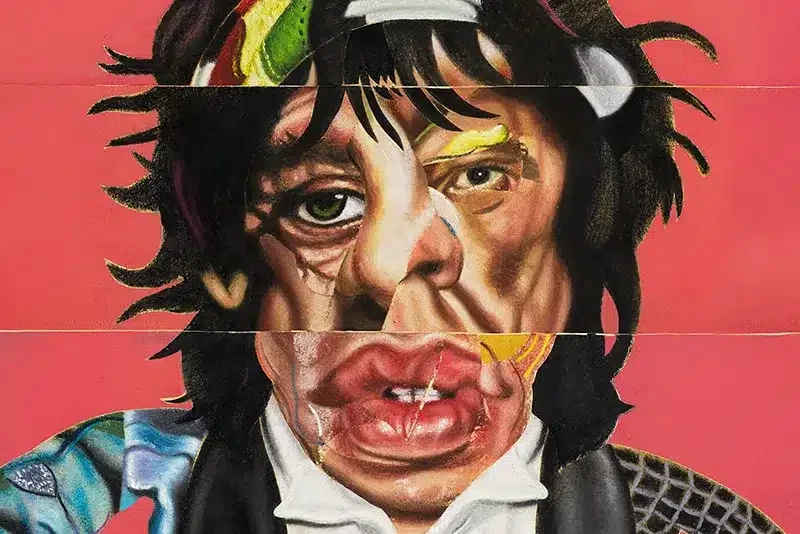
Visually, the album is anchored by pastel cover artwork titled Trinity by acclaimed American artist Nathaniel Mary Quinn. By melting the faces of Jagger, Richards, and Wood into a single, cohesive portrait, the artwork serves as a visual metaphor for a brotherhood forged in fire, endurance, and time.
Conclusion
Spanning 14 uncompromising tracks, Foreign Tongues proves unequivocally that the Rolling Stones have not veered from the path they set upon in 1962. The raw, unadorned blues lineage they absorbed from mentors like Muddy Waters and Howlin’ Wolf remains as vibrant today as it was in the clubs of Soho.
While recording technology, studio gear, and global distribution models have undergone radical revolutions over the decades, the fundamental elements remain untouched: two guitars conversing with one another, an unshakeable rhythm, and a signature vocal snarl that defies the passage of years. That absolute loyalty to their craft is something no other band in history has ever been able to successfully imitate.
Ultimately, Foreign Tongues is living proof of a creative force that refuses to stop searching. What keeps the Rolling Stones performing isn’t the ghost of past glory, but an insatiable, childlike curiosity for the next unwritten song.







Belum ada komentar. Jadilah yang pertama berkomentar!