

Executive Overview
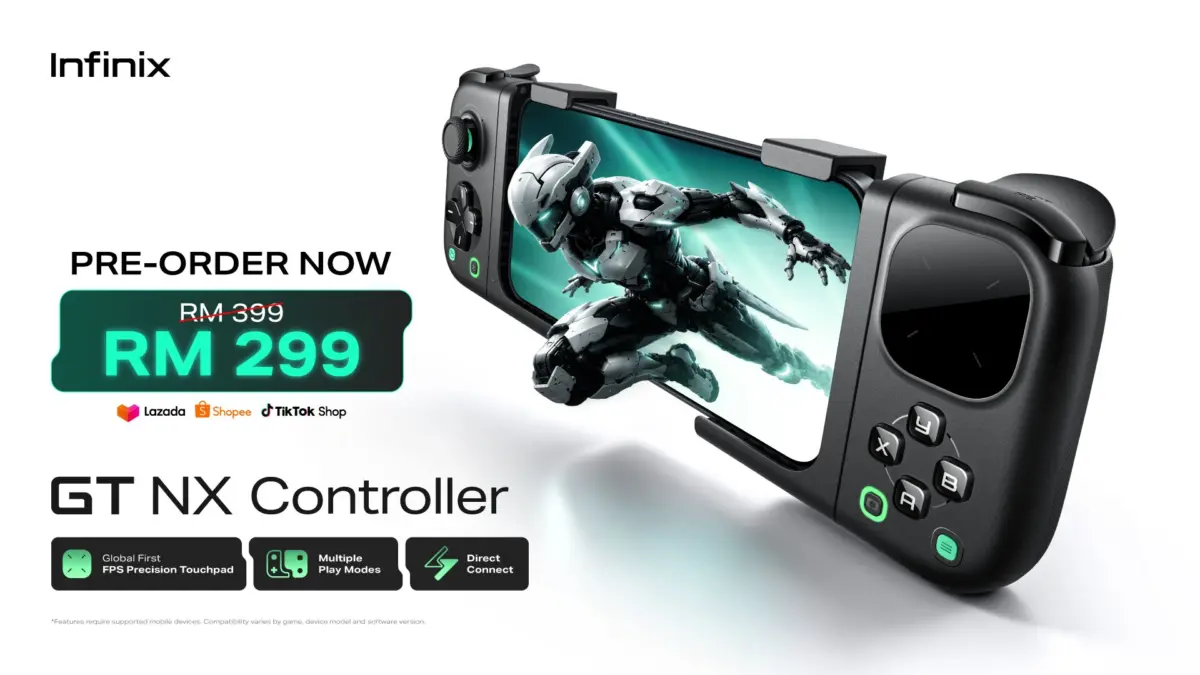
The paradigm of mobile gaming is undergoing a fundamental structural shift. For years, smartphones built specifically for gaming relied primarily on raw processing power, aggressive cooling fans, and proprietary software suites embedded directly into the chassis. However, Infinix is challenging this device-centric approach with the strategic expansion of its GT gaming ecosystem. Moving beyond dedicated gaming smartphones, the brand has introduced two high-performance accessories designed to transform a compatible phone into a modular, desktop-grade gaming rig or a high-precision handheld console: the GT NX Controller and the GT NX Station.
Currently available for online pre-order in Malaysia, these peripherals signal a broader ambition by Infinix to capture the burgeoning market of mobile enthusiasts who demand console-level precision and thermal stability without sacrificing the convenience of a smartphone. Individually priced at a recommended retail price (RRP) of RM399, both accessories have launched with an aggressive introductory promotional price of RM299. For users seeking the complete ecosystem upgrade, the GT NX Bundle—pairing both devices—is available starting from RM549.
Following their digital debut across major e-commerce platforms, Infinix has confirmed that the physical roll-out will hit brand stores nationwide in early October 2026, remaining available while stocks last. This launch represents a calculated pivot: rather than forcing consumers to constantly upgrade to new hardware iterations every year, Infinix is creating a modular ecosystem where the smartphone serves as the processing core, anchored by versatile, high-end peripherals built to last across generations of mobile devices.
Detailed Chronology of the Infinix GT Ecosystem Expansion
The Evolution from Standalone Devices to Modular Gaming
The genesis of the Infinix GT series was rooted in democratizing performance-driven smartphones for budget-conscious mobile gamers. Models bearing the GT moniker quickly gained traction for their aggressive aesthetic, high-refresh-rate displays, and optimized chipsets. Yet, internal market research and shifting consumer habits highlighted a persistent bottleneck: mobile gaming ergonomics and thermal endurance. Long sessions of intensive titles like PUBG Mobile, Genshin Impact, or Call of Duty: Mobile invariably led to thermal throttling, battery degradation, and hand fatigue caused by holding a hot glass-and-metal slab.
Recognizing that external hardware solutions were necessary to bridge the gap between casual touch-screen gaming and serious competitive play, Infinix began developing a hardware ecosystem. The timeline of this expansion culminated in the late-third-quarter rollout of the GT NX hardware lineup.
- Phase One: Digital Pre-Orders (Late September 2026): Infinix initiated online pre-order campaigns across major Southeast Asian e-commerce channels, specifically targeting Malaysia as a primary launch market. Platforms such as Shopee, Lazada, and TikTok Shop became the exclusive storefronts for early adopters eager to secure the introductory RM299 pricing tier.
- Phase Two: Bundle Strategies and Pricing Incentives: Recognizing that power users would likely want both the tactile precision of the controller and the desktop versatility of the docking station, Infinix structured a bundled pre-order offering starting at RM549, shaving significant margins off the combined RRP to drive initial market penetration.
- Phase Three: Nationwide Retail Expansion (Early October 2026): The final stage of the immediate rollout transitions the products from digital storefronts to physical brand stores across Malaysia. This hybrid retail strategy ensures that tactile consumers can experience the build quality of the split controller and the heft of the active-cooling dock before making a purchase.
Technical Deep Dive: Engineering Precision and Thermal Management
The value proposition of the GT NX series rests entirely on its engineering specifications. Infinix has avoided slapping generic branding on OEM hardware, instead opting for proprietary innovations in both input fidelity and thermal management.
The GT NX Controller: Redefining Mobile Aiming and Feedback
Mobile first-person shooters (FPS) have historically struggled with a fundamental input limitation: thumbsticks lack the absolute precision of a physical mouse, while swipe-to-aim setups lack physical feedback and boundary control. The GT NX Controller directly addresses this pain point through a radically reimagined split gamepad architecture.
- The Glass Precision Touchpad: The standout feature of the controller is its integration of a large glass touchpad on the controller surface. Infinix has branded this a "pixel-level FPS precision touchpad." It operates in dual modes—handling standard swipe gestures or shifting into a dedicated mouse mode. This allows players to execute micro-adjustments in aim that would otherwise be impossible on standard analog thumbsticks.
- Three-Chip Architecture and Four-Zone Mapping: To ensure zero latency and uncompromised input polling, a complex three-chip architecture distributes the processing load across the two controller halves. Furthermore, four-zone independent mapping allows players to configure controls for games that lack native controller support, mapping on-screen touch areas to physical inputs seamlessly.
- Versatile Form Factors: The controller is engineered to adapt to multiple play styles. It can clamp around a smartphone for a traditional portable handheld experience (reminiscent of a Nintendo Switch or Steam Deck), sit detached in a desktop configuration, or operate in a single-hand mode depending on the title being played.
- Advanced Haptics and Battery Endurance: Powered by a robust internal battery rated for over 22 hours of continuous gameplay, the controller minimizes downtime. Through Infinix’s XArena software suite, users can adjust haptic intensity across three distinct levels. More impressively, the mapping mode can generate context-aware vibration cues synced to specific FPS events—such as extended rumble feedback during a parachute drop or aircraft take-off, transitioning to sharp, short pulses as the final play zone shrinks in a battle royale match.
The GT NX Station: 9-in-1 Docking with Active Thermoelectric Cooling
While the controller solves input ergonomics, the GT NX Station targets the hardware performance ceiling. Mobile chipsets are notorious for throttling performance when operating under sustained thermal loads. The GT NX Station is a foldable, 9-in-1 desktop hub that doubles as an active cooling system wrapped in gamer-centric RGB lighting.
- Comprehensive I/O Array: The station consolidates a cluttered desk into a single hub. It features an HDMI output for external monitors, a Gigabit Ethernet port for lag-free wired networking, two USB-A ports, a dedicated USB-C host cable, standard USB-C ports, a USB-C Power Delivery (PD) input, a microSD card slot, and a 3.5mm audio jack.
- Active Thermoelectric Cooling: Unlike passive metal heatsinks, the GT NX Station utilizes active thermoelectric (Peltier) cooling technology. By aggressively drawing heat away from the rear of the mounted smartphone, the dock aims to mitigate thermal throttling, allowing chipsets to sustain peak clock speeds over hours of competitive gaming. While real-world performance gains fluctuate based on ambient room temperatures and device specifications, the hardware foundation provides a noticeable stability upgrade.
- Multi-Display Versatility (Mirror and Extend Modes): The dock supports both mirrored output (duplicating the phone screen onto a monitor) and an advanced extended-display mode. Infinix’s Extend mode allows a game to run in full-screen on an external monitor or television while leaving the smartphone screen active and unlocked for secondary tasks—such as viewing interactive walkthroughs, checking Discord, or replying to text messages. Alternatively, users can switch off the phone display entirely to conserve power and reduce thermal generation.
Supporting Context & Metrics: Market Dynamics and Compatibility Realities
As mobile gaming revenue continues to outpace both console and PC sectors globally, hardware manufacturers are locked in an arms race to capture the accessory ecosystem. However, technological fragmentation remains a major hurdle for universal peripherals.
The Compatibility Matrix
A critical detail often glossed over in tech marketing is device compatibility. While Infinix markets the GT NX series with broad terminology, external-display capabilities and advanced software features are governed by strict hardware protocols.
- DisplayPort Alt Mode Requirement: For the Extend and Mirror modes to function via the GT NX Station, the host smartphone must support native DisplayPort (DP) output over USB-C.
- Software Optimization: Full software integration—including XArena haptic sync and advanced mapping—is natively optimized for selected Infinix models running XOS 16.3 or newer.
- Cross-Platform Support: The accessories can interface with broader Android and iOS ecosystems provided the host hardware supports standard USB-C video-out and controller protocols. However, certain Android devices may require proprietary drivers supplied directly through the dock, and external monitors must feature standard HDMI connectivity.
Pricing and Value Proposition
At an introductory price point of RM299 per accessory (discounted from the RM399 RRP) and a combined bundle price starting at RM549, Infinix is positioning the GT NX lineup aggressively within the mid-to-high tier accessory market. When compared to standalone mobile controllers from elite brands (such as the Razer Kishi or Backbone One) which often retail upwards of $99 to $129 USD without active cooling or desktop docking capabilities, the Infinix pricing strategy offers high value for users seeking an all-in-one transformation kit.
Official Statements and Industry Perspective
Infinix’s strategic shift reflects a maturing corporate vision regarding mobile entertainment. Company representatives have consistently emphasized that modern mobile gamers no longer view smartphones merely as communication devices that happen to run games, but as primary computing nodes capable of powering full-fledged multimedia and gaming experiences.
Industry analysts note that accessories like the GT NX Controller and GT NX Station represent a smart hedge against slowing smartphone upgrade cycles. By providing modular hardware that enhances existing devices, brands can foster deeper ecosystem loyalty. If a user invests in an Infinix controller and cooling station, they are statistically more likely to purchase subsequent smartphone upgrades that maintain compatibility with their established peripheral investment.
Furthermore, the emphasis on tactile precision—specifically the glass touchpad for FPS titles—demonstrates that manufacturers are finally listening to competitive mobile gamers who feel constrained by purely touch-based or traditional thumbstick control schemes. By bridging the gap between mouse-and-keyboard precision and mobile convenience, Infinix is carving out a distinct niche in the competitive peripherals market.
Future Outlook: The Road Ahead for Mobile Gaming Ecosystems
The launch of the GT NX series in Malaysia and its subsequent retail rollout in October 2026 serves as a bellwether for the future of mobile gaming hardware. As mobile processors approach the raw computational parity of entry-level desktop PCs, the primary limitations of mobile gaming are no longer internal processing power, but external constraints: thermal dissipation, ergonomics, and input accuracy.
Looking forward, we can expect several industry trends to accelerate based on Infinix’s current trajectory:
- Mainstreaming of Active Cooling Docks: As mobile games demand higher frame rates (such as 120Hz and 144Hz modes in titles like Honkai: Star Rail and Zenless Zone Zero), passive cooling will no longer suffice. Active thermoelectric docks will likely transition from niche enthusiast gear to standard-issue equipment for serious mobile competitors.
- Hybrid Input Methodologies: The integration of touchpads, mechanical micro-switches, and customizable haptics into mobile gamepads suggests that the line between console controllers and mobile gamepads will continue to blur. Developers will increasingly optimize games to support complex hybrid input profiles.
- Ecosystem Lock-in and Proprietary Optimization: As brands build out proprietary operating system layers (such as Infinix’s XOS integration with XArena), the depth of hardware-software synchronization will become a key competitive differentiator. Consumers will increasingly choose their smartphones based on the quality and depth of the surrounding accessory ecosystem rather than raw processor benchmarks alone.
For now, Malaysian gamers represent the vanguard of this ecosystem expansion. As the introductory pre-order window closes and physical units hit shelves nationwide in October 2026, the real-world performance of the GT NX Controller and GT NX Station will dictate whether Infinix’s ambitious vision of desktop-grade mobile gaming successfully translates from marketing specifications to everyday gaming reality.








Belum ada komentar. Jadilah yang pertama berkomentar!