

By Adam Roarty, Senior Editor
Published: September 10, 2026
Executive Overview
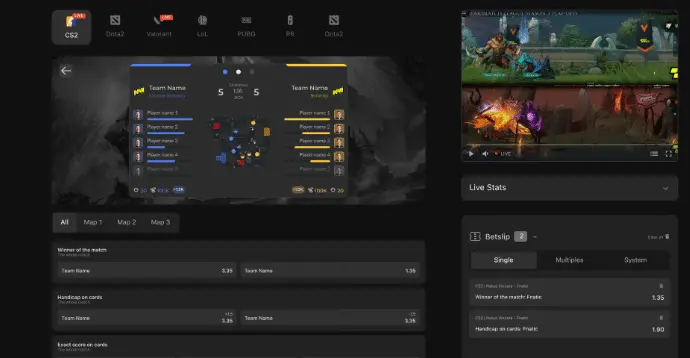
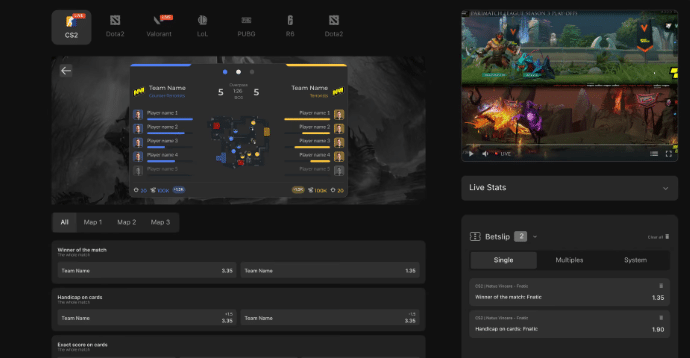
In a significant strategic expansion that bridges the gap between competitive gaming and the regulated gambling sector, esports data infrastructure giant GRID has officially announced the launch of GRID Odds. Designed specifically as a high-performance esports betting service tailored for global gambling operators, the product is live immediately across major competitive titles, including Counter-Strike 2 (CS2), Dota 2, Valorant, and League of Legends.
Built on the foundational premise that the integrity and success of esports wagering rely entirely on verified, official data pipelines, GRID Odds aims to provide enterprise clients with precise, data-driven pricing models. The service boasts a comprehensive suite of betting markets ranging from traditional match and map winners to granular player propositions (props) and lightning-fast in-round betting.
This commercial rollout represents more than just a new product launch; it signifies a structural evolution for GRID. By leveraging its deeply entrenched official data partnerships with industry heavyweights such as Riot Games, Ubisoft, KRAFTON, the ESL FACEIT Group, and BLAST, the company is positioning itself at the absolute center of the burgeoning live-betting economy. Furthermore, the timing of this launch coincides with GRID’s aggressive diversification into alternative financial and prediction markets—exemplified by its recent high-profile collaboration with Polymarket—signaling a transformative era for how fans, bettors, and traders engage with competitive video gaming.
Detailed Chronology and Strategic Evolution
The genesis of GRID Odds did not happen overnight; it is the culmination of years of positioning GRID as the definitive gatekeeper and distributor of official tournament data. To understand the gravity of the September 2026 launch, it is necessary to examine the systematic steps the company took to secure its market dominance.
Laying the Infrastructure
Since its inception, GRID has operated on a singular, uncompromising conviction: the wild-west era of esports betting—reliant on delayed television streams, screen-scraping, and error-prone manual scouting—was unsustainable. For betting operators to scale sustainably, they required low-latency, official feeds directly from tournament organizers and game publishers.
Over the past several years, GRID systematically locked down exclusive or preferred data rights across the ecosystem’s most lucrative titles. By embedding its software development kits (SDKs) and data-capture technologies directly into the tournament pipelines of publishers like Riot Games and Ubisoft, GRID built a proprietary data moat.
Strengthening Leadership and Trading Expertise
Recognizing that raw data must be translated into commercial trading products, GRID executed a series of calculated leadership appointments to spearhead its betting division:
- Thomas Warburton (Co-Founder and Chief Business Officer): Transitioning his deep industry insights—honed over six years at major gambling operator Sky Betting and Gaming—Warburton has steered GRID’s commercial vision squarely toward the betting ecosystem.
- Evgeniy Bekker (Vice President of Trading): To construct and execute the trading desk "from the ground up," GRID brought in Bekker, who previously served as the Director of Trading at BETER.
Bekker’s mandate was to assemble a world-class trading team capable of translating raw, low-latency game states into dynamic, continuous pricing models. According to company leadership, this dedicated trading desk forms the operational engine room of GRID Odds, ensuring that the platform’s pricing remains resilient, accurate, and ahead of the curve.
Diversifying into Prediction Markets
The final piece of GRID’s 2026 chronology centers on its expansion beyond traditional bookmaking into decentralized and alternative prediction markets. In June 2026, GRID announced a strategic partnership with Polymarket, a decentralized prediction market platform.
This alliance immediately paid dividends. Fueled by GRID’s robust data streams, Polymarket experienced unprecedented engagement throughout July 2026, registering an astounding $790 million in esports-related volume—representing a massive 33% month-on-month increase from June. This milestone proved that the appetite for esports-based financial speculation extends far beyond traditional sportsbooks, tapping into a younger, digitally native audience eager to trade on match outcomes, tournament winners, and structural game events.
Supporting Context & Metrics: The Dominance of In-Play Betting
To fully appreciate why GRID Odds is heavily optimized for live wagering, one must examine the macro-economic shifts occurring within the global sports and esports betting landscapes.
The Shift Toward Live, In-Play Wagering
Historically, traditional sports betting was dominated pre-match. Bettors placed their wagers prior to kickoff and watched the event unfold. In stark contrast, esports has fundamentally rewritten the rules of consumer engagement.
According to proprietary metrics highlighted by GRID, live in-play betting now accounts for roughly 70% of all stakes placed across esports wagering markets globally. This makes esports arguably the fastest-growing in-play sport on the modern betting board.
The structural nature of video games—characterized by rapid pacing, economy resets, round-based eliminations, and sudden momentum shifts—makes them uniquely suited for micro-betting. Bettors do not just want to wager on who will win a Best-of-3 series; they want to bet on who will win the next pistol round in CS2, secure the next Baron Nashor in League of Legends, or pull off the next clutch play in Valorant.
The Power of Access Over Modeling
Thomas Warburton emphasized that unlocking these hyper-granular markets is not merely an exercise in mathematical modeling; it is entirely a question of data access. Without direct, official pipelines providing real-time telemetry from the game server, bookmakers face catastrophic latency issues, rendering in-round micro-markets unfeasible due to the high risk of arbitrage and exploitation.
"In-map player options and in-round micro markets are not a modelling choice but rather are a question of access," Warburton noted. "Leveraging that access for our customers is why GRID Odds stands out in the market, letting us serve far more operators who are serious about esports."
By cutting out the latency inherent in traditional broadcast-scraping methods, GRID Odds provides operators with the speed and safety margins required to offer thousands of micro-markets per match without suffering from chronic exposure risks.
Official Statements and Industry Perspective
The rollout of GRID Odds has sent ripples across both the gaming and gambling industries. Industry stakeholders have praised the move as a long-overdue professionalization of esports trading desks.
In the official press release detailing the launch, Thomas Warburton reiterated the core philosophy driving the company:
"GRID has been built on a single conviction: esports betting success depends on official data access. GRID Odds is the logical, scalable extension of that position."
Addressing the appointment of Evgeniy Bekker and the formation of the internal trading infrastructure, Warburton added:
"I am glad to have Evgeniy leading the trading side. He brings the experience to drive the business forward, with a team behind him that knows the success lies in the product."
Meanwhile, Bekker and his trading team have focused on ensuring that GRID Odds provides customizable pricing feeds that integrate seamlessly into existing sportsbook platforms via APIs. This plug-and-play approach allows tier-one and tier-two operators alike to rapidly deploy a comprehensive esports lobby without needing to build an internal esports trading department from scratch.
Future Outlook: Regulatory Horizons and Prediction Markets
As GRID looks toward the remainder of 2026 and beyond, its trajectory points toward two major frontiers: the maturation of global esports trading and the evolving regulatory landscape surrounding prediction markets.
Expanding the Operator Footprint
With GRID Odds now live for CS2, Dota 2, Valorant, and League of Legends, the immediate objective is client acquisition. The platform is designed to onboard legacy sportsbooks looking to capture the lucrative Gen Z and Millennial demographic, as well as esports-native betting brands that require deeper, more reliable data feeds to differentiate their product offerings.
The UK Regulatory Debate and Prediction Markets
Perhaps the most intriguing subplot of GRID’s recent expansion involves the intersection of prediction markets, traditional gambling, and regulatory frameworks.
While alternative prediction platforms like Polymarket and Kalshi have achieved massive volume growth globally—evidenced by Polymarket’s record-breaking $790 million esports volume in July—they currently face strict operational blocks in key jurisdictions such as the United Kingdom.
However, the regulatory winds may be changing. Recent reports indicate that UK regulators are actively considering lifting restrictions on esports prediction markets. If the UK Gambling Commission or related authorities eventually modernize their frameworks to accommodate these financialized prediction products, GRID—armed with its proven partnership track record with Polymarket—will be ideally positioned to capture a massive share of a newly unlocked European market.
Conclusion
GRID Odds represents a watershed moment for the commercialization of competitive gaming. By marrying official publisher data rights with institutional-grade trading infrastructure, GRID is solving the operational bottlenecks that have historically plagued esports bookmaking. As live in-play betting continues to dominate consumer preferences and regulatory horizons expand toward prediction markets, GRID has cemented its role not just as a data provider, but as the foundational financial engine of the global esports economy.








Belum ada komentar. Jadilah yang pertama berkomentar!