

Executive Overview
The landscape of independent horror gaming has long been defined by tight, claustrophobic encounters that weaponize isolation and confined spaces. Among the modern vanguard of this subgenre, David Szymanski’s 2022 breakout hit Iron Lung stands out as a masterclass in vehicular terror, tasking players with navigating a blind submarine through an ocean of human blood on an alien moon. Despite its critical acclaim, commercial success, and even a forthcoming cinematic adaptation spearheaded by prominent YouTuber Markiplier, the industry has seen surprisingly few developers adopt its specific brand of mechanical, cockpit-bound dread.
While titles like Barotrauma offer cooperative maritime survival, and job-simulation horror projects like Kletka and Shift at Midnight lean heavily into the frantic, systemic mechanics popularized by Lethal Company, true spiritual successors to Iron Lung remain remarkably rare.
Enter The Temple—an ambitious, upcoming total conversion mod for Half-Life 2 developed by modder Klems. Expanding far beyond the tight parameters of its mechanical inspirations, The Temple scales up the concept of vehicular horror by shifting players across three vastly different environments: the crushing blackness of an alien ocean, the towering, desolate heights of an abandoned sky-world, and the chilling vacuum of space. Originally born as a compact, 20-minute map submission for the community-driven MapLabs competition, the project has evolved into a fully realized, multi-hour sci-fi horror experience that promises to push the venerable Source engine to its atmospheric limits.
Detailed Chronology: From MapLab Experiment to Standalone Total Conversion
The genesis of The Temple traces back to the collaborative efforts of MapLabs, a renowned community platform designed to foster creative mapping challenges centered around specific themes for Valve’s Source engine. Developers are routinely tasked with building short, self-contained experiences that push engine limitations, experiment with unconventional mechanics, or subvert traditional gameplay expectations.
In its initial incarnation, The Temple existed merely as a pair of experimental maps totaling roughly 20 minutes of playtime. These early levels introduced players to the haunting, oppressive ambiance of an aquatic world characterized by gargantuan, brutalist concrete megastructures piercing the surface of a murky, dark ocean. Even in this embryonic state, the concept resonated with players and horror enthusiasts alike due to its striking visual contrast: towering, monolithic architecture juxtaposed against the vast, indifferent emptiness of an alien sea.
Recognizing the untapped potential of the initial concept, creator Klems elected to take the project significantly further. Rather than letting the maps remain a footnote in the expansive archives of Source engine modding, the developer initiated a comprehensive overhaul. The original two maps are currently undergoing rigorous expansion, modernization, and restructuring, complemented by the introduction of an entirely new third map.
This dramatic scaling of the project aims to deliver a cohesive, narrative-driven exploration horror experience lasting upwards of two hours. By breaking free from the traditional constraints of standard map jam releases, The Temple has matured into a fully fledged total conversion—a distinction that places it among the most anticipated community projects within the classic PC modding ecosystem.
Supporting Context & Metrics: Mechanics, Design, and the Evolution of Vehicle Horror
To understand why The Temple is generating substantial excitement among veteran PC gamers, one must examine its unique mechanical ecosystem and how it compares to existing genre benchmarks.
The Vehicle-Centric Design Philosophy
Unlike standard first-person horror titles where the protagonist relies entirely on their own two feet—running, hiding, or occasionally fighting back—vehicular horror introduces a layer of vulnerability and detachment. The player is insulated from the horrors outside by fragile layers of glass and steel, yet completely dependent on instrumentation, navigational machinery, and mechanical upkeep.
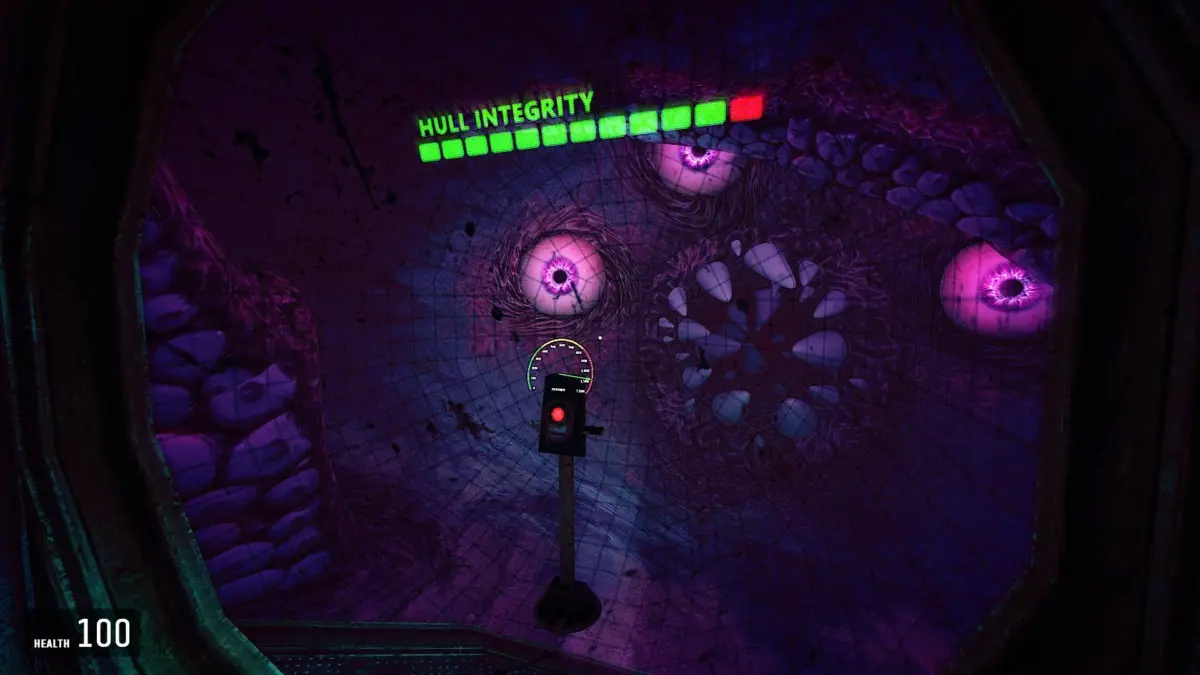
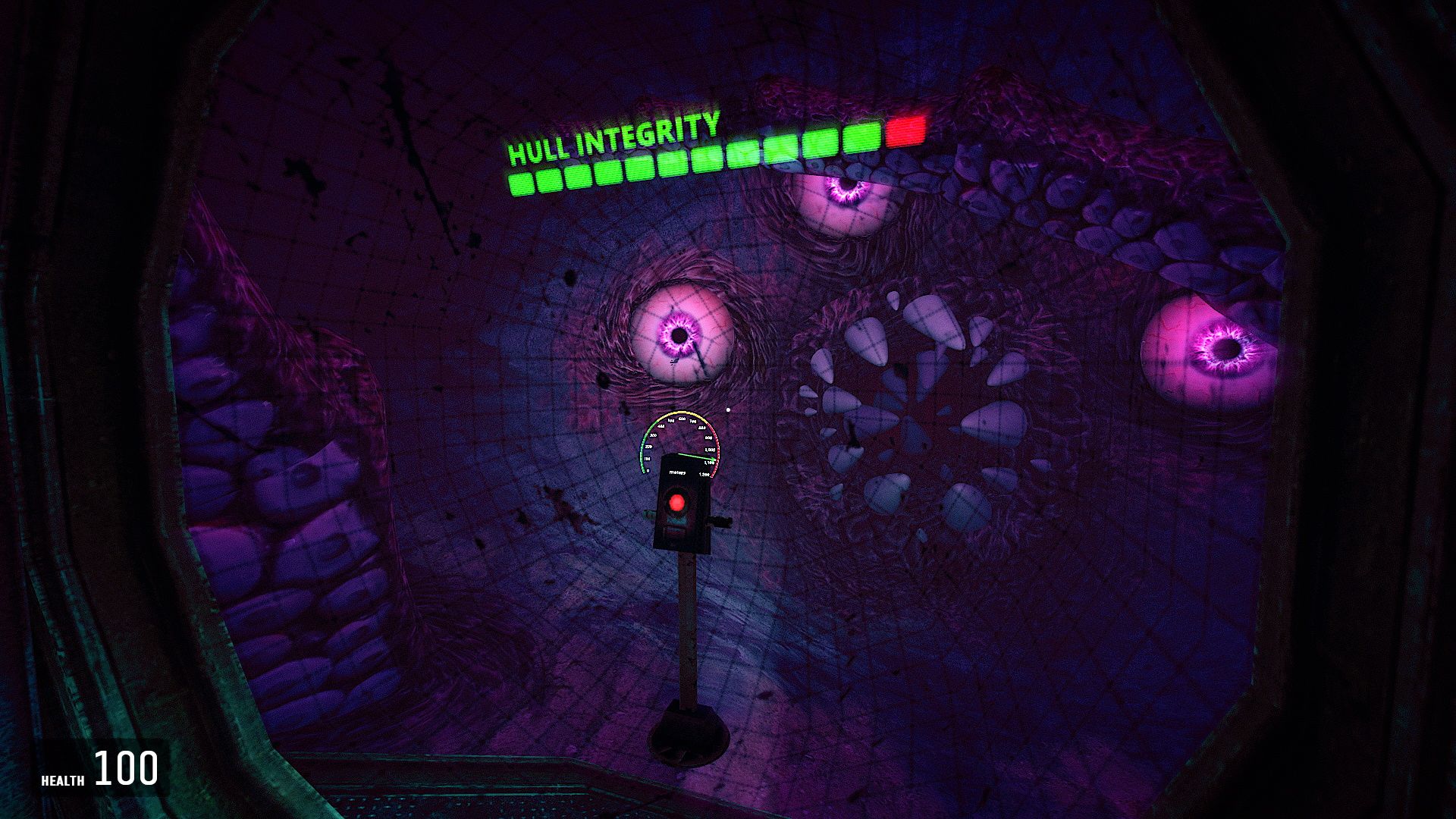
- The Submarine: Replicating and expanding upon the claustrophobic dread found in Iron Lung, this vessel takes players into the lightless depths of the planet’s ocean. Navigating entirely via exterior cameras, sonar, and proximity alerts, players must chart courses through sunken concrete mazes while evading unseen leviathans.
- The Airship: Moving vertically from the ocean floor, the airship serves as the primary mode of transportation through the planet’s tempestuous skies. This vehicle facilitates exploration of the aforementioned concrete megastructures and abandoned towers that jut out of the water like jagged teeth, offering eerie vistas and vertical platforming/exploration puzzles.
- The Space Shuttle: Breaking the atmospheric barrier entirely, the final vehicle transitions the horror experience from aquatic to cosmic. Players pilot a shuttle into orbit to explore desolate, cratered asteroidal moons, introducing the eternal, silent terror of outer space.
Atmospheric Influences and Engine Mastery
Klem’s design philosophy draws heavily from psychological horror milestones. The mod incorporates invisible water-dwelling monstrosities reminiscent of the tension-building aquatic stalkers in Frictional Games’ Amnesia: The Dark Descent. By keeping the threats largely unseen and relying on audio cues, spatial distortion, and player imagination, the mod maximizes dread without relying on cheap jump scares.
Furthermore, narrative delivery in The Temple breaks away from standard audio logs or traditional text dumps. Players are accompanied—and occasionally guided—by a talking crow. More intriguingly, the narrative implies that the player character can comprehend the avian creature’s complex corvid language, adding a surreal, folkloric layer to the otherwise industrial and clinical sci-fi setting.
Utilizing the Source engine, Klems has demonstrated a sophisticated eye for scale. The visual presentation leverages the engine’s lighting and fog systems to emphasize the crushing weight of the ocean and the vertigo-inducing heights of the skies and space.
Official Statements & Creator Insights
While formal press releases are rare in the realm of independent modding, creator Klems has maintained transparent communication with the community via ModDB and related development channels regarding the progress and scope of The Temple.
Reflecting on the transition from a brief map jam entry to an expansive total conversion, the developer emphasized a commitment to depth, atmosphere, and pacing over mere runtime padding. The core design philosophy centers on maintaining a relentless sense of isolation. "The goal was never just to make bigger maps, but to create a seamless journey that shifts the player’s perspective from the crushing depths of the ocean to the silent, suffocating expanse of space," notes the development background provided on community hubs.
Community reception has been overwhelmingly positive following the release of the official gameplay trailer, which showcases the seamless switching between submersible, aerial, and space navigation. Reviewers and enthusiasts have praised the trailer’s pacing, noting that the sheer architectural scale of the concrete megastructures evokes the sublime, terrifying aesthetics of architectural horror masterpieces like Blame! or Control.
Future Outlook: Release Window and Legacy
As development enters its final phases, anticipation for The Temple continues to grow within the classic PC gaming and modding communities. For fans of Half-Life 2 modifications, The Temple represents the pinnacle of what a dedicated solo developer or small team can achieve using Valve’s legendary middleware decades after its initial release.
Crucially, Klems has provided a promising update regarding the mod’s commercial and public availability. While no rigid, calendar-marked release date has been locked in due to final polish and bug testing, the creator has confirmed that The Temple will launch "very soon, possibly next month."
When it drops, the mod will be available as a standalone total conversion, meaning players will not need to jump through complex installation hoops typical of older Source mods, lowering the barrier to entry for modern horror fans.
In a gaming landscape increasingly saturated with live-service titles and homogenized multiplayer horror games, The Temple stands as a beacon of uncompromising, atmospheric single-player design. By taking the blueprint of Iron Lung and violently expanding its horizons—from the murky abyss to the freezing void of space—Klems is poised to deliver one of the most memorable and mechanically diverse horror mods of the decade.








Belum ada komentar. Jadilah yang pertama berkomentar!