


Executive Overview
Since its initial breakout launch into early access by developer Iron Gate Studios, Valheim has captured the imaginations of millions of survival-crafting enthusiasts worldwide. Rooted deeply in Norse mythology, the game strands players in a purgprudential tenth realm where they must gather, build, hunt, and conquer vicious bosses to prove themselves worthy of the halls of Valhalla. Yet, for all its atmospheric beauty, gorgeous lighting, and intricate building mechanics, the vanilla version of Valheim has historically suffered from a distinct ecological staticness. Biomes—from the sweeping green Meadows to the dark, foreboding Black Forest—remain locked in a single, unchanging climatic state throughout the duration of a playthrough.
Enter the vibrant, highly active modding community, which has once again stepped in to push the boundaries of what is possible within Iron Gate’s engine. Among the most transformative and ambitious fan-made creations to emerge following recent game updates is the "Seasons" mod, developed by community modder Shudnal.
By introducing four distinct, dynamic, and visually stunning times of the year to all of Valheim’s biomes, the Seasons mod fundamentally alters not just how the game looks, but how it feels to survive, explore, and build. This comprehensive feature dives deep into how the mod works, why it has captivated survival game veterans, and what it signals for the broader evolution of the Valheim community-driven ecosystem.
Detailed Chronology: The Evolution of Valheim’s Environment and the Rise of Custom Biomes
To understand the profound impact of Shudnal’s Seasons mod, one must first examine the historical climate architecture of Valheim. When Iron Gate Studios first launched the survival title, the game’s procedural generation engine mapped out distinct biomes—Meadows, Black Forest, Swamp, Mountains, Plains, Mistlands, and later additions—each defined by rigid environmental rules.
The Static Nature of Vanilla Biomes
In vanilla Valheim, the weather system is localized and volatile, featuring sudden downpours, thunderstorms, and localized blizzards in the elevated Mountains. However, these weather patterns operate independently of a macro-calendar.
- The Meadows are always lush and green.
- The Black Forest remains perpetually dim and damp under its thick pine canopy.
- Snow and sub-zero temperatures are strictly confined to the hazardous, rocky slopes of the Mountain biome or the perilous, unfinished expanses of the Deep North.
For builders and long-term explorers, this meant that achieving a specific aesthetic—such as a cozy, snow-draped winter cabin—required settling in high-altitude regions fraught with danger. Building in the Mountains meant dealing with freezing status effects, treacherous verticality, and aggressive enemies like drakes and stone golems. Furthermore, it left players vulnerable to the chaotic environmental destruction caused by local wildlife and raid events.
The Modding Renaissance
As Valheim continued to receive major updates, its modding scene matured in tandem. Utilizing frameworks like BepInEx and custom asset injection tools, modders began addressing the quality-of-life gaps left by the developers. While initial mods focused on inventory sorting, map markers, and minor performance tweaks, creators soon turned their attention to environmental overhaul projects.
Shudnal’s Seasons mod represents the pinnacle of this movement. By systematically altering asset textures, lighting values, particle emitters, and environmental rules across a synchronized global calendar, the mod successfully injects a living, breathing temporal cycle into a previously static world. Players no longer look at the calendar as a mere indicator of days survived; time now dictates the very color of the grass, the length of the nights, and the chilling descent of winter frost upon the starting zones.
Supporting Context & Metrics: Breaking Down the Seasons Mod Mechanics
The brilliance of the Seasons mod lies not merely in its aesthetic appeal, but in its seamless integration into the core survival loop of Valheim. Below is a detailed breakdown of how the four seasons manifest within the modded ecosystem, particularly within the game’s iconic starting biome: the Meadows.
1. Spring: Rebirth and Verdant Growth
- Visuals: Spring arrives with an explosion of hyper-vibrant greens. The flora looks saturated, and the morning fog rolls thicker across the valleys, signaling the melting of winter ice.
- Gameplay Impact: Wildlife activity shifts, and the world feels newly awakened. For players, spring serves as the optimal planting season for agricultural endeavors, aligning closely with the survival genre’s traditional reliance on crop cycles.
2. Summer: Sizzling Heat and Golden Fields
- Visuals: As summer progresses, the relentless heat begins to take a toll on the landscape. Lush green patches gradually transition into sun-baked, golden-yellow grasses. Days are noticeably longer, granting builders extended hours of daylight to execute ambitious mega-projects without the constant looming threat of pitch-black night raids.
- Gameplay Impact: The extended daylight alters exploration dynamics, allowing for safer sea voyages and prolonged resource-gathering excursions into the Black Forest and beyond.
3. Autumn: Amber Hues and Darkening Evenings
- Visuals: Autumn introduces a stunning palette of deep oranges, fiery reds, and rich browns. The foliage thins slightly, and evening shadows lengthen dramatically.
- Gameplay Impact: Nights arrive much sooner, ramping up the atmospheric tension. The ambient sound design—featuring the echoing, unholy bleats of Valheim’s spectral deer at double-speed—takes on a haunting quality as visibility drops and hostile nocturnal creatures begin spawning earlier in the evening cycle.
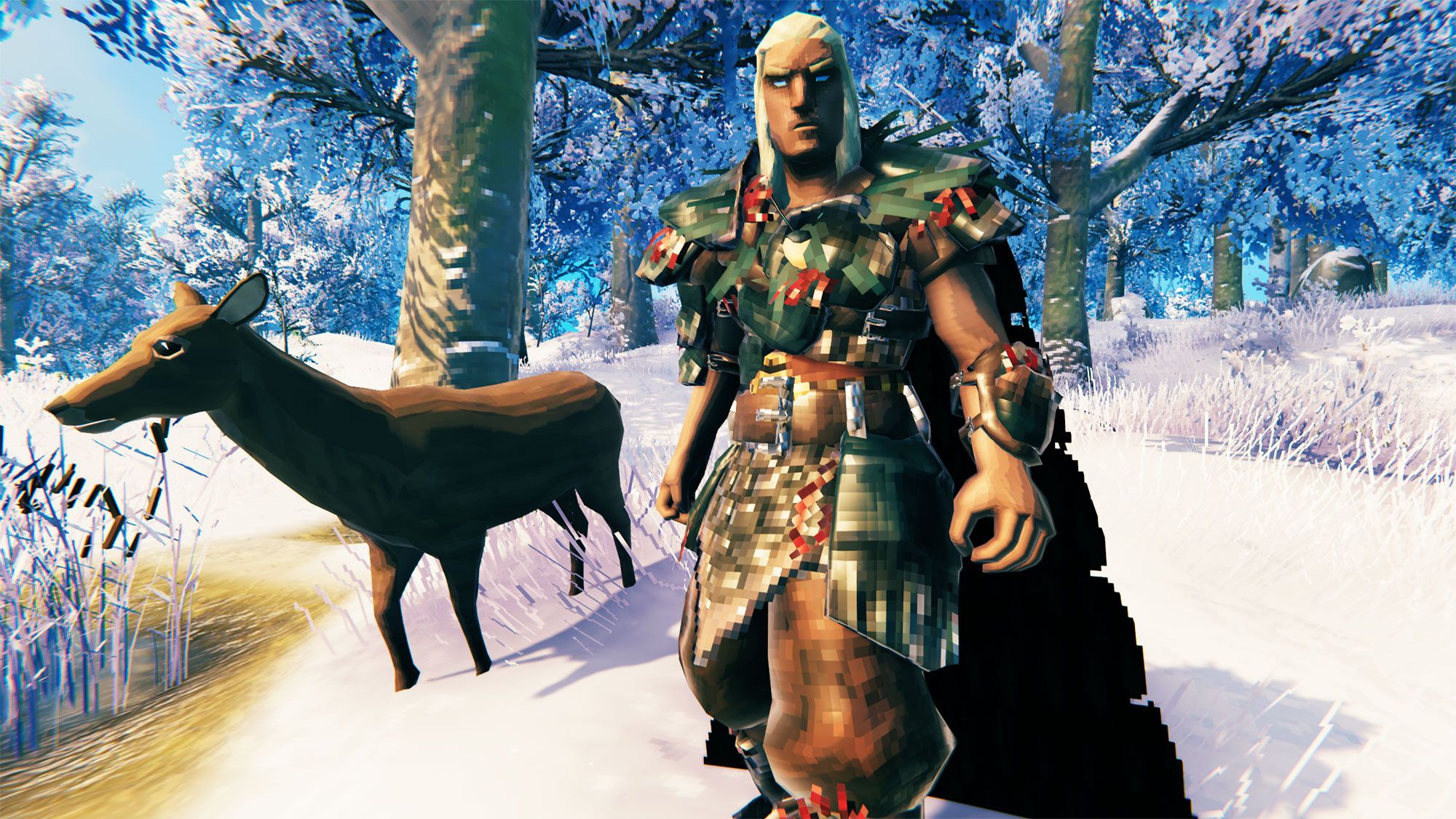
4. Winter: The Christmas Card Aesthetic in the Meadows
- Visuals: Winter blankets the entire world in pristine, sparkling white snow. Tree branches bend under the weight of accumulated frost, and cozy smoke rising from stone chimneys creates an idyllic, holiday-card-esque atmosphere.
- Gameplay Impact: For survival purists, this is the crown jewel of the mod. Players can finally construct idyllic, snow-covered homesteads right in the safety and gentle rolling topography of the Meadows, bypassing the frustrating verticality and hostile hazards of the Mountain biome.
| Season | Primary Color Palette | Daylight Duration | Key Environmental Feature |
|---|---|---|---|
| Spring | Vibrant Greens | Moderate (Increasing) | Heavy morning fog, melting frost |
| Summer | Golden Yellows & Greens | Maximum Daylight | Heat haze, extended construction windows |
| Autumn | Ambers, Reds, & Browns | Decreasing Rapidly | Longer nights, falling leaves |
| Winter | Crisp Whites & Blues | Minimum Daylight | Global snow cover, frost visual effects |
Official Perspectives: The Community, Modders, and Iron Gate Studios
The relationship between survival game developers and their modding communities is often a delicate dance, but in the case of Valheim, the developer-fan synergy has been remarkably positive.
Iron Gate Studios’ Stance on Community Content
Iron Gate Studios has historically maintained a cautious yet respectful approach toward modding. Because Valheim is built on the Unity engine and frequently updates its core code to accommodate major official patches (such as the Mistlands and Ashlands updates), total conversion and environment-altering mods often require dedicated maintenance by their creators.
While Iron Gate has focused its official roadmap on expanding the endgame through hazardous biomes like the Deep North and Ashlands, the studio has frequently acknowledged the ingenuity of the modding community. Developers have noted that fan-made creations often highlight what features players are craving most—such as deeper environmental immersion, agricultural depth, and atmospheric customization.
The Modder’s Vision: Shudnal’s Design Philosophy
Modders like Shudnal operate out of a shared passion for enhancing player agency. By designing the Seasons mod to be customizable, Shudnal recognized that not every player wants the same survival pacing. The mod includes configuration options that allow server administrators and solo players to adjust the duration of each season, tailor visual intensity, and control how weather interactions affect gameplay elements.
This level of granular control has turned the Seasons mod into a staple for private multiplayer servers, where groups of friends can synchronize their calendars and experience synchronized solstices and equinoxes together.
Future Outlook: What Seasons Mean for the Future of Survival Gaming
As the survival-crafting genre continues to saturate the gaming market—with heavyweights like Palworld, Enshrouded, and Sons of the Forest competing for player attention—longevity has become the ultimate metric of success. Games that survive for years past their initial launch window are almost universally those that empower their communities to alter, expand, and personalize the experience.
The Role of Dynamic Weather and Seasons in Modern Survival Design
The widespread popularity of environmental mods like Seasons points toward a clear consumer demand: static worlds are no longer enough. Players want environments that react to time, weather, and human intervention.
- Future survival titles are increasingly expected to bake seasonal mechanics directly into their foundational code from day one, rather than leaving it to modders to retrofit complex calendar systems.
- For Valheim, mods like Seasons serve as a living proof-of-concept for how official updates could eventually incorporate macro-environmental features without breaking existing player structures.
What Lies Ahead for Valheim Modding
As Iron Gate Studios marches closer to the eventual 1.0 full release milestones and beyond, the modding community shows no signs of slowing down. Projects that bridge the gap between cozy building simulators and hardcore survival challenges will undoubtedly continue to dominate community interest.
For players tired of the eternal summer of the Meadows, installing Shudnal’s Seasons mod isn’t just a visual upgrade—it is a complete resurrection of the tenth realm. It transforms Valheim from a static playground into a living, breathing world where time marches forward, snow falls on familiar shores, and every cabin built feels truly weathered by the passage of time.









Belum ada komentar. Jadilah yang pertama berkomentar!