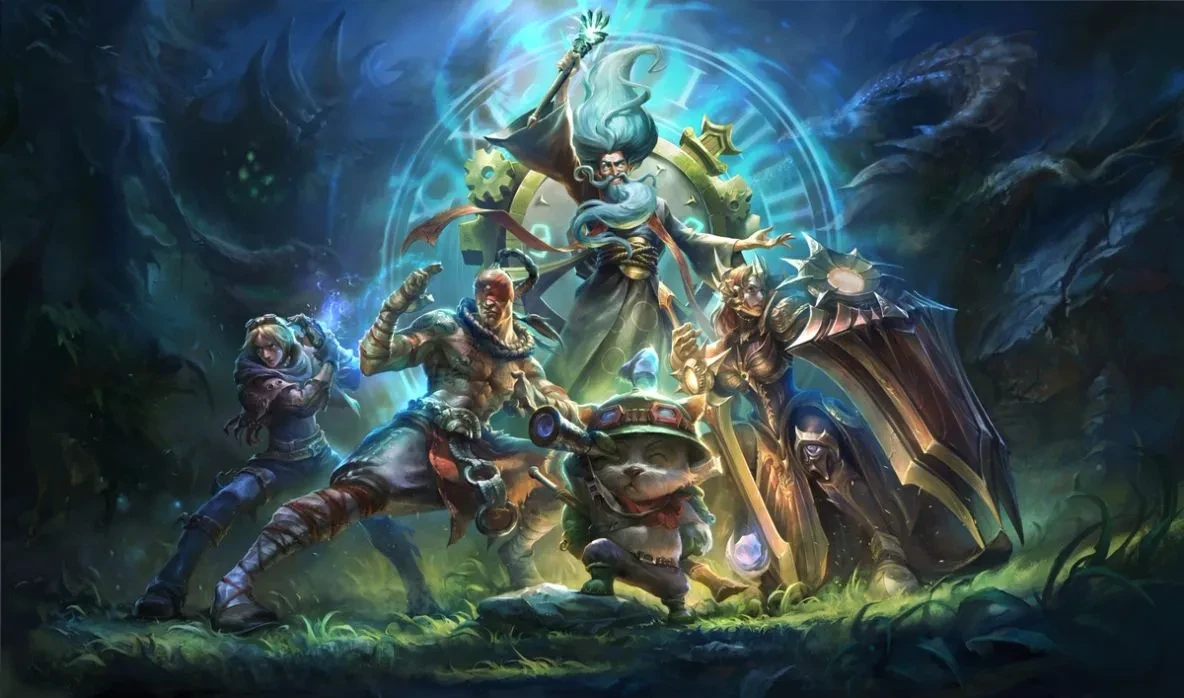
In the fast-paced, relentlessly evolving universe of modern multiplayer online battle arenas (MOBAs), nostalgia is a powerful yet unpredictable force. When Riot Games announced the development of League of Legends Classic—a dedicated server environment designed to strip away more than a decade of champion reworks, item overhauls, and graphical updates—it was met with a mix of fierce excitement and skeptical caution. The promise was alluring: wind the clock back to 2013, roll back Summoner’s Rift to its vintage layout, delete modern design philosophies, and let players relive the glory days of early competitive play.
Yet, reality proved far less forgiving than the warm embrace of memory. Following a rollout that generated massive initial curiosity, League of Legends Classic is slated to go offline in January 2027, bringing its active lifecycle to an abrupt halt after a mere six months.
While Riot Games frames this temporary closure not as a permanent failure, but as a calculated retreat to the drawing board, the swift decline of Classic highlights deep-seated differences between the psychological stickiness of classic MMORPGs and the high-octane, fiercely adversarial nature of the MOBA genre. This post-mortem explores the rapid trajectory of League of Legends Classic, examining why the nostalgia bomb ultimately fizzled, the logistical and community hurdles it faced, and what its premature twilight reveals about the enduring nature of Riot’s flagship title.
Detailed Chronology: From Concept to the Impending Sunset
The inception of League of Legends Classic was born out of years of community yearning. For a decade, internet forums, social media channels, and Reddit boards had played host to fervent discussions about "how good things used to be." Players waxed poetic about the simplicity of early item builds, the distinct identities of champions before extensive modernization, and the visceral thrill of an era when the game felt wilder, less optimized, and more exploratory.
Recognizing the immense success that companies like Blizzard had achieved with World of Legends Classic and Jagex with Old School RuneScape, Riot Games decided to take the plunge. The development team undertook a massive logistical effort to reconstruct a bygone digital ecosystem. They pruned away dozens of champions and modern reworks, reverted to legacy map aesthetics, and promised a rapid cadence of "newly reintroduced" vintage champions to keep the ecosystem fresh.
The Launch and the Rapid Drop-Off
When the mode officially opened its doors, thousands of players flooded the servers. Queues popped instantly, and social media feeds were flooded with screenshots of legacy user interfaces, old-school scoreboard designs, and triumphant declarations of forgotten strategies.
However, the honeymoon phase was remarkably short-lived. According to developer retrospectives and player engagement metrics, the initial wave of excitement crested and then receded with unexpected swiftness. The core player base, having scratched their nostalgic itch or confronted the jarring realization of how far game design standards have progressed, steadily drifted back to the modern, highly polished infrastructure of contemporary League of Legends.
Recognizing the unsustainable trajectory of the active player counts, Riot Games made the difficult decision to pull the plug. The current competitive season will mark the final chapter of this initial run, with the servers scheduled to power down permanently in January 2027.
Despite the looming shutdown, Riot has committed to delivering the remainder of its pre-planned vintage roster rollouts. Players can still look forward to the arrival of several legacy champions:
Update 26.21: Mordekaiser, Yorick, Hecarim, and Lucian.
Future Updates: Vilibear, Urgot, and Udyr.
Furthermore, Riot has confirmed that full refunds will be issued for any Classic-specific content rendered obsolete by the closure, softening the blow for dedicated fans who invested time and currency into the experiment.
Supporting Context & Metrics: The Anatomy of a Nostalgia Mismatch
To understand why League of Legends Classic struggled to retain its audience, industry veterans and analysts point to a fundamental psychological paradox inherent to competitive gaming. In August, former League of Legends esports professional Alex Chu—widely known as Xpecial—offered a prescient critique of the mode’s viability on social media, capturing the sentiment of a community divided over the concept.
"Classic was never going to be a huge success at launch, because everyone has a different version of classic," Chu noted. For players who entered the scene during the game’s nascent years, the 2013 build felt like home. They recognized every item icon, understood the nuances of the archaic warding system, and felt a rush of adrenaline seeing familiar champion portraits.
However, League of Legends experienced its most explosive growth years well after 2013. For the vast majority of the modern player base, a 2013 client wasn’t a nostalgic artifact of their personal history; it was simply an objectively dated, clunkier version of a game they already loved.
The MMO vs. MOBA Divide
A broader structural issue lies in how different genres age. In titles like World of Warcraft Classic or Old School RuneScape, the game world functions as a virtual second home. Players can log in, engage in low-pressure gathering, explore expansive landscapes at their own pace, and socialize in a persistent environment. The friction of older design choices—such as slower leveling speeds or more tedious travel—often enhances the immersive, communal role-playing experience.
League of Legends, conversely, is an adversarial, high-stakes MOBA. Matches are tightly structured, intensely competitive, and deeply reliant on mechanical responsiveness and quality-of-life improvements. When stripped of modern quality-of-life updates, modern matchmaking refinements, and balanced champion design, an old MOBA doesn’t feel cozy—it often feels punishing, unforgiving, and frustrating.
Moreover, the velocity of change in League of Legends has always far outpaced that of traditional MMORPGs. Back in 2013, Riot was pushing out new champions every two to three weeks, injecting constant volatility into the meta. Traditional MMOs of that era typically relied on massive, sweeping annual expansions, giving players months or even years to internalize a specific meta-state. The hyper-dynamic nature of early League meant that recreating a single snapshot in time captured a system that was, by its very nature, unstable and constantly shifting.
Official Statements: Riot’s Perspective and Lessons Learned
In a candid dev update published on the official League of Legends website, Riot Games reflected on the bittersweet reality of the project. Rather than sweeping the failure under the rug, the studio embraced the experiment as a valuable learning experience.
"We’ve seen a lot of players have fun revisiting the olden days with Classic," a Riot spokesperson shared in the update. "At this point though, most have gone back to other parts of League. As a result, the current season will be the last. We’ll then put Classic back in the box for now, with the goal of bringing it back, likely as an event mode with adjustments and additions."
Riot acknowledged that the data harvested during this six-month window provides a goldmine of insight regarding player behavior, historical design philosophy, and community expectations. The post-mortem process is set to evaluate several critical questions:
Where did the development team nail the nostalgic fantasy?
Where did they compromise too much in the name of modern sensibilities, failing to be "classic enough"?
Conversely, where did sticking too rigidly to historical constraints actively hamper the enjoyment of the game?
Despite the short lifespan of the dedicated servers, Riot expressed deep gratitude to the community for helping bring the vision to life. The studio highlighted the grassroots momentum that fueled the project—ranging from social media advocacy and Council votes to players returning to coordinate complex jungle paths for their teammates.
"This game mode was a true labor of love from so many Rioters, and seeing you all dive back in to reclaim the nostalgia, reconnect with old friends, and relive your glory days made it a truly special moment for everyone," the spokesperson added. "We will keep exploring different ways to play League and as always, we appreciate all of your feedback."
Future Outlook: What’s Next for Classic and League of Legends?
While the dedicated, permanent servers for League of Legends Classic are scheduled to go dark in January 2027, this is unlikely to be the absolute end of the concept. Riot’s phrasing—putting the mode "back in the box for now, with the goal of bringing it back, likely as an event mode"—signals a strategic pivot.
The Shift Toward Curated Event Modes
Maintaining a permanent, parallel live-service ecosystem requires immense infrastructural, developmental, and balancing resources. For a mode experiencing rapidly diminishing active user numbers, sustaining dedicated servers becomes economically and operationally unfeasible. By transitioning Classic into a rotating or recurring event mode, Riot can capture the concentrated burst of nostalgia and high player engagement without the burden of long-term population decay.
Furthermore, this pivot opens the door to the creative experimentation that Alex Chu envisioned during the mode’s early days. Unshackled from the pressure of maintaining a permanent ecosystem that must constantly compete with the modern game, future iterations of Classic as an event could lean into wilder, more experimental rule-sets:
Community-Driven Metas: Implementing curated voting systems where the player base votes on aggressive, unorthodox balance adjustments or banned champion pools for specific event durations.
Thematic Rotation: Packaging specific historical patches—such as the height of particular competitive world championships—as short-term, high-intensity tournament simulations.
Final Thoughts
League of Legends Classic will be remembered as a bold, affectionate, and ultimately humbling experiment. It proved that while the past holds an undeniable emotional pull for millions of veterans, the modern player base expects the polished, responsive, and constantly evolving mechanics of contemporary gaming.
As Riot Games prepares to shelve the project in early 2027, the lessons learned from this six-month window will undoubtedly inform how the studio approaches alternative game modes, community desires, and the preservation of gaming history in the years to come. The glory days may be heading back into the vault, but the journey to reclaim them has left an indelible mark on the legacy of Summoner’s Rift.











Belum ada komentar. Jadilah yang pertama berkomentar!