

Executive Overview
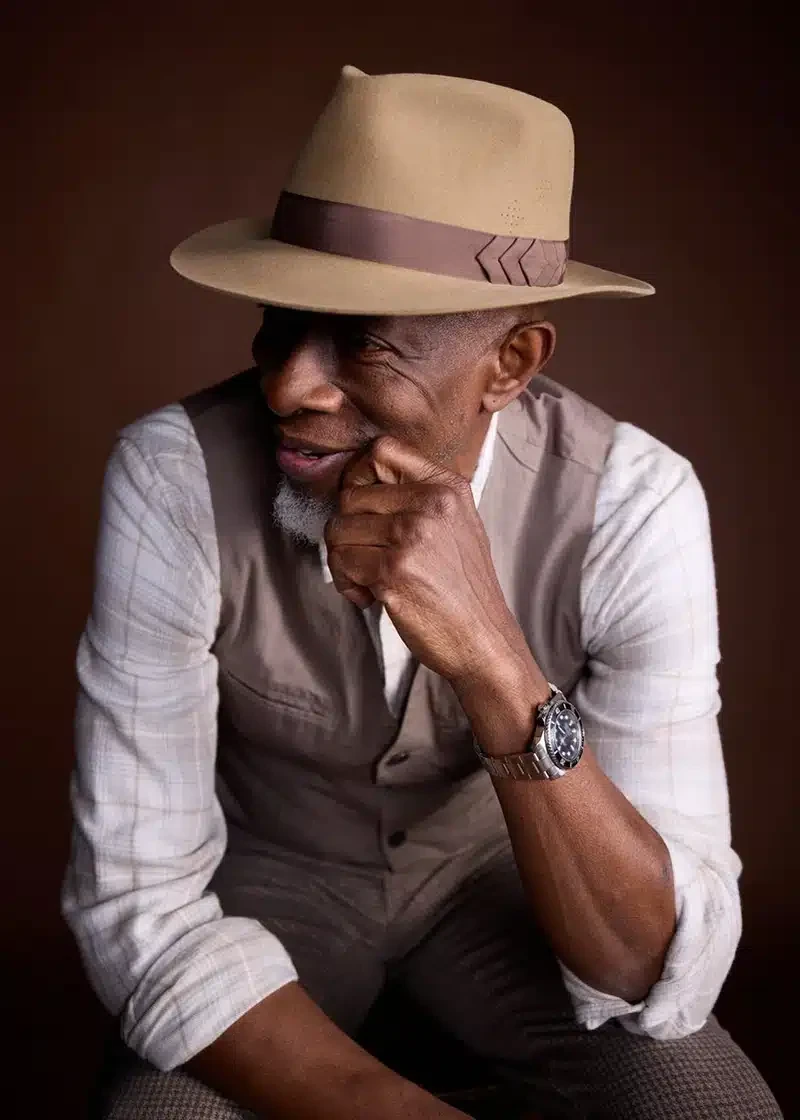
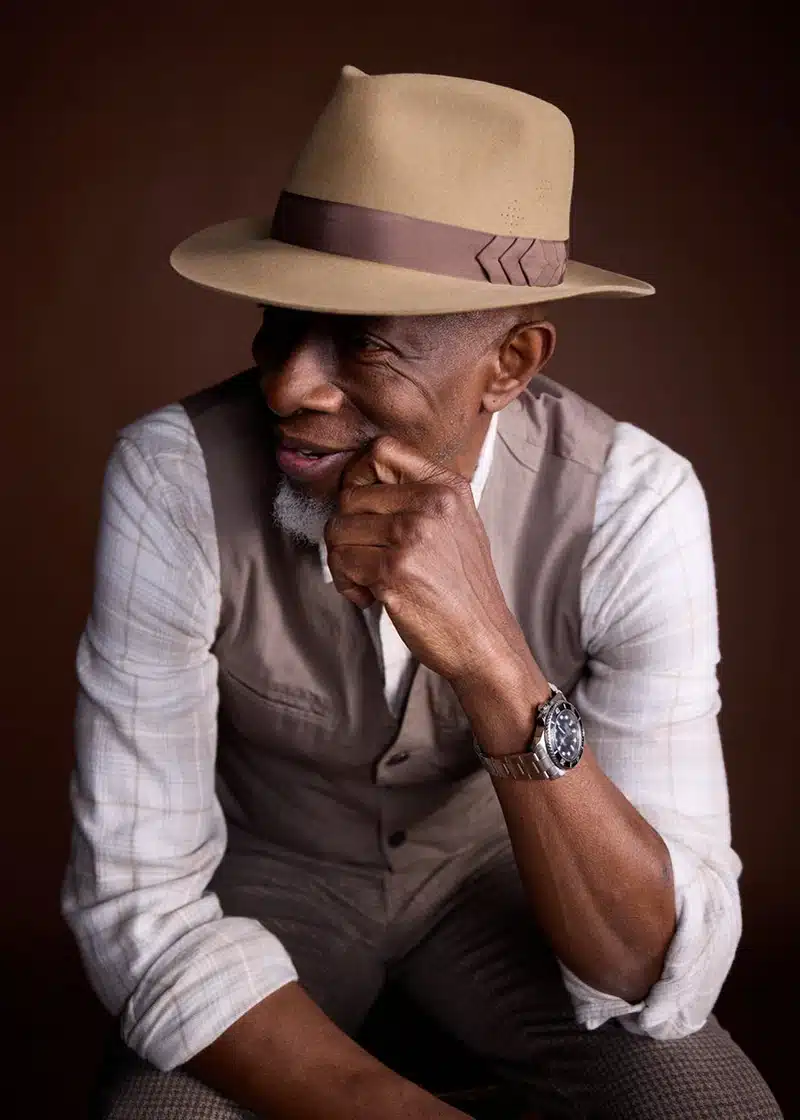
For more than half a century, Kevin Moore—better known to the world as Keb’ Mo’—has navigated the shifting tides of American roots music with a singular, unyielding artistic curiosity. Even now, approaching his mid-70s with a resume that boasts five Grammy Awards, an Americana Music Association Lifetime Achievement Award, and legendary collaborations with the likes of Taj Mahal, Bonnie Raitt, and Willie Nelson, he still approaches a blank sheet of manuscript paper and an unamplified acoustic guitar as if he is trying to solve a puzzle for the very first time.
That relentless pursuit of discovery defines his latest masterwork, The Breakdown. Released on August 21, the album is a remarkably stark, intimate collection of songs anchored primarily by his weathered, expressive vocals and intricate guitar work, punctuated selectively by world-class choral arrangements from the Soweto Gospel Choir and Take 6.
Yet, The Breakdown is far more than just another acclaimed entry in an already storied catalog. It is a sonic monument to survival. Recorded at his home studio just outside Nashville, the project was forged in the crucible of profound personal upheaval: open-heart surgery, the dissolution of a nearly two-year marriage, and an existential period where, as the artist bluntly summarizes, “everything in my life was breaking down.”
Instead of yielding to bitterness or wallowing in regret, Keb’ Mo’ channeled these seismic life shifts into an album that radiates momentum. The Breakdown addresses aging, mortality, faith, deep-seated gratitude, and the unbreakable ties of community—from the streets of Compton to the recording studios of Johannesburg. In an era when the global music industry floods streaming platforms with upwards of 800,000 new tracks every single day, Keb’ Mo’ remains an enduring exemplar of the power of authentic human communication.
Detailed Chronology: From Compton Backstreets to Global Stages
To understand the profound depth of The Breakdown, one must retrace a trajectory that began long before the multi-platinum albums and the international accolades. Born and raised in Compton, California, long before the city became synonymous with West Coast hip-hop, a young Kevin Moore was surrounded by a rich tapestry of sound. His household soundtrack bridged generations, moving effortlessly from the sophisticated crooning of Nat King Cole to the vibrant energy of local church singers.
Crucially, his musical antenna gravitated toward the blues—a genre that served as an emotional and historical bridge stretching straight back to the Mississippi Delta. He studied the fretboards and phrasing of the masters rather than trying to mimic singers whose vocal ranges he could not replicate. “I never tried to imitate singers because I couldn’t make their sounds,” he reflects candidly. Instead, he let guitarists like B.B. King, Little Milton, Robert Johnson, Son House, Muddy Waters, Howlin’ Wolf, Big Bill Broonzy, Bobby “Blue” Bland, and John Lee Hooker guide his education.
At just 21 years old, Moore’s immense technical proficiency on the guitar landed him his first major professional gig backing the legendary electric violinist Papa John Creach. For the next two decades, Moore honed his craft quietly and relentlessly behind the scenes as a journeyman guitarist, songwriter, and arranger. This prolonged apprenticeship cultivated a deep, foundational respect for musical mechanics long before he stepped into the public spotlight.
That spotlight finally found him in 1994 with the release of his self-titled breakout album, Keb’ Mo’. Introduced under his now-iconic moniker, the record captivated a broad international audience, establishing him as a vital torchbearer for contemporary acoustic blues. Over the subsequent decades, his career expanded exponentially. He collected five Grammy Awards, built bridges across genres, shared stages and studios with musical royalty, and solidified his reputation as an elder statesman of Americana.
Yet, the pinnacle of this journey arrived not with a massive, high-budget stadium tour or an ultra-processed pop collaboration, but with a deeply introspective return to basics. Following major cardiovascular surgery and personal heartbreak, Moore retreated to his Nashville-area home studio. Stripped of distractions, he began working on the material that would comprise The Breakdown, proving that his creative fire burns hotter than ever in his seventh decade.
Supporting Context & Metrics: The Craft, The Market, and The Roots
The creation of The Breakdown offers a fascinating study in artistic discipline amidst profound personal vulnerability. Before stepping up to the microphone to record the album’s sparse arrangements—which include standout tracks like “Fussing and Fightin’,” “Every Step of the Way,” “Hand It Over,” and “One Day Away”—Moore subjected himself to a rigorous physical and vocal regimen.
“I do a lot of vocal warming up,” he explains, detailing the meticulous preparation required to deliver an authentic performance. “I warm up my vocals, and then I rest. I make sure it’s got air, and I’m shaving off the loose hair, you know? I’m not a great singer, but I like to at least be able to tell a story.”
This storytelling ethos stands in stark contrast to the hyper-saturated landscape of the modern music business. Commenting on the staggering volume of modern content creation, Moore notes the overwhelming scale of contemporary competition:
“Every day, like 800,000 songs come out worldwide. There’s so much music being put out there. So you’re trying to figure out how to cut through all that. I just try to communicate authentically and put my best foot forward.”
To maintain that authenticity, Moore remains tethered to his earliest influences. Growing up, the Southern Baptist tradition experienced live every Sunday in church provided an immersive cultural education that recorded media simply could not replicate. “The church singers were a major inspiration because I heard that live Southern Baptist tradition every Sunday,” he recalls. “You’re hearing the African American experience right there. That set a pretty high bar.”
That innate curiosity eventually led him outside the United States. In 1993, he made a pilgrimage to Greenville, Mississippi, to study directly under Eugene Powell, better known as Sonny Boy Nelson. “I’m not much of a tourist,” Moore remarks. “I’d rather listen to the music.”
Decades later, that same drive took him across the Atlantic to Johannesburg, South Africa, where he recorded with the renowned Soweto Gospel Choir. The collaboration breathed new life into “Hand It Over,” a song he had originally written back in 1996 that sat in his vaults for nearly twenty years before finding its rightful home on The Breakdown. The experience fostered a deep reflection on heritage and history:
“Yeah. I mean, we got robbed. As African Americans, we’ve been here for generations, and we lost a lot of the culture of where we came from, but African culture is pretty cool too.”
Official Statements and Artistic Philosophy
Throughout the rollout of The Breakdown, Keb’ Mo’ has been remarkably open about the philosophical underpinnings of his life and art. Far from viewing the album’s creation as an exercise in mourning lost years, he frames it as a celebration of agency, resilience, and spiritual alignment.
Religion and dogma take a backseat on the album to a broader, more universal concept of faith, particularly evident on tracks like “One Day Away.”
“Faith is universal,” Moore asserts. “It’s not necessarily one dominant denomination. It’s the universe, God, whatever you want to call it. Your words and your actions are infinitely connected. What you speak, what you ask for, what you do—it all matters.”
Drawing inspiration from author Florence Scovel Shinn’s famous maxim, “Your words are your wand,” Moore applies this philosophy directly to his daily existence and creative output:
“I believe that. I speak and think things into existence. It keeps proving itself to me. You get out of life what you put into it.”
This steadfast dedication to forward momentum is driven by an ongoing fear of creative stagnation—both for himself and his audience. Explaining his eternal drive to explore new sounds and write fresh material, he shares a pragmatic self-assessment:
“I keep myself excited. I get bored with myself, so maybe other people might get bored with me too. I have to find something that makes me want to keep going.”
When questioned about his songwriting process and whether tracks like “Fussing and Fightin’” are meticulously mapped out from conception to completion, Moore dismisses the myth of the infallible architect. “Well, making a record is always trial and error,” he laughs. “You’re trying things and deciding what guitar parts work, what doesn’t work.”
Future Outlook: The Road Ahead
As The Breakdown establishes its footprint across global charts and playlists, Keb’ Mo’ shows zero signs of slowing down. His geographical and emotional anchors remain firmly intact, balancing the peaceful isolation of his Nashville-area studio with the gritty nostalgia of Compton, California, where he still maintains a residence and frequently visits. It was in the garage of that very Compton home, collaborating with producer Money Mark Ramos while discussing the nuances of Los Angeles, that the title track of his previous album, Good To Be, was born.
Looking to the immediate future, Moore’s calendar is filled with creative reunions and new ventures. He is actively preparing to hit the road once again for a series of collaborative live tour dates with Taj Mahal—the very artist he first watched perform with awe during his senior year of high school, whom he later opened for, and with whom he has already recorded two critically acclaimed collaborative records.
Tangible objects, instruments, and relationships inevitably transform or fade over time. He recalls the $25 Sears & Roebuck steel guitar he once owned before it was tragically lost in a flooded Nashville storage locker, as well as the custom guitars built for him by Larry Pogreba and the foundational bonds forged with lifelong friends like drummer Quentin Dennard.
Yet, as these physical artifacts drift away, the music remains indestructible. After more than fifty years in the spotlight, navigating the highest highs and the most harrowing personal lows, Keb’ Mo’ remains intensely focused on the horizon—looking for the next compelling sound, the next resonant story, and the next undeniable reason to pick up his guitar and start playing.









Belum ada komentar. Jadilah yang pertama berkomentar!