

Executive Overview
The digital creator economy has long transcended mere entertainment, evolving into a potent force for global philanthropy and social mobilization. This year, YouTube’s annual "Season of Giving" has entered its final, high-octane sprint, bringing together millions of viewers, hundreds of top-tier content creators, and massive technological platforms in a coordinated push for charitable impact. Over the past several weeks, global digital communities have rallied to raise funds and build awareness for causes ranging from pediatric cancer research and global reforestation to animal rescue and educational equity.
As the campaign culminates this week, the sheer scale of the digital benevolence is staggering. Through marathon livestreams, collaborative cross-channel events, and high-stakes incentive challenges, YouTube has positioned itself not just as a video-sharing platform, but as the world’s most dynamic philanthropic hub. This report provides an exhaustive look into the final week of YouTube’s Season of Giving, highlighting landmark events like The Game Theorists’ mega-livestream for St. Jude Children’s Research Hospital, the final push of the historic #TeamTrees campaign, and the broader ecosystem of giving that defines the modern creator community.
Detailed Chronology: The Week That Defined Digital Philanthropy
The final sprint of the Season of Giving is characterized by an unprecedented convergence of digital star power, interactive viewer participation, and real-time fundraising mechanisms.
Giving Tuesday: The Game Theorists’ 9-Hour St. Jude Takeover
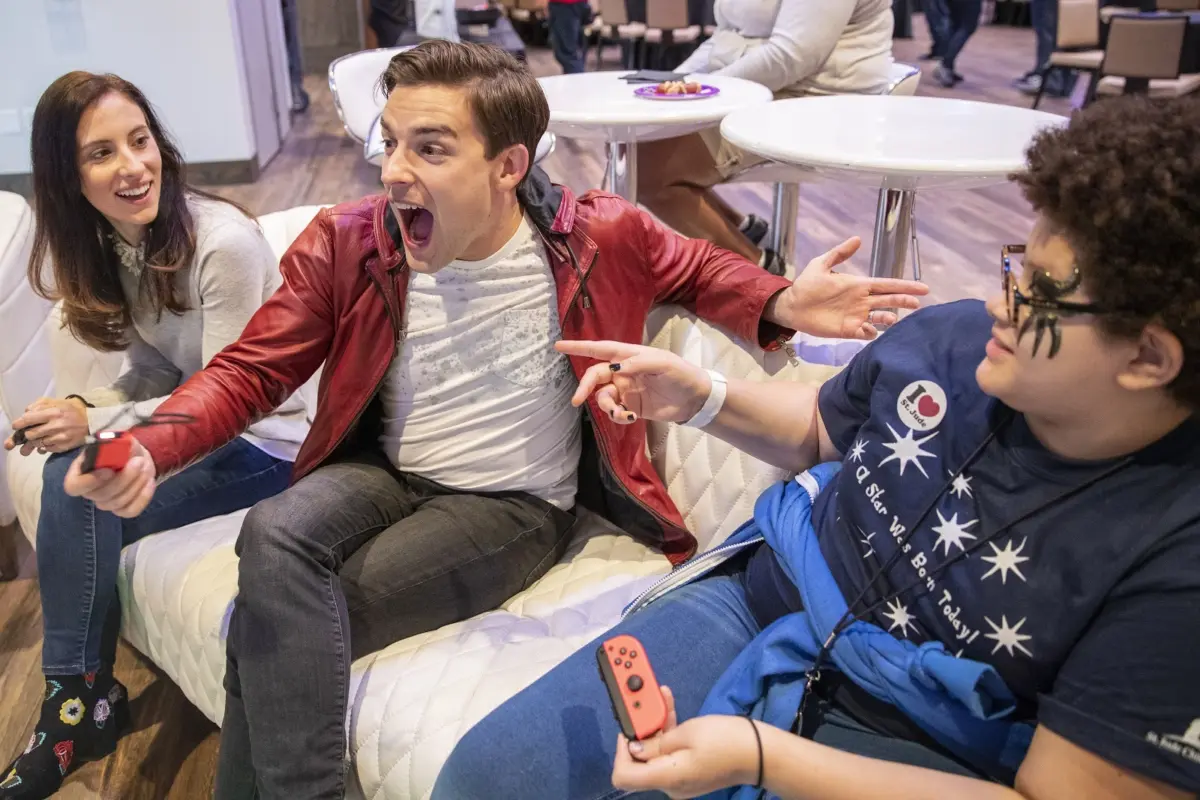
The epicenter of this week’s charitable blitz arrives on Giving Tuesday, spearheaded by MatPat and Stephanie Patrick of The Game Theorists. Known for their deep-dive analytical videos into gaming lore, the duo orchestrated a monumental nine-hour livestream dedicated entirely to supporting St. Jude Children’s Research Hospital in Memphis, Tennessee.
The event bypassed standard broadcast formats by integrating a massive ensemble cast of digital royalty. Fan-favorite creators—including Binging with Babish, The Completionist, Dawko, Jackie Aina, Kyle Hill of Because Science, Markiplier, Miranda Sings, NateWantsToBattle, TheOdd1sOut, Rhett and Link, Rosanna Pansino, SomethingElseYT, The Try Guys, and VSauce3—banded together in virtual and physical collaboration. Their unified mission: to help St. Jude eradicate childhood cancer and other life-threatening pediatric diseases.
Adding an unprecedented layer of engagement, Scott Cawthon, the elusive and acclaimed creator of the global gaming phenomenon Five Nights at Freddy’s, introduced a high-stakes challenge. Cawthon pledged a staggering personal donation of $500,000 to St. Jude, conditional upon the internet community successfully uncovering hidden Easter eggs within a specially developed, unreleased game launching simultaneously with the stream. The catch? Fans and creators had a strict one-hour window from the moment the game went live to solve the puzzle. Guided by veteran streamers like MatPat, Markiplier, and Dawko, millions tuned in, transforming passive viewing into an active, high-tension archaeological dig for charity.
The Final Lap of #TeamTrees
Simultaneously, the digital landscape continues to reap the rewards of one of the most successful collaborative environmental campaigns in history: #TeamTrees. Initiated by creators Jimmy Donaldson (MrBeast) and Mark Rober, the initiative set out with a deceptively simple yet monumental goal: to raise $20 million to plant 20 million trees by January 1, 2020.
As the campaign enters its final weeks, it stands on the precipice of total victory, needing to clear just its final four million trees. From the outset, the campaign captured the public imagination through its radical simplicity: every single dollar donated equaled one tree planted, managed in partnership with the Arbor Day Foundation. The momentum was immediate and historic. Within the first 48 hours of its launch, #TeamTrees secured an astounding $5 million in contributions, driven largely by viral promotion across YouTube and Twitter. Within the first week alone, community members uploaded more than 3,800 dedicated videos featuring the #TeamTrees tag, proving that decentralized creator networks could achieve conservation milestones typically reserved for major international NGOs.
A Tapestry of Generativity: Project for Awesome, Khan Academy, and Beyond
While the spotlight shines brightly on mega-events like St. Jude and #TeamTrees, the broader YouTube ecosystem is currently saturated with specialized fundraising initiatives. This week marks the 13th annual Project for Awesome, hosted by educational and philanthropic pioneers Hank and John Green (vlogbrothers), where creators from across the platform spend 48 straight hours creating content to raise money for charities via decreasing-value perks and live community donations.
Concurrently, educational titans like Khan Academy are hosting targeted livestreams such as "All in for Education," ensuring that the push for equity reaches classrooms and learners globally. Animal welfare organizations like Hope For Paws are leveraging the platform’s reach to showcase rescue operations in real-time, driving immediate emergency funding. To help users navigate this overwhelming tide of goodwill, YouTube curated a centralized playlist highlighting the top-tier fundraisers of Giving Week, turning the platform’s homepage into a dynamic directory of social impact.
Supporting Context & Metrics: The Mechanics of Creator-Led Giving
To understand the efficacy of YouTube’s Season of Giving, one must examine the structural integration of philanthropy into modern digital media. Traditional fundraising relied on telethons, direct-mail campaigns, and institutional galas—methods with high overhead costs and limited demographic reach. In contrast, the creator economy leverages hyper-targeted, highly engaged, and globally distributed audiences.
The Power of Micro-Donations and Scale
The success of campaigns like #TeamTrees and the St. Jude livestreams underscores the financial power of micro-donations at scale. When a creator with millions of dedicated subscribers champions a cause, the conversion rate, though individually small in financial terms, aggregates into millions of dollars within hours.
- Speed to Capital: Within 48 hours of the #TeamTrees launch, the campaign hit $5 million, a velocity rarely matched by traditional non-profit donor acquisition strategies.
- Content Multiplication: In the first week of #TeamTrees, over 3,800 user-generated videos organically amplified the message, eliminating the need for expensive paid advertising campaigns.
- Engagement-Driven Incentives: Gamified philanthropy—such as Scott Cawthon’s $500,000 Easter egg challenge or MatPat’s multi-creator relay format—drastically increases average watch time, viewer retention, and, consequently, real-time donation volume through YouTube’s integrated Super Chat and direct-donation tools.
Demographics and Community Identity
Research into digital philanthropy reveals that younger demographics (Millennials and Generation Z) heavily favor peer-to-peer recommendations over institutional appeals. When a trusted creator—someone whose content a viewer consumes daily for years—asks for support, it carries the weight of a personal recommendation from a peer. YouTube’s Season of Giving capitalizes on this parasocial trust, transforming passive entertainment consumption into an active civic duty.

Official Statements and Community Perspectives
The profound cultural shift toward creator-led philanthropy has not gone unnoticed by platform executives and participating creators alike, who view these initiatives as definitive proof of the community’s maturing ethos.
Reflecting on the overarching mission of the initiative, a YouTube spokesperson emphasized the unique nature of the platform’s user base:
"The spirit of generosity and support is one of the things that makes our community so special. On behalf of everyone at YouTube, thank you to all of the creators, fans, and friends who are using their voices to make the world a better place. What we are witnessing is not just a seasonal trend, but a fundamental realignment of how communities mobilize for social good."
The sentiment is echoed intensely by the creators on the front lines. Speaking from St. Jude Children’s Research Hospital in Memphis prior to their marathon broadcast, Stephanie and MatPat of The Game Theorists articulated the emotional core behind their massive undertaking:
"Warning: You aren’t going to get anything done this Tuesday, because you’re going to be watching our all-day livestream in support of St. Jude. But more importantly, you’re going to witness what happens when an entire community decides that childhood cancer is a fight we are going to finish together. The scale of this isn’t about us—it’s about millions of viewers realizing their individual power when they stand as one."
Similarly, environmental crusader Mark Rober has repeatedly highlighted the democratization of impact through the #TeamTrees initiative:
"We proved that the sum of many small actions of kindness can make a huge, positive impact on the world. People often feel helpless when faced with massive global challenges like climate change or disease. What we’ve built here is a tangible vehicle: $1 equals 1 tree, 1 dollar equals 1 step closer to a cure. It gives people agency."
Future Outlook: The Evolution of Digital Philanthropy
As the final hours of YouTube’s Season of Giving tick away and campaigns like #TeamTrees approach their definitive deadlines, industry analysts are already looking toward the future. The success of this year’s initiatives signals a permanent evolution in how charitable organizations must operate to remain relevant in the 21st century.
1. Integration of Native Platform Tools
Expect platforms like YouTube to continue refining and expanding native monetization and donation tools. Features such as integrated fundraising goals, streamlined Super Chat allocations, and automated tax-receipt generation for creators will lower the administrative friction of running multi-million-dollar charity drives, encouraging even mid-tier creators to host regular philanthropic streams.
2. Year-Round Philanthropy Over Seasonal Sprints
While campaigns traditionally cluster around the year-end holiday season (Giving Tuesday and December holidays), the infrastructure built during events like the Season of Giving paves the way for year-round responsiveness. Creators are increasingly treating philanthropy not as an annual PR event, but as a core pillar of their channel identities, deploying rapid-response fundraising streams for natural disasters, humanitarian crises, and localized community needs on a moment’s notice.
3. Corporate-Creator Hybrid Partnerships
The massive financial commitments seen from figures like Scott Cawthon point toward a new paradigm in corporate social responsibility (CSR). Traditional corporations are increasingly bypassing legacy marketing agencies to partner directly with digital creators and platform-native initiatives, recognizing that creator-led campaigns yield significantly higher authenticity, engagement, and measurable social ROI.
Conclusion
YouTube’s Season of Giving has once again proven that the digital space is far more than an escape from reality—it is a powerful crucible for real-world change. From planting millions of trees across the globe to funding breakthrough pediatric cancer research and educational equity, creators and their communities have redefined the boundaries of collective action. As the final livestreams conclude and the tallies are finalized, one undeniable truth remains: the modern internet has birthed a new generation of philanthropists, and their impact is only just beginning.









Belum ada komentar. Jadilah yang pertama berkomentar!