

Executive Overview
In an era defined by hyper-fast digital consumption, synthetic manufacturing, and instantaneous gratification, a quiet counter-movement is taking root in the leafy suburbs of Tokyo. Japan’s traditional crafts have long commanded global reverence for their uncompromising quality, mesmerizing complexity, and the generational devotion of their master artisans. Yet, for many international travelers, engaging with this heritage remains a passive pursuit—a matter of viewing pristine textiles behind museum glass or admiring antique kimonos on mannequins.
Through platforms like Wabunka, however, this paradigm is shifting. Discerning travelers are increasingly moving beyond observation to step directly into the country’s living heritage, working shoulder-to-shoulder with master craftspeople.
This journey into tactile antiquity reaches its zenith at Atelier Shimura in Setagaya Ward, Tokyo. Here, the profound legacy of Fukumi Shimura—a celebrated textile master and designated Living National Treasure of Japan—continues to thrive, pulse, and inspire. Founded in 2015 by Shoji Shimura to preserve and promote his grandmother’s life’s work, Atelier Shimura bridges the gap between ancient botanical wisdom and contemporary cultural tourism.
This feature chronicles an immersive journey into Atelier Shimura’s plant-based dyeing (kusakizome) workshop. From the earthy, chamomile-like aroma of raw botanicals simmering in copper pots to the fluid, meditative movement of raw silk absorbing rich organic pigments, this experience offers a profound, grounding connection to the natural world. Far more than a simple craft-making tourist activity, it serves as an intimate masterclass in patience, mindfulness, and the alchemy of turning earth into living color.
Detailed Chronology: Step-by-Step Through the Kusakizome Workshop
Arrival and Introduction: Welcoming Ritual over Tea
The experience begins long before hands ever touch dye or fabric. Nestled in a quiet residential neighborhood of Setagaya Ward—easily reached via an eight-minute taxi ride or a twenty-minute stroll from Soshigaya-Okura Station on the Odakyu Line—Atelier Shimura feels immediately removed from the frenetic neon pulse of central Tokyo. The walk from the station’s North exit winds through pleasant suburban streets lined with small local shops, offering an unvarnished window into everyday Japanese life.
Upon arrival, participants are welcomed into a serene traditional interior by master artisans. Our guide for the session, Ms. Taniguchi, exemplifies the rigorous standards and gentle hospitality of the atelier. Having initially studied natural dyeing at university before completing a formal apprenticeship under the Shimura lineage, Taniguchi possesses a rare synthesis of academic depth and intuitive mastery across both tsumugi-ori (hand-spun silk weaving) and kusakizome.
Over a warm cup of tea, Taniguchi shares the foundational philosophy of Atelier Shimura and details the pioneering work of Fukumi Shimura, who was designated a Living National Treasure in 1990 for her monumental role in reviving traditional plant-dyeing methods. For non-Japanese speakers, professional interpreters can be arranged, ensuring that the historical context and technical nuances are fully communicated.
The Alchemy of Extraction: Harvesting Seasonal Botanicals
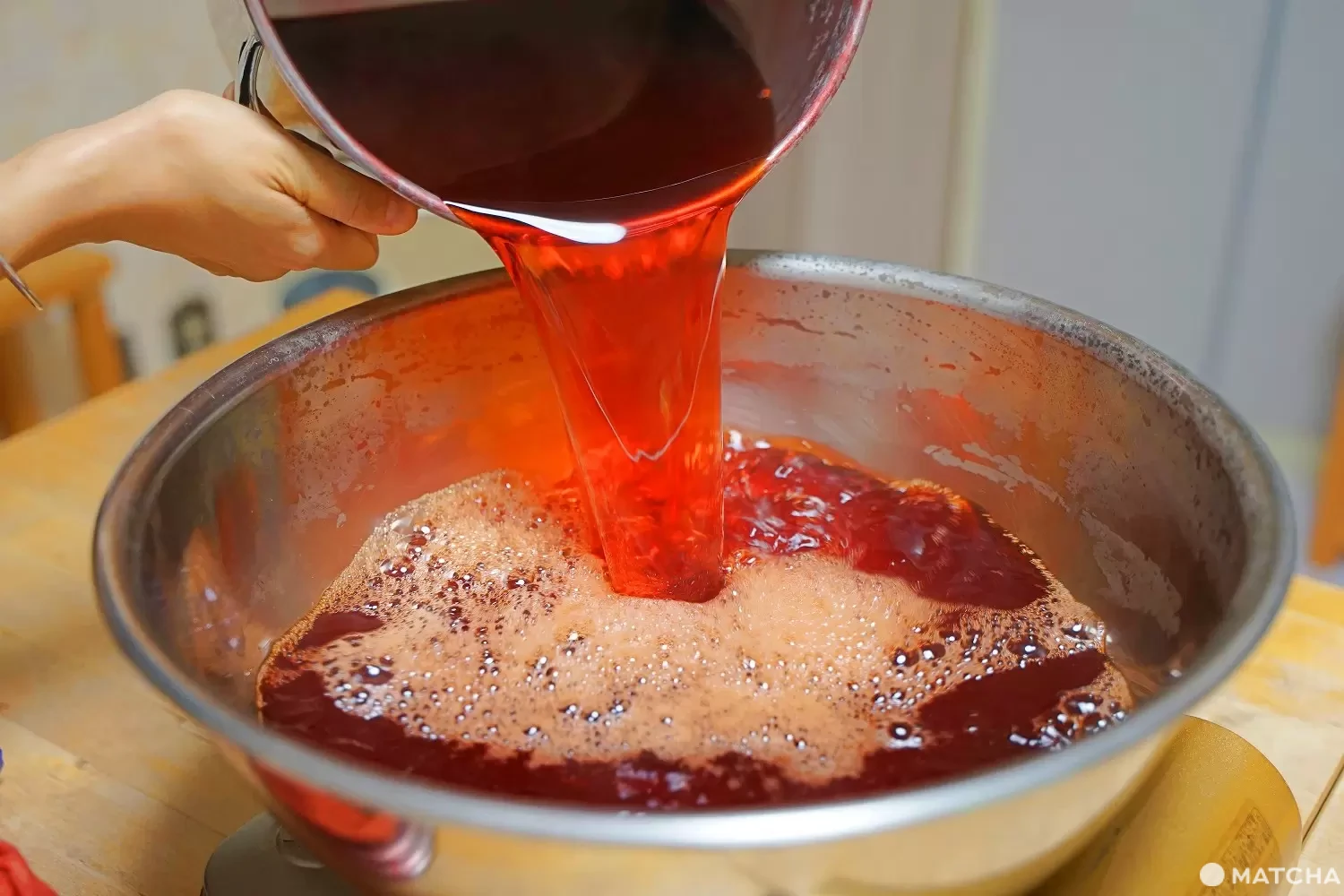
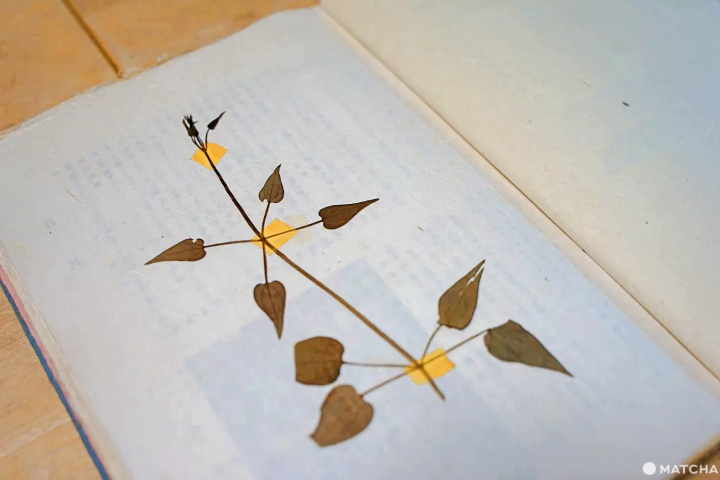
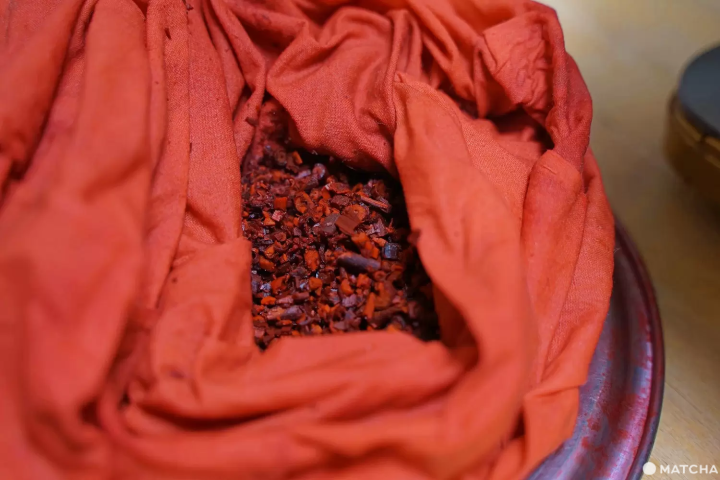
Atelier Shimura structures its dyeing workshops around the rhythm of the seasons, utilizing whatever botanicals are currently yielding their most potent pigments. Our autumn session utilized stems and roots from the Japanese madder plant, akane, to produce a deep, earthy red dye.
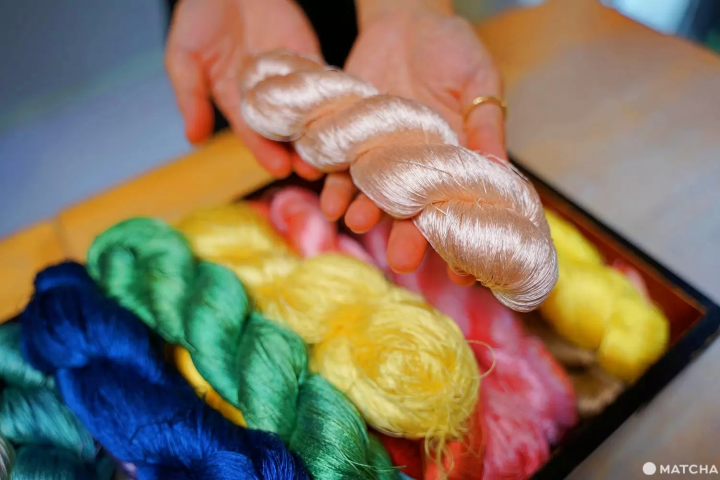
“Natural plant dyes reflect the organic world,” Taniguchi explains, noting how contrasting natural pigments—such as the sunny brightness of yellow and the meditative depth of purple—effortlessly harmonize when woven into complex textile fields.
While native Japanese madder has regrettably become virtually extinct in the wild, Atelier Shimura responsibly sources premium alternatives, such as Indian madder root, to maintain continuity with historical palettes. The underground root portion of the madder plant is central to producing its characteristic soft, grounded, and soothing hue. Historically referred to by the atelier as a "mother color," akane yields an organic warmth distinctly different from the sharper tonalities of synthetic reds.
Submersion and Mindfulness: The Dye Bath
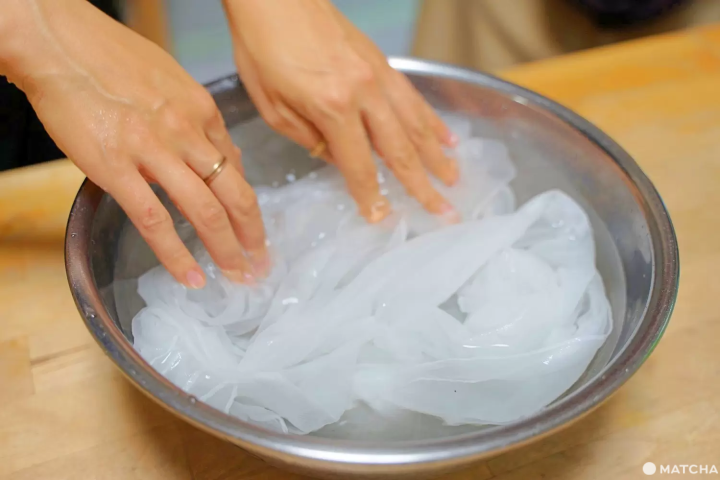
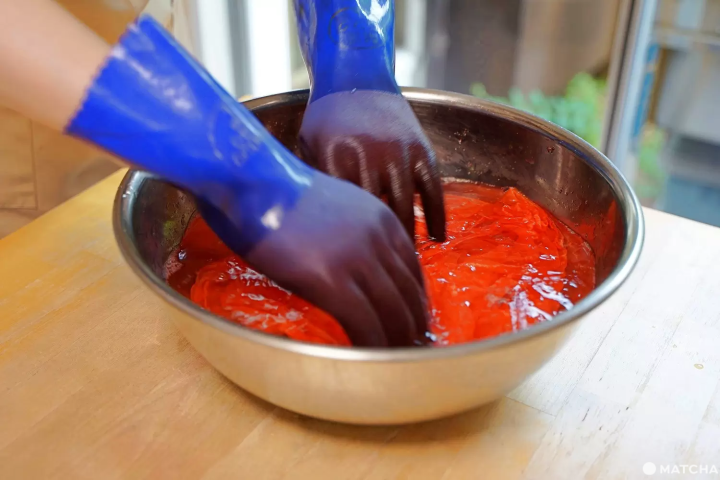
Protected by an apron and thick heat-resistant gloves, participants approach the steaming dye vats. The process is preceded by a meticulous demonstration from Taniguchi, who illustrates how to submerge a pristine white silk scarf into water, gently circulating the delicate fibers and pressing out excess liquid without stretching or fracturing the weave.
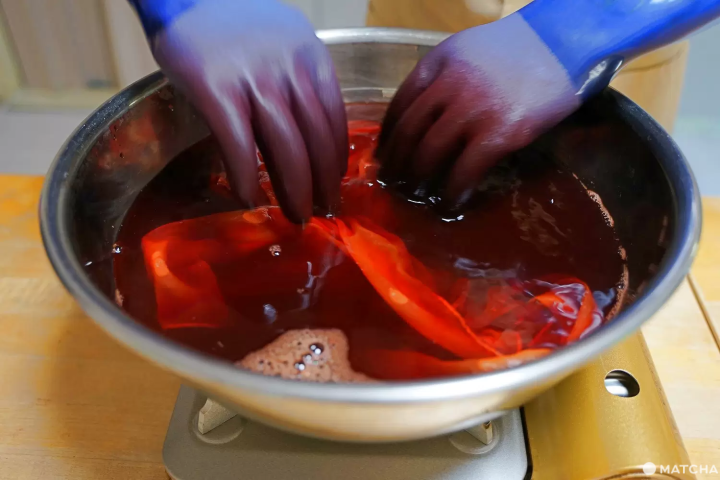
Stepping up to the hot red dye bath, initial anxieties regarding uneven pigment distribution are quickly quelled. Taniguchi remains a constant, reassuring presence by the participant’s side, monitoring the immersion process with hawk-like vigilance.
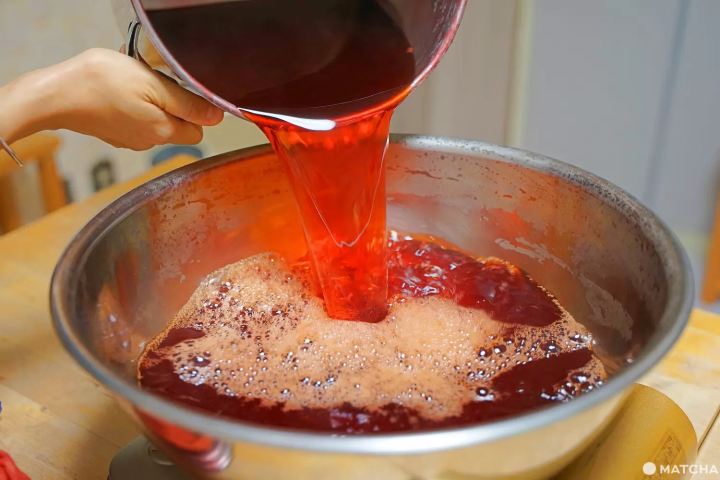
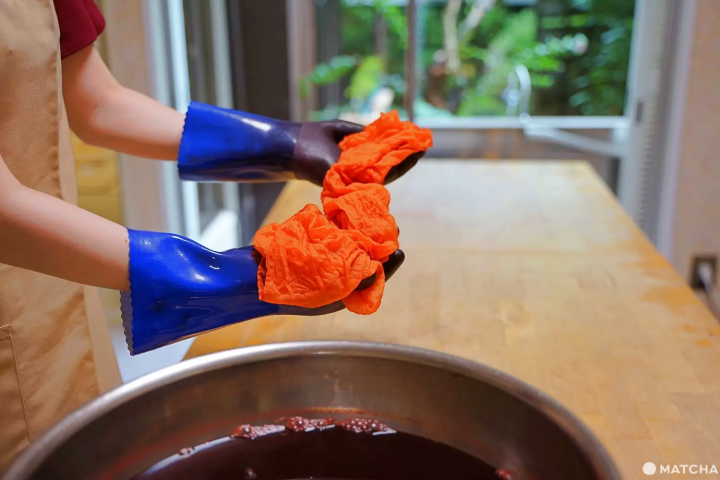
As the silk is continuously folded and stirred, the experience shifts from a mechanical task into a deeply meditative ritual. The rising steam carries the relaxing, herbal aroma of chamomile. As Taniguchi notes, the dyeing process requires artisans to clear their minds completely, focusing entirely on the shifting tones unfolding before them. In an era dominated by relentless digital noise and multitasking, this forced, tranquil focus on the present moment emerges as a rare and luxurious psychological reset.
Fixing the Color: The Natural Mordant
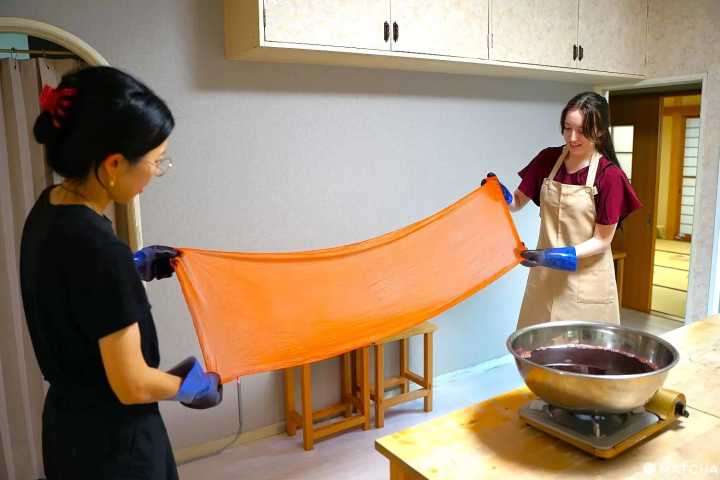
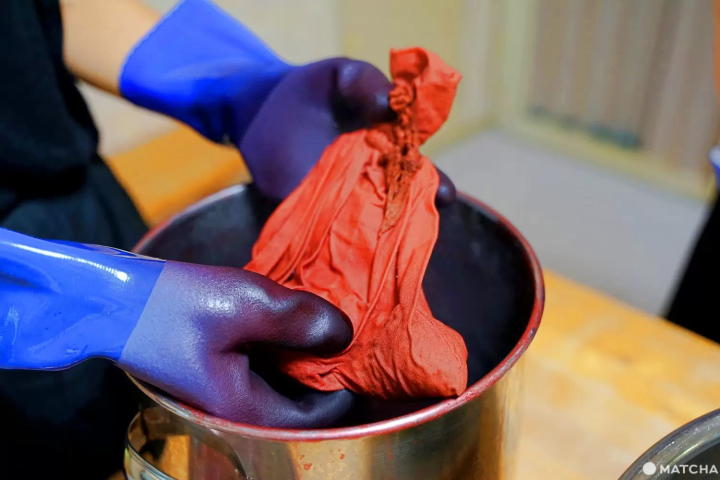
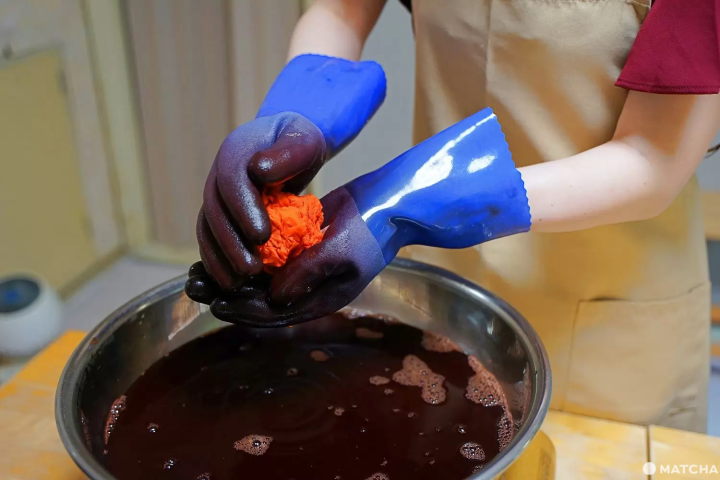
Once the initial pigment takes hold, the silk is gathered into a gentle ball to express excess liquid—avoiding any aggressive twisting or wringing that could compromise the integrity of the silk filaments. The fabric is then unfurled to reveal a surprisingly vibrant crimson.
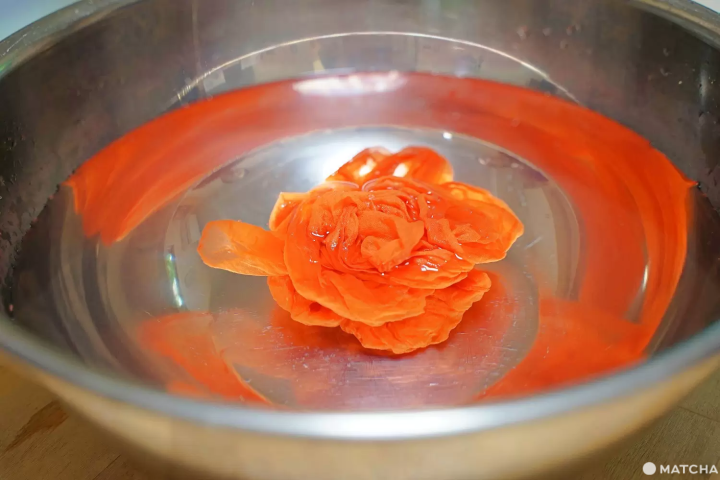
Because raw plant dyes require a metallic salt to permanently bond with animal-protein fibers like silk, the next phase involves submerging the fabric into a natural mordant bath of dissolved alum powder. This step is repeated two to three times.
The alum imbues the water with a remarkable, silky viscosity. Watching the vibrant crimson scarf swirl through the clear, mineral-rich liquid evokes the serene imagery of a koi fish gliding through a pristine pond. This phase represents a fascinating structural triad of natural kingdoms:
- Botanical: The plant-derived dye compounds.
- Animal: The harvested silk fibers.
- Mineral: The alum mordant locking the color in place.
Following the mordant bath, the fabric is briefly exposed to sunlight before being hung to dry completely in the shade of the atelier’s courtyard.
Supporting Context & Metrics: The Scale of Heritage Preservation
| Category | Detail / Specification |
|---|---|
| Founding Year | 2015 (Tokyo branch established in 2017) |
| Founder | Shoji Shimura |
| Matriarch / Icon | Fukumi Shimura (Living National Treasure, designated 1990) |
| Location | Setagaya Ward, Tokyo (Headquarters in Kyoto) |
| Nearest Transit | Soshigaya-Okura Station (Odakyu Line) |
| Workshop Duration | ~2 hours (Dyeing only); up to 6 hours (Combined dyeing & weaving) |
| Core Techniques | Kusakizome (Plant-based dyeing) & Tsumugi-ori (Hand-spun silk weaving) |
| Historical Palette Context | Edo Period (1603–1868) featured over 48 distinct shades of brown and 100+ shades of gray derived entirely from nature. |
Beyond the Vat: Gardens, Architecture, and Exhibition Spaces
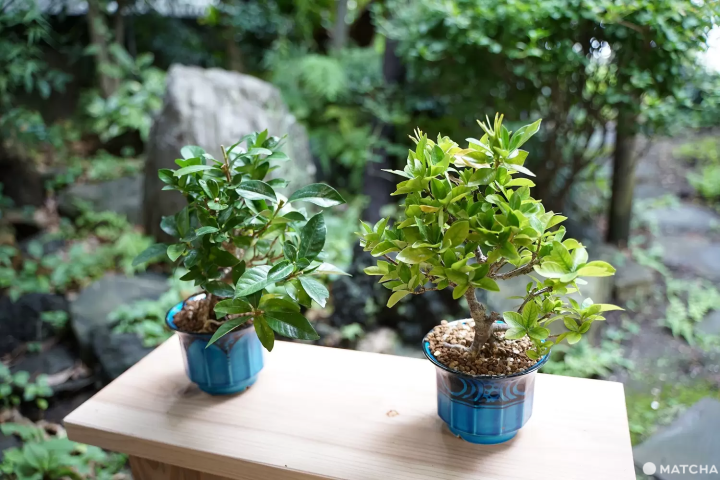
While the dyed silk dries in the shaded courtyard, Atelier Shimura encourages visitors to explore its wider campus. The grounds feature a serene garden dedicated to cultivating key dye-yielding flora, including loquat trees, providing an idyllic setting to enjoy tea on crisp autumn afternoons.
Adjacent to the gardens stands a traditional tatami room (washitsu) that doubles as a rotating gallery space. During our visit, the room hosted an exhibition of handcrafted paper origami flowers titled "hananowa," produced in collaboration with the Gifu Product Development Laboratory (GPDL). Framed by masterfully exposed structural wooden beams, the room itself operates as a masterclass in authentic Japanese architectural restraint, offering guests a profound architectural sanctuary.
Before departure, visitors can browse the atelier’s retail boutique. Stocked with artisanal goods handcrafted by the studio’s masters—ranging from minimalist silk accessories to comprehensive monographs detailing the philosophy of kusakizome—the shop provides tangible, ethically produced keepsakes that embody the organic luxury of traditional Japanese craftsmanship.
For those wishing to deepen their engagement, Atelier Shimura also offers comprehensive silk-weaving workshops. Participants select their preferred naturally dyed threads and sit at traditional wooden hand-looms, guided by master weavers to discover how the introduction of even a single contrasting thread can dramatically transform the character of a textile.
Official Statements and Philosophy
The guiding ethos of Atelier Shimura is rooted in the preservation of ecological harmony and the elevation of unadulterated natural expression. In an official statement regarding their institutional mission, representatives emphasize that kusakizome is not merely an aesthetic choice, but an ethical stance toward the natural world:
"Natural plant-dyeing is an ever-evolving dialogue with the earth. When we extract color from roots, stems, and leaves, we are acknowledging our absolute dependence on natural ecosystems. Our workshops are designed to awaken urban travelers to this symbiosis—to help them see that a single hue is not flat or manufactured, but alive, breathing, and deeply connected to the changing seasons."
Master artisan Ms. Taniguchi echoes this sentiment, reflecting on the psychological dimensions of the craft:
"When you are dyeing silk, you cannot rush the material. The color emerges at its own pace, dictated by the water temperature, the season of harvest, and the mineral composition of the mordant. It teaches us patience and reminds us of a rhythm larger than ourselves."
Future Outlook: The Global Relevance of Slow Craft
As global tourism rebounds toward post-pandemic highs, consumer preferences are undergoing a fundamental structural shift. Mass-market souvenir hunting and superficial sightseeing are steadily giving way to transformative, educational, and slow-travel paradigms.
Atelier Shimura stands at the vanguard of this evolution. By opening its doors to international travelers through curated cultural channels like Wabunka, the atelier ensures that intangible cultural heritage is not entombed in history books, but actively transmitted to a global audience.
The future of traditional Japanese textiles relies precisely on this model of open transparency, participatory education, and uncompromising authenticity. By transforming an afternoon workshop into an exercise in mindfulness, ecology, and artistic creation, Atelier Shimura guarantees that the brilliant, quiet legacy of Fukumi Shimura will continue to color the modern world for generations to come.






Belum ada komentar. Jadilah yang pertama berkomentar!