

By Dominic-Madori Davis
Executive Overview
For decades, the billionaire lifestyle was defined by a predictable checklist: a sprawling island estate, a fleet of private Gulfstream jets, and a multi-story mega yacht capable of navigating international waters. But in recent years, a new must-have asset has cemented its place at the pinnacle of ultra-high-net-worth portfolios: an English soccer club.
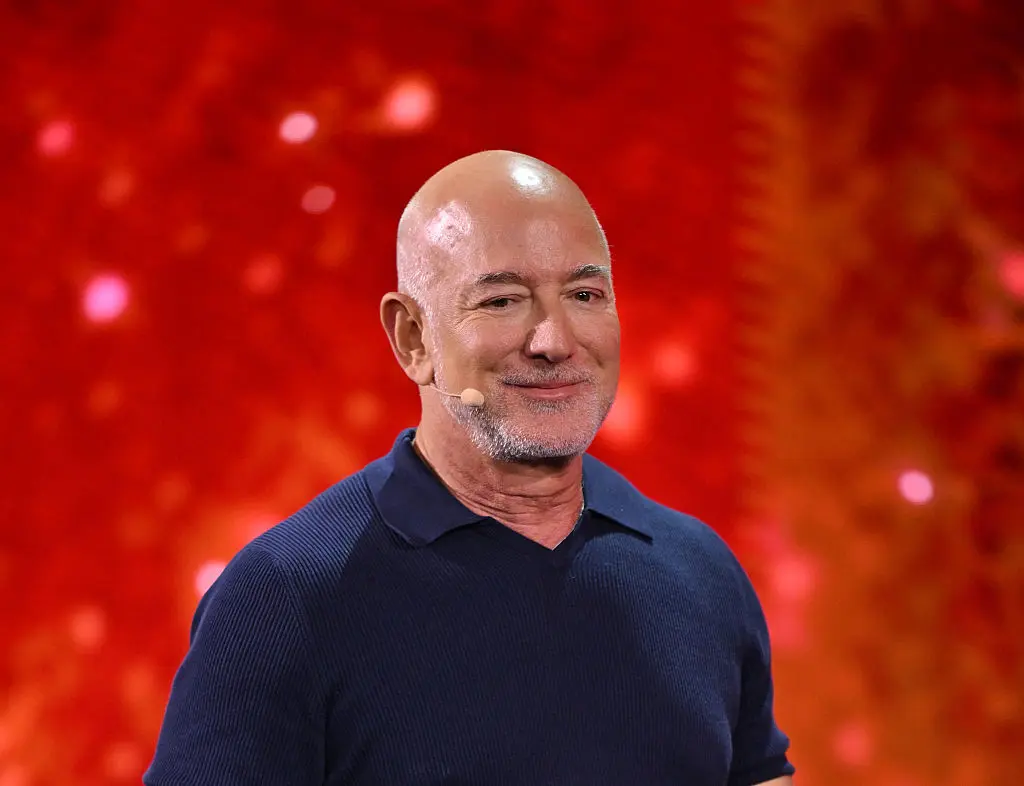
Now, the world’s most formidable technology titan appears ready to join the club. According to reports from The Guardian, Amazon founder Jeff Bezos is orchestrating a move to acquire at least a 30% stake in Liverpool Football Club, one of the crown jewels of European sport. Valued at roughly £1.35 billion (approximately $1.8 billion) for this specific block of shares, the deal would place Bezos firmly inside the upper echelon of global sports ownership. Operating alongside a consortium that reportedly includes Facebook co-founder Eduardo Saverin, Bezos’s potential acquisition represents far more than a simple financial play; it is a calculated entry into the upper atmosphere of global cultural influence.
While Bezos has previously explored investments in American professional sports—including rumored looks at U.S. football franchises—this prospective deal marks his maiden voyage into institutional athletics. It also underscores a wider, undeniable macroeconomic trend: the systematic Americanization of the English Premier League (EPL). With a staggering 13 out of 20 Premier League clubs now featuring American shareholders, U.S. capital is reshaping the world’s most popular sport.
As Bezos evolves from a reclusive tech architect into an international lifestyle and cultural figure—particularly following his marriage to former news anchor and television host Lauren Sánchez—his pivot toward English soccer reveals a broader convergence of big tech, high finance, international media, and elite celebrity culture.
Detailed Chronology: The Evolution of the Liverpool Stake Bid
The path toward Jeff Bezos’s potential entry into English football did not materialize overnight. It is the product of converging financial pressures, shifting sports valuations, and a broader strategic pivot by American tech moguls toward European assets.
Early Inquiries and Domestic Near-Misses
Long before whispers of Anfield surfaced in international sports columns, Bezos’s investment team quietly evaluated opportunities closer to home. Over the past several years, as tech fortunes ballooned to unprecedented heights, sports franchises emerged as virtually inflation-proof alternative assets. Bezos reportedly flirted with the idea of purchasing a controlling or minority stake in a prominent U.S. football franchise. However, the rigidly capped ownership structures of the NFL, combined with astronomical valuations that frequently clear the $5 billion to $10 billion threshold, presented high barriers to entry.
Furthermore, U.S. leagues operate under strict regulatory and ownership guidelines that limit sovereign wealth and massive cross-portfolio syndicates. Faced with domestic roadblocks, Bezos’s gaze naturally drifted across the Atlantic, where English soccer offered a more accessible, globally scaled alternative with room for exponential brand amplification.
The Consortium Forms Around Anfield
The current maneuver centers on Liverpool Football Club, an institution with a valuation hovering around $6 billion, according to Forbes. Widely considered the European equivalent of the Dallas Cowboys in terms of cultural gravity and global brand recognition, Liverpool has long been an attractive target for institutional capital. Current owners Fenway Sports Group (FSG) have previously entertained minority investment to inject fresh liquidity and fund infrastructure development without relinquishing total control.
According to The Guardian, Bezos has joined forces with a high-powered consortium that includes tech billionaire and Facebook co-founder Eduardo Saverin. The group is targeting a minimum 30% stake in the Merseyside club, valuing that block at roughly £1.35 billion ($1.8 billion). While negotiations remain fluid and subject to the complex due diligence required for multi-billion-dollar sports transactions, the framework of the deal highlights how elite tech fortunes are increasingly being pooled to acquire planetary-scale sports properties.
Broader U.K. Expansion
Bezos’s mounting interest in Liverpool does not exist in a vacuum; it aligns perfectly with his expanding commercial and infrastructural footprint in the United Kingdom. Amazon has previously waded into European soccer broadcasting, securing rights to stream select English Premier League fixtures and expanding its Prime Video sports ecosystem.
Simultaneously, Bezos’s footprint in London is growing deeper. Reports indicate that Prometheus, his new high-profile artificial intelligence enterprise, is actively negotiating a major lease to anchor itself in King’s Cross—London’s premier technology and innovation hub. By fusing an AI infrastructure play in the heart of London with a marquee stake in one of England’s most storied football clubs, Bezos is effectively anchoring his personal and corporate brand into the economic capital of the U.K.

Supporting Context & Metrics: The American Takeover of the Premier League
To understand why Jeff Bezos and Eduardo Saverin are targeting Liverpool, one must look closely at the seismic shifts currently reshaping English association football.
The Numbers Behind the Influx
A comprehensive analysis published earlier this year by Sky Sports mapped out the quiet revolution sweeping through the English football pyramid. The data revealed an undeniable reality: 13 out of the 20 clubs competing in the English Premier League now feature American shareholders.
This massive influx of capital has transformed the Premier League from a traditionally localized, community-driven sporting competition into a playground for international private equity, venture capital, and Silicon Valley wealth.
- Chelsea FC: Acquired by a consortium led by American billionaire Todd Boehly and Mark Walters (who also hold ownership stakes in the LA Dodgers and LA Lakers).
- Crystal Palace: Co-owned by American businessman and former U.S. Ambassador to the U.K., Woody Johnson.
- Everton: Received major financial backing and investment control from American investor Dan Friedkin.
- AFC Bournemouth: Brought under the control of an American-led group spearheaded by Bill Foley, which notably included Hollywood actor Michael B. Jordan.
Why U.S. Investors are Flocking to the U.K.
Several structural and economic factors explain why American billionaires are bypassing domestic sports leagues in favor of English soccer:
- Valuation Disparity: Major U.S. sports leagues (NFL, NBA, MLB) feature hyper-inflated valuations where entry points are exceptionally narrow and prohibitively expensive. By comparison, Premier League clubs—despite their massive global audiences—offer fractional ownership models or minority stakes at valuations that represent perceived "value" to tech multi-billionaires.
- Global Reach: While American football and baseball remain largely domestic spectacles with localized international fandoms, English soccer is a truly borderless religion. Matches are broadcast live in prime time across Asia, Africa, the Americas, and Europe, generating unmatched eyeballs and digital engagement.
- The "Ted Lasso" and Wrexham Cultural Effect: Popular culture has romanticized the experience of owning an English football club. Global hit television shows like Ted Lasso and Ryan Reynolds’ critically acclaimed FX docuseries Welcome to Wrexham have successfully rebranded lower- and top-tier English soccer ownership as the ultimate adventure in community storytelling and brand reinvention.
Official Statements and Industry Perspectives
While formal announcements regarding the finalization of the Liverpool stake remain tightly under wraps—partially due to the sensitive nature of ongoing negotiations between FSG and the prospective consortium—industry insiders have been vocal about the implications of the deal.
Sports finance analysts note that a partnership between FSG and a tech titan of Bezos’s magnitude could revolutionize how clubs monetize their global fanbases. "When you bring someone like Jeff Bezos or Eduardo Saverin into a club like Liverpool, you aren’t just buying goals on a pitch; you are buying advanced digital infrastructure, cloud computing integration, and proprietary data analytics capabilities," notes one London-based sports investment banker who spoke on the condition of anonymity.
Furthermore, cultural commentators have highlighted the strategic evolution of Bezos’s public persona. Since stepping down as CEO of Amazon and marrying Lauren Sánchez, Bezos has actively transitioned from a reclusive, hyper-rational software and logistics pioneer into a fixture of international high society, philanthropy, and media.
Owning a slice of Liverpool Football Club provides an immediate, untouchable cultural halo. It grants an American tech mogul direct access to the emotional heartbeat of British working-class culture, neatly wrapped in a global media product that commands billions of viewers each week.
Future Outlook: What a Bezos Investment Means for Global Sport
If Jeff Bezos successfully secures his stake in Liverpool Football Club, the ripples will be felt across both the technology and sporting landscapes for years to come.
1. Accelerated Technological Integration in Football
Expect to see a rapid acceleration in how clubs leverage artificial intelligence, cloud infrastructure, and personalized digital streaming. With Amazon’s deep bench of technological resources and Bezos’s long-term vision, Liverpool could become a testing ground for next-generation fan engagement, utilizing advanced data science to optimize player recruitment, stadium operations, and global merchandise distribution.
2. Further Consolidation of American Wealth in Europe
The success of a Bezos-backed consortium will likely trigger a fresh wave of Silicon Valley and Wall Street capital eyeing remaining English assets. As traditional British ownership models face rising operating costs, Financial Fair Play (FFP) regulations, and the constant demand for stadium redevelopment, deep-pocketed American tech billionaires will remain the primary buyers capable of footing the bill.
3. The Ultimate Status Symbol
Ultimately, the modern billionaire’s portfolio evolution is complete. The superyacht secures privacy on the high seas; the private jet masters physical distance; but an English Premier League club anchors a legacy in the public imagination. For Jeff Bezos, stepping onto the balcony at Anfield won’t just be a financial transaction—it will mark his official coronation as a dominant force in global cultural power.





Belum ada komentar. Jadilah yang pertama berkomentar!