

Executive Overview
For decades, the pursuit of pristine night skies has demanded a particular brand of endurance. Across the globe, astrotourism has been synonymous with rugged expeditions: navigating pitch-black mountain roads for hours in the dead of night, riding rattling ropeways to icy peaks, and enduring biting alpine winds just to catch a glimpse of the Milky Way. For urbanites and international travelers alike, the logistical friction of stargazing often outweighs its romantic appeal.
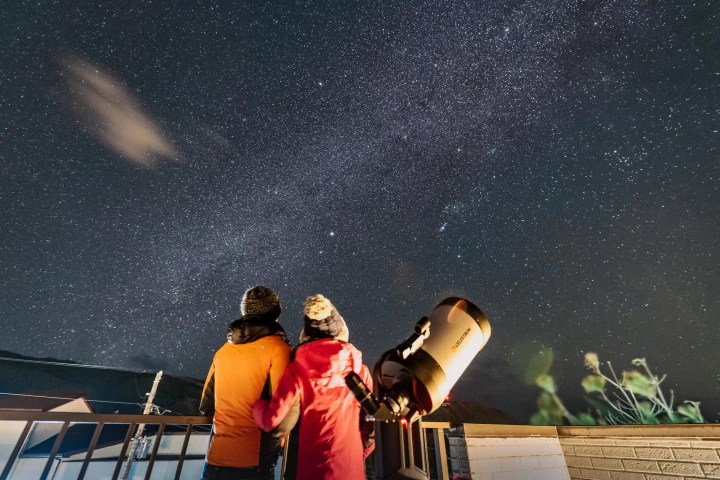
Enter Kozushima—an idyllic volcanic island belonging administratively to Tokyo, yet worlds away from its neon-drenched metropolis. Earning international acclaim as a certified "Dark Sky Place" by the International Dark-Sky Association (IDA), Kozushima holds the rare distinction of being the only municipality in Japan where the entire island, including its residential settlements, is protected from artificial light pollution. Globally, it stands among an elite trio of locations officially designated as a "Dark Sky Island."
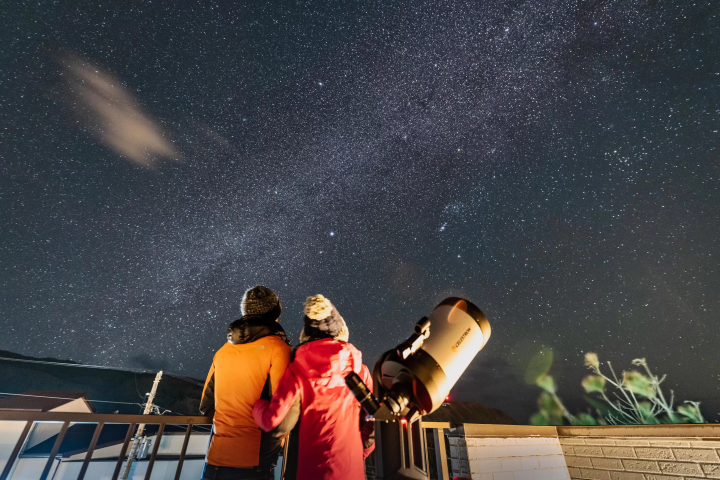
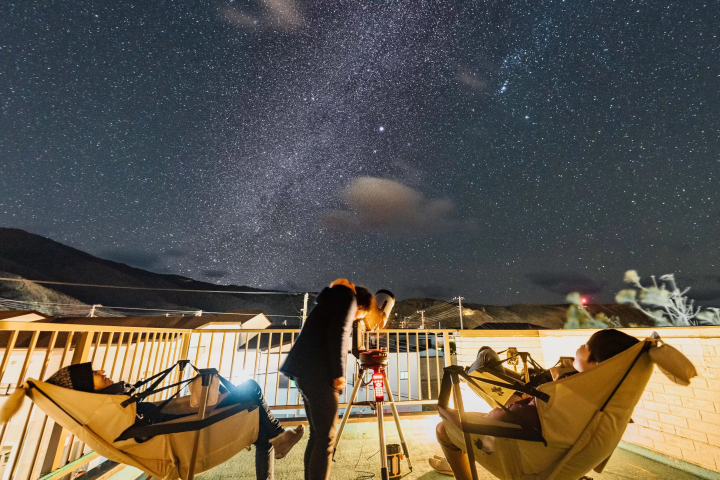
Yet, the true revolution on Kozushima is not merely the quality of its starlight, but the democratization of the experience. At Vacation House FamiliA, a boutique guesthouse situated right on the island, the philosophy is simple yet transformative: effortless astrotourism. Discarding the need for rental cars, treacherous nighttime driving, or heavy telescopic equipment, FamiliA introduces a "slow travel" paradigm. Here, guests can recline in a gently swaying hammock on a dedicated "Starry Chill Terrace," sip warm hot cocoa or local island wine, and gaze deep into the cosmos—all mere steps from the comfort of a warm, indoor bed.
This comprehensive report examines the logistics, itinerary framework, scientific context, and exceptional hospitality that make a 2 to 3-night stay at Vacation House FamiliA the definitive standard for stress-free island stargazing.

Detailed Chronology: A Standard 3-Day/2-Night Itinerary at Vacation House FamiliA
To fully absorb Kozushima’s natural rhythms, local topography, and stellar phenomena, travel experts and FamiliA management recommend a minimum stay of two to three nights. A whirlwind day trip risks disruption from fickle maritime weather, while a prolonged stay invites deep relaxation. Below is a detailed, hour-by-hour chronology of an immersive 3-day journey designed for the modern slow traveler.
Day 1: Arrival, Island Orientation, and the First Stellar Symphony
- 10:00 AM – Arrival and Seamless Transfer:
Passengers disembark at either Maehama Port or Tako Bay, depending on which side of the island is sheltered from the day’s prevailing winds. Regardless of the arrival port, an English-speaking staff member from Vacation House FamiliA is waiting with a pre-arranged shuttle bus. Upon arrival at the guesthouse, guests sit down with an interactive map to review local sights, seasonal highlights, and safety protocols. - 12:00 PM – Culinary Immersion:
A short stroll or local transfer leads guests to a neighborhood eatery specializing in shimazushi (island-style marinated sushi) and other catches of the day, freshly hauled from the surrounding Kuroshio Current. - 1:00 PM – Independent Exploration:
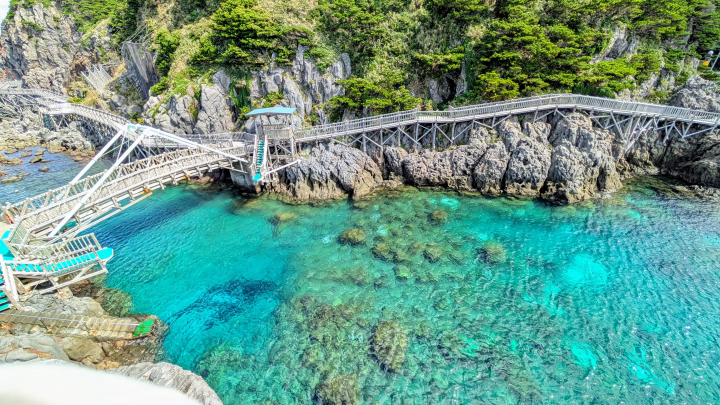
The afternoon invites leisurely exploration. Guests can rent bicycles to pedal toward the dramatic geological formations of the Akasaki Promenade, or wander through the historic village alleys, soaking in the architecture and relaxed pace of island life. - 6:00 PM – Open-Air Thermal Rejuvenation:
As evening approaches, guests utilize FamiliA’s complimentary evening shuttle to visit the island’s famous open-air hot spring bath (onsen). Soaking in mineral-rich waters while watching the sun melt into the Pacific Ocean provides an unmatched sensory transition into the night. Following dinner at a local establishment, guests return to the guesthouse. - 9:00 PM – The Debut Stargazing Session:
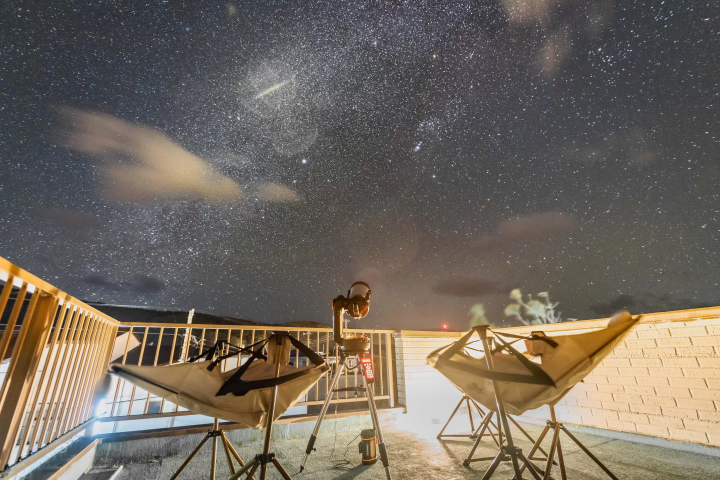
The night culminates at FamiliA’s "Starry Chill Terrace." Cradled in a hammock chair with the rhythmic percussion of ocean waves as a background score, guests look upward as the Milky Way reveals itself in striking clarity, entirely unmarred by stray municipal lighting.
Day 2: Alpine Hikes, Cultural Wandering, and Impromptu Astronomy
- 8:30 AM – Communal Breakfast:
Morning breaks with a nutritious, locally sourced breakfast shared around a communal table, fostering organic conversations among international travelers, domestic visitors, and FamiliA’s knowledgeable staff. - 10:00 PM – Conquering Mount Kaminoyama:
Equipped with trail maps and transit advice, guests set out on foot or via local bus to hike Mount Kaminoyama, celebrated as one of Japan’s 100 Famous Flower Mountains. The trek rewards climbers with panoramic vistas of the Izu Archipelago. - 3:00 PM – Afternoon Respite:
Returning to the guesthouse by mid-afternoon, guests unwind in the cozy lounge. Armed with a paperback and a freshly brewed cup of artisan coffee, they enjoy hours of uninterrupted tranquility. - 8:00 PM – The Spontaneous Astrophotography Call:
Capitalizing on real-time sky monitoring, a staff member steps into the lounge with an exciting announcement: "The Milky Way is exceptionally clear right now!" Guests stream onto the balcony. Utilizing FamiliA’s loaner tripods, visitors experiment with smartphone astrophotography, capturing professional-grade memories of constellations with zero specialized photographic training.
Day 3: Coastal Farewells and Departure
- 8:00 AM – Final Island Stroll:
Following a leisurely breakfast, guests take a final morning walk through the village. Popular activities include searching for sea turtles near the Maehama Pier or hunting for translucent pieces of sea glass washed ashore by the tide. - 11:00 PM – Departure Logistics:
FamiliA provides a complimentary ride directly to the departing ferry port or airstrip. Boarding the transport—whether a high-speed vessel or a 45-minute commuter flight back to Tokyo—travelers depart with a lingering reluctance to leave, already planning their return.
Supporting Context & Metrics: Why Kozushima is a Dark Sky Pioneer
To appreciate the engineering and ecological marvel of Kozushima’s night sky, one must understand the stringent criteria required by the International Dark-Sky Association (IDA).
The Dark Sky Island Designation
The IDA’s "Dark Sky Place" program recognizes communities, parks, and reserves that demonstrate robust commitments to preserving dark skies through responsible lighting policies and public education. Kozushima achieved this status not merely by hiding in a remote pocket of the ocean, but by retrofitting its entire municipal infrastructure. Streetlights, residential exterior bulbs, and commercial lighting were systematically replaced with shielded, warm-toned fixtures that direct illumination downward rather than scattering it into the upper atmosphere.
As a result, Kozushima stands as:
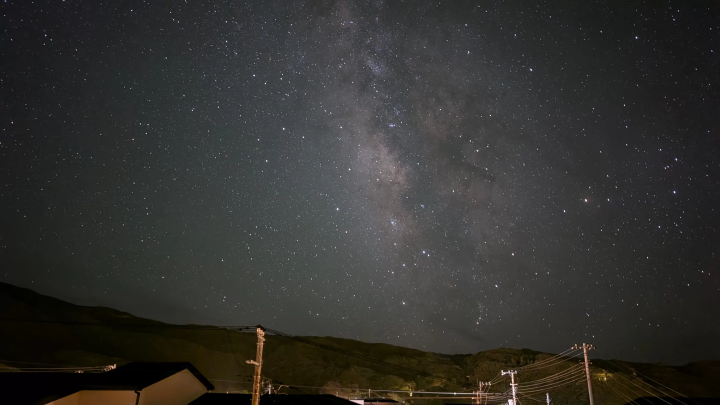
- The only island in Japan where residential areas are fully integrated into a Dark Sky Place designation.
- One of only three locations globally to bear the coveted title of "Dark Sky Island," placing it in the company of isolated sanctuaries like Sark in the Channel Islands and Huon Valley in Tasmania.
The Physics of the Night Sky: Lunar Phases Explained
While Kozushima’s lighting controls guarantee minimal light pollution, celestial variables still dictate the visual texture of the night. FamiliA’s staff actively monitor these shifts, ensuring guests maximize their viewing potential:
- New Moon Windows: Travelers aiming to view faint celestial phenomena—such as the delicate tendrils of the Milky Way, distant nebulae, and faint star clusters—should align their 2 to 3-night itineraries with the lunar new moon cycle, when reflected solar light is at its absolute minimum.
- Full Moon Alternatives: Far from disappointing, a full moon on Kozushima offers an entirely distinct aesthetic. Visitors can observe the moon’s stark craters using FamiliA’s high-powered astronomical telescope, or watch as moonlight spills dramatically over mountain ridges, tracked via high-grade binoculars provided on-site.
Planetary Observation Parameters
Autumn and early winter (spanning October through the first half of December) present an optimal window for planetary astronomy. During this season, atmospheric stability (seeing conditions) allows guests utilizing FamiliA’s house telescope to resolve complex planetary features. Visitors regularly experience genuine moments of awe—such as children and international tourists gasping aloud upon spotting the distinct rings of Saturn or the banded cloud decks of Jupiter for the very first time.
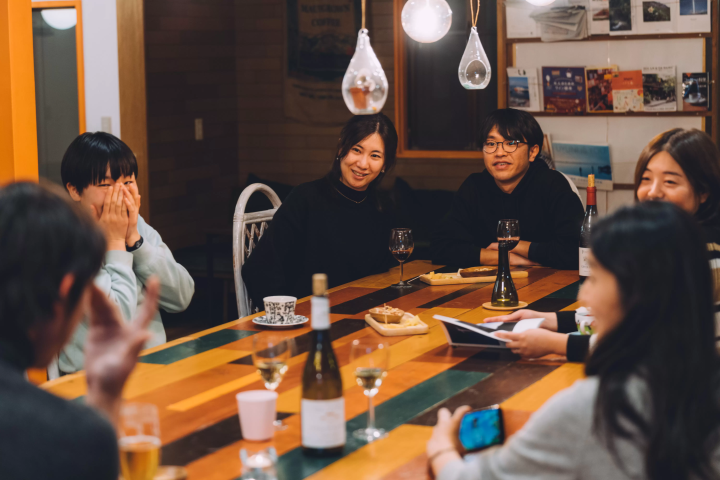
Official Services and Hospitality Framework at Vacation House FamiliA
The operational framework of Vacation House FamiliA is engineered to remove every traditional friction point associated with island travel. Below is a breakdown of the core complimentary and curated services designed to guarantee guest comfort:
1. Dynamic Port/Airport Shuttle Logistics
Kozushima’s maritime accessibility is governed by prevailing wind directions. Depending on atmospheric pressure systems, incoming vessels dock at either Maehama Port (located conveniently near the village center) or Tako Bay (situated on the rugged eastern coast, requiring an arduous one-hour journey across the island’s mountainous terrain).
- The FamiliA Solution: Staff monitor vessel docking schedules daily and dispatch a complimentary shuttle service directly to whichever port or airstrip is active, ensuring guests never face unexpected logistical hurdles or expensive taxi fares.
2. Evening Hot Spring Shuttles
The island’s premier open-air thermal bath offers sweeping views of the Pacific Ocean, making it a mandatory daily ritual for visitors. However, local municipal bus services cease operations during evening hours, particularly in the off-season (October through June).
- The FamiliA Solution: FamiliA operates a dedicated evening shuttle service to and from the hot spring resort upon request, ensuring guests can soak in sunset views and warm waters without worrying about nighttime transit.
3. Comprehensive Weather and Equipment Safety Nets
Astrotourism is inherently weather-dependent, a reality that often causes traveler anxiety.

- The FamiliA Solution: Staff continuously monitor cloud cover, humidity, and moonrise timetables. Guests are spared the mental burden of constantly checking forecast apps; instead, staff proactively announce prime viewing windows. Furthermore, if coastal winds grow chilly, the heated interior of the guesthouse—complete with a first-floor café bar serving local wine, craft sake, and hot cocoa—is accessible in under two seconds from the balcony. Heavy tripods, star charts, and telescopes are provided free of charge, eliminating the need to pack cumbersome gear.
Comprehensive Transportation Guide to Kozushima
Reaching Tokyo’s premier island sanctuary involves balancing travel time, budgetary considerations, and weather resilience. Here is the definitive transport breakdown for planning a trip to Kozushima:
| Mode of Transport | Route & Operator | Approximate Travel Time | Weather Reliability | Booking & Practical Notes |
|---|---|---|---|---|
| Large Passenger Ship (Salvia Maru) | Takeshiba Pier (Tokyo) ➔ Kozushima (Tokaikisen) | ~10 hours (Overnight ferry) | Highest (Least prone to cancellation) | Features comfortable cabin classes; ideal for maximizing daytime island schedules upon arrival. |
| High-Speed Jet Ferry | Takeshiba Pier (Tokyo) ➔ Kozushima (Tokaikisen) | ~3.5 hours | Moderate (Prone to seasonal suspension) | Operates reliably in mid-summer; spring and autumn operations are frequently subject to wave height restrictions. |
| Regional Ferry (Azalea Maru) | Shimoda Port (Shizuoka Pref.) ➔ Kozushima (Shinshin Kisen) | ~2.5 hours | Moderate-Low | Highly sensitive to coastal swells; online booking is unavailable, but reservations are generally easy to secure. Highly recommended to pack motion sickness medication. |
| Commuter Aircraft (Propeller Plane) | Chofu Airport (Tokyo) ➔ Kozushima (New Central Airlines) | ~45 minutes | High (Subject to visibility/wind limits) | Operates via ultra-compact 19-seater aircraft. Offers the fastest transit from mainland Tokyo, but books out rapidly due to limited seating capacity. |
Travel Advisory: Maritime routes to the Izu Archipelago are routinely evaluated each morning based on ocean swells. Because single-day itineraries can be entirely derailed by a single morning cancellation, booking a minimum stay of two to three nights at Vacation House FamiliA acts as an essential insurance policy against weather delays, ensuring your vacation remains uncompromised.
Future Outlook: The Evolution of Slow Astrotourism in Japan
As global tourism rebounds toward hyper-personalized, wellness-oriented, and eco-conscious models, destinations like Kozushima are positioned at the vanguard of a new travel era. The convergence of municipal environmental policy—exemplified by the strict lighting ordinances that secured Kozushima’s Dark Sky status—and private hospitality innovation, pioneered by properties like Vacation House FamiliA, points toward a sustainable future for Japanese regional tourism.
Moving forward, industry analysts predict an exponential rise in demand for "frictionless nature"—vacations that allow travelers to engage deeply with natural wonders without sacrificing urban comforts or enduring physical hardships. By removing the barriers of night driving, equipment rental, and complex transit planning, FamiliA has redefined what it means to touch the stars.
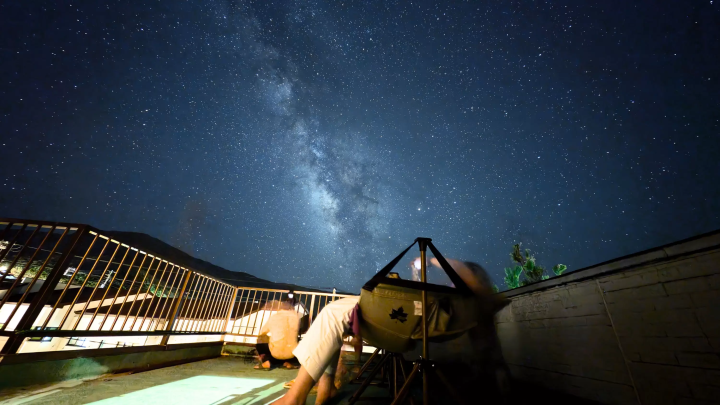
For travelers seeking a profound, restorative encounter with the cosmos—backed by warm island hospitality, world-class volcanic landscapes, and absolute peace of mind—Kozushima and Vacation House FamiliA represent the undisputed gold standard of modern astrotourism.
To secure your reservation at Vacation House FamiliA and begin planning your effortless island escape, visit the official booking portal at www.familia-family.club.






Belum ada komentar. Jadilah yang pertama berkomentar!