

Executive Overview
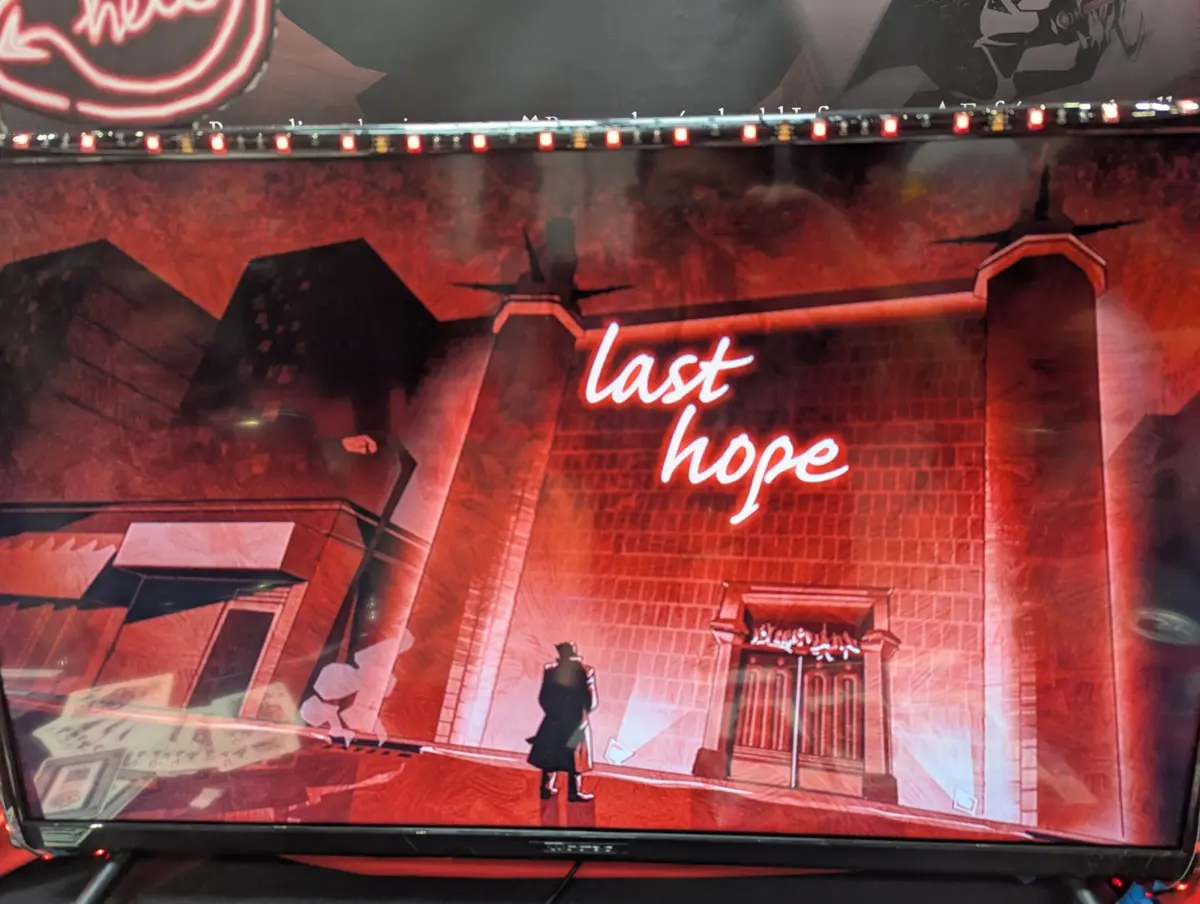
The contemporary landscape of independent game development has long been a fertile ground for high-concept crossovers, structural subversions, and thematic risk-taking. However, few titles in recent memory have so seamlessly bridged the analytical mechanics of traditional card games with the suffocating psychological weight of dark fantasy as Hell Hold’em.
Debuting with considerable critical acclaim at the prestigious SAGA Barcelona Game Fest 2026, this harrowing deck-building roguelike has captured the attention of both hardcore strategy enthusiasts and narrative-driven RPG purists alike. Developed under the creative vision of veteran designer Pedro J. Ramos—whose fifteen-year legacy with the celebrated tabletop RPG publisher Nosolorol has cemented his reputation as a master of atmospheric world-building—Hell Hold’em is far more than a simple novelty mashup. It is a calculated descent into a surreal, high-stakes purgatory where every numerical calculation carries the crushing weight of existential dread.
Set within a dimension where the boundaries between tactical hand-management and psychological survival blur entirely, Hell Hold’em strips away the glittering artifice of traditional casino gaming, replacing it with a decaying ecosystem of demons, curses, and deteriorating sanities. At its core, the game asks a profoundly unsettling question: What happens to a gambler’s soul when the house itself begins to prey on their psychological vulnerabilities?
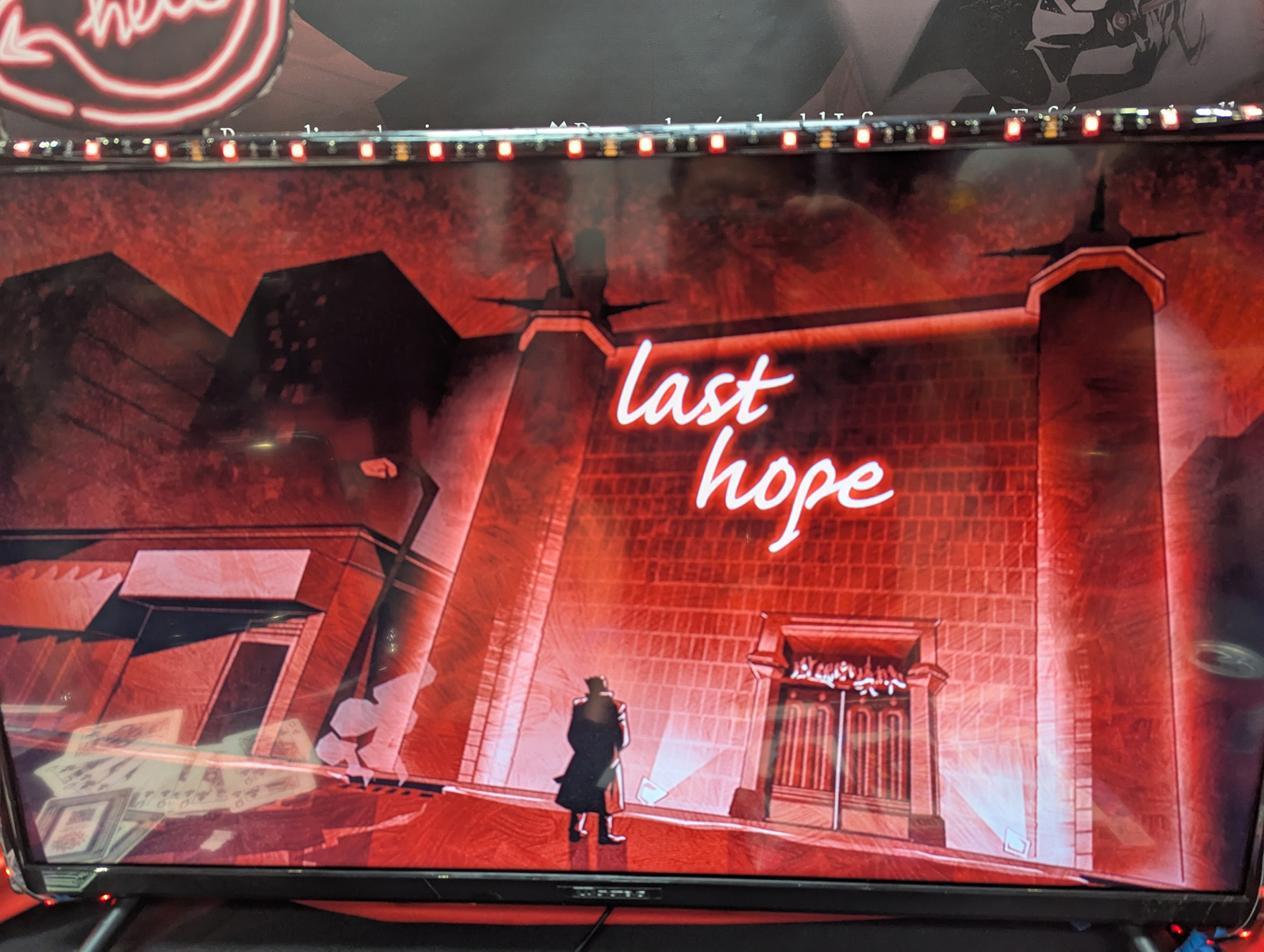
The answers provided by Ramos and his development team are as mechanically rigorous as they are artistically arresting, positioning Hell Hold’em as a landmark release for the roguelike genre in 2026. This comprehensive investigative report explores the genesis, mechanics, narrative philosophy, and future outlook of a title that is rapidly rewriting the rulebook for strategic indie gaming.
Detailed Chronology: From Tabletop Roots to Digital Purgatory
To truly understand the intricate architecture of Hell Hold’em, one must trace its lineage back through the fifteen-year history of Nosolorol, a publisher renowned for its atmospheric, narrative-first tabletop roleplaying games. Pedro J. Ramos, operating within the shadowy, high-tension domains of tabletop design, spent over a decade perfecting the art of psychological pressure—crafting mechanics where the physical and mental health of a character are continuously traded for fleeting power.
When Ramos and his team conceptualized the transition from physical rulebooks to digital interaction, the primary challenge was translating the improvisational dread of a tabletop campaign into the rigid, predictable logic of software code.
The initial conception of Hell Hold’em began years prior to its 2026 exhibition, gestating under the working title The Twisted House. In its earliest iterations, the project was envisioned as a relatively straightforward poker roguelike—a genre popularized by breakout hits in the mid-2020s. However, Ramos recognized that the standard poker formula, while mechanically addictive, often lacked long-term narrative resonance. Players would build massive multipliers, clear screens of enemies, and reset without ever feeling the true, lingering consequences of their virtual vices.
To combat this ludic fatigue, the design philosophy underwent a radical shift. The developers asked: What if the cards themselves were sentient, manipulative entities?
This conceptual pivot transformed Hell Hold’em from a numbers game into an interactive psychological thriller. By integrating tabletop mechanics—such as sanity degradation gauges, curses that permanently alter a deck’s composition, and NPCs who actively bargain with the player’s real-time emotional state—the project evolved into a sophisticated hybrid genre.
The journey to the SAGA Barcelona Game Fest 2026 was marked by closed-door alpha tests, iterative balance patches overseen by veteran strategy players, and a rigorous re-evaluation of how user interface design can induce genuine claustrophobia. By the time the game hit the convention floor, it had transformed into a fully realized digital descent, drawing massive queues and immediate critical praise from industry journalists.
Supporting Context & Metrics: Anatomy of a Digital Nightmare
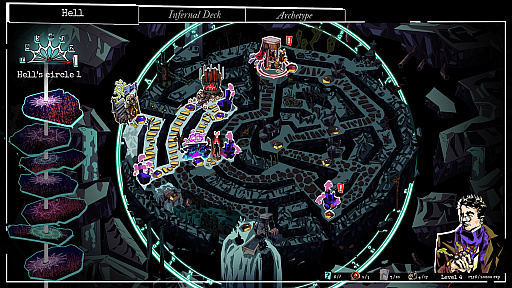
At first glance, Hell Hold’em utilizes familiar visual and mechanical framing devices common to the deck-building roguelike sub-genre. Players are presented with a hand of cards, a target score to beat, and a finite number of rounds or discards to achieve victory. However, the game subverts these familiar touchstones by introducing a ruthless economy of psychological attrition.
The Mechanics of Madness
Unlike traditional titles where resources are finite commodities like gold or health potions, Hell Hold’em tracks Sanity as its primary currency and ticking clock. Every action—whether it is folding a poor hand, pushing an aggressive bluff, or invoking a dark pact with a demonic entity—drains the player’s mental stability. As sanity metrics plummet, the game’s user interface begins to fracture. Visual hallucinations distort the card values; audio cues whisper false tactical advice; and the boundaries between the player’s real-world focus and the character’s in-game panic dissolve entirely.
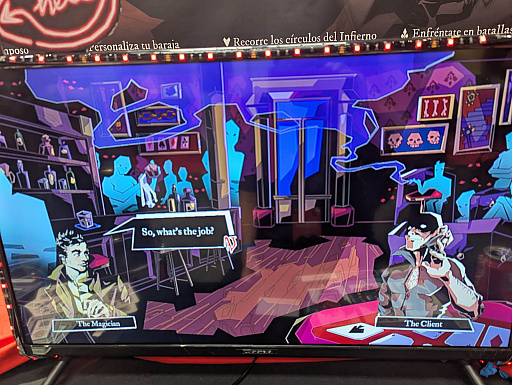
[Sanity Gauge: 100%] ---> Stable Interface, Clear Card Values, Objective UI
[Sanity Gauge:  50%] ---> Minor Visual Artifacts, Whispering Audio Cues, Paranoia Mechanics
[Sanity Gauge:  15%] ---> Severe Hallucinations, Fake Card Suit Swaps, UI Deception
[Sanity Gauge:   0%] ---> Total Ego Death, Permanent Run Termination, Permanent Memory Curses
The Three Archetypes and Strategic Depth
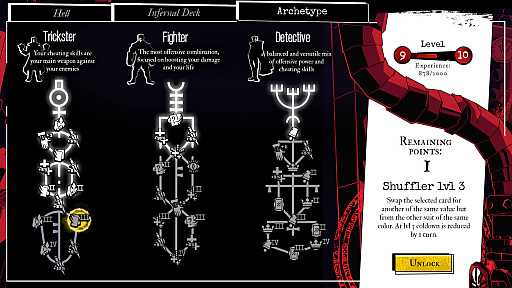
Players must choose their runs from three distinct character archetypes, each fundamentally altering how the core deck functions:
- The Trickstar: Focused on manipulation, deception, and high-risk, high-reward point generation. Trickstars excel at altering card suits mid-hand and tricking the house into accepting illegal combinations through sheer charisma and sleight-of-hand.
- The Fighter: A blunt-force instrument designed to smash through numerical hurdles using raw statistical power. Fighters rely heavily on heavy-hitting card synergies, turning standard poker hands into devastating physical blows that overwhelm opponents through sheer force.
- The Detective: An analytical powerhouse centered around hand-reading, probability calculation, and uncovering hidden information within the dealer’s deck. Detectives mitigate RNG through meticulous planning, slowly starving the house of options over extended, methodical matches.
Each archetype demands a completely different approach to deck manipulation. While a Trickstar might deliberately court chaos by packing their deck with volatile, cursed cards that offer massive point multipliers at the cost of sanity, a Detective will systematically thin their deck down to a microscopic core of high-probability certainties, starving the house of statistical advantages.
Official Statements & Developer Insights
In exclusive interviews conducted during the SAGA Barcelona Game Fest 2026, lead designer Pedro J. Ramos elaborated on the philosophical underpinnings that drove the development of Hell Hold’em.
"We didn’t want to make a game where you simply beat the dealer and feel clever," Ramos explained to the press. "We wanted the act of gambling against cosmic forces to feel inherently heavy, morally ambiguous, and ultimately exhausting. In real life, high-stakes gambling leaves a psychological mark. We wanted our digital cards to carry that exact same weight."
Ramos also highlighted the influence of classic tabletop roleplaying design on the digital medium. For fifteen years at Nosolorol, Ramos championed mechanics where player choice is inextricably linked to character degradation. By bringing this philosophy to Hell Hold’em, the development team successfully bridged a long-standing gap in indie gaming: the division between mechanical abstraction and emotional storytelling.
Further statements from the engineering team shed light on the game’s proprietary AI dealer system—an adaptive algorithm designed to study the player’s psychological tendencies over multiple runs. If the algorithm detects that a player consistently folds under pressure, the virtual dealer will begin applying aggressive bluffing tactics, forcing the player out of their comfort zone. Conversely, if a player exhibits reckless, high-rolling behavior, the game introduces subtle, punishing curses that penalize overconfidence.
Future Outlook & Industry Impact
As Hell Hold’em continues its triumphant run on digital storefronts following its convention debut, the gaming industry is taking careful note of its success. The title serves as a masterclass in how established tabletop designers can successfully pivot into digital spaces without sacrificing the narrative depth, thematic darkness, and structural complexity that define great roleplaying experiences.
Looking ahead, the development roadmap for Hell Hold’em includes planned content expansions, additional character archetypes inspired by classic Nosolorol campaigns, and cross-platform optimization. Furthermore, the critical acclaim secured in Barcelona has positioned Pedro J. Ramos and his team as pioneers of a burgeoning sub-genre: narrative-driven, psychological roguelike strategies.
For players brave enough to step up to the table, Hell Hold’em offers an unforgettable test of wits, nerve, and mental endurance. It is a stark reminder that in the darkest corners of indie gaming, the most terrifying monster you can face isn’t a physical beast—it is the sinking realization that the house is always winning, and your own mind is helping it deal the cards.









Belum ada komentar. Jadilah yang pertama berkomentar!