

Executive Overview
In the sprawling pantheon of strategic video gaming, few titles achieve the mythical, enduring status held by Creative Assembly’s Total War: SHOGUN 2. Originally released in March 2011 to widespread critical acclaim, the title defined a golden era for the grand strategy and real-time tactics (RTT) genre. More than a decade and a half later, in October 2026, Creative Assembly—in collaboration with veteran technical partners—surprised the gaming community by launching a comprehensive, modern update accompanied by an updated suite of downloadable content (DLC) and a platform-wide optimization patch.
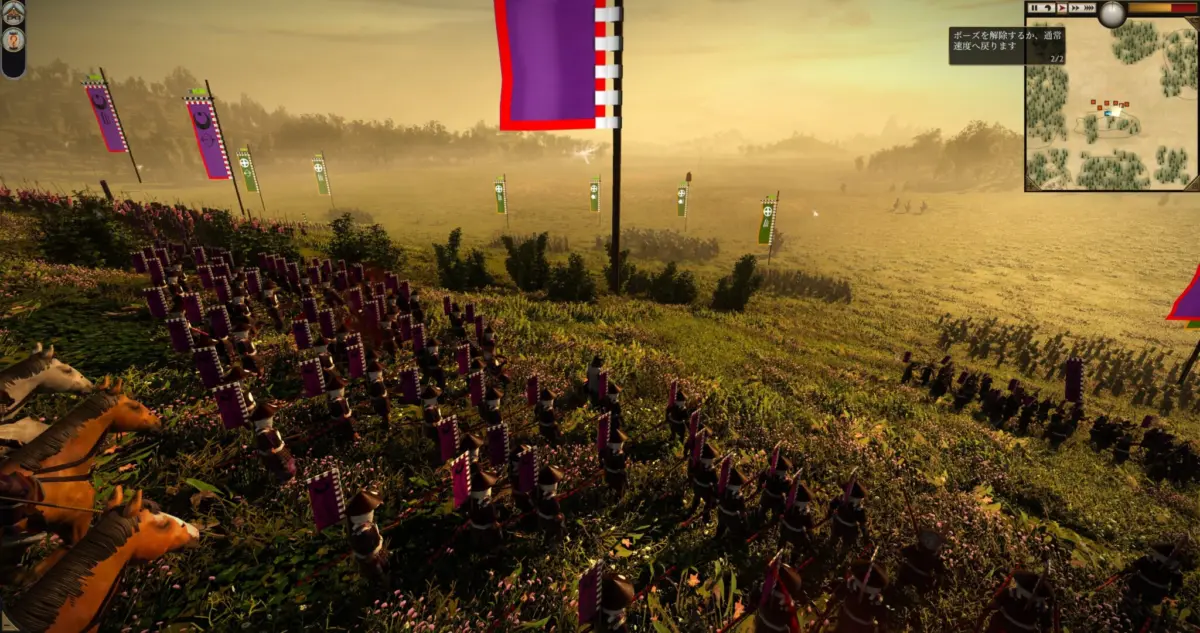
This unexpected revival is not merely a nostalgia-driven patch or a standard resolution bump. Rather, it represents a deep, structural engineering overhaul designed to bring a 2011 masterpiece up to the hardware and software standards of 2026. By introducing modern upscaling support, refined user-interface (UI) elements, extensive bug fixes, and expanded multi-threaded CPU handling, Creative Assembly has transformed SHOGUN 2 from a beloved legacy product into a modern technical showcase.
![「トータルウォー:ショーグン2 コンプリートエディション」はシリーズの入り口にうってつけの1本だ[プレイレポ]](https://www.4gamer.net/games/043/G104352/20261011001/SS/001.jpg)
For veterans of the Total War franchise and newcomers alike, this update serves as a masterclass in how to preserve PC gaming heritage. This report provides an exhaustive, investigative breakdown of the technical milestones, the community impact, the structural shifts in the game’s engine, and the broader implications for the strategy game genre as a whole.
Detailed Chronology: From 2011 Masterpiece to 2026 Modernization
To fully appreciate the scope of the 2026 update, one must examine the historical trajectory of Total War: SHOGUN 2 within Creative Assembly’s broader portfolio.
![「トータルウォー:ショーグン2 コンプリートエディション」はシリーズの入り口にうってつけの1本だ[プレイレポ]](https://www.4gamer.net/games/043/G104352/20261011001/TN/020.jpg)
The 2011 Launch and Foundational Era
When Shogun: Total War debuted in 2000, it established the foundational pillars of the franchise: a turn-based strategic campaign map paired with real-time tactical battles. Over the subsequent decade, Creative Assembly iterated on this formula across seven major releases, moving through historical eras ranging from medieval Europe to the Napoleonic Wars (Empire: Total War, Napoleon: Total War).
However, by the late 2000s, the community yearned for a return to the franchise’s roots in feudal Japan—a setting optimized for intense, symmetrical warfare where unit counters and tactical positioning mattered immensely. SHOGUN 2 answered this call with unprecedented artistic focus. Eschewing the sprawling, multi-continental scale of Empire, Creative Assembly concentrated its design philosophy on a single theater of war: the Japanese archipelago. This deliberate limitation allowed the developers to polish every mechanical system, resulting in what many consider the most tightly balanced game in franchise history.
![「トータルウォー:ショーグン2 コンプリートエディション」はシリーズの入り口にうってつけの1本だ[プレイレポ]](https://www.4gamer.net/games/043/G104352/20261011001/TN/011.jpg)
The DLC Expansion Era (2011–2012)
Following its initial release, SHOGUN 2 received substantial post-launch support, most notably through two era-defining expansions:
- Rise of the Samurai: Set during the Genpei War (12th century), this campaign introduced asymmetrical faction mechanics and distinct unit compositions, pushing players back into an era of aristocratic clan warfare.
- Fall of the Samurai (AOTS): Set during the Boshin War (19th century), Fall of the Samurai introduced the clash between traditional samurai armor and modern industrial warfare—gatling guns, ironclad warships, and railways. This expansion pushed the limits of the Warscape engine, bridging historical eras in a way that fundamentally altered tactical pacing.
For over a decade, these expansions remained active benchmarks within the community. Yet, as operating systems evolved, graphics application programming interfaces (APIs) shifted, and hardware architectures moved toward multi-core dominance, the 2011 executable began to show its age. Modern operating systems struggled with memory leaks, high-refresh-rate monitors introduced erratic physics bugs tied to un-capped frame rates, and the lack of modern widescreen support alienated users running ultra-wide or multi-monitor setups.
![「トータルウォー:ショーグン2 コンプリートエディション」はシリーズの入り口にうってつけの1本だ[プレイレポ]](https://www.4gamer.net/games/043/G104352/20261011001/TN/006.jpg)
The October 2026 Resurgence
In October 2026, Creative Assembly deployed a massive, unannounced patch alongside new distribution initiatives across digital storefronts. This update directly targeted the technical debt accrued over fifteen years. Rather than leaving the title to languish in compatibility limbo, the developers delivered a robust modernization package that touches every layer of the game, from low-level graphics pipeline management to high-level UI scaling.
Supporting Context & Metrics: Under the Hood of the 2026 Update
The 2026 patch introduces four primary pillars of technical advancement. Each of these upgrades directly addresses historical bottlenecks that plagued the original 2011 release.
![「トータルウォー:ショーグン2 コンプリートエディション」はシリーズの入り口にうってつけの1本だ[プレイレポ]](https://www.4gamer.net/games/043/G104352/20261011001/TN/005.jpg)
1. Modern API Support and 64-Bit Transition
The most significant architectural change is the complete migration to a native 64-bit application environment. While the original release operated within the limitations of 32-bit architecture—restricting RAM utilization and leading to frequent out-of-memory crashes during massive siege battles—the 2026 version unchains the engine.
Modern PCs boast abundant RAM and powerful multi-core processors. The 64-bit transition allows SHOGUN 2 to dynamically allocate memory, eliminating the artificial ceilings that previously restricted modders and large-scale custom battles. Players can now execute multi-stack army clashes with thousands of individual units without encountering the dreaded application crash.
![「トータルウォー:ショーグン2 コンプリートエディション」はシリーズの入り口にうってつけの1本だ[プレイレポ]](https://www.4gamer.net/games/043/G104352/20261011001/TN/013.jpg)
2. Advanced Upscaling Technologies
To ensure peak visual fidelity on modern high-resolution displays (1440p, 4K, and beyond), Creative Assembly integrated industry-standard upscaling frameworks:
- NVIDIA DLSS (Deep Learning Super Sampling)
- AMD FSR 3.1 (FidelityFX Super Resolution)
- Intel XeSS (Xe Super Sampling)
These integrations allow players with varying GPU specifications to leverage temporal reconstruction techniques. The result is crystal-clear UI rendering and sharp edge-definition on armor textures and foliage, even when running the game at maximum graphical settings on high-refresh-rate panels.
![「トータルウォー:ショーグン2 コンプリートエディション」はシリーズの入り口にうってつけの1本だ[プレイレポ]](https://www.4gamer.net/games/043/G104352/20261011001/TN/014.jpg)
3. UI Scaling and Widescreen Refinements
In 2011, standard resolutions hovered around 1080p, and ultra-wide monitors were a rarity. Running SHOGUN 2 on modern 21:9 or 32:9 displays previously resulted in stretched HUD elements, distorted aspect ratios, and misplaced interface overlays.
The 2026 update introduces comprehensive UI scaling and native ultra-wide support. Tactical maps, unit cards, and faction management screens now anchor correctly to the edges of the display, ensuring that information density remains legible regardless of monitor geometry. Furthermore, camera distance limits have been unlocked, allowing virtual generals to pull back further for a grand strategic overview or zoom in intimately for cinematic duels.
![「トータルウォー:ショーグン2 コンプリートエディション」はシリーズの入り口にうってつけの1本だ[プレイレポ]](https://www.4gamer.net/games/043/G104352/20261011001/TN/010.jpg)
4. Quality of Life and Stability Improvements
Beyond rendering pipelines, the patch addresses hundreds of legacy bugs. Pathfinding algorithms on siege maps—historically a point of frustration where units would occasionally clump together or fail to scale walls—have been overhauled. Turn-times on the campaign map have been drastically reduced due to optimized multi-threaded CPU task distribution.
Official Statements and Developer Insights
In accompanying press releases and developer walkthroughs, representatives from Creative Assembly shed light on the philosophy behind the 2026 update. Studio leads emphasized that while newer entries in the Total War franchise have explored vast historical scopes—such as Total War: WARHAMMER and Total War: PHARAOH—the design purity of SHOGUN 2 has remained a touchstone for the development team.
![「トータルウォー:ショーグン2 コンプリートエディション」はシリーズの入り口にうってつけの1本だ[プレイレポ]](https://www.4gamer.net/games/043/G104352/20261011001/TN/007.jpg)
"SHOGUN 2 occupies a sacred space in our studio’s history," noted a senior technical director during the release window. "When we looked at the community engagement—the active modding scene, the competitive multiplayer tournaments, and the enduring passion of our players—we realized that leaving this engine in the past was a missed opportunity. This update is a love letter to the fans who have kept feudal Japan alive for a decade and a half."
The development team also highlighted the collaborative effort required to bridge the gap between 2011-era codebase frameworks and modern graphics APIs. By integrating modern upscaling algorithms without altering the core gameplay loop, Creative Assembly successfully threaded the needle between nostalgic preservation and modern technical excellence.
![「トータルウォー:ショーグン2 コンプリートエディション」はシリーズの入り口にうってつけの1本だ[プレイレポ]](https://www.4gamer.net/games/043/G104352/20261011001/TN/001.jpg)
Future Outlook: The Legacy of SHOGUN 2 in the Modern Era
The release of the 2026 update for Total War: SHOGUN 2 carries profound implications for the strategy genre and game preservation as a whole.
Setting a Precedent for Game Preservation
In an industry increasingly focused on live-service models and annual releases, the decision to retroactively patch a single-player-focused title from 2011 is remarkably rare. Most publishers allow legacy titles to degrade as operating systems update and hardware standards shift, forcing players to rely on unofficial, community-made patches.
![「トータルウォー:ショーグン2 コンプリートエディション」はシリーズの入り口にうってつけの1本だ[プレイレポ]](https://www.4gamer.net/games/043/G104352/20261011001/TN/003.jpg)
By taking official ownership of SHOGUN 2‘s longevity, Creative Assembly sets an industry standard. It demonstrates that older titles can remain commercially viable and culturally relevant if developers are willing to invest in fundamental engine maintenance.
Impact on the Modding Community
The transition to 64-bit architecture and the integration of modern hardware hooks represent a monumental win for the game’s active modding community. Historically, total-conversion mods and massive graphical overhauls were constrained by memory limits and DirectX 9/11 bottlenecks. With these restrictions lifted, modders can push the Warscape engine into uncharted territory. We can expect a renaissance of community-driven content, ranging from expanded campaign maps to hyper-detailed historical accuracy overhauls.
![「トータルウォー:ショーグン2 コンプリートエディション」はシリーズの入り口にうってつけの1本だ[プレイレポ]](https://www.4gamer.net/games/043/G104352/20261011001/TN/008.jpg)
Conclusion
Total War: SHOGUN 2 was a masterpiece upon arrival, and its 2026 resurgence ensures it will remain a cornerstone of strategy gaming for years to come. By thoughtfully pairing modern technological conveniences—such as DLSS, FSR, 64-bit memory handling, and ultra-wide support—with the pristine, uncompromised tactical depth of feudal Japan, Creative Assembly has achieved something extraordinary. The blade has been re-forged, the clan banners are raised, and the campaign for the unification of Japan awaits a new generation of Daimyo.








Belum ada komentar. Jadilah yang pertama berkomentar!