

Japan’s dynamic hospitality sector is undergoing a quiet, highly efficient revolution. As land prices fluctuate, tourism surges, and urban developers look for innovative ways to maximize space without compromising consumer comfort, a rising-star class of accommodations has captured the imagination of travelers: the container hotel.
Distinctly separate from the notorious capsule hotels—where guests rent compact sleeping pods embedded within a shared wall—container hotels offer genuine, self-contained private rooms. However, the foundational shell of each accommodation is constructed from a converted industrial shipping container. These modular units are swiftly deployed, structurally sound, and engineered to fit cleanly into spaces as modest as a standard commercial parking bay.
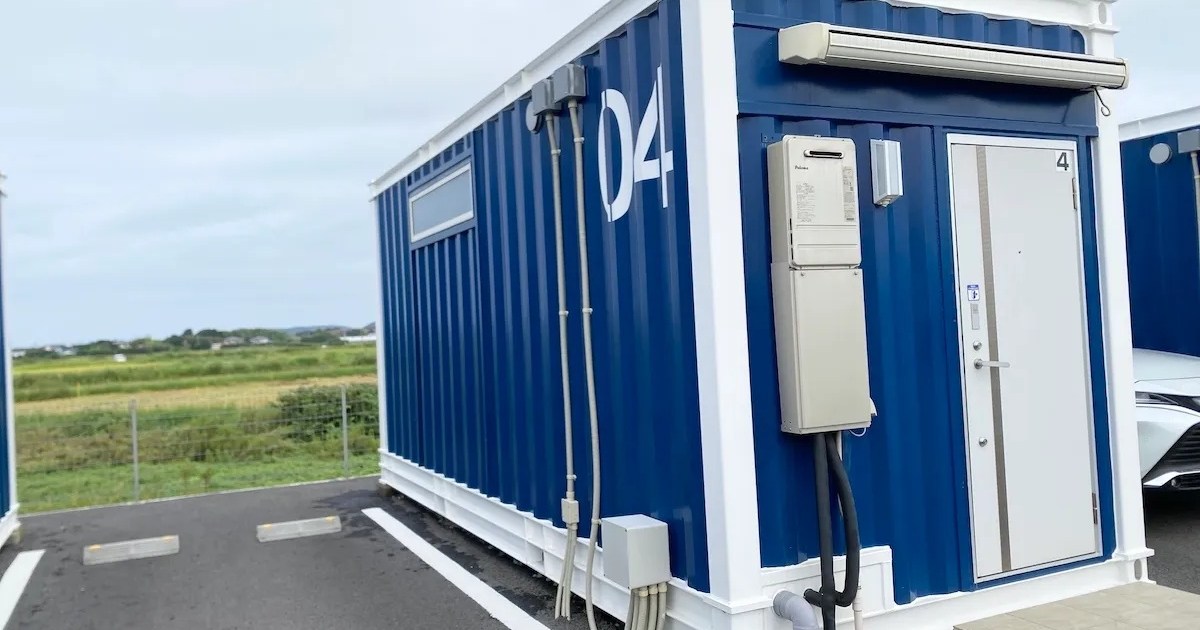
To determine whether these budget-friendly lodgings deliver a genuinely restorative experience or merely trade affordability for cramped, claustrophobic misery, our senior Japanese-language reporter, Takashi Harada, checked into Cradle Cabin Tateyama in Chiba Prefecture. Spending a full night inside one of these steel enclosures, Harada’s investigation sheds light on an accommodation trend that is rapidly expanding across the Japanese archipelago.
What Harada discovered inside Container #747446 challenged preconceived notions about modular living. Far from being a dim, industrial box, the interior revealed a meticulously designed, fully appointed hotel room. Featuring a private en-suite bathroom, high-end amenities, superior sound insulation, and a surprisingly competitive nightly rate of 8,080 yen (approximately $51 USD), container hotels like Cradle Cabin are proving that modular architecture can rival traditional budget "business hotels" while offering unique architectural advantages.
Detailed Chronology: An Inside Look at Cradle Cabin Tateyama
Arrival and First Impressions
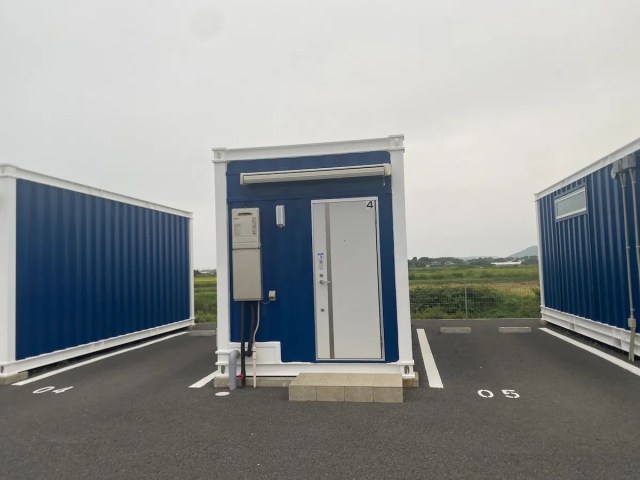
The journey to understanding Japan’s container hotel phenomenon begins on the asphalt. Arriving at Cradle Cabin Tateyama in Chiba Prefecture, the visual layout of the property is striking. The hotel is composed of a series of industrial shipping containers lined up in what looks precisely like a re-purposed parking lot. Each container is engineered to be narrow enough to occupy a single shipping-truck-width parking space.
From the exterior, the dimensions appear deceptively restrictive. Standing outside the steel door, Harada admitted to feeling an initial wave of skepticism. Upon unlocking the unit and stepping across the threshold, his first visual sweep through the narrow entryway triggered an inward groan. The layout initially suggested a tight, uncompromising corridor.
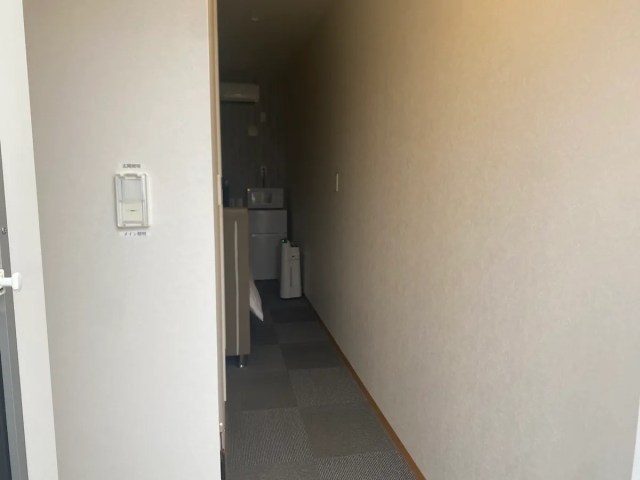
However, this initial claustrophobic impression vanished almost immediately upon advancing past the entryway.
Interior Layout and Amenities
Once inside the primary living quarters, the design brilliance of modern modular architecture became apparent. While the dimensions remain undeniably cozy, the usable space matches the standardized square footage found in Japan’s ubiquitous budget-tier business hotels.
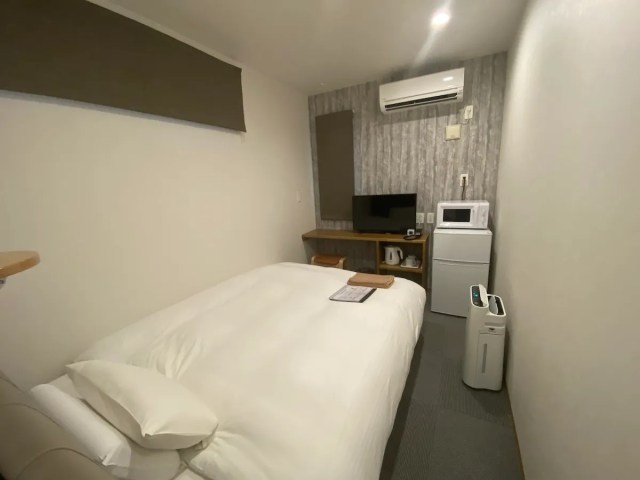
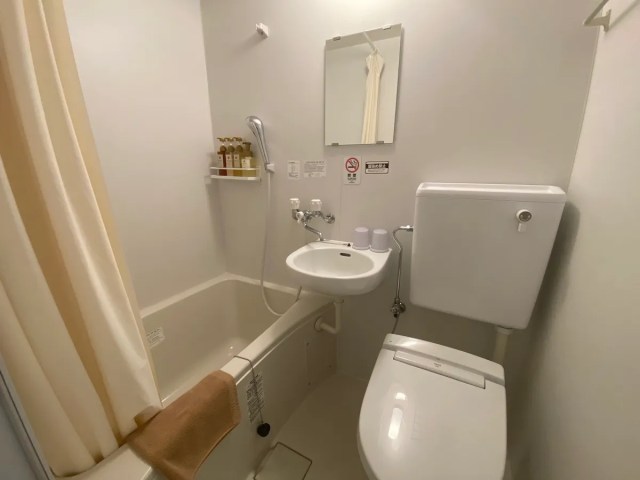
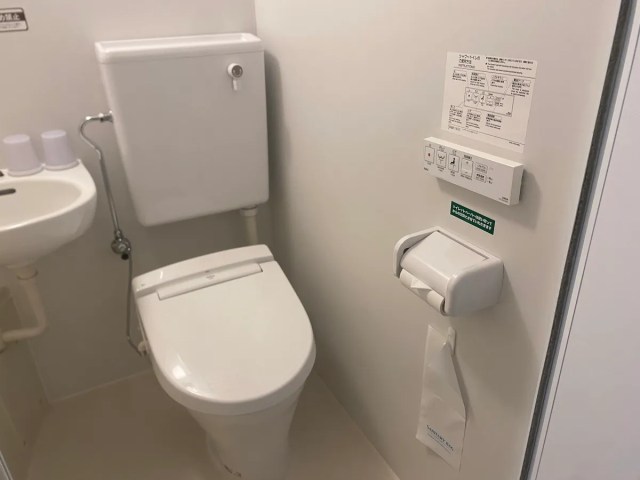
The clever spatial organization places the compact, fully self-contained bathroom and shower unit immediately near the entrance—an engineering choice that explains why the doorway corridor feels compressed. Bracing himself for communal showers or shared restrooms typical of budget youth hostels, Harada was pleasantly surprised to find a complete, private en-suite bathroom equipped with a modern washlet (bidet-style toilet).
Moving deeper into the cabin, every square inch of the living space is utilized with Japanese precision:
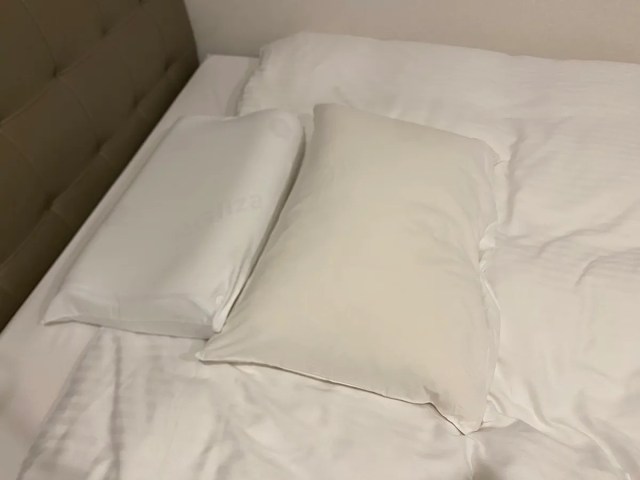
- The Bedding: The mattress balances softness with firm ergonomic support. Going a step beyond standard budget properties, the housekeeping staff provided two pillows of differing firmness, allowing guests to customize their sleep ergonomics.
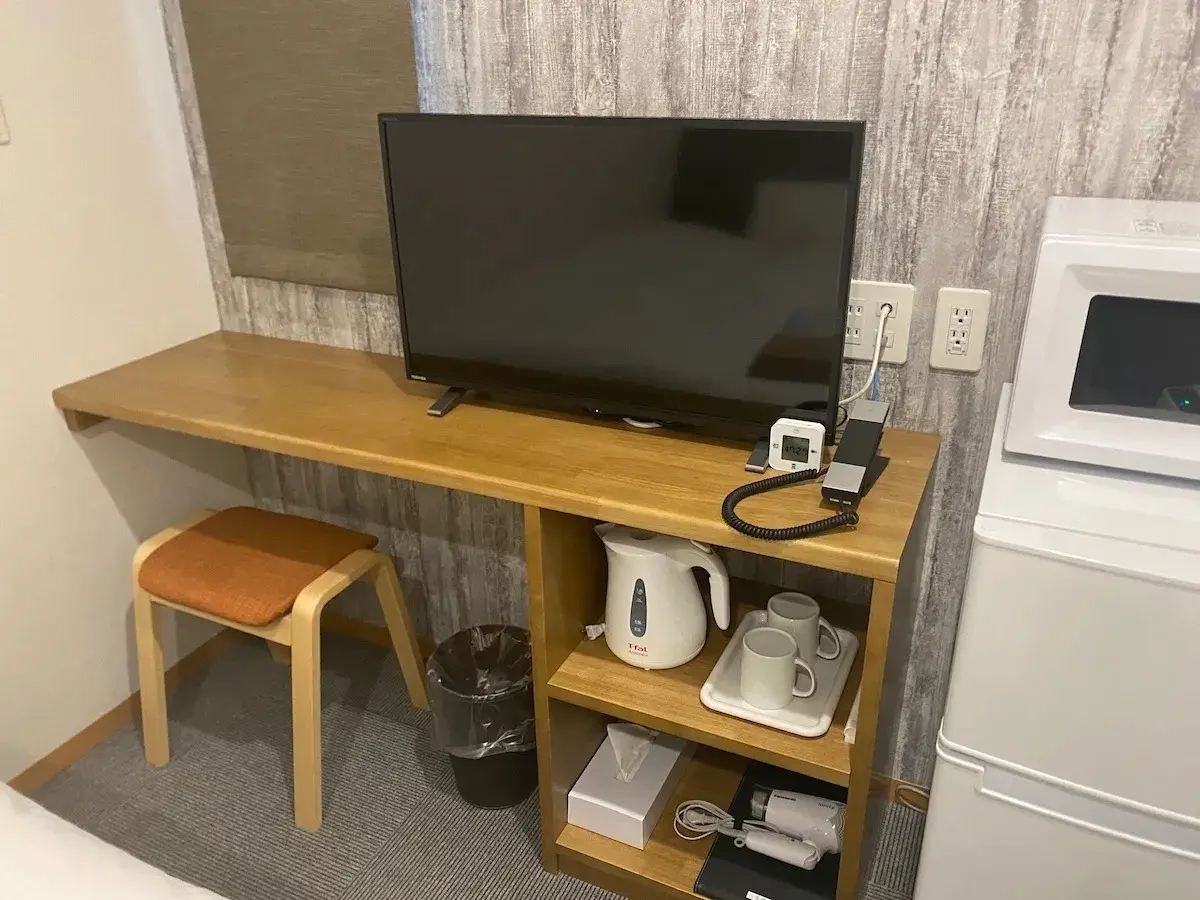
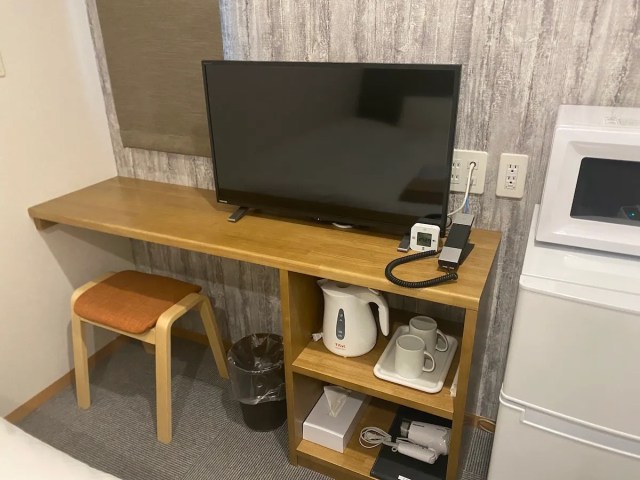
- The Workstation and Electronics: A neat desk setup hosts a smart television, telephone, digital clock, hot-water electric kettle, coffee mugs, a hair dryer, and a tissue box.
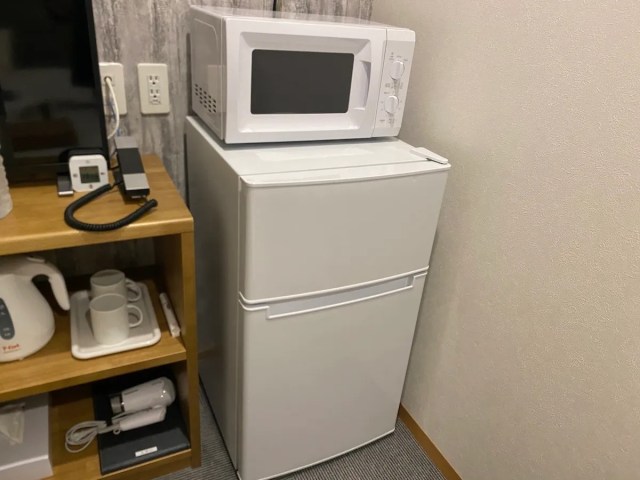
- Appliances: Unlike standard Japanese business hotels—which rarely feature heavy kitchen appliances due to space and fire regulations—Cradle Cabin includes a full-sized microwave and a generously proportioned refrigerator complete with a functional freezer compartment.
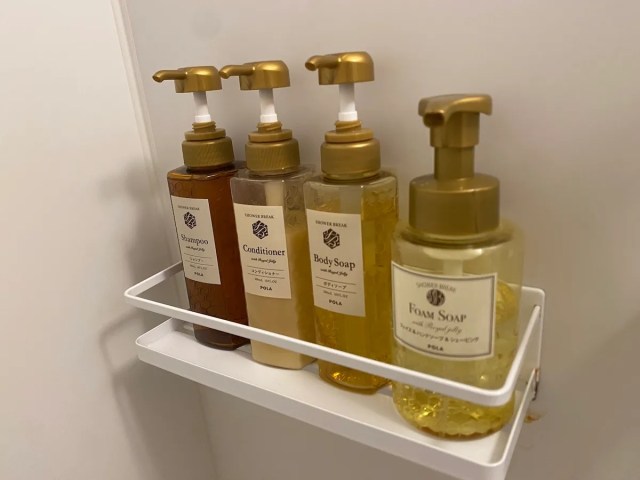
- Toiletries: High-end hospitality products from Pola, a well-respected Japanese cosmetics and skincare brand, stock the shower stall. Additional amenities—including plush towels, slippers, cotton pads, razors, hairbrushes, and complimentary green tea and coffee packets—are conveniently available at the central check-in desk.
The Overnight Experience
The ultimate test of any hotel room is the quality of sleep it affords, particularly when enveloped in four corrugated steel walls.
For Harada, the night yielded unexpected tranquility. While the initial absence of windows felt slightly surreal upon first turning off the lights, the psychological sensation of enclosure quickly faded. Once settled under the covers to watch television, the four solid walls transformed into a cocoon of privacy.
Crucially, because each container is structurally isolated from its neighbors—meaning no shared walls touch adjacent rooms—ambient noise transmission was virtually non-existent. Furthermore, total light blocking prevented any intrusive early-morning street illumination from prematurely waking the guest. The result was a deep, uninterrupted sleep.
The next morning, however, brought a stark reminder of the container’s physical boundaries. Stepping back out into the open air highlighted the complete lack of exterior views. For travelers accustomed to lingering in their rooms during lazy afternoons, the windowless, bunker-like environment could eventually feel slightly oppressive. Yet, as a dedicated sanctuary for resting, sleeping, and recharging overnight, the container hotel exceeded expectations.
Supporting Context & Metrics: The Economics of Modular Tourism
To fully appreciate the significance of Cradle Cabin Tateyama, one must examine the broader economic and structural forces shaping Japan’s hospitality industry.
Pricing and Value Proposition
At a nightly rate of 8,080 yen ($51 USD), Cradle Cabin positions itself firmly in the budget travel sector. However, a comparative analysis of amenities reveals that it punches well above its weight class:
| Feature / Amenity | Traditional Capsule Hotel | Standard Japanese Business Hotel | Cradle Cabin Container Hotel |
|---|---|---|---|
| Private Room | No (Shared Pod) | Yes | Yes |
| Private En-Suite Bathroom | No (Shared Facilities) | Yes | Yes |
| Microwave in Room | Rare / Communal | Extremely Rare | Included |
| Full-Sized Fridge/Freezer | No | Mini-Fridge Only | Full Fridge & Freezer |
| Acoustic Isolation | Poor (Thin Partitions) | Moderate | Superior (Detached Walls) |
| Average Nightly Cost | 3,500 – 6,000 Yen | 7,000 – 12,000 Yen | ~8,080 Yen |
The inclusion of high-end Pola toiletries, customizable pillow options, and heavy-duty kitchen appliances elevates the value far beyond what a conventional 8,000-yen business hotel typically provides.
Architectural and Structural Advantages
Container architecture—often referred to in the construction sector as "modular volumetric building"—offers developers massive logistical advantages over traditional stick-built or concrete hotels:
- Speed of Construction: Containers are prefabricated off-site, drastically reducing on-site construction timelines and labor costs.
- Mobility and Scalability: If tourism demand shifts or land leases expire, the entire hotel can theoretically be disassembled, loaded onto transport trucks, and reassembled in a new municipality with minimal environmental waste.
- Seismic Resilience: Shipping containers are built from heavy gauge weathering steel (Corten steel) designed to withstand the violent kinematic stresses of ocean transport, making them exceptionally rigid and earthquake-resistant structures—a vital engineering metric in seismically active Japan.
Future Outlook: The Expansion of Container Lodging in Japan
The success of pilot projects like Cradle Cabin Tateyama signals that container hotels are transitioning from a quirky architectural experiment into a mainstream, highly viable sector of Japanese tourism infrastructure.
Industry analysts point out that these modular hotels solve two persistent issues plaguing regional Japanese tourism: the high cost of permanent real estate development in rural or semi-rural tourist destinations, and the demand for clean, private, affordable lodging among domestic road-trippers, cyclists, and budget-conscious international backpackers.
Capitalizing on this positive market reception, the operators behind Cradle Cabin are already executing regional expansion strategies. Plans are currently underway to open a brand-new container hotel location in Nishitokyo, bringing the concept directly to the western suburbs of metropolitan Tokyo. This urban-adjacent expansion will test whether business travelers and urban explorers embrace the steel-box aesthetic within striking distance of a major global metropolis.
For Takashi Harada and skeptics alike, the experiment yielded a definitive verdict. Far from being a claustrophobic gimmick, the modern Japanese container hotel represents a triumph of spatial optimization, offering a clean, quiet, and remarkably comfortable night’s sleep at a price point that respects the modern traveler’s wallet.





Belum ada komentar. Jadilah yang pertama berkomentar!