

Published: October 14, 2026
Location: Mount Gozaisho, Mie Prefecture, Japan
Executive Overview
Rising 1,212 meters above sea level, Mount Gozaisho in Mie Prefecture offers travelers a seamless fusion of breathtaking natural beauty and rich, localized culinary traditions. At the heart of this elevated experience is the Gozaisho Ropeway, one of Japan’s largest and most technologically impressive aerial transit systems. Transporting visitors from the bustling valley floor up into the crisp, panoramic alpine air, the ropeway serves as a gateway to both stunning geological wonders and a vibrant regional food culture.
![[Gozaisho Ropeway] Gourmet Guide](https://resources.matcha-jp.com/resize/720x2000/2025/12/03-251960.webp)
For decades, Mount Gozaisho has drawn nature enthusiasts, hikers, and casual tourists alike. However, in recent years, the destination has undergone a quiet culinary revolution. Led by the mountaintop Observation Restaurant "Nature" and the versatile Alpen Hall, the destination has redefined what it means to dine at high altitudes in Japan. Far from offering standard, mass-produced tourist fare, these dining venues celebrate the terroir of Mie Prefecture and Komono Town.
This comprehensive report explores the unique gastronomic offerings available along the Gozaisho Ropeway, detailing signature dishes like the famous Gozaisho Curry Udon, festival-inspired seasonal creations, and the Instagram-favorite White Tower Soft Serve Ice Cream. By examining the intersection of engineering, regional agriculture, and culinary artistry, we uncover why a trip to Mount Gozaisho is as much a feast for the palate as it is for the eyes.
![[Gozaisho Ropeway] Gourmet Guide](https://resources.matcha-jp.com/resize/720x2000/2025/12/03-251961.webp)
Detailed Chronology: The Evolution of Gozaisho’s Mountaintop Dining
To understand the current culinary landscape of Mount Gozaisho, one must trace the development of its infrastructure and hospitality services over the years. The mountain has long been celebrated for its dramatic seasonal shifts—from lush greenery and vibrant azaleas in spring and summer to brilliant crimson foliage in autumn and the ethereal "juhyo" (frost-covered trees) in winter. Yet, for much of its early history, visitor amenities at the summit were functional rather than destination-worthy.
Phase 1: Infrastructure and the Rise of Basic Mountain Huts
When the Gozaisho Ropeway was first established, its primary objective was to safely transport passengers across the steep, rugged terrain of the Suzuka Quasi-National Park, granting access to the majestic peaks overlooking Ise Bay. Early visitors relied on simple mountain lodges and modest snack stands for warmth and sustenance. While the views were consistently world-class, the food was secondary—largely consisting of portable provisions or simple hot noodles to combat the chill of the high-altitude winds.
![[Gozaisho Ropeway] Gourmet Guide](https://resources.matcha-jp.com/resize/720x2000/2025/12/03-251962.webp)
Phase 2: The Modernization of Alpine Hospitality
As tourism preferences shifted toward experiential travel, local authorities and hospitality planners recognized the potential to elevate the visitor experience. The realization that travelers were seeking immersive cultural connections through food catalyzed a major overhaul of summit dining facilities.
The establishment and subsequent refinement of Observation Restaurant "Nature" marked a turning point. Positioned strategically to boast the highest elevation of any restaurant in Mie Prefecture, the facility was designed to maximize panoramic views while serving as a showcase for hyper-local ingredients. Rather than importing generic menu items, the culinary team collaborated with farmers, producers, and culinary artisans from Komono Town and surrounding municipalities to curate a menu rooted in local heritage.
![[Gozaisho Ropeway] Gourmet Guide](https://resources.matcha-jp.com/resize/720x2000/2025/12/03-251963.webp)
Phase 3: Culinary Innovation and Regional Storytelling
In recent years, the menus at Observation Restaurant "Nature" and Alpen Hall have evolved to tell specific stories of regional folklore and festival culture. Dishes are no longer just meals; they are edible celebrations of Mie Prefecture’s identity. The introduction of specialty items like the Gozaisho Curry Udon—which bridges the gap between traditional Ise Udon and modern comfort food—alongside festival-inspired dishes linked to the Yunoyama Onsen Sohei Festival, demonstrates a deliberate strategy to anchor tourism in authentic cultural expression. Today, the ropeway and its summit dining rooms operate as a unified ecosystem where engineering marvels meet gastronomic excellence.
Supporting Context & Metrics: The Engineering and Gastronomy of Gozaisho
To fully appreciate the journey to the summit, one must examine the staggering scale and precision behind the Gozaisho Ropeway, as well as the economic and agricultural framework supporting its culinary offerings.
![[Gozaisho Ropeway] Gourmet Guide](https://resources.matcha-jp.com/resize/720x2000/2025/12/03-251964.webp)
Architectural and Geographical Metrics
- Summit Altitude: 1,212 meters (3,976 feet) above sea level, providing the highest dining vantage point in all of Mie Prefecture.
- Visual Scope: On clear days, visitors looking out from the summit observation decks and restaurant windows can gaze across the expansive waters of Ise Bay, stretching all the way to the distant peaks of the Japanese Alps.
- Engineering Landmark: The ropeway system features iconic structural milestones, most notably Pillar No. 6—affectionately known as the "White Iron Tower." Standing as a symbolic architectural marvel along the route, this tower has inspired both regional branding and specialty menu items.
Agricultural and Culinary Metrics
- Local Sourcing Radius: The ingredients utilized in Observation Restaurant "Nature" are heavily weighted toward producers within Komono Town and Mie Prefecture. This includes locally harvested mountain vegetables, premium regional meats, and specialized miso pastes.
- Menu Diversity: The culinary ecosystem is divided into two primary tiers:
- Observation Restaurant "Nature": A sit-down, scenic dining experience offering sophisticated regional dishes, proprietary noodle variants, and artisanal desserts.
- Alpen Hall: A high-turnover, fast-casual facility catering to hikers and families with a broad selection of accessible favorites, including classic curry rice, hearty beef bowls, traditional Ise udon, takoyaki, and regional gohei mochi (sweet miso-glazed grilled rice cakes).
Culinary Highlights: Must-Try Dishes Along the Gozaisho Ropeway
A journey on the Gozaisho Ropeway is punctuated by a series of distinct gastronomic discoveries. Here is a detailed look at the flagship dishes that define the mountain’s culinary identity.
1. The Legendary Gozaisho Curry Udon
- Location: Observation Restaurant Nature
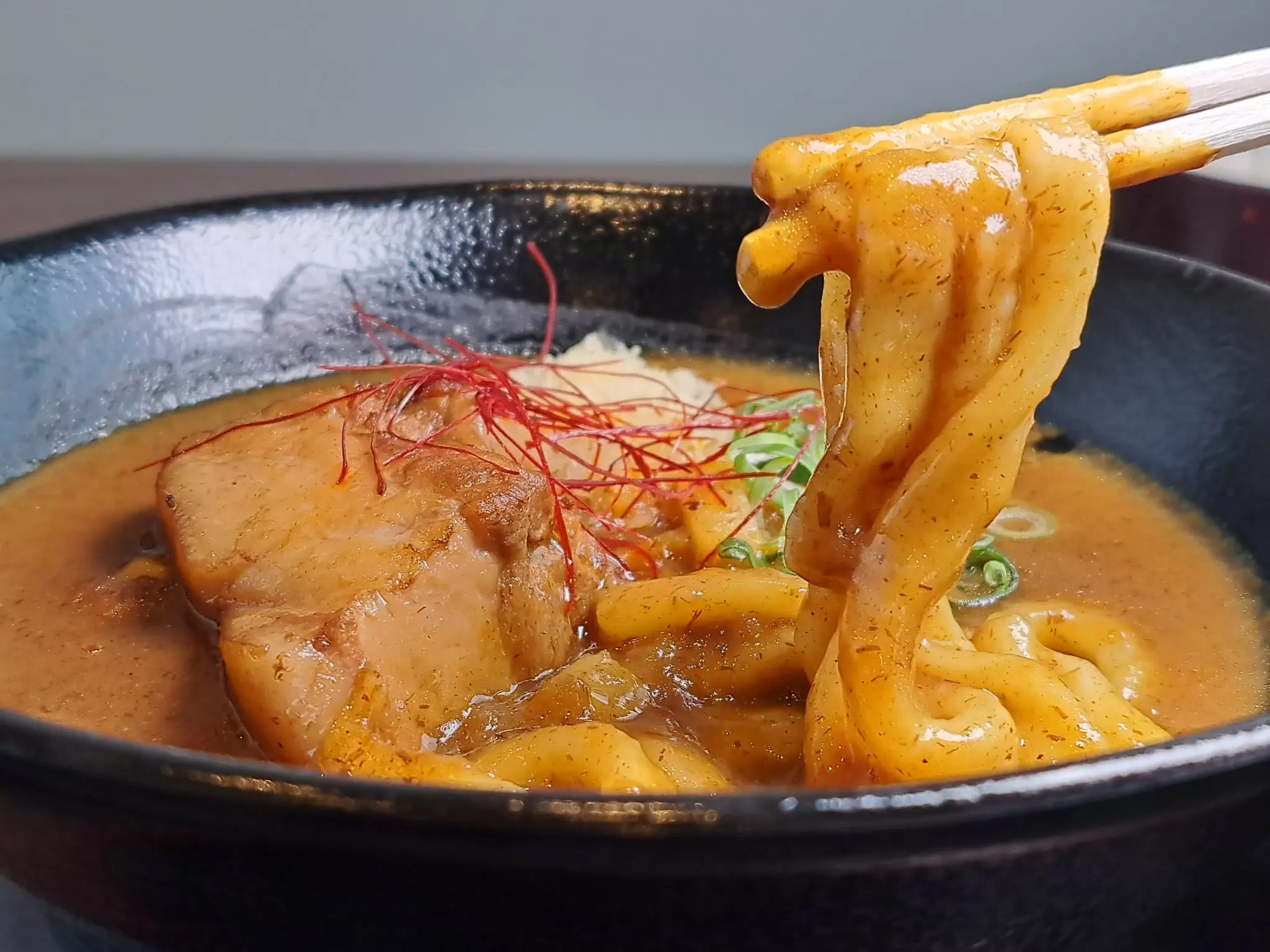
- The Concept: A masterclass in culinary fusion, this dish takes Mie Prefecture’s celebrated Ise Udon—traditionally characterized by thick, exceptionally soft-boiled noodles served in a rich, dark, tamari-based broth—and reimagines it for the mountain climate.
- Flavor Profile: The soft, comforting texture of the Ise Udon noodles absorbs a custom, aromatic curry broth developed exclusively by the restaurant’s chefs. To elevate the dish from a simple snack to a satisfying meal, it is crowned with generously proportioned, slowly braised homemade pork cubes that melt in the mouth. It is the ultimate comfort food for visitors stepping off the ropeway into the brisk alpine air.
2. Festival-Inspired Regional Specialties
- Location: Observation Restaurant Nature
- The Concept: Food as cultural preservation. This specialty dish draws direct inspiration from the "Flame Mikoshi" festival, the dramatic centerpiece of the annual Sohei Festival held every October in the nearby hot spring village of Yunoyama Onsen.
- Flavor Profile: The dish captures the robust, warming flavors of the region by combining tender pork and freshly grated mountain yam. These ingredients are meticulously mixed with Sohei Miso—the distinctive, deeply savory miso paste famously utilized in Yunoyama Onsen’s traditional Sohei Nabe hotpot. The result is a complex, earthy, and deeply nourishing flavor profile that connects the diner directly to local autumn traditions.
3. The Iconic "White Tower Soft Serve Ice Cream"
- Location: Observation Restaurant Nature
- The Concept: A playful, highly photogenic homage to the ropeway’s engineering.
- Flavor Profile: This creamy, rich soft-serve ice cream features custom-baked commemorative cookies shaped like "Blanc," the official mascot character modeled directly after Pillar No. 6 (the White Iron Tower). The contrast between the smooth, milky sweetness of the dairy and the crisp, buttery crunch of the cookie makes it an essential treat for visitors of all ages, regardless of the season.
4. Seasonal Soft Serve Variations
- Location: Observation Restaurant Nature / Alpen Hall Outlets
- The Concept: A commitment to agricultural seasonality.
- Flavor Profile: Complementing the signature White Tower ice cream, the ropeway operators introduce rotating soft-serve flavors throughout the year. Utilizing locally harvested fruits, green teas, and agricultural products unique to Mie Prefecture, these seasonal variations ensure that repeat visitors always encounter something new.
Official Statements and Documentation
The management and culinary teams behind the Gozaisho Ropeway maintain a rigorous commitment to transparency, guest communication, and digital accessibility. Recognizing an increasingly international demographic of travelers, official resources have been systematically expanded.
![[Gozaisho Ropeway] Gourmet Guide](https://resources.matcha-jp.com/resize/720x2000/2025/12/03-251970.webp)
- Bilingual Accessibility: To assist foreign tourists navigating the culinary options at 1,212 meters, comprehensive menus—such as the official English-language documentation provided via the Observation Restaurant "Nature" English Menu PDF—provide clear descriptions of ingredients, allergen information, and pricing.
- Domestic Resources: Local visitors can consult the detailed Japanese-language guide via the Observation Restaurant Nature Japanese PDF for updates on operating hours, seasonal menu changes, and banquet reservation policies.
- Official Portal: For real-time updates regarding ropeway weather conditions, maintenance schedules, and ticketing information, travelers are encouraged to visit the Gozaisho Ropeway Official Website.
Future Outlook: Sustainable Tourism and Gastronomic Innovation
As tourism in Mie Prefecture continues to rebound and diversify, the future of the Gozaisho Ropeway and its summit dining facilities hinges on three core pillars: environmental sustainability, culinary localization, and digital integration.
1. Deepening Local Agricultural Partnerships
Plans are currently underway to expand the footprint of locally sourced ingredients within Observation Restaurant and Alpen Hall. By forging direct supply agreements with small-scale organic farmers in Komono Town and surrounding agricultural districts, ropeway management aims to minimize the carbon footprint of its supply chain while guaranteeing absolute freshness. This "farm-to-summit" model not only enhances the quality of dishes like the Gozaisho Curry Udon but also supports the economic viability of rural mountain communities.
![[Gozaisho Ropeway] Gourmet Guide](https://resources.matcha-jp.com/resize/720x2000/2025/12/03-251979.webp)
2. Enhancing the Visitor Experience Through Technology
To manage peak congestion during high-demand periods—such as the autumn foliage season in October and November—operators are exploring advanced digital reservation systems and real-time crowd-monitoring tools. Future digital upgrades will likely include multilingual mobile ordering platforms, allowing international guests to customize their dining preferences at Observation Restaurant "Nature" before they even step out of the ropeway cabin.
3. Preserving Natural Splendor for Tomorrow
Operating within the boundaries of the Suzuka Quasi-National Park carries profound ecological responsibilities. The Gozaisho Ropeway administration remains dedicated to strict environmental conservation protocols, ensuring that infrastructural expansion and culinary waste management operate in strict harmony with the protection of local flora, fauna, and geological formations.
![[Gozaisho Ropeway] Gourmet Guide](https://resources.matcha-jp.com/resize/200x2000/2026/05/23-264490.webp)
Conclusion
The Gozaisho Ropeway is far more than a mechanical transit system; it is a multi-sensory journey that bridges the gap between earth and sky, tradition and innovation. Whether you are scaling the heights to witness the sweeping vistas of Ise Bay and the distant Japanese Alps, warming your hands around a steaming bowl of Gozaisho Curry Udon, or marveling at the clever design of the White Tower Soft Serve Ice Cream, the experience is unmistakably rooted in the rich identity of Mie Prefecture.
By continuously elevating its culinary offerings while honoring local heritage and natural beauty, Mount Gozaisho secures its status as an unmissable destination for global travelers seeking the ultimate synthesis of adventure and gastronomy in Japan.






Belum ada komentar. Jadilah yang pertama berkomentar!