

Executive Overview
For international travelers seeking an immersive journey into the heart of authentic Japanese culture, culinary excellence, and architectural preservation, Matsusaka City in Mie Prefecture represents one of the country’s most compelling yet remarkably accessible destinations. Famed globally as the birthplace of legendary Matsusaka Beef—a pinnacle of Wagyu craftsmanship—and deeply rooted in the mercantile prosperity of the Edo period (1603–1867), this historic city often maintains the aura of an undiscovered sanctuary. Yet, despite its tranquil, crowd-free atmosphere, getting there from the primary international gateway of western Japan is an exercise in streamlined efficiency.
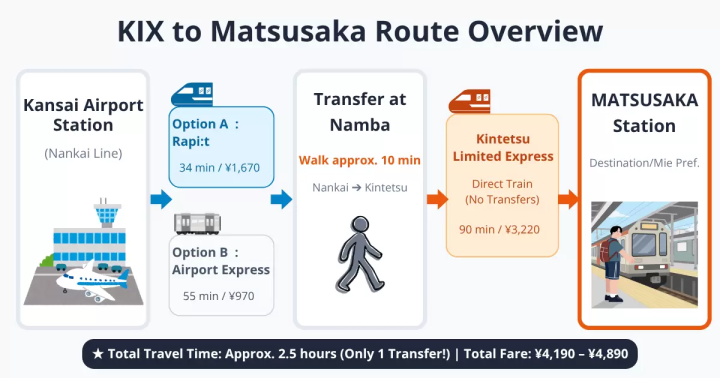
Operating under updated transport schedules and routing data, this comprehensive investigative guide outlines the precise mechanics of traveling from Kansai International Airport (KIX) to Matsusaka Station. Spanning a total duration of approximately two and a half hours, the journey requires only a single, fully indoor transit connection in central Osaka. Whether navigating ticket kiosks, utilizing modern contactless tap-to-ride systems, or selecting between high-speed limited expresses and budget-friendly alternatives, this report delivers an authoritative, step-by-step roadmap for first-time visitors and seasoned Japan travelers alike.
Detailed Chronology: Step-by-Step Transit Blueprint
Executing a seamless journey from the arrival terminal at KIX to the historic platforms of Matsusaka Station requires a precise understanding of the two-stage transit corridor: the Nankai Railway link from the airport to Namba, followed by the Kintetsu Line direct service to Mie Prefecture.
Phase 1: Kansai-Airport Station to Nankai Namba Station
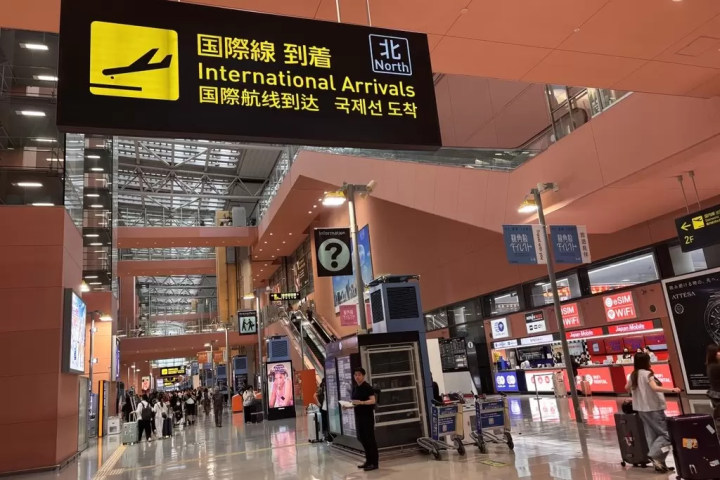
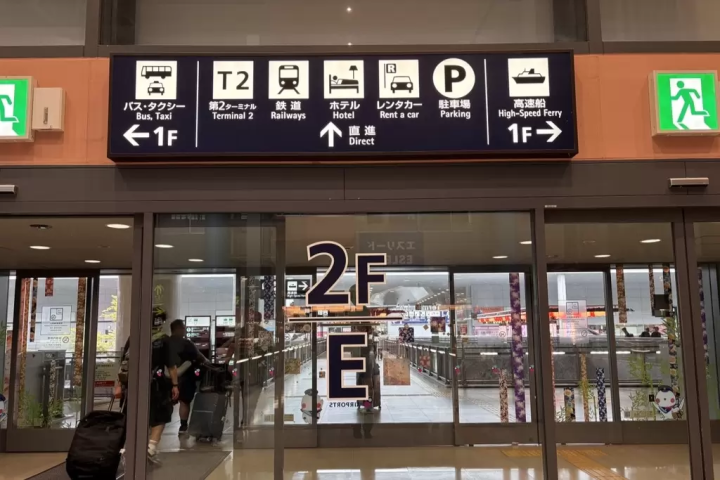
Upon clearing customs and exiting the International Arrival Lobby on the 1st floor of Kansai International Airport, travelers must orient themselves toward the transportation infrastructure hubs.
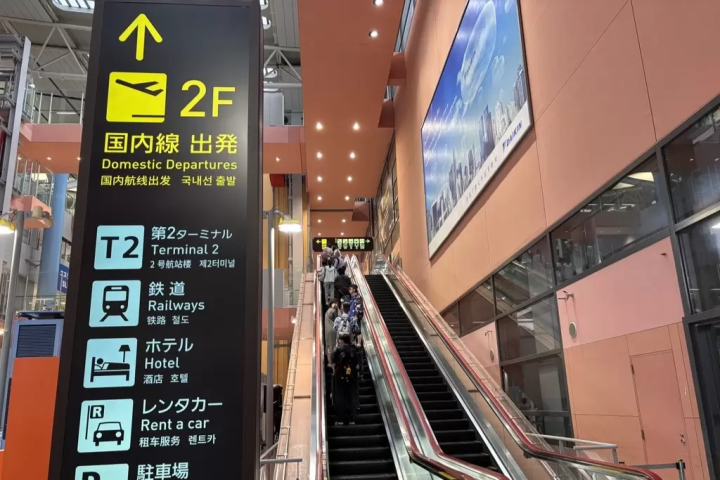
- Terminal Navigation: Look for overhead signage directing travelers to "Railways." Ascend to the 2nd floor utilizing either the escalators or elevators.
- Pedestrian Bridge Crossing: Pass through the automated glass doors and traverse the enclosed, climate-controlled pedestrian bridge connecting the terminal building to Kansai-Airport Station.
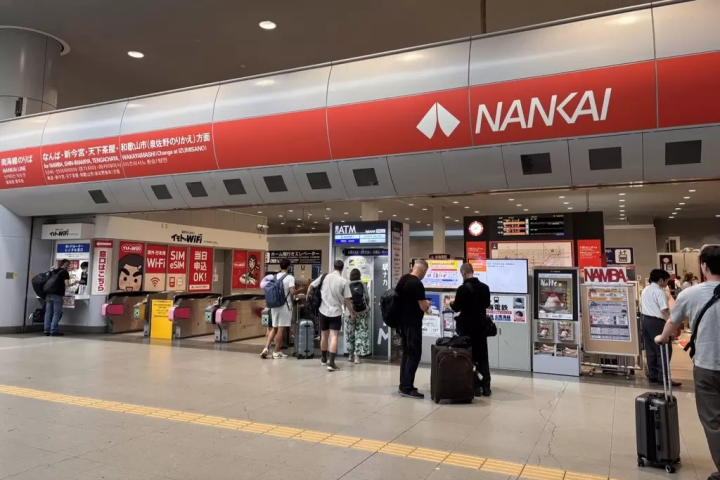
- Concourse Arrival: Enter the main station concourse. The Nankai Railway ticket gates and ticketing machines are located directly adjacent to the JR railway gates.
At this juncture, passengers must select between two primary rail options provided by Nankai Electric Railway:
Option A: The Nankai Limited Express "Rapi:t" (Recommended for Speed and Comfort)
- Travel Time: 34 to 40 minutes (Fastest connection).
- Total Fare: ¥1,670 (Base fare ¥970 + Limited Express reserved seat ticket ¥700).
- Operational Characteristics: Characterized by its distinctive retro-futuristic design, the Rapi:t offers fully reserved seating, superior luggage storage accommodations, and an exceptionally smooth ride.
Option B: The Nankai Airport Express (Budget Alternative)
- Travel Time: Approximately 55 minutes.
- Total Fare: ¥970 (Base fare only).
- Operational Characteristics: Operates as a standard commuter express service. While it lacks seat reservations and dedicated luggage bays, it offers an economical choice for cost-conscious travelers during off-peak hours.
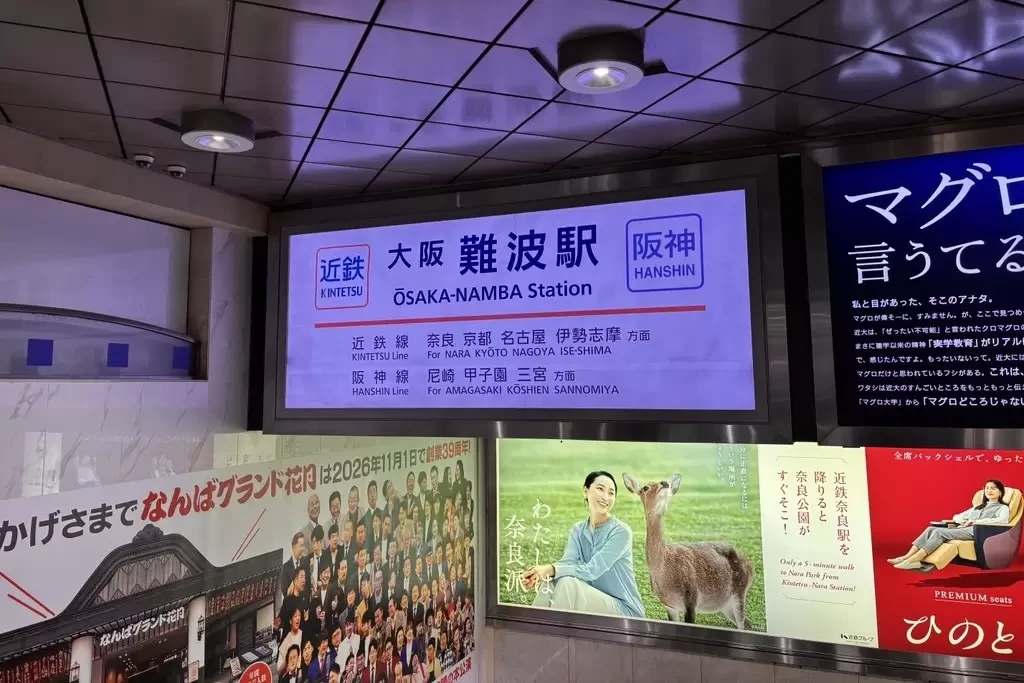
The Central Osaka Transfer: Nankai Namba to Kintetsu Osaka-Namba
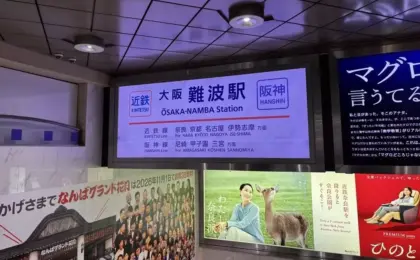
To bridge the gap between the Nankai network and the Kintetsu line heading eastward toward Mie Prefecture, travelers must execute a 10-minute indoor walking transfer from Nankai Namba Station to Kintetsu Osaka-Namba Station.
[Nankai Namba Station (3F Platform)]
         │
         ▼ (Look for "Kintetsu Line" signs, exit North Gate)
[1F Concourse Level]
         │
         ▼ (Take escalators/stairs)
[B1F Underground Passage]
         │
         ▼ (Walk straight through fully indoor/underground corridor)
[Kintetsu Osaka-Namba Station Gates]
Step-by-Step Walking Directions:
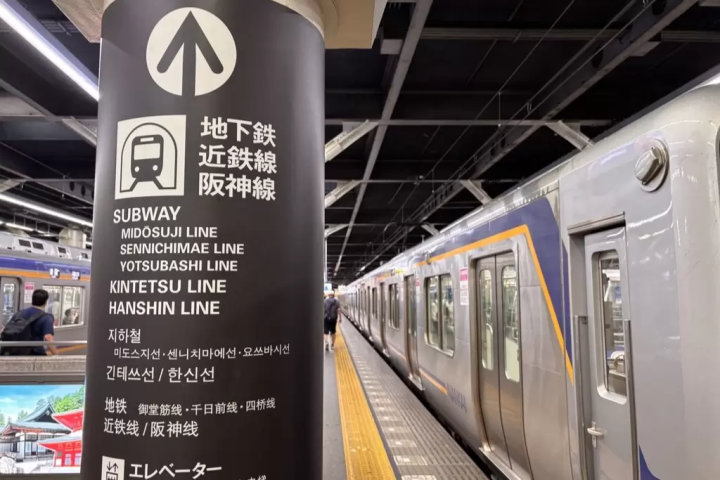
- Exit the Nankai Gates: Upon alighting on the 3rd-floor platform of Nankai Namba Station, scan the overhead directional signage for the "Kintetsu Line." Follow these cues toward the North Exit and pass through the ticket barriers.
- Descent to Level 1: Immediately after exiting the gates, take the escalator downward to the 1st floor.
- Descent to the Basement (B1F): Continue following the prominent Kintetsu Line markers and utilize the subsequent stairwells or escalators to reach the basement concourse.
- Traverse the Underground Corridor: Navigate the straight, fully sheltered underground passage. This corridor shields travelers entirely from surface weather conditions.
- Arrival at Kintetsu Infrastructure: The passageway terminates directly at the Kintetsu Osaka-Namba Station ticket counters and automated entry gates.
Phase 2: Kintetsu Osaka-Namba Station to Matsusaka Station
The final leg of the transit corridor utilizes the Kintetsu Limited Express network, delivering passengers directly to Matsusaka Station without requiring any additional changes of train.
- Train Category: Kintetsu Limited Express (All seats are fully reserved).
- Travel Time: Approximately 90 minutes.
- Total Fare: ¥3,220 (Base fare ¥1,880 + Limited Express seat surcharge ¥1,340).
- Operational Characteristics: Provides spacious reclining seating, tray tables, and quiet cars designed for long-distance regional transit across the Kansai and Chubu regions.
Supporting Context & Metrics
Understanding the financial and time investments required for this itinerary allows travelers to optimize their logistical planning. The table below outlines the aggregated cost structures and operational parameters based on current tariff schedules.
| Travel Segment | Service Type | Duration | Cost Structure | Key Amenities |
|---|---|---|---|---|
| Phase 1 (Option A) | Nankai Rapi:t | 34–40 min | ¥1,670 (Base + Express) | Reserved seats, luggage racks |
| Phase 1 (Option B) | Nankai Airport Express | ~55 min | ¥970 (Base fare only) | Standard commuter seating |
| Transfer Corridor | Indoor Walking Route | ~10 min | Free | Fully sheltered, climate-controlled |
| Phase 2 | Kintetsu Limited Express | ~90 min | ¥3,220 (Base + Express) | Direct route, all reserved seats |
| Total Route Range | Optimized Express | ~2.5 Hours | ¥4,190 – ¥4,890 | Single hassle-free transfer |
Ticketing Methodologies and Modern Payment Integration
Navigating Japanese railway ticket systems has evolved significantly, integrating advanced digital booking platforms alongside traditional purchasing channels. For both the Nankai and Kintetsu networks, travelers can choose from three primary acquisition workflows:
- Automated Ticketing Kiosks:
- Workflow: Access multi-lingual interfaces (English, Chinese, Korean), select the "Purchase Limited Express Ticket" option, input destination parameters, choose specific departure times, and bundle the base fare ticket with the express surcharge in a single transaction. Cash and major credit cards are accepted.
- Online Reservations Coupled with Contactless Tap-to-Ride:
- Workflow: Secure reserved seats in advance via official web portals—specifically the Nankai Ticketless Service or the Kintetsu Internet Reservation and Sales Service. For the base fare component, international travelers can bypass paper ticket queues entirely by tapping an eligible contactless credit card (Visa, Mastercard, JCB) or smartphone digital wallet directly at designated contactless-enabled ticket gates upon entry and exit.
- Manned Ticket Counters:
- Workflow: Engage directly with station attendants at designated service counters. Verbally communicate the destination, passenger count, and preferred departure window to receive physical tickets.
Official Statements & Cultural Context
Local municipal authorities and tourism boards emphasize that the accessibility of Matsusaka serves as a strategic bridge between high-density metropolitan tourism and serene, deep-cultural exploration.
Representatives from the Matsusaka City Tourism Information infrastructure highlight that while major urban centers like Osaka and Kyoto offer immense energy, modern travelers increasingly seek destinations that provide historical gravity without the friction of overtourism. By streamlining the transit corridor from Kansai International Airport down to a predictable 2.5-hour journey with a singular, intuitive transfer, regional planners have effectively removed the logistical barriers that once kept international visitors confined to major trunk lines.
The Historical and Culinary Landscape Awaiting Travelers
Upon stepping onto the platform at Matsusaka Station, visitors immediately enter a living museum shaped by two centuries of economic and culinary evolution:
- The Merchant Legacy: During the Edo period, Matsusaka stood as a powerhouse of entrepreneurial wealth. Home to influential merchant families—most notably the founders of the Mitsui conglomerate—the city preserves grand architectural testaments to its golden age. Visitors can explore sprawling, meticulously maintained residences such as the Former Hasegawa Residence and the historic merchant district, gaining rare insight into the domestic and professional lives of elite Edo-period traders.
- Architectural Defense: The ruins of Matsusaka Castle (Matsusaka-jō Shi), constructed in 1588 by warlord Gamō Ujisato, command panoramic views over the cityscape. Built with master stonemasonry utilizing dry-stack techniques (nozura-zumi), the fortress grounds now serve as a public park celebrated for its seasonal cherry blossoms and wisteria.
- The Culinary Pinnacle: No discourse on Matsusaka is complete without addressing its crowning gastronomic achievement. Matsusaka Beef—distinguished by its intense marbling, delicate texture, and rich, melt-in-the-mouth profile derived from meticulous cattle-rearing traditions—is available across numerous specialized dining establishments within easy walking distance of the rail terminal.
Future Outlook
As international travel patterns continue to diversify beyond conventional urban loops, municipalities like Matsusaka are poised to capture a sophisticated demographic of cultural explorers. Future municipal initiatives aim to expand English-language digital wayfinding, enhance contactless payment integration across regional bus networks connecting to the station, and introduce unified digital transit-tourism passes that bundle rail fare with admission to historic sites and culinary vouchers.
For travelers landing at Kansai International Airport, the path forward is clear. By leveraging the optimized Nankai-to-Kintetsu corridor outlined in this report, visitors can effortlessly trade the bustling concourses of Osaka for the timeless elegance, architectural splendor, and world-class gastronomy of historic Matsusaka.








Belum ada komentar. Jadilah yang pertama berkomentar!