

Executive Overview
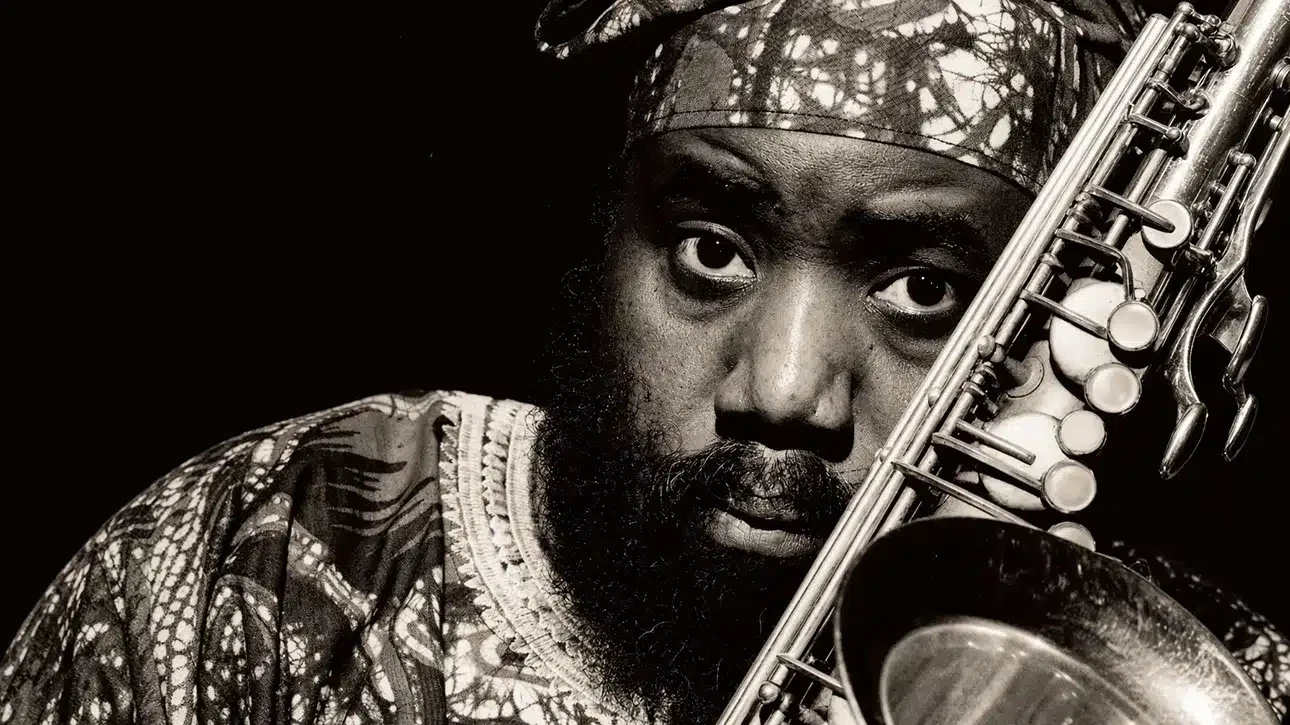
In the upper echelons of modern avant-garde music, few figures commanded the physical authority, emotional intensity, and spiritual discipline of tenor saxophonist David S. Ware. Emerging from the tumultuous New York free jazz resurgence of the mid-1980s, Ware did not merely play music; he weaponized tone, breathing life into an idiom that many conservative critics had prematurely relegated to the historical archive. Bridging the visceral fire of late-period John Coltrane and Albert Ayler with a deeply personal, transcendental lyricism, Ware built an uncompromising catalog that remains a high-water mark of late-20th-century creative expression.
This piece draws heavily upon one of the final interviews granted by Ware in early 2012—conversations that took on a poignant, solemn weight following his untimely passing in October of that year due to complications from kidney disease. Though he had received a life-saving kidney transplant in 2009 after a decade of exhausting dialysis, his body was ultimately unable to sustain the ferocious energy he funneled into his craft.
Through the persistent efforts of labels like AUM Fidelity, which has continuously championed his archival material and live recordings, Ware’s legacy endures. Yet, the narrative of his life—stretching from his upbringing in New Jersey and his formative years under the informal tutelage of Sonny Rollins to his quiet years navigating New York’s gritty cab trade—remains a masterclass in artistic integrity. This examination chronicles the trajectory of a singular musical visionary whose devotion to sound superseded all commercial considerations.
Detailed Chronology: From New Jersey Roots to the New York Avant-Garde
The Sonny Connection and Early Awakening
Born David Spencer Ware in Plainfield, New Jersey, in November 1949, the future luminary’s initial artistic impulses pointed toward the percussion kit. Drawn to rhythm as an elemental force of existence, Ware soon gravitated toward the tenor saxophone, recognizing that kinetic energy and melodic phrasing could be forged just as effectively through reeds.
After completing his secondary education in Scotch Plains, Ware spent a brief, unfulfilling stint at Boston’s Berklee College of Music during the late 1960s. Rather than viewing the institution as a transformative incubator, Ware recognized its limitations early on. By age 17, his musical trajectory was firmly set, rendering the conservative academic environment more instructive in what he did not want to pursue than what he did.
Far more influential than any formal classroom was Ware’s initiation into the New York jazz ecosystem, catalyzed by an unexpected mentor: tenor titan Sonny Rollins. Rejecting the notion that a young, unknown musician had to systematically "convince" an icon, Ware’s relationship with Rollins began organically in Greenwich Village.
"There was no convincing," Ware recalled. "I used to go see him play in Greenwich Village and, at one point, I told him I wanted him to listen to me play. That’s when the musical relationship began. We started to practice together from that point. There was never any form of instruction: we just practiced freely together."
Through these unscripted sessions, Rollins passed down trade secrets, including his trademark circular breathing techniques, cementing a generational bridge that honored the roots of the tradition while paving the way for the radical explorations to come.
The Mystery of The Third World
Ware’s early discography holds a nearly mythical status among vinyl collectors and free jazz historians. In 1968, Ware joined alto saxophonist and flutist Abdul Hannan and other Boston-area musicians for an underground recording session at Hannan’s home. The resulting music was a challenging, spiritually charged tapestry that expanded upon the spiritual free jazz of Coltrane, Pharoah Sanders, and Marion Brown by integrating unconventional instrumentation—such as the violin and electric piano—and early world music textures.
The ensemble planned to issue the session under the title The Third World. However, a fateful meeting in New York with a representative from Jazz Magazine introduced a strange twist of fate. Having left a demonstration tape with the publication, the young musicians were later told the publication lacked a machine to play it. Shortly thereafter, saxophonist Gato Barbieri released an album bearing the exact same title and exploring analogous sonic territory.
"Right away we thought they stole the concept we had introduced to them," Ware reflected. "I don’t think it was a coincidence, but what could we do? None of us knew anything about how things were working at the time; we were naive."
While Barbieri’s subsequent release leaned toward a Latin-infused pastiche, Hannan eventually issued the 1968 recordings as a private pressing in 1971. Today, original pressings of The Third World command staggering four-figure sums on the secondary market, serving as a rare artifact of Ware’s foundational aesthetic—one where musical expression and spirituality were inextricably linked.
The Loft Scene and European Breakthroughs
By 1973, Ware relocated permanently to New York City, immersing himself in the burgeoning loft jazz scene. This cooperative, underground ecosystem fostered artists working outside the commercial jazz mainstream. During this period, Ware worked extensively both as a bandleader and as a sideman alongside avant-garde royalty such as pianist Cecil Taylor and drummer Andrew Cyrille.
Working with Taylor and Cyrille exposed Ware to contrasting improvisational frameworks:
- The Cecil Taylor System: A meticulously structured architecture that mandated a specific, rigorous approach to internal improvisation.
- The Andrew Cyrille Approach: A fluid, piece-to-piece methodology emphasizing dynamic shifts in texture and space.
These collaborations forged the foundation for Apogee, a trio featuring pianist Gene Ashton (Cooper-Moore) and drummer Marc Edwards. The group’s self-financed 1977 studio session caught the attention of Swiss imprint HatHut, which released it in 1979 as Birth of a Being. Credited under Ware’s name, the album showcased a ferocious synthesis of Coltrane and Ayler’s structural freedoms, balanced by an underlying melodic architecture driven solely by piano and drums.
The Taxi Years and the Second Wind
Despite critical acclaim within inner circles, the late 1970s and early 1980s proved hostile to free jazz as commercial fusion and smooth jazz dominated the marketplace. Facing financial instability, Ware stepped away from full-time performance, spending over a decade navigating the grueling streets of New York City as a yellow cab driver.
When asked if his daily existence mirrored the gritty, dystopian landscape depicted in Martin Scorsese’s Taxi Driver, Ware remained tight-lipped: "There is nothing I want to share about that."
The hiatus broke unexpectedly in the mid-1980s during a routine shift in the East Village, when Ware crossed paths with bassist William Parker. Hesitantly asked if he would consider returning to the bandstand, Ware’s affirmative response reignited his musical career. Though he continued driving cabs to maintain financial independence—finally hanging up his keys in 1995 only after sustaining a knee injury from a reckless driver—the encounter with Parker birthed the legendary David S. Ware Trio with drummer Marc Edwards.
The 1988 release of Passage to Music on Sweden’s Silkheart Records signaled a profound artistic maturation. Ware’s playing was no longer solely defined by incendiary sonic attacks; it possessed a new gravity, enriched by microtonal subtleties and the introduction of alternative reeds like the saxello and stritch.
Supporting Context & Metrics: The Architecture of Ware’s Artistry
Ware’s career can be quantified not merely by album sales or touring schedules, but by his steadfast rejection of commercial compromises. Music was never approached as a mere trade vehicle.
| Career Milestone / Era | Key Collaborators | Defining Musical Characteristics |
|---|---|---|
| The Boston/Loft Era (Late 1960s–1970s) | Abdul Hannan, Cecil Taylor, Andrew Cyrille, Gene Ashton (Cooper-Moore), Marc Edwards | Explosive, spiritual free jazz; integration of alternative textures (violin, electric piano); strict structural systems vs. fluid improvisation. |
| The Trio/Quartet Epoch (1988–2000s) | William Parker, Marc Edwards, Matthew Shipp, Whit Dickey, Susie Ibarra | Masterful balance of collective interplay and extended soloing; introduction of the saxello; transition to a telepathic quartet format. |
| Late-Career Explorations (2009–2012) | Joe Morris, Cooper-Moore, Rashied Ali, Matthew Shipp | Guitar-integrated improvisations (Shakti); deep engagement with modal architecture and historical jazz lineage. |
The Transcendental Discipline
Central to Ware’s endurance through chronic health crises—culminating in his decade-long battle with kidney failure and subsequent transplant—was his daily practice of Transcendental Meditation (TM). This spiritual foundation was so integral to his life that it caught the attention of the David Lynch Foundation, resulting in the 2011 documentary David S. Ware: A World of Sound.
For Ware, this spiritual discipline was not a philosophical accessory; it was the root system from which all creative expression grew:
"Spirituality will manifest itself through everyone in different ways. It gives anything meaning; nothing has meaning without spirituality. Because this is the base of all subjects."
Official Statements and Archival Insights
The transition of Ware’s music from underground cassettes to major independent labels like Columbia Records—facilitated by creative consultant Branford Marsalis in the late 1990s—highlighted the perennial friction between institutional jazz apparatuses and true avant-garde visionaries.
Reflecting on his brief tenure with Columbia, which yielded the highly praised 1998 album Go See the World, Ware summarized the dichotomy with characteristic candor:
"It was easy in the sense that I was given the freedom to do what I wanted to do. It was much harder in the sense for them to understand what it is that we do."
Even within a major-label environment, Ware refused to pander. His radical transformation of Marvin Hamlisch and Barbra Streisand’s pop standard "The Way We Were" into a 14-minute modal odyssey stands as an enduring testament to his ability to subvert listener expectations while honoring melodic lineage.
Future Outlook and Legacy
The passing of David S. Ware in October 2012 left an irreplaceable void in the global creative music community. Yet, the framework he established—grounded in the holy trinity of tradition, fearless exploration, and uncompromising spiritual focus—continues to influence subsequent generations of improvisers.
Projects from his final years, such as the critically lauded quartet Planetary Unknown alongside Parker, Cooper-Moore, and Rashied Ali, proved that Ware viewed jazz history not as a museum exhibit, but as a living, breathing foundation for future innovation. As he frequently maintained, the highest calling of an artist is to avoid self-repetition at all costs:
"Jazz is a very gracious way of self-expression, to express oneself through a musical instrument. And it should be a very creative way. Creativity is the biggest part: one should not repeat oneself in jazz as much as possible."
Though we are left to wonder what heights Planetary Unknown and subsequent iterations of his ensembles might have reached had health permitted, the recorded legacy remains secure. Through ongoing archival releases, academic re-examinations, and the unwavering dedication of independent champions like AUM Fidelity, David S. Ware’s horn continues to ring out across the cosmos—unyielding, transcendent, and profoundly human.








Belum ada komentar. Jadilah yang pertama berkomentar!